






Inside Egypt’s crackdown on Sudanese refugees
13 May 2026
Weeks passed in silence for the wife of Sudanese refugee “Mohammed Al-Mahdi” after Egyptian police detained her husband in March. The couple lived in Cairo’s Badr district, where officers took Al-Mahdi from the shop where he worked to provide for his family.
Al-Mahdi (35 years old) holds an asylum seeker document issued by the United Nations High Commissioner for Refugees (UNHCR) on September 21, 2025. The situation left his wife in a state of distress due to her inability to meet him inside the police station. “My husband is diabetic and needs health care and to take medication regularly. His detention is exacerbating his health condition,” she told Ayin. Her concerns are justified. Reports have already emerged of Sudanese refugees dying in detention, including 18-year-old Al-Nadhir Al-Sadiq, who was detained for 25 days without access to medical care despite having valid documentation. According to several news outlets, at least six young Sudanese men have passed away in Egyptian detention in the beginning of this year.
The ongoing conflict between the Sudanese Armed Forces (SAF) and the Rapid Support Forces (RSF) has induced a UN-estimated 850,000 Sudanese refugees to seek asylum in Egypt. Authorities in Egypt claim the number is closer to 1.5 million. According to UNHCR’s latest report, the number of Sudanese refugees in Egypt has increased fourteenfold since the outbreak of the war, making them by far the largest refugee group in the country.
Egyptian pledges of protection
Khartoum and Cairo discussed the crisis at the end of March during talks between Sudanese Prime Minister Kamil Idris, head of the military-backed government, and Egyptian Prime Minister Mostafa Madbouly. The discussions led to the release of hundreds of Sudanese nationals detained for residency permit violations after being apprehended during security raids in Cairo, Alexandria, and Aswan.
Following his arrival in Cairo at the end of February, Idris announced the formation of a joint Sudanese-Egyptian committee tasked with securing the release of detainees arrested during security campaigns related to identity and residency documentation. He stated that Egypt denied specifically targeting Sudanese nationals and maintained that the measures were necessary to protect its national security.
Similarly, on 1 April, during a meeting involving representatives from sixteen African countries and the International Organization for Migration (IOM) on migration issues, Egyptian Foreign Minister Dr Badr Abdel-Ati said that Egypt currently hosts more than ten million refugees who “enjoy basic services without discrimination” despite what he described as insufficient international support.
Despite these claims, in late February and mid-March 2026, at least three flights reportedly forcefully transferred around 450 Sudanese refugees – most of them elderly people, women, girls, and children – to Port Sudan Airport.
Hiding indoors
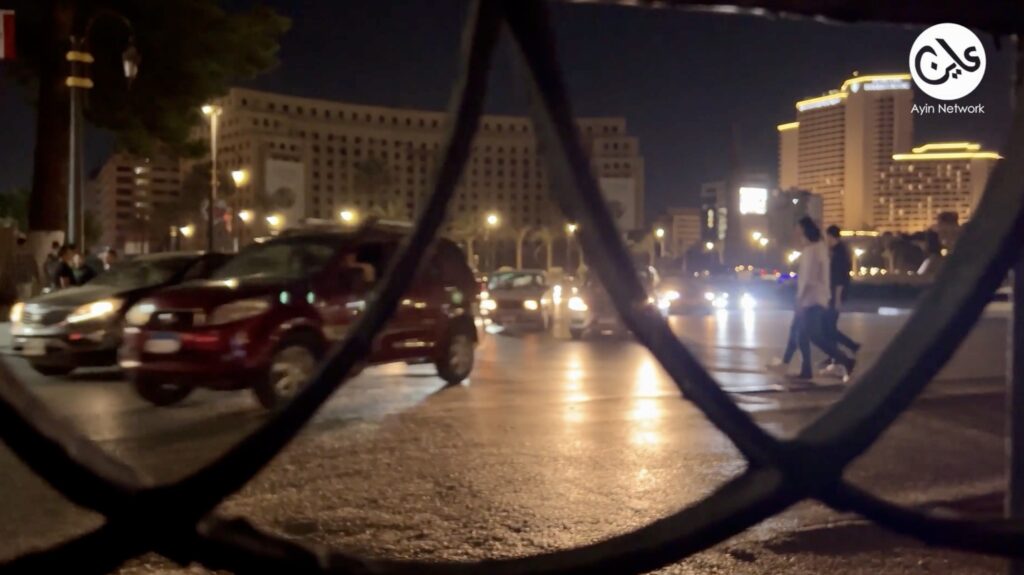
Many Sudanese describe the feeling of not being able to move outside, despite having the correct legal papers. Several families have told Amnesty International that they are afraid to send their children out to school for fear of deportation. University students often face the same concern over sudden arrest, as they are obliged to attend classes or do exams on campus in Cairo.
Ahlam Omar, a Sudanese activist who monitors emergency cases involving Sudanese detainees in Cairo police stations, described cases in which girls were released only on the condition that they return to Sudan. “In one case,” Omar said, “a 32-year-old woman was transferred in mid-February to Badr City Police Station, where she remained for three weeks before being released after the Egyptian government agreed to deport detained Sudanese nationals by air to Port Sudan Airport.” The activist added that Noura continues to suffer psychological distress despite her return to Sudan.
A source close to the family of a young Sudanese man detained at Talibiya Police Station in Cairo said that relatives searched several facilities known for holding Sudanese detainees, including police stations and prisons. According to the source, detainees arrested in street raids were held in overcrowded and poorly ventilated cells. Occasionally they were forced to stand for extended periods because of severe overcrowding with detainees facing other charges, including serious criminal offences.
Amer Abdullah, a 40-year-old Sudanese refugee, said he resorted to desperate measures to secure the release of his brother, who had been detained at Al-Obour Police Station in early March. After multiple attempts to contact police officers, Abdullah said he was referred to a Sudanese embassy security official holding the rank of colonel. According to Abdullah, the official demanded 13,000 Egyptian pounds in exchange for his brother’s release, warning that otherwise he would remain imprisoned.
“We decided to accept the offer to ensure his release,” Abdullah said, “especially given the deaths of Sudanese refugees in police stations in recent months due to negligence and lack of medical care.”
Security raids under houses
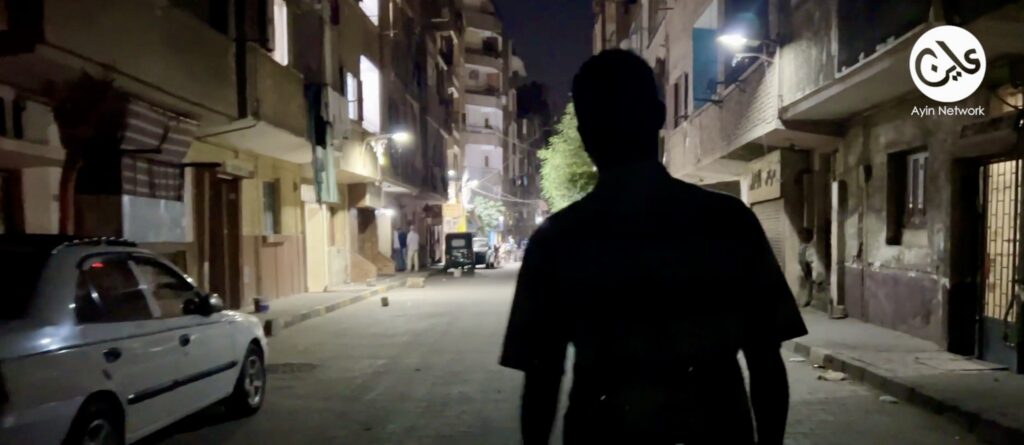
Over the last months, Egyptian security campaigns have begun targeting Sudanese gathering places in Cairo, such as the “Monday Market” in the Abdeen area in the centre of the capital, and have also included the areas of “Nozha”, “Nasr City”, “Mohandessin”, “Agouza”, “Helwan”, “Ismailia”, and the “Zefta” area, reaching as far as the southern city of Aswan.
According to several accounts, observers have also seen security vehicles monitoring students near Sudanese schools in Cairo.
Ahmed Ezzeldeen, a 30-year-old Sudanese refugee residing in Cairo, told Ayin how he saw a security vehicle monitoring students in front of the “Al-Jeel” school in the Sayeda Zeinab neighbourhood. The monitoring forced the school principal to come out and request that the security forces leave so as not to spread terror among the students, Ezzeldeen said, especially since the campaign was mainly targeting boys. Ezzeldeen added that similar incidents had occurred at several Sudanese schools throughout March.
Apartment raids
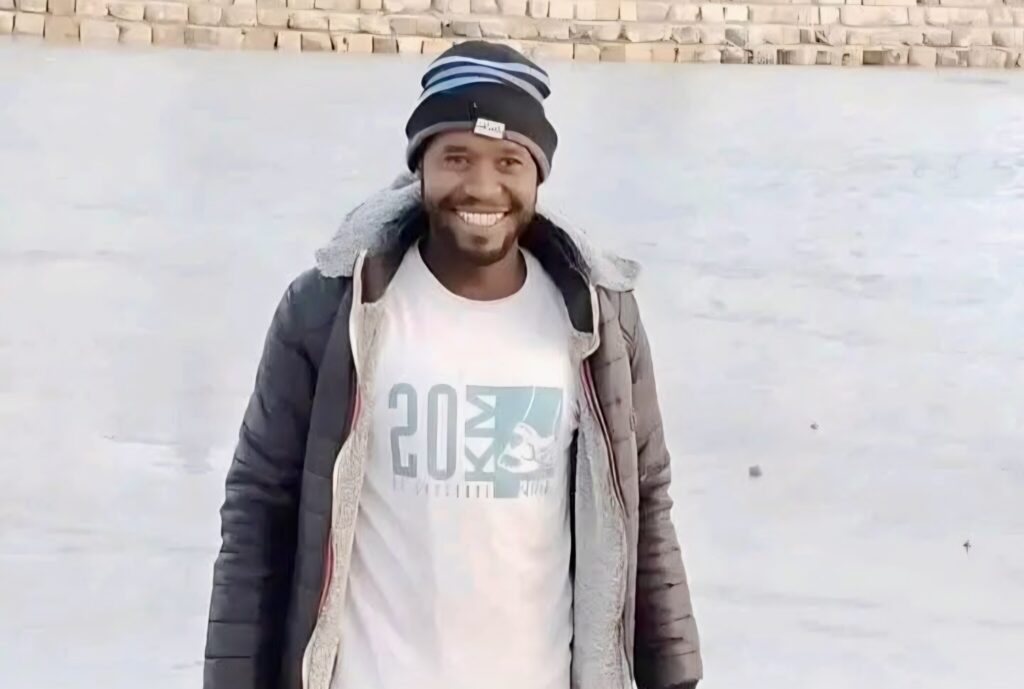
A Sudanese human rights defender residing in Cairo told Ayin that there are documented reports of security forces raiding several apartments in the Ismailia area during February and March, where Sudanese refugees and their families reside. The residents were asked to produce their residency documents. Although the forces left after verifying their legal status, the families are now terrified and feel that Egypt is no longer “safe” for Sudanese people in general.
This human rights defender, whose name was withheld by Ayin to protect him from security repercussions, believes that Egyptian authorities deported 95% of those rounded up from the streets in Cairo, Alexandria, and Aswan. Only a small number were released after their families managed to deliver official documents to the police stations. “Some of those released by the prosecution were returned to police stations by security forces, who then contacted the Sudanese embassy to arrange their return to the country,” the human rights activist added. “This is what happened to more than 700 Sudanese refugees in the past two months.”
In some cases, the human rights activist added, Sudanese were forcibly taken to the National Security Headquarters in central Cairo, in a bid to hold them until transport was available to send them back to Sudan.
Deportations continue
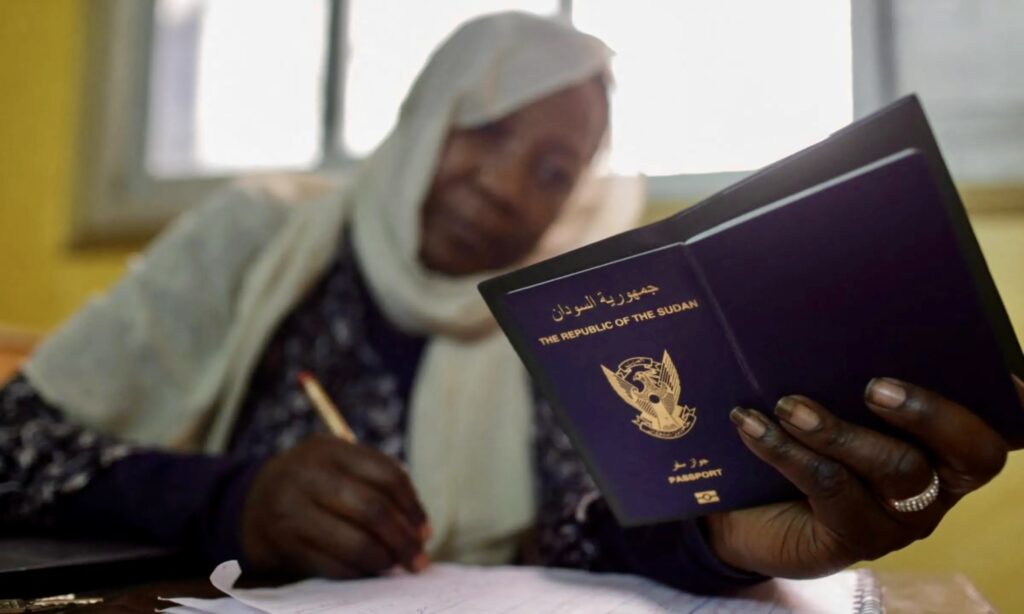
Egyptian “security campaigns” targeting Sudanese refugees are now carried out three to four times a day in the cities of Cairo, Aswan, and Alexandria, according to Ahmed Yaqoub, a researcher in migration and population issues.
“The restrictions on Sudanese refugees have extended to several hospitals, which now require patients to present official documents before medical intervention and treatment, even if the case is an emergency,” Yaqoub said. He believes that the UN is “failing” to protect Sudanese refugees in Egypt because the authorities keep suggesting that the increasing number of refugees may lead to irregular migration to Europe, and the UN offices in Egypt do not fully exercise their mandate due to security restrictions.
“At least 600,000 Sudanese refugees live in daily terror in the cities of Aswan, Cairo and Alexandria and do not leave their homes except at specific times to avoid security campaigns,” Yacqoub said. “While about 700,000 other Sudanese who hold passports that meet the residency requirements are apprehensive about these campaigns because the security forces deal with them according to varying assessments.”
Egypt intends to deport nearly half a million Sudanese refugees by the end of the year, according to a survey conducted by human rights organisations based on the activities of security campaigns.
Yaqoub says hundreds of those deported from Egypt to Sudan were left without any assistance on the Sudanese border in the city of Wadi Halfa between February and March. Authorities in Wadi Halfa formed a committee in March to deal with the increasing number of Sudanese deported from Egypt, many of whom arrived without money or belongings, and arranged their transfer to their home cities.