











Airstrikes ignite Sudan’s western borderlands
30 April 2026
The tri-border area connecting Sudan, Chad, and the Central African Republic is no longer teeming with commercial caravans, owing to an escalating military conflict between the Rapid Support Forces (RSF) and the Sudanese army, particularly in light of airstrikes targeting RSF-controlled border areas.
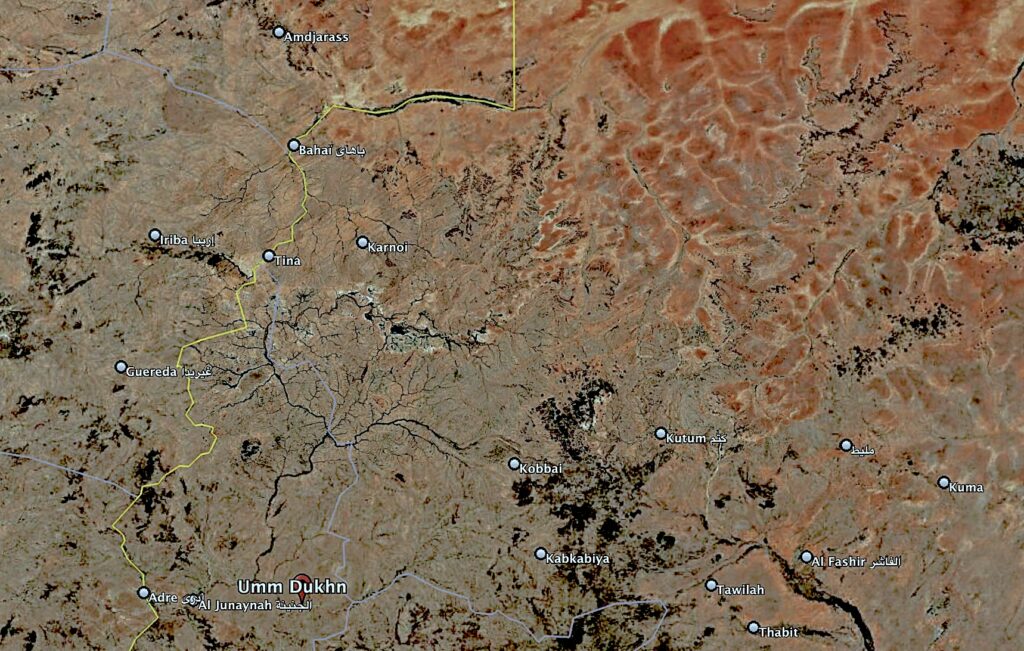
From January through April, at least 13 air raids have struck these areas. Recently, the army has intensified its aerial bombardment of frontline areas along the border with Chad, stretching from the town of Al-Tina in North Darfur to Umm Dukhun in Central Darfur.
On 21 April, three drones operated by the Sudanese army targeted the “Motor Market” in Umm Dukhun, Central Darfur State, killing around 15 people and injuring dozens. Local sources told Ayin that the high death toll was due to the strike coinciding with the weekly market day, which serves as the economic lifeline for residents of the border areas.
This incident did not occur in isolation. Days earlier, specifically on April 15, a drone struck a local market in Umm Dukhun, killing at least 40 people. According to a medical source at Umm Dukhun Hospital, the strike focused on the customs office area.
In the same context, eyewitnesses reported that the strike coincided with a meeting of military leaders near an intelligence office in the customs square, leading to the deaths of several soldiers. However, shrapnel and fires caused by the bombardment did not spare civilians, as the flames spread and destroyed a shelter for displaced persons in a nearby school.
Adikong crossing – bombing a Lifeline
On another equally significant front, an airstrike hit the Adikong crossing on 14 April in the Adré area of West Darfur State, killing four people. This crossing represents the “lung” through which more than six million people in Darfur breathe, as humanitarian aid and essential goods flow through it from Chad.
The strike targeted the crossing’s fuel market, triggering widespread panic and halting truck movement. According to eyewitnesses who spoke to Ayin, the bombardment destroyed commercial vehicles and essential food commodities, immediately causing a sharp surge in prices in markets across the already exhausted region.
“I constantly move between Adré, Al-Tina, and Adikong, and what we are seeing is a recurring pattern,” says trader Sharif Ahmed. “The bombing does not always distinguish between military and civilian targets, and the result is the disruption of truck movement coming from ports in Cameroon and Benin via Chad.”
“The bombardment significantly affects the movement of trucks, whether commercial or belonging to relief organisations,” he added. “Since the Adré and Al-Tina crossings represent the lifeline for goods coming from West Africa, the strikes lead to an accumulation of cargo and a halt in supplies, placing residents in a catastrophic living situation.”
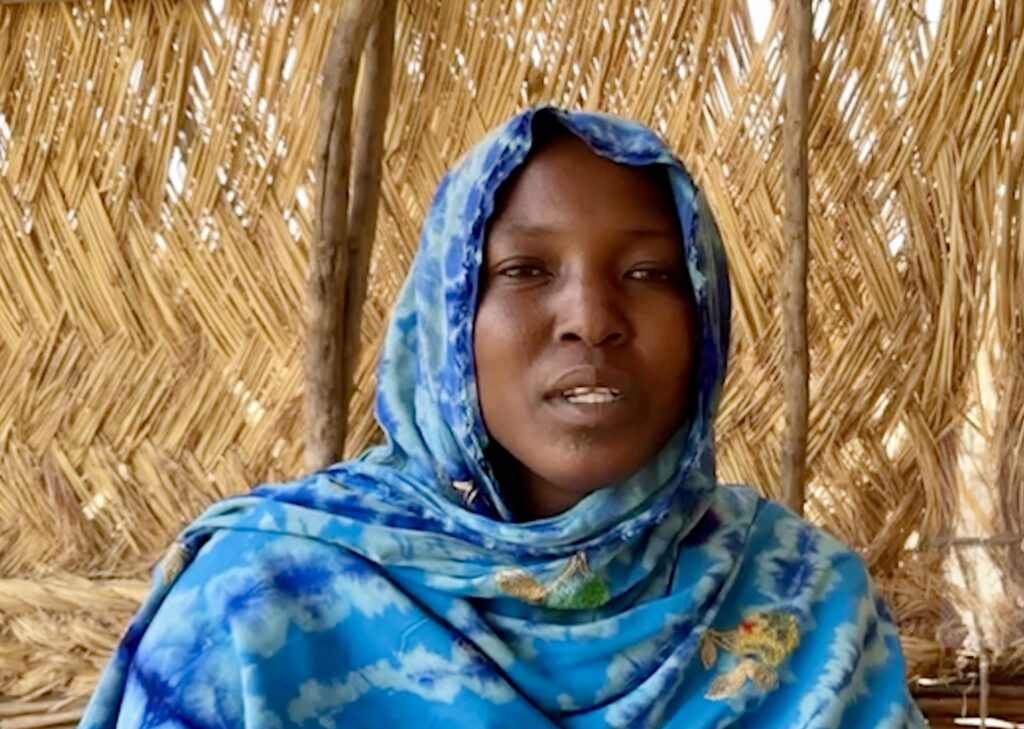
Fathia Ali is a Sudanese refugee living in Adré who conducts trade along the border as a source of income. “We work in trade and travel to Adikong, on the Sudanese-Chadian border,” Fathia told Ayin. “But we face grave dangers from drone attacks and the hard road conditions. Still, we continue because we need to survive.”
Humanitarian efforts stifled
“Chadian authorities, as a result of this bombing, have begun implementing strict security measures, including partial border closures, which has negatively impacted the flow of fuel and goods,” a member of the Emergency Response Rooms based along the Darfur border told Ayin.
“When a drone strikes a truck carrying fuel or flour, you are not just killing a driver—you are effectively killing thousands of families waiting for those supplies in displacement camps,” the ERR volunteers added. “Prices have doubled, formal commercial activity has been paralysed, and activity has shifted toward smuggling routes.” The continued bombardment of border areas and the closure of crossings have also led to the growth of smuggling and informal routes, driving transport expenses to unprecedented levels.
On 24 April, a UN aid truck transporting emergency shelter kits was completely destroyed by a drone strike while transiting through the town of Umm Drisaya in North Darfur State. The vehicle was en route to Tawila, a heavily congested town currently hosting an estimated 700,000 internally displaced persons (IDPs). The incineration of these supplies deprives thousands of highly vulnerable individuals of baseline protection against the elements.
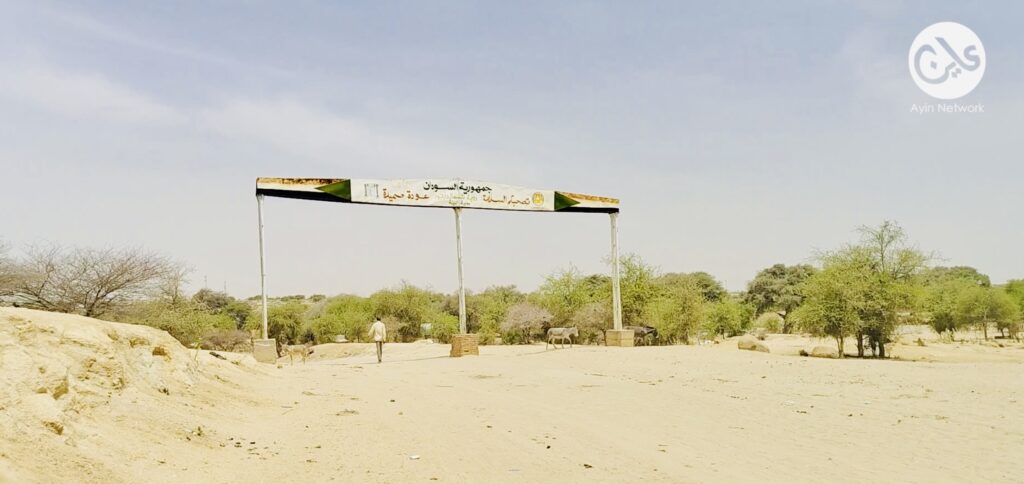
“The window through which Darfur breaths”
According to political scientist Azza Mustafa, Chad and the Central African Republic act as a “window through which Darfur breathes” and a vital logistical supply corridor for the region. She stressed that this relationship cannot be understood in isolation from regional interventions, as both countries also use their borders to ship weapons.
Azza suggests that the army’s attacks may serve as a “deterrent message” from the Port Sudan-based government to Chad, indicating its ability to reach deep into border areas. The political scientist also noted that Chad’s recent tightening of measures at border crossings reflects its awareness of the seriousness of the army’s operations to sever these vital lifelines.
This assessment aligns with the view of security expert Al-Fatih Mahjoub Osman, who told Ayin that battles in North Darfur are being managed on the ground by joint forces in Kurnoy and Al-Tina, while Umm Dukhun serves as the main base for launching RSF counterattacks.
“The army’s air operations are primarily aimed at maintaining the presence of joint forces and opening the way for deeper incursions intended to cut supply routes coming from Libya and Chad to the RSF,” he added.