

12 May 2026
To keep our readers informed of the multitude of events taking place in Sudan amidst the ongoing, devastating war, we have developed a series of weekly news briefs covering major topics of the week.
In this week’s edition:
- United nations warns of escalating drone fatalities in Sudan
- Sudanese pound plummets to record lows as war costs mount
- Sudanese refugees face deportations and deaths in Egyptian custody
- Sudan displacement reaches 15 million amid new fighting in Blue Nile
- Military calm returns to South Kordofan following fierce clashes
 1) United nations warns of escalating drone fatalities in Sudan
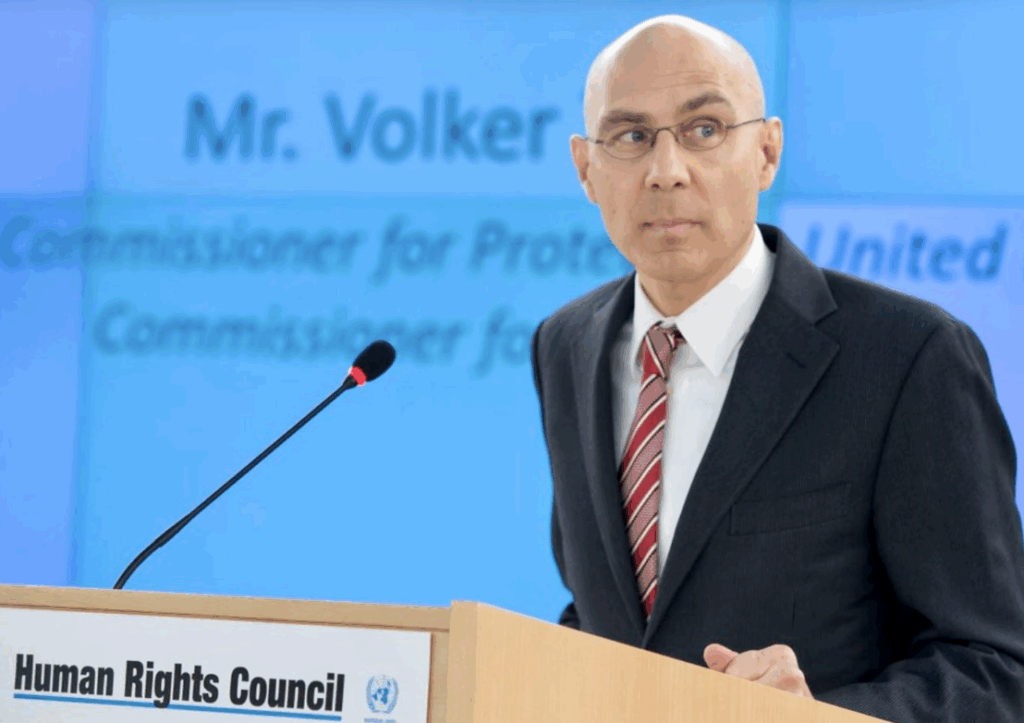
United Nations High Commissioner for Human Rights, Volker Türk, has raised a grave alarm over the rising use of unmanned aerial vehicles in Sudan, revealing that drone strikes killed at least 880 civilians between January and April 2026. This figure accounts for more than 80% of all conflict-related civilian deaths during that period. Türk warned that the war is entering a “more bloody” phase as both the Sudanese army and the Rapid Support Forces (RSF) increasingly normalize drone warfare.
The High Commissioner noted that drone attacks have shattered the relative calm in Khartoum, where civilians had begun to return, and are now claiming lives at a rate exceeding all other causes of death. In a tragic validation of these concerns, a recent drone strike near Abu Zabad in West Kordofan targeted a civilian vehicle, killing at least 15 people and wounding several others. Local sources confirmed the victims were villagers traveling to the city when they were hit.
Türk predicted that hostilities will intensify in the coming weeks despite the approaching rainy season, which historically hindered military movement. He expressed deep concern over the Sudanese military’s efforts to seize territory in the center and east of the country, warning of potentially deadly consequences for civilians across vast areas.
The UN statement called for immediate and strict measures to halt the transfer of sophisticated weaponry, particularly armed drones, to the warring parties. Türk emphasised that the lack of accountability for these strikes encourages further atrocities, as drone attacks against civilian objects are becoming a standard tactic on both sides.
 2) Sudanese pound plummets to record lows as war costs mount
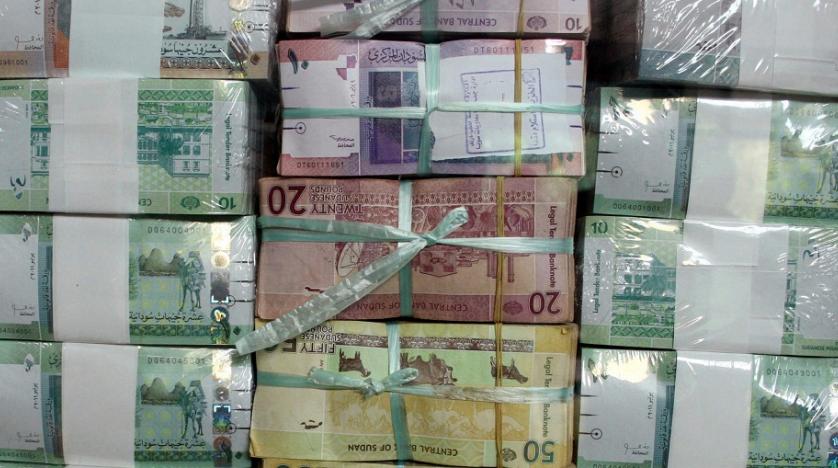
The Sudanese pound has suffered a fresh collapse in the black market, dropping between 50 and 100 pounds against the US dollar in recent trading. The national currency is now valued at approximately 4,300 pounds to the dollar, while the UAE dirham and Saudi riyal have climbed to 1,170 and 1,140 pounds respectively. This rapid devaluation comes despite efforts by the military-backed government in Port Sudan to find urgent economic interventions.
The currency’s plummeting purchasing power has triggered a 12% surge in the cost of essential consumer goods. Prices for food grains, cooking oil, sugar, and fuel have reached record highs, forcing many families to reduce their daily meals to the bare minimum. Relief workers report that the majority of citizens can no longer afford even the most basic commodities required for survival.
Economic analyst Omar Abshar attributed the deterioration to a sharp increase in military spending and the near-total collapse of national exports, such as gum arabic and agricultural crops. While the government has looked toward international trade agreements—recently holding talks with Belarus for oil and goods—analysts remain skeptical that these measures can stem the bleeding.
Market traders in Port Sudan noted that the Egyptian pound has also emerged as a strong competitor due to a heavy reliance on imports from Egypt to sustain the Sudanese market. Without comprehensive economic reforms and a cessation of hostilities, experts predict the dollar could reach 5,000 Sudanese pounds before the end of the year.
 3) Sudanese refugees face deportations and deaths in Egyptian custody
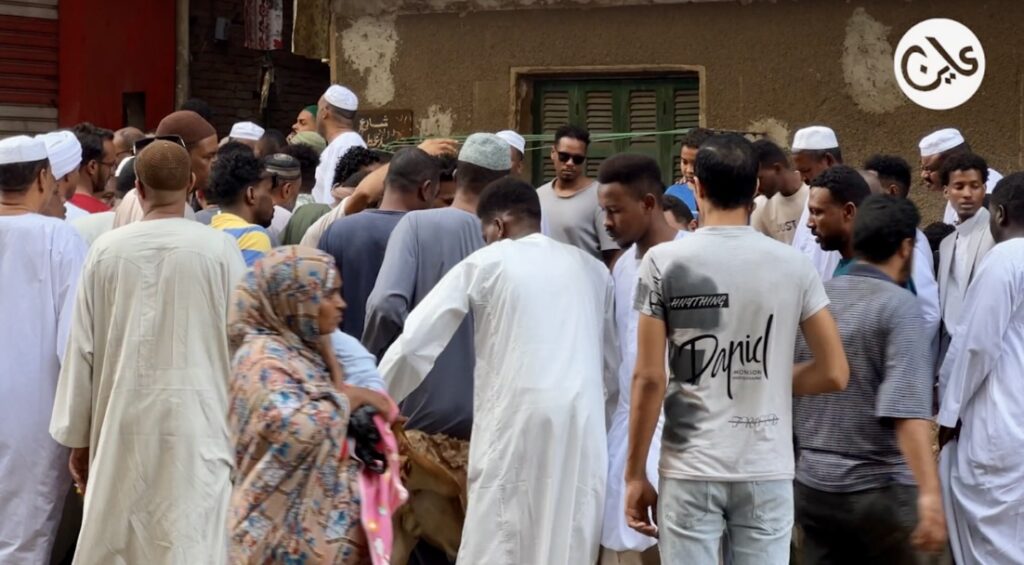
A Sudanese government committee has overseen the return of 24 citizens deported from Egypt to Port Sudan Airport following their release from Egyptian custody. These individuals were detained during recent security campaigns targeting foreigners for residency violations. The “Hope” Committee confirmed in a statement on 10 May the return was facilitated via Sudanair as part of a voluntary repatriation program, though many were held in police stations for months.
The situation for Sudanese nationals in Egypt remains dire, with human rights platforms reporting the deaths of at least five Sudanese citizens while in police custody. According to the “Refugee Platform in Egypt,” these deaths resulted from a lack of adequate medical care and deteriorating humanitarian conditions within detention facilities. Thousands have been detained since late 2025 for lacking valid identification papers.
Interestingly, the cost of “security clearance” required for Sudanese citizens to enter Egypt has plummeted from $1,500 to $300. Travel agency employees in Cairo attribute this drop to a decrease in demand, as many Sudanese now prefer to return home or seek refuge in East Africa, the Gulf, or Libya to avoid the risk of detention in Egypt.
The UN estimates that over one million Sudanese have fled to Egypt since the conflict began in 2023. However, Egyptian authorities have faced international criticism for forced deportations at border crossings like Ashkeit and Arqin. Activists report that deportees are often left in tragic conditions at the border, with many forced to find manual labor in mining areas just to survive.
 4) Sudan displacement reaches 15 million amid new fighting in Blue Nile
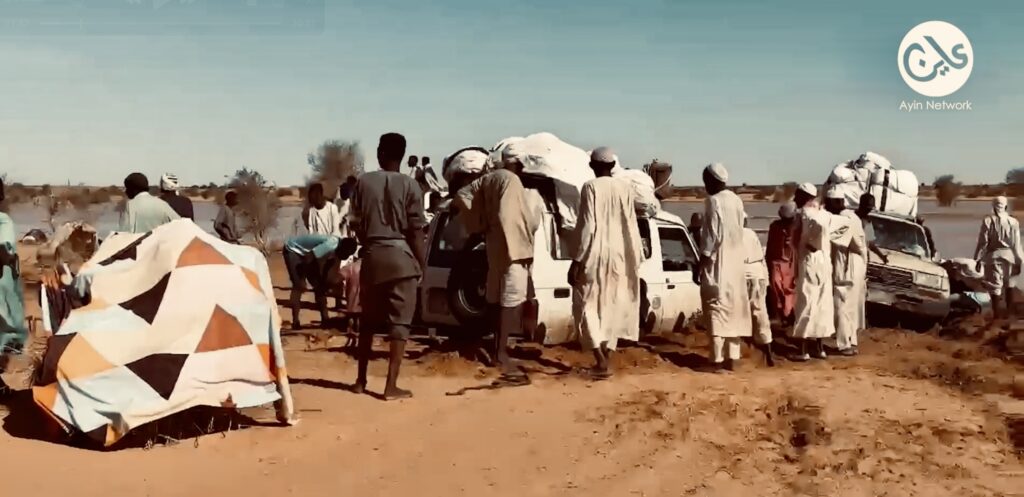
The International Organization for Migration (IOM) has announced that nearly one-third of Sudan’s population is now displaced, marking one of the largest humanitarian crises in the world. New data reveals that 15 million people have fled their homes, with internal displacement more than tripling since the war’s onset. On average, a new wave of displacement has occurred every 33 hours over the last three years.
While internal displacement remains the primary struggle, nearly 4 million people have attempted to return to their original areas. However, this progress is frequently undermined by the shifting frontlines and the persistent lack of security. The IOM notes that for many, returning home is a desperate gamble taken only when resources in displacement camps are completely exhausted.
Compounding the misery of war, natural disasters such as seasonal floods and fires have displaced an additional quarter of a million people. The humanitarian response remains severely underfunded, leaving millions in shelters across Sudan’s 18 states without consistent access to food, water, or medical care as the conflict shows no signs of abating.
The crisis has intensified in Blue Nile State, where 4,650 people from approximately 930 families were recently forced to flee Kurmuk County. Insecurity in the villages of Dukan, Kiring, and Khor Hassan has left the regional situation volatile. The IOM reports that those fleeing the fighting are often forced to move multiple times to find safety in over 13,000 makeshift camps across the country.
 5) Military calm returns to South Kordofan following fierce clashes
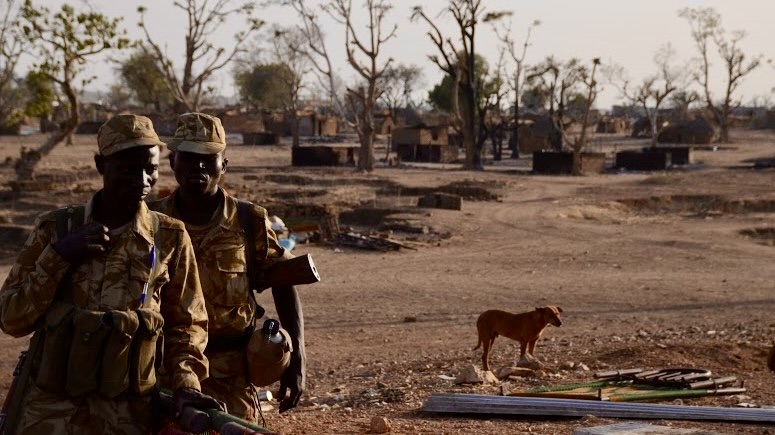
A cautious calm has settled over the Kordofan region following four days of intense combat between the Sudanese army and the Rapid Support Forces (RSF) last week near the city of Dilling. The fighting centered on the “Tukma” area, where the army attempted to break a long-standing siege to open essential supply routes. While the clashes were some of the most violent in recent months, the frontlines have since stabilised.
The city of Dilling remains a strategic flashpoint, currently besieged by the RSF on one side and the Sudan People’s Liberation Movement-North (SPLM-N) on the other. This dual encirclement has effectively cut off the roads connecting the city to El Obeid and Kadugli. Although the army briefly reclaimed the Habila and Tukma areas earlier this year, the RSF recently released footage claiming to have repelled the latest offensive and maintained control.
Kordofan has become a primary theater of war as the Sudanese army solidifies its hold on Khartoum and the central states. In response, the RSF has tightened its grip on Darfur and West Kordofan, leaving South Kordofan as the contested middle ground. The army currently maintains control of major urban centers like Kadugli and Dilling, but they are increasingly isolated.
In North Kordofan, the army continues to hold the capital, El Obeid, despite the RSF being stationed only a short distance away in several directions. With the RSF controlling the city of Bara to the north and maintaining positions to the south and west, the region remains a tinderbox where any break in the current calm could lead to a significant shift in the war’s momentum.