









Blue Nile: Fierce battles, drone strikes, competing control and thousands displaced
17 March 2026
Some of the most violent clashes between the warring parties and their allied forces have been taking place in Blue Nile State since the beginning of last month. Conflict around the southern town of Kurmuk in Blue Nile State, near the Ethiopian border, has been the epicentre of this violence between Sudan’s army, the Rapid Support Forces (RSF), and the latter’s ally, the Sudan People’s Liberation Movement-North (SPLM-N).
While military sources affiliated with the army confirmed regaining control of strategic areas around Kurmuk and securing its eastern borders, field commanders from the allied forces in the region denied this, confirming that they continue to besiege the town from three axes to cut off supply routes.
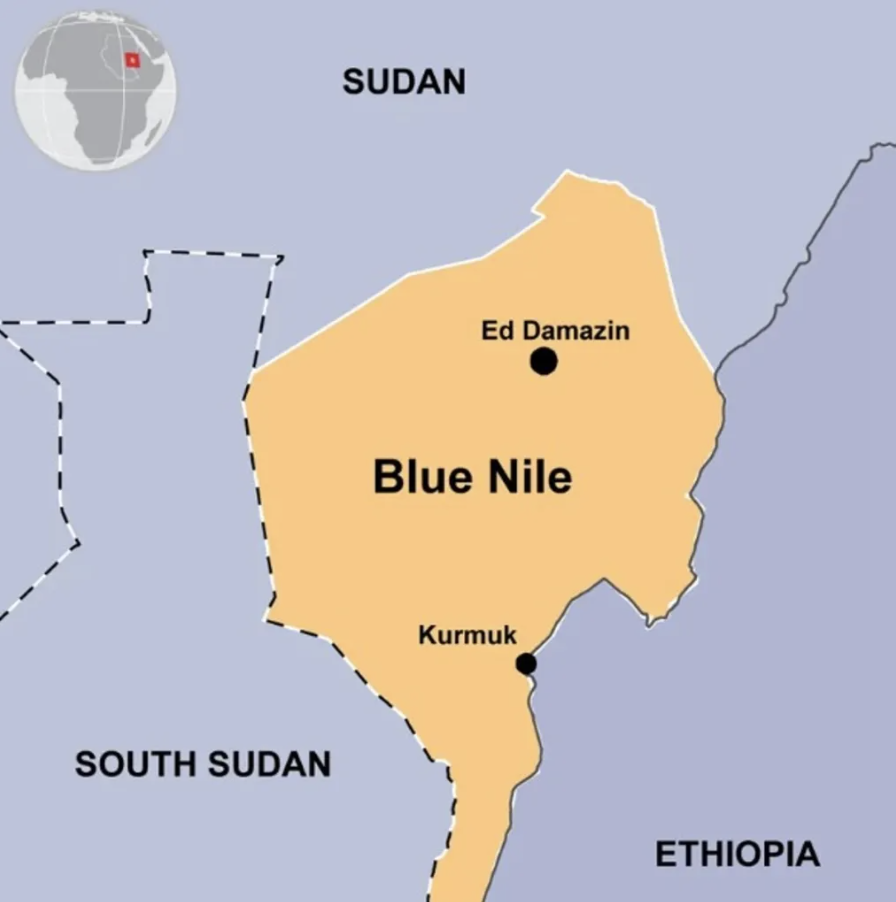
RSF-led drone attacks have led to their control of Deim Mansour, the last army stronghold south of Kurmuk, army sources told Ayin. Local sources have reported that the RSF and allied forces have positioned themselves so close to Kurmuk that they are visible from its neighbourhoods. While the army claims to have retaken nearby areas like Jurut and Bashir Nubawi, the RSF claim they will continue their siege of Kurmuk, leaving the Ethiopian border as the city’s only viable exit.
Kurmuk sits directly on the international border with Ethiopia’s Benishangul-Gumuz region. For the RSF and its allies, capturing the town means securing a vital international crossing point. This access can be used to establish external supply lines, smuggle resources out, and bring weapons or reinforcements in. For the Sudanese army, holding the town is essential to keep the opposition landlocked and prevent them from easily accessing foreign logistics. The town also represents the single route to Damazin, the capital of Blue Nile State. Controlling Kurmuk allows a direct link to the capital, as well as control over vital local resources such as gold and gum arabic.
Kurmuk – Humanitarian consequences
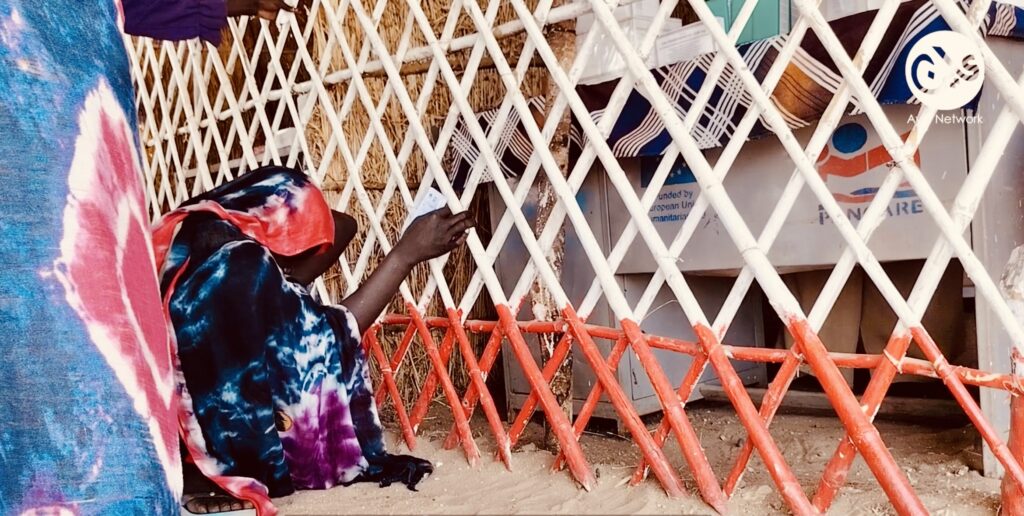
The escalation in conflict has displaced 80% of Kurmuk’s residents. “The disaster is not limited to bullets; it has also brought livelihoods to a standstill, including farming and fishing,” says human rights activist Hassan al-Aqib. “The city has become a ghost town, haunted by fear, its silence broken only by the drone engines and shrapnel from the drones that have left no alley untouched.”
Displaced civilians face harrowing choices across multiple overwhelmed routes. Political activist Mona Balla reported that 4,000 people fled Al-Silik to Damazin on foot to avoid drone strikes on vehicles. In Damazin itself, thousands are now crowding into camps like Al-Karama 6. Ethiopia’s stringent border entry regulations have left thousands of people stranded in the east. Meanwhile, those fleeing to South Sudan are arriving at dilapidated camps unable to support them. Tragically, drone strikes met 500 families, Balla added, who attempted a “reverse displacement” back to South Sudan to escape starvation.
“People in South Kurmuk are being subjected to violations that amount to war crimes,” says Ali Hajo, Secretary General of the Blue Nile Civil Society Initiative. “We have more than 6,000 citizens stranded on the barbed wire of the Ethiopian border, prevented from entering, and unable to return.”
Hajo added that civilians are residing in thatched huts that provide no protection from drone strikes. “We need a comprehensive humanitarian truce and an immediate halt to the aerial bombardment.”
Capture and recapture
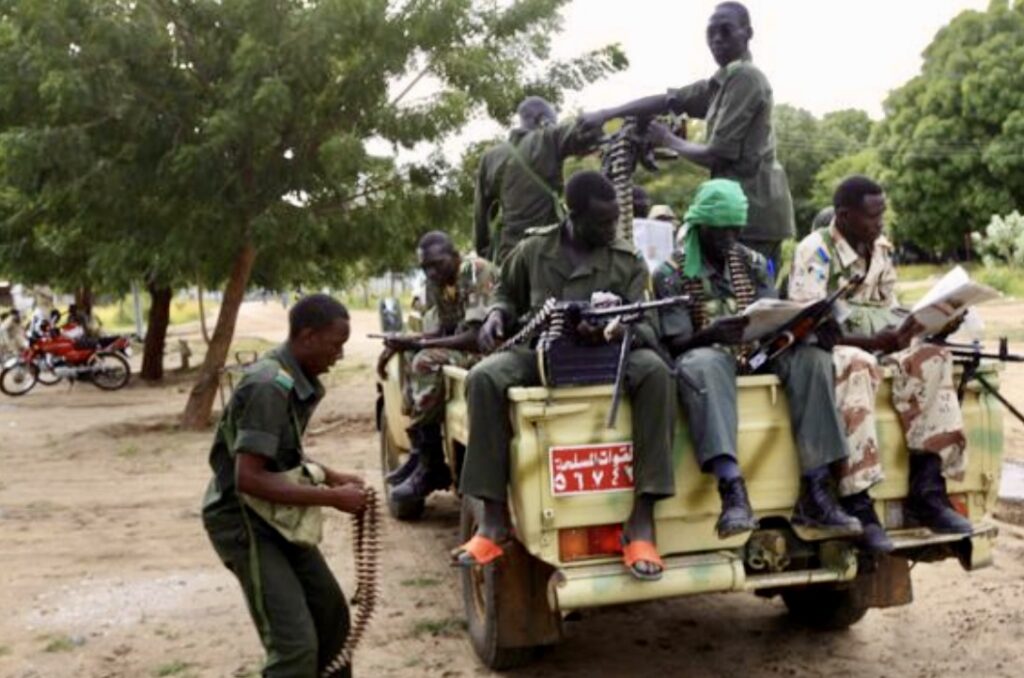
Even Blue Nile’s capital city, Damazin, is not safe from joint RSF and SPLM-N captures, says Ashraf Hassan, a researcher specialising in the area. “The Rapid Support Forces occupied the lands of Al-Tadamun province west of Damazin, and their actual arrival reached the outskirts of Damazin city near the Aqdi area at the end of 2024,” Hassan told Ayin. “Although the armed forces were able to regain control after fierce confrontations a year or more ago, this incident revealed the fragility of the defensive depth and the ease with which it could be penetrated by new tactics.”
Since 2024, control over strategic towns in Blue Nile State has never been stable, Hassan added. “However, in most strategic areas, the Sudanese Armed Forces have held the final say, particularly in areas of significant military importance, such as Roro, Ahmar Roro, Jariwa, and Ahmar Sidak, in addition to the towns of Kurmuk, Quli, and Wad Abuk,” he said. “All these major centres remain under the army’s control, despite the siege imposed on them.”
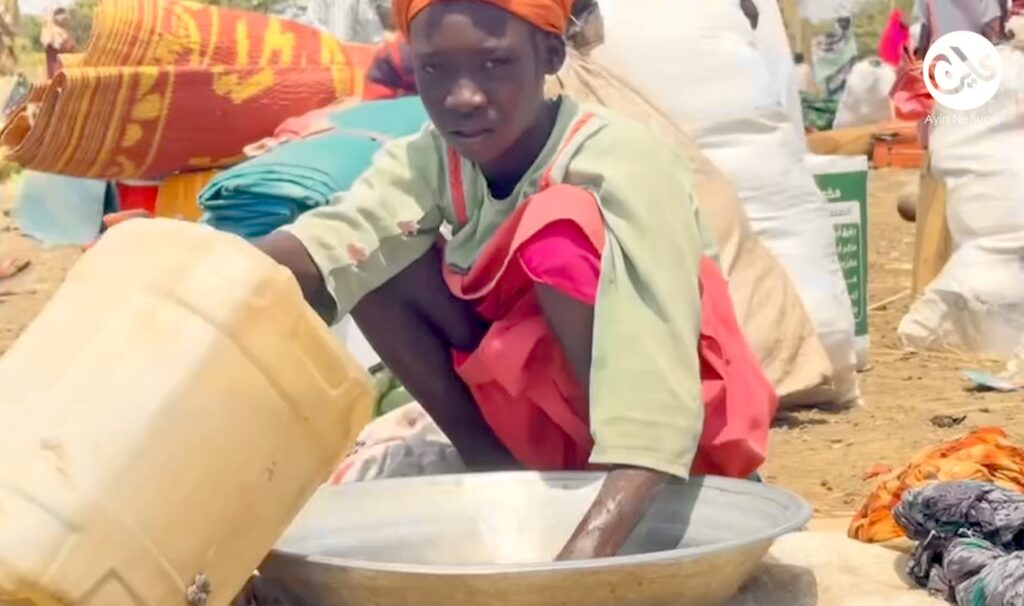
On the other side of the front, the RSF and allied forces are entrenched in the rugged terrain bordering South Sudan, specifically in the areas of “Ulu” and “Malken”. These forces, Hassan says, have made desperate attempts since the beginning of the year to reach the Al-Silik area in southeastern Blue Nile State. “The RSF have indeed entered the Silik area on more than one occasion, but they have not been able to withstand the army’s counterattacks for long periods,” he added.
The Al-Silik area connects to the politically and economically strategic Wad Abuk region, known for its abundant gum arabic production and serves as a bridge connecting the mountains of the western region with the Ingessana Hills. Because the region’s natural defences make ground assaults near suicidal, attackers have increasingly shifted to drone warfare and aerial reconnaissance.
Similarly, in northern Kurmuk, the RSF and allied forces briefly seized Maya and Baldago in an attempt to capture Dindiro. The RSF is eager to capture Dindiro due to the presence of a significant army garrison and its direct connection to the capital, Damazin. Failing to hold these grounds or reach Dindiro, the RSF and SPLM-N have again relied heavily on drones to compensate for their inability to advance on foot. Both warring parties are now using drones indiscriminately against civilian targets, destroying populated sites in Yabus, Shali al-Fil, Bakuri, and Qaysan.
Gold mining in peace
While Kurmuk and other areas burn, neighbouring fronts remain surprisingly quiet. “Amid this grim landscape, a strange paradox emerges in the areas of Kili and Zouzak; these areas have been under the control of the SPLA-N (under Abdelaziz Al-Hilu) for many years and have not witnessed major clashes recently,” Hassan said.
This “military lull” in places like the Amurat Mountains stems from unannounced local agreements driven by gold mining. These understandings protect both civilian lives and financial investments, leaving some frontiers entirely inactive while fighting rages just kilometres away. “If there is money to be made, the typically uncompromising warring parties become surprisingly diplomatic and amenable,” says political analyst Mohamed Ibrahim. “But if it’s civilian lives, all bets are off, and the constant bombing and shelling continues.”