



Nowhere to go – civilians take their chances to flee on foot across Kordofan
24 October 2026
After the Rapid Support Forces (RSF) killed three people in front of her house in the remote Jebel Al-Dar area of North Kordofan State, Dawlat Musa knew she and her family had to leave the area. The RSF shelled her village when they were in the mountains, Dawlat told Ayin. Some of the children from her village died in the attack. “They even beat my uncle, tied him to a donkey and dragged him across the ground. They dragged him until his legs were broken, and he eventually died,” she said.
The RSF had already displaced Ibtisam Mahmoud once. After the paramilitary force attacked Dilling, South Kordofan State, she and her family were displaced once again. “The RSF attacked us so we fled – there were many of us, so we left to save our lives,” she explained to Ayin. Aircraft were hovering overhead in Dilling and ground troops were approaching on foot. “Even if we had food, we could not continue living there. We might lose even our last hope,” she added.
In other cases, civilians from the Kordofan region have migrated on foot to El Obeid out of economic desperation, risking life and limb to seek a viable income for their families. In September, Al Rabee Ibrahim and two friends decided to leave the Wadmatqal area of Ghabish locality in West Kordofan State for El Obeid on foot. The fare amounted to 1.2 million Sudanese pounds, an amount beyond their financial means. “We arrived in El-Obeid after eight days, our feet swollen from walking, and we faced death on the road,” Al-Rabee told Ayin.
Many Sudanese civilians have fled on foot across the Kordofan region, seeking work and safety in El Obeid, only to find further insecurity along the way or even upon arriving in the city itself. The RSF routinely accuses civilians trying to reach areas controlled by the Sudanese Armed Forces (SAF) of collaborating with the army. At the same time, the army often accuses anyone coming from the RSF areas of colluding with their enemy. “You are damned if you do and damned if you don’t in Sudan,” says political analyst Mohamed Ibrahim, himself a displaced Sudanese refugee living outside his country. “Simply trying to survive has somehow become a crime if you are a civilian in Sudan.”
A perilous journey
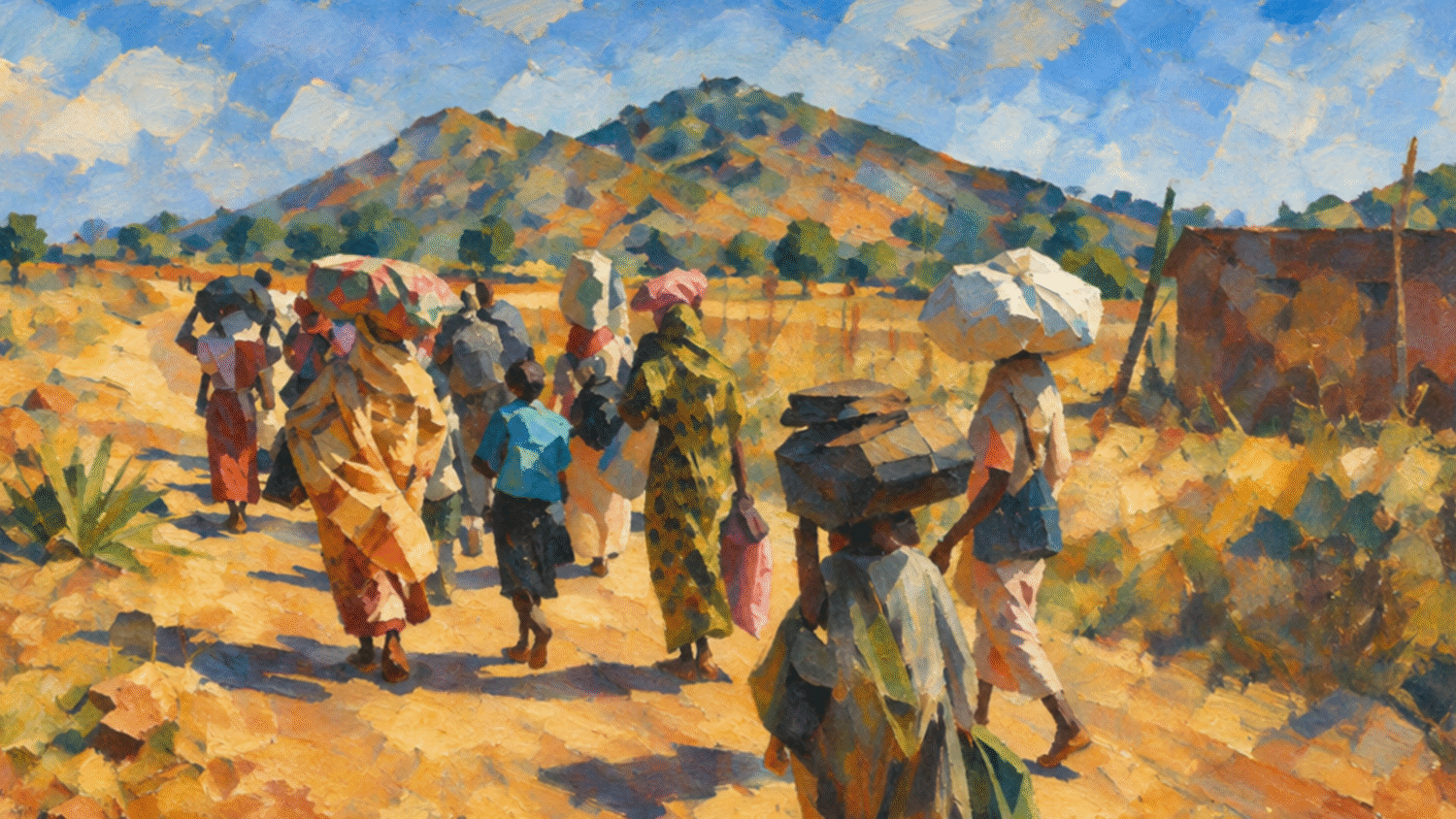
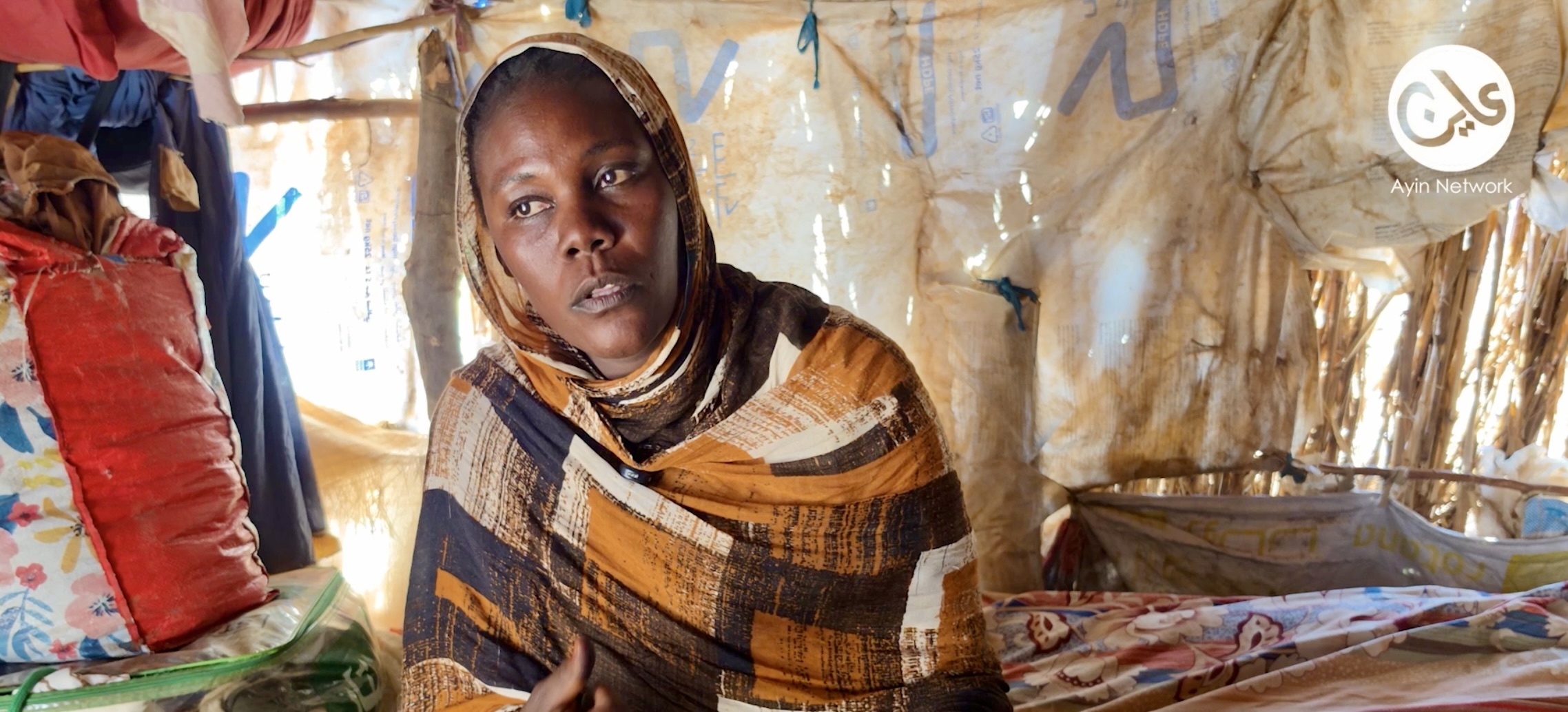
Dawlat and her family had been walking for days to El Obeid, carrying only meagre supplies. While they tried their best to avoid the RSF, they eventually reached a checkpoint in Al-Barouki, an area southwest of the town Al-Rahad in North Kordofan State. The RSF flogged her children and left her sister’s newborn baby out in the sun. When Dawlat’s sister protested, they flogged her too. “My other sister’s husband was forced to lie on the ground and they stood on him – he almost died,” she said. Even the food they struggled to bring with them for their children was destroyed. “They poured the sugar we were carrying onto the ground, mixed our flour with dirt, and urinated in the water we were carrying.”
As Ibtisam and her family traversed through villages across the Kordofan region, they would ask locals the same question: was it safe to stay put? The responses from the villages were rarely hopeful, so they would keep going. “Some of us were killed along the way, while others died of hunger,” she explained. “Some people ate leaves from the trees out of desperation, without knowing what kind of tree they were or how harmful they may be.”
Al-Rabee and his friends also travelled from village to village, and when members of the Rapid Support Forces (RSF) stopped them at checkpoints, they said they were heading to the next village in search of work, not to El Obeid. Al-Rabee says they feared that revealing their true destination would prevent them from continuing their journey and force them to return to where they came from. In the last week of September 2026, they had reached the outskirts of Umm Sameimah, North Kordofan State, as fierce fighting broke out between the RSF and the army. Despite hearing gunfire from all sides of the road and seeing drones flying overhead, they did not stop.
Like Al-Rabee, Adam Ibrahim had come from the Ghabish locality in West Kordofan State and decided to walk to El Obeid in search of employment. But, unlike Al-Rabee, Adam walked alone, carrying a plastic bag with two pieces of clothing, some dates and peanuts (known locally as “mudmas”), and a small jerrycan of water. He didn’t have enough for a long journey, but he left his village of Umm Kadada, heading for El Obeid, roughly 300 kilometres away. While Adam managed to traverse the RSF-controlled areas unscathed, it was the dearth of life that nearly killed him.
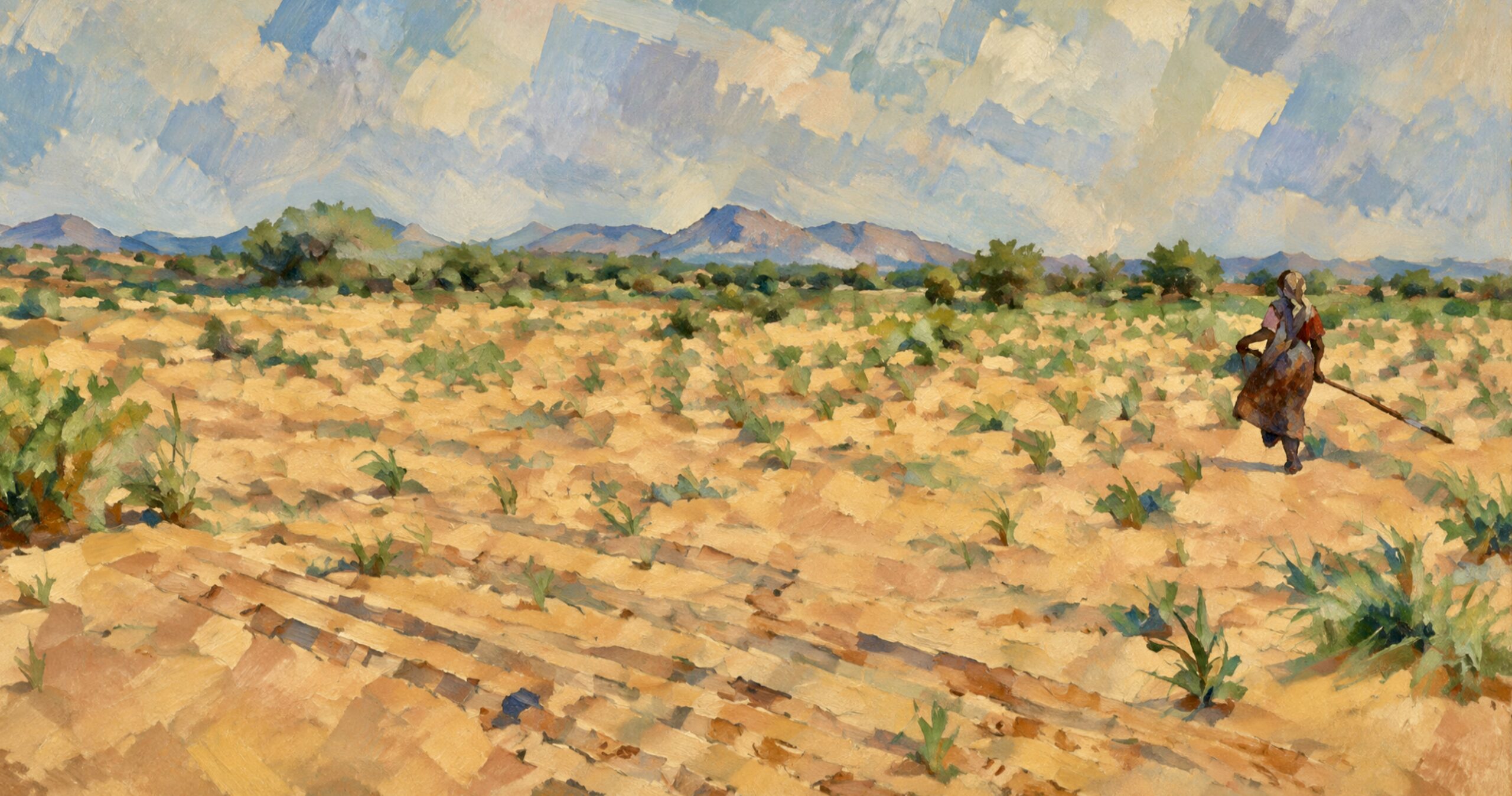
Adam walked through forests and crossed deserted roads, a stark contrast to the bustling streets of the past, moving from abandoned villages to empty towns. Hawks, Adam said, swarmed around dead animals, especially donkeys that their conflict-displaced owners had abandoned when they fled their villages. In other areas, farmland was barren after the farmers had fled. Adam ran out of water, and he did not find any inhabitants in the villages on the road where he expected to obtain supplies from them to continue his journey. “My fate could have been like these donkeys, food for the falcons, had God not sent rain and the valleys were filled with water,” he said.
Reaching El Obeid
Despite these civilians’ incredibly perilous journeys to El Obeid, their troubles did not necessarily end upon reaching the capital city of North Kordofan State. For one, El Obeid can hardly be considered a safe haven, given that since September there have been at least four drone strikes against the city. In late September drones struck a displacement shelter within the city, killing at least two people.
When Al-Rabee and his two friends reached an army checkpoint near El Obeid, after nine gruelling days of travel, they faced accusations of belonging to the Rapid Support Forces. The soldiers at the checkpoint threatened them and beat them mercilessly for roughly eight hours. “They forced us to take off our clothes, put the knife to our throats and threatened to slaughter us,” Al-Rabee told Ayin. “They accused us of looking like the people they had fought the day before.” Eventually the army soldiers released them after they contacted a police officer who confirmed their identities and their families.
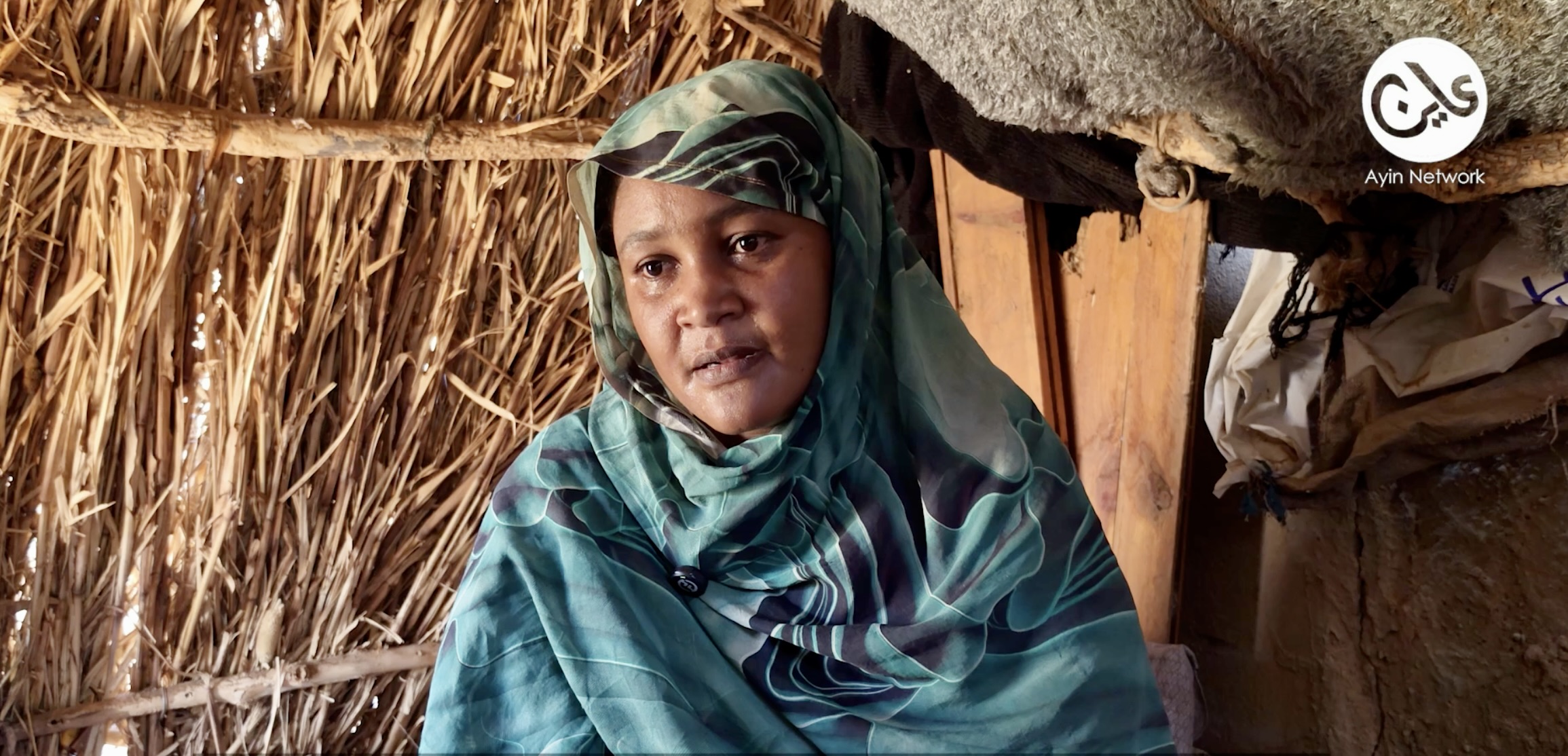
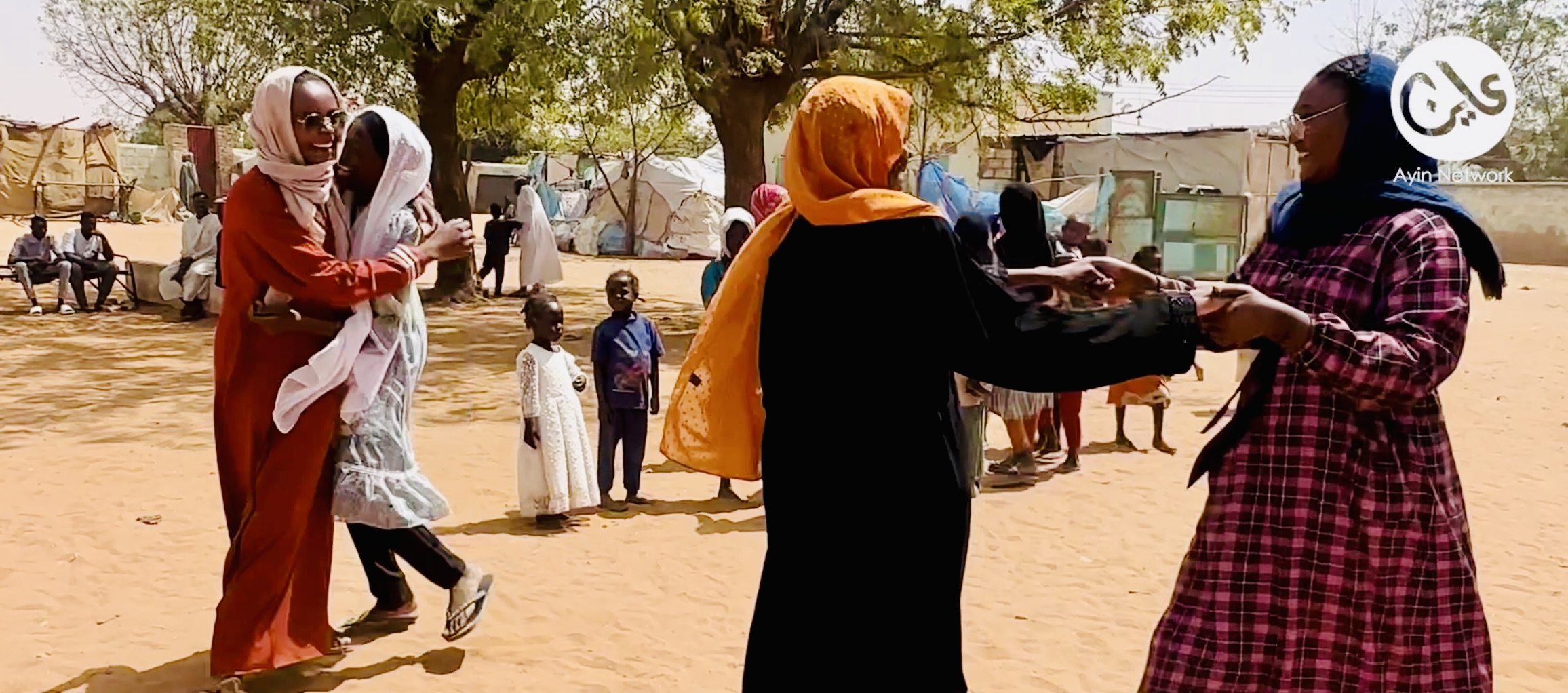
Ibtisam and her family managed to reach El Obeid and now they are staying, for now, within a displacement camp in the city. “As long as we have a place that has given us shelter, we thank God,” Ibtisam told Ayin. “If this place is good, that is enough. In the end, I am just a human being who wants to live in safety.”
But for Al-Rabee and Adam, El Obeid is just a stop on their journey to northern Sudan, where they hope to work in the gold mines and send money back to their families.
From villages to gold mines
Countless Kordofan youth are making the treacherous journey to the Red Nile and River Nile states to work in the gold mines. The details of these young men’s journeys vary, but they all end with the search for a source of income.
People interviewed by Ayin in Kordofan and the mining regions of northern Sudan say that groups of young men have resorted to travelling on foot in search of work to support their families. Ibrahim Abu Qaid, a village elder located on a vital road linking the towns of Ghabish and Al-Nuhud, told Ayin that he saw dozens of young men crossing his village from west to east – all heading to the gold mines. This month, Abu Qaid estimated that he saw roughly 70-80 youths crossing on foot through his once- sleepy village.
These journeys come amid dwindling income sources in their areas, after many families lost their livelihoods due to the war. The failed agricultural season and shrinking grazing lands are also factors contributing to this migration, several sources told Ayin. With few options other than joining the warring parties, youth in Kordofan are resorting to travelling on foot through war zones to find employment, the same sources said. This risky journey is necessitated by their families, who remain hungry and cut off from trade and supply routes back home.