

Tea sellers, nurses and teachers: Sudanese women accused of collaborating with the Rapid Support Forces
This report was originally reported and published by the independent news outlet, Madania News. It is republished here with the permission of the author.
8 September 2026
“I spent nine months in the security cell, where I was beaten and abused. I lost three teeth due to torture. I was sexually assaulted and pressured into confessing to collaboration [with the Rapid Support Forces] under duress,” recounts Sahar*.
Sahar has been sentenced to death by the Sudan Armed Forces (SAF), for alleged collaboration with the Rapid Support Forces (RSF) under Article 50, which criminalises “undermining the constitutional order”. Sahar denies the accusation, saying she was merely working as a translator to support her three children. In April, Human Rights Watch (HRW) documented at least 25 women sentenced to death for alleged collaboration with the RSF.
Behind the walls of Sudanese prisons, dozens of women languish after being convicted or tried for allegedly collaborating with the Rapid Support Forces (RSF) during the ongoing war, based on Articles 50 and 51 of the 1991 Sudanese Penal Code. The charges can carry the death penalty or lengthy prison sentences.
But many of the accused women did not bear arms, says Adila Abu Bakr, head of the protection unit at the Strategic Initiative for Women in the Horn of Africa (SIHA). “We found that many of those detained were doctors, nurses, and tea and food vendors, forced by the circumstances of war to continue providing services within RSF-controlled areas,” she told Ayin. In prison, they are now bearing the consequences of that decision.
“Collaborators”
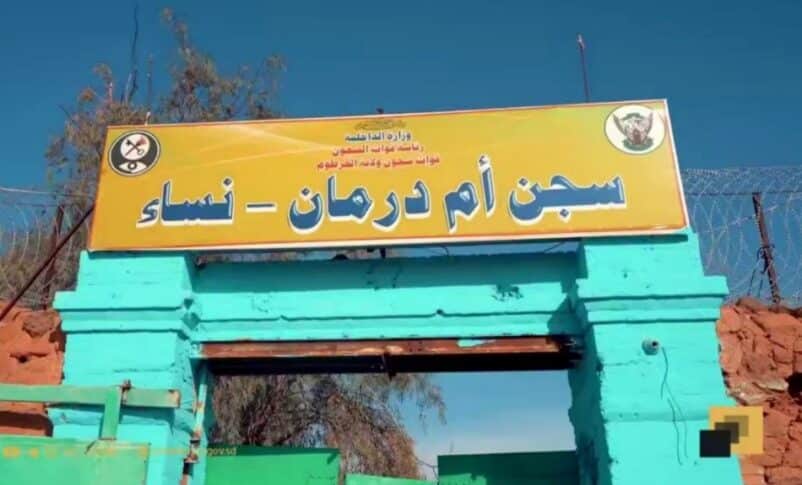
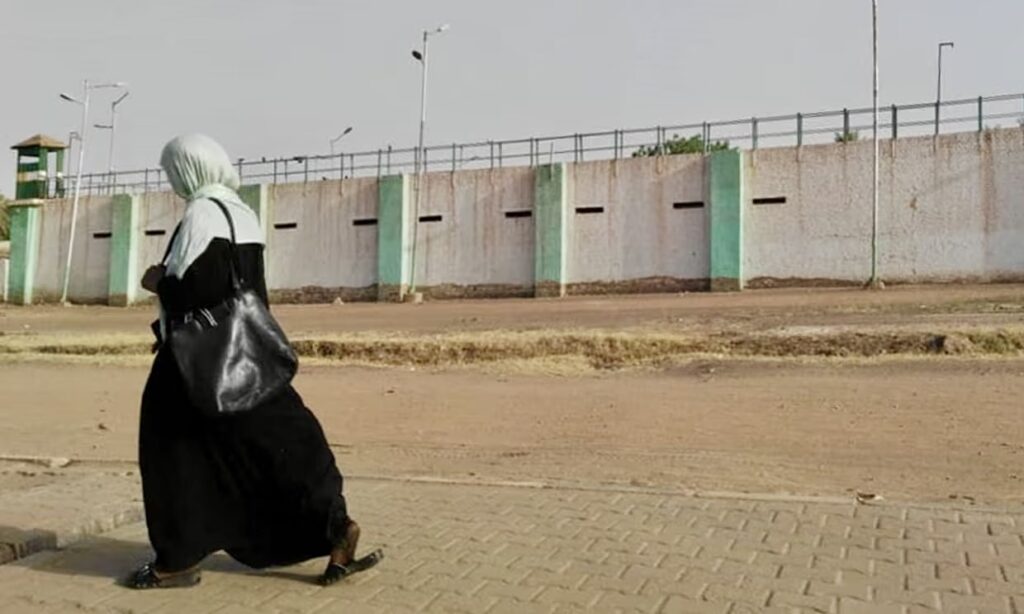
In Omdurman Women’s Prison, also known as Dar al-Ta’ibat, about 600 women are detained, according to an investigation by Madania News. More than 10% of the prisoners were charged with collaborating with the RSF, while 83 children live with their mothers in the prison. The majority of the women are facing sentences or trials under Articles 50 and 51.
Article 50 of the Sudanese Criminal Code of 1991, entitled “Undermining the Constitutional Order”, allows for punishment ranging from lesser penalties to life imprisonment or death. Article 51, “Inciting War Against the State”, also carries the death penalty or lengthy prison sentences.
Lawyer Abdel-Baset Al-Hajj says the loose wording of the articles allows them to be interpreted broadly and used against civilians and political opponents. The term “collaborators” does not even exist in Sudanese law, Al-Haji says, while the phrase “assistance in any way” can encompass acts related to survival rather than participation in the war. He also notes that civilians who remained in areas controlled by the RSF were living under duress, a fact that must be taken into account according to the rules of international humanitarian law.
Othman al-Basri, a lawyer and human rights defender currently handling the cases of nine women tried on these charges, adds that about 90% of the women whose cases he has followed work in selling tea or food. “Just being in an area under the control of the RSF has become sufficient reason to raise suspicion.”
According to statements by four lawyers in the Khartoum and Omdurman area, more than 100 reports against women for cooperation with the RSF were based on personal disputes or general accusations. In some cases, the lawyers said, Articles 50 and 51 were used against women who were breadwinners or who had become involved in disputes over marriage or personal relationships.
A deputy prosecutor assigned to the collaborators’ cases said charges of RSF cooperation had been filed against more than 1,000 women in one state alone. “We hope they will receive justice, and we will work towards that,” the deputy prosecutor said. The same source acknowledged that some accusations of RSF collaboration may be linked to personal, retaliatory reasons but said such factors did not prevent authorities from treating them as grounds for suspicion. “Even if the report was retaliatory, that is a suspicion, and for us, suspicion of collaboration is a certainty. The punishments are always deterrent, so that they serve as an example to anyone who dares to betray the country.”
Imprisoned for existing
The range of accusations and reasons for which women in the capital area are arrested often extends from the incredulous to the absurd. A woman in her seventies, who supported her family by selling food in the streets of Khartoum, was sentenced to 20 years after RSF fighters began buying food from her when they took control of her area. During eight months of pretrial detention, she said she was forced to cook and wash clothes for those holding her.
Maryam*, a nurse, stayed in her neighbourhood after it came under RSF control to continue treating the sick and wounded. She says she was sometimes forced at gunpoint to treat RSF fighters and was twice kidnapped for this purpose. After the SAF recaptured Khartoum, she was sentenced to ten years in prison and is still awaiting an appeal.
In another case, Sumaya*, 25, was sentenced to ten years after a neighbour reported her for attending a wedding in eastern Jazeera State. The wedding took place in a square outside her home, she says, and she did not even know the bride and groom. “The entire investigation revolved around the fact that I was happy about the wedding,” she says. “They interpreted it as meaning I accepted the RSF.”
For some women, even the reason for their arrest remains unclear.
Khadmalla Musa, a trainee lawyer, used to gather the neighbourhood children to teach them the Quran after schools closed during the war. With the water supply cut off, she, like the other families, fetched water from the only tanker provided by the Rapid Support Forces. After the army recaptured the area, she was arrested and sentenced to death. The team obtained a copy of the verdict, which was later commuted to twenty years in prison. Her case is still pending before the Supreme Court. “She was helping people,” one local resident who knows her said. “And then suddenly she was accused of inciting war against the state, even though we all drew water from the same source. These accusations sometimes lack any logic.”
“I had disagreements with my husband for many reasons, including that he did not bring us food,” says Hind* a 30-year-old woman currently in Omdurman Prison. “One day during the war, I went out with other women to get flour so I could prepare food. Because I decided to separate from him, he informed the security committee that I was cooperating with the RSF and that I was going out to buy flour from them.” She continues, weeping, “I found myself imprisoned for four months without any charges being brought against me, and then I was surprised to be sentenced to twenty years in prison based on articles I do not know.”
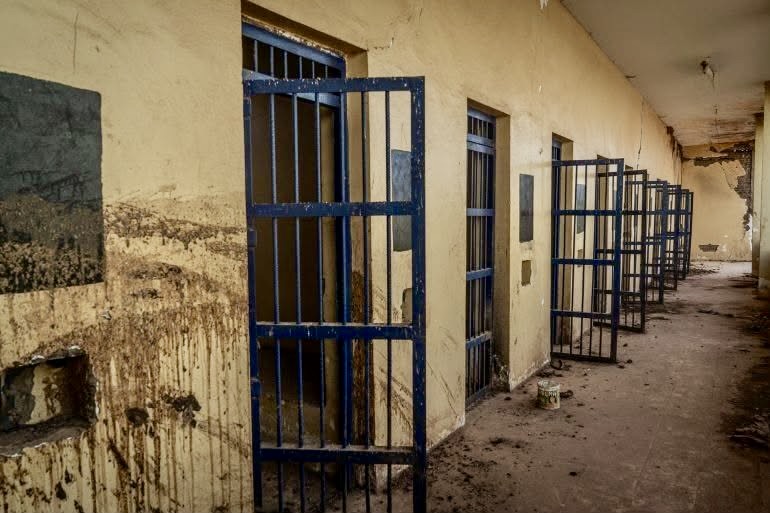
According to interviews conducted in the prison, eight women accused of collaborating said they did not know the reason for their imprisonment. They said they were not allowed to ask what crime they had committed. The prison administration imposes strict surveillance on them and refuses them access to a lawyer, even family members.
Another woman recounted encounters with a SAF soldier: “He had been harassing me for a long time, and I did not hesitate to reject all his sexual innuendos and his constant statements. The SAF soldier, who gained authority by joining the army through popular mobilisation, accused me of being a collaborator with the RSF simply because I rejected him, and now I am paying the price with ten years of my life.”
The trials also affect children. The investigation documents the presence of dozens of children inside the women’s prison in Omdurman, including infants and children who have exceeded the legal age allowed to reside with their mothers, due to the absence of any alternative shelter for them.
According to prison law, children live with their mothers only until the age of two. One mother told Madania News that she awaits a death sentence while her one-and-a-half-year-old child lives with her in prison. She is charged with collaboration since she was the wife of an RSF soldier.
The “security cell”
One of the mothers, with her infant daughter, said she spent more than eight months under investigation by a “security cell”, special units developed after the outbreak of the conflict to investigate war crimes. Throughout that period, the young mother endured repeated beatings and insults,
“After I was close to death, I was transferred to the Public Prosecution Office,” the mother said. After six court sessions, the public prosecutor finally charged her with cooperating with the RSF, based on her tribal affiliation. Being part of the same tribe as many within the RSF and having family in Darfur was enough to accuse her of collaboration. “After appealing for clemency, the ruling issued against me was dropped, and I am required by verbal decree to leave Khartoum because, as a tribe, I am not welcome here.”
Ethnic profiling is also a recurring feature of detention by the army. SIHA reported more than 840 women detained by SAF forces between August 2024 and December 2025, with many accused of collaborating with the RSF based solely on their ethnicity, socio-economic status or place of residence.
The security cells – set up by the army, military intelligence, and military police – can operate with impunity, one of their members said, requesting anonymity. The cells can conduct lengthy investigations without filing charges and can even direct the judiciary to comply with their decisions.
Another source within the “security cells” told Madania News that they have a zero-tolerance policy towards anyone affiliated with the RSF, even if it is simply for returning a greeting. Women, the source said, have contributed to sharing information with the RSF and “must pay the price.” The source justified the torture, assault, or even rape of these women as a “punishment” for them because “they agreed to deal with the enemy.”
Broader pattern of wrongful detentions
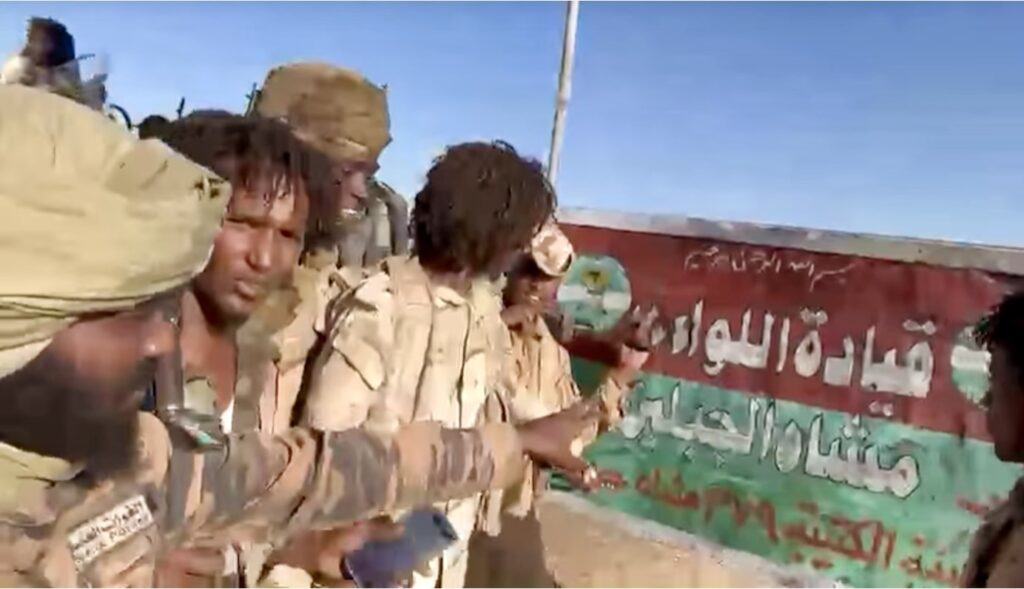
The cases documented by Madania News are part of a broader pattern of arbitrary detention of women by both sides of Sudan’s war. While this investigation focuses on women detained by the SAF, the RSF has also widely detained, abducted and forcibly enslaved women in areas under its control. SIHA reported in June 2026 that detention sites in Darfur under RSF control operate without judicial oversight or access to legal counsel, and that women are being targeted based on their ethnicity and suspected collaboration with the army.
* Name have been changed to protect the identity of the source.