

Between Sudan’s war and Libya’s crackdown
6 July 2026
“I have no option now except to try to cross the Mediterranean Sea to reach Europe. I know I may never arrive, and the sea may swallow us, but believe me, there is no other choice. I cannot return to Sudan under these circumstances.”
With these words, a Sudanese journalist living in Libya described the desperation that has gripped thousands of Sudanese refugees who fled war only to find themselves confronting a new crisis in their country of refuge.
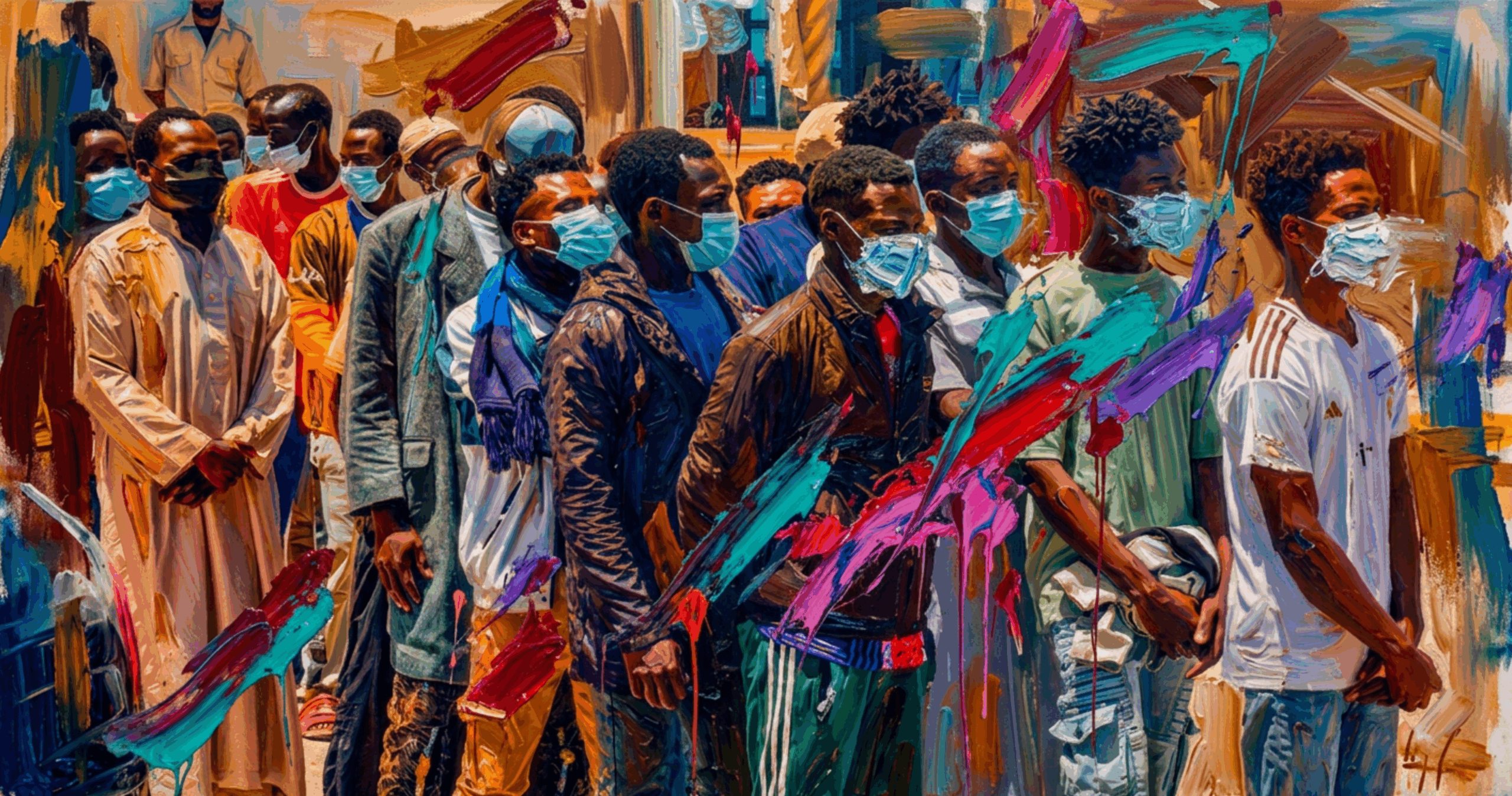
More than three years after the outbreak of war in Sudan, hundreds of thousands of Sudanese remain scattered across neighbouring countries. For many, Libya emerged as one of the few remaining destinations after violence consumed their homes and livelihoods. United Nations estimates indicate that roughly 559,000 Sudanese refugees have entered Libya since the conflict began in April 2023. But recent developments have transformed the lives of many Sudanese refugees in Libya into a daily struggle for safety and survival.
Over the past few weeks, Libyan authorities have carried out large-scale campaigns targeting foreign nationals across several cities. According to a security source who spoke to Ayin, these operations have led to the arrest of hundreds of Sudanese. Some remain in detention centres under difficult humanitarian conditions, while others have reportedly been deported to Egypt.
The crackdown has generated widespread fear among Sudanese communities already traumatised by war and displacement. Many have settled in areas such as Kufra, Tripoli, and Tobruk, often living in precarious conditions with limited access to healthcare, housing, and social services.
Hiding indoors
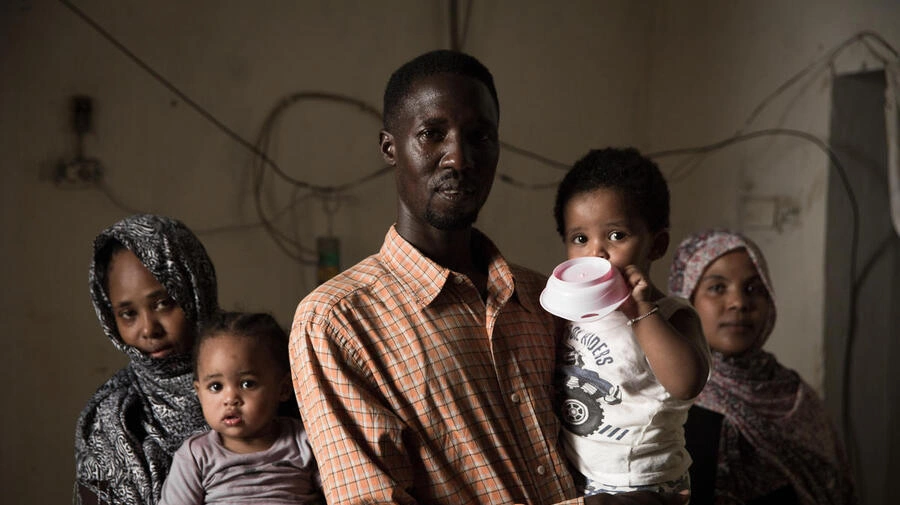
Salem Sabri, a pseudonym used for a Sudanese journalist currently residing in Libya, told Ayin that he and his family have effectively confined themselves to their apartment. Fear now shapes every aspect of their daily lives.
Sabri said he rarely leaves home except at night and only when absolutely necessary. His children have stopped attending school and no longer play outside as they once did. The family now spends most of its time indoors, trying to avoid encounters with security forces or hostile members of the public.
According to Sabri, security vehicles and armed groups affiliated with government authorities have been patrolling neighbourhoods in search of foreigners. “The situation became so tense that I avoid leaving home – even to attend Friday prayers,” Sabri said. What worries him most, however, is that the hostility is no longer coming solely from official institutions.
The growing anti-foreigner sentiment has increasingly spilt into daily interactions with ordinary citizens. Sabri described incidents in which people insulted, harassed, and attacked Sudanese refugees in public spaces. In some cases, he said, children threw stones at Sudanese refugees and demanded that they leave Libya.
The Sudanese Journalists Syndicate reported that within a single week, eight Sudanese journalists in Libya faced violations, including threats, humiliation, and incitement. The incidents highlight the vulnerability of Sudanese refugees, who increasingly face official security measures and growing public hostility.
Raids, detentions, and a closed route home
Every day Sudanese refugees in Libya face arrests, detention, and the threat of forced return.
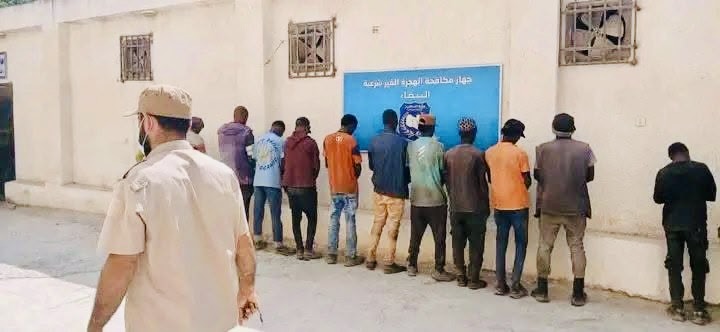
Videos circulated widely on Libyan social media platforms show security forces carrying out raids on homes, workplaces, and public areas. The footage showed security forces chasing foreigners through the streets, arresting them, and transporting them in closed vehicles to detention facilities.
The security operations have affected both eastern and western Libya. However, eastern cities, including Benghazi, Al-Bayda, Al-Marj, Shahat, Derna, Al-Qubba, Tobruk, Ajdabiya, and Al-Butnan, reported some of the most extensive campaigns. According to official figures released by Libya’s Anti-Illegal Migration Agency, authorities arrested 7,782 people in just two days.
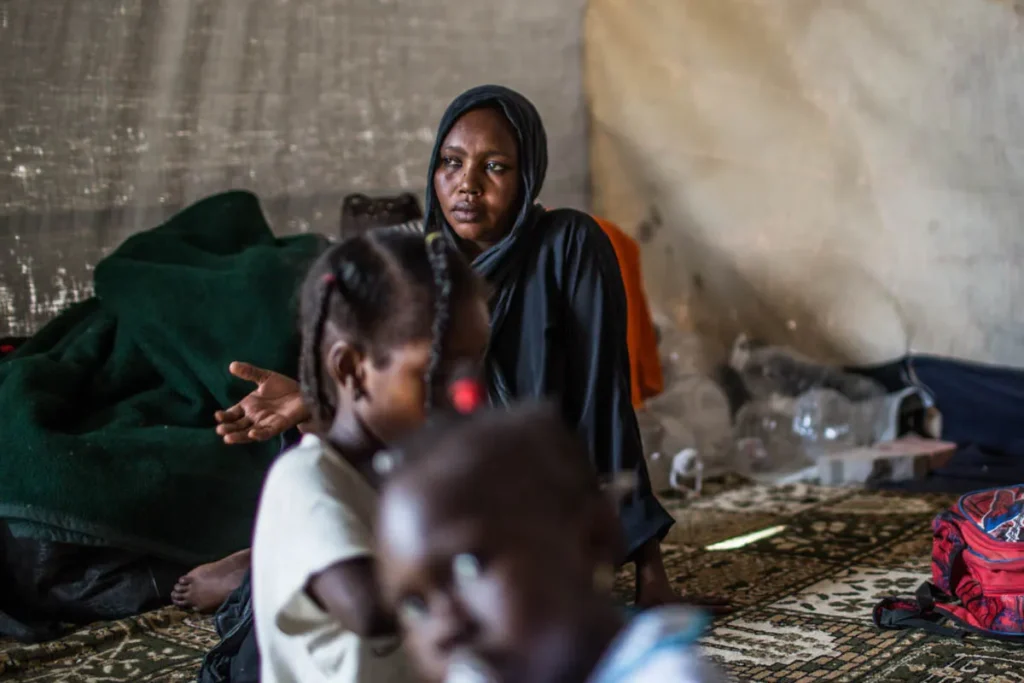
For thousands of Sudanese refugees, the operations have created a new reality in which detention has become a constant possibility. Some detainees, according to Sudanese refugees who spoke to Ayin, remain in overcrowded centres while they await deportation. Others have reportedly secured release only after paying money to armed groups involved in their detention.
The situation is particularly devastating because many Sudanese refugees have nowhere else to go. For many, it remains unsafe to return home and many who have fled no longer have a home in Sudan to return to. Even those willing to return face significant obstacles.
Since the paramilitary Rapid Support Forces (RSF) seized control of the border triangle area between Sudan and Libya in June 2025, the only crossing connecting the two countries has remained closed. Ayin learned that hundreds of Sudanese are currently stranded in Kufra waiting for permission to enter Sudan through the border crossing. Many have exhausted their savings while waiting. The high cost of air travel and the fact that many refugees no longer possess valid travel documents make the difficulties even worse. For some families, the cost of obtaining a passport has become financially impossible.
‘No to Resettlement’
While the consequences of the crackdown are being felt directly by Sudanese refugees, the political debate driving the developments inside Libya is broader and more complex.
Samira El-Saidi, a journalist covering Libya and North Africa, told Ayin that the current situation is not widely viewed inside Libya as a campaign specifically targeting Sudanese refugees. “It is important to understand that the current developments are not widely perceived inside Libya as being directed specifically against Sudanese refugees. Rather, they are linked to a broader debate around irregular migration, border management, and the state’s capacity to deal with growing numbers of arrivals.”
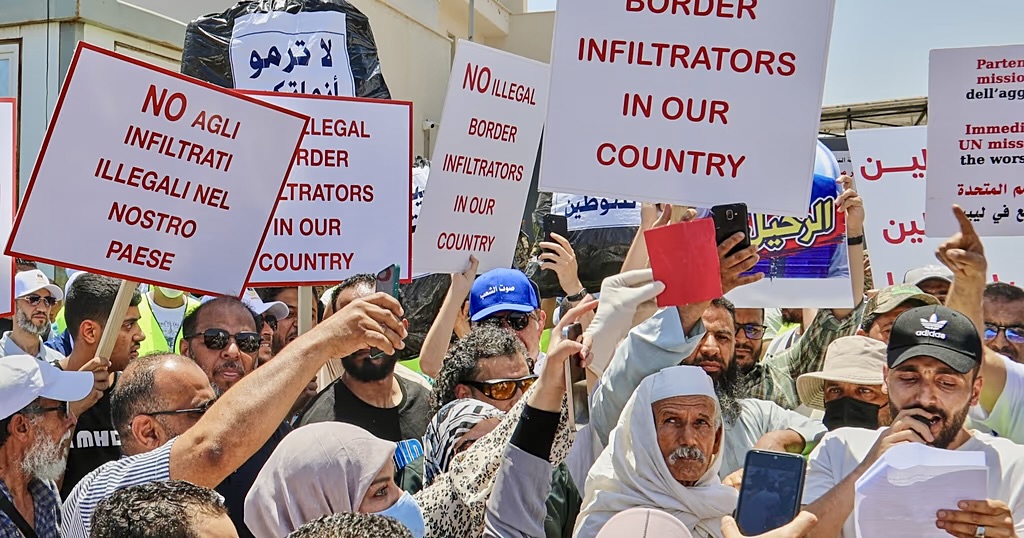
“Many Libyans who support the current protests and the ‘No to Resettlement’ movement argue that Libya has, over the past years, become both a transit and destination country for large numbers of migrants and refugees entering through borders that are difficult to control effectively,” El-Saidi said.
Supporters of the movement argue that years of increasing arrivals, weak border controls, and limited institutional capacity have generated economic, social, and security pressures that public authorities are struggling to manage. Concerns about human smuggling networks and organised crime have further intensified public anxiety, linking migration issues to broader debates about national security and social stability.
Sudanese refugees and Libyan politics
The controversy escalated following discussions between the International Organization for Migration (IOM) and Libya’s Ministry of Local Government regarding migrant inclusion and access to employment opportunities. Critics viewed those discussions as an attempt to facilitate long-term settlement of migrants and refugees in Libya. The issue became a rallying point for activists opposed to what they perceived as an effort to permanently resettle foreigners in the country.
These concerns contributed to protests outside the offices of international organisations and fuelled calls for stronger measures against migration. At the same time, other Libyan voices reject this narrative. They argue that migration has become heavily politicised and warn against treating refugees fleeing war in the same way as irregular migration networks.
According to El-Saidi, many critics of the movement believe that humanitarian protection and migration management should not be conflated. “Within this broader and highly politicised debate, Sudanese refugees have found themselves caught in a complex political and security discussion, despite having fled one of the world’s most devastating ongoing conflicts in search of safety and protection.”
With thousands of Sudanese refugees trapped between conflict back home and targeting in Libya, many feel compelled to flee to Europe. Last year, over 10,000 Sudanese refugees travelled by sea from Libya to Europe, a massive increase compared to previous years. Another 3,462 were intercepted and returned the same year, marking Sudanese as one of the primary nationalities held in detention points.