







Golden graveyard: local miners are dying in high numbers
12 October 2026
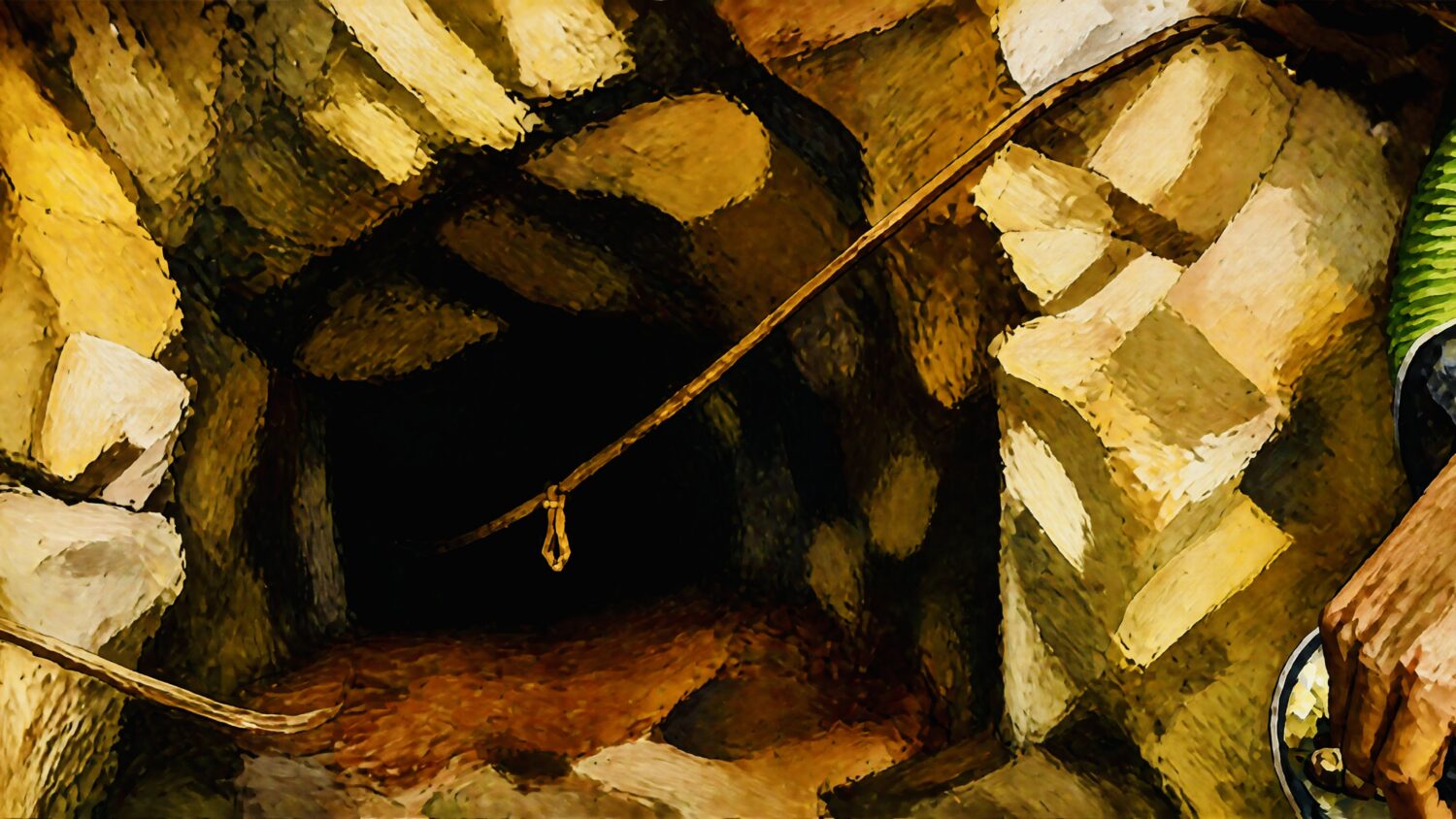
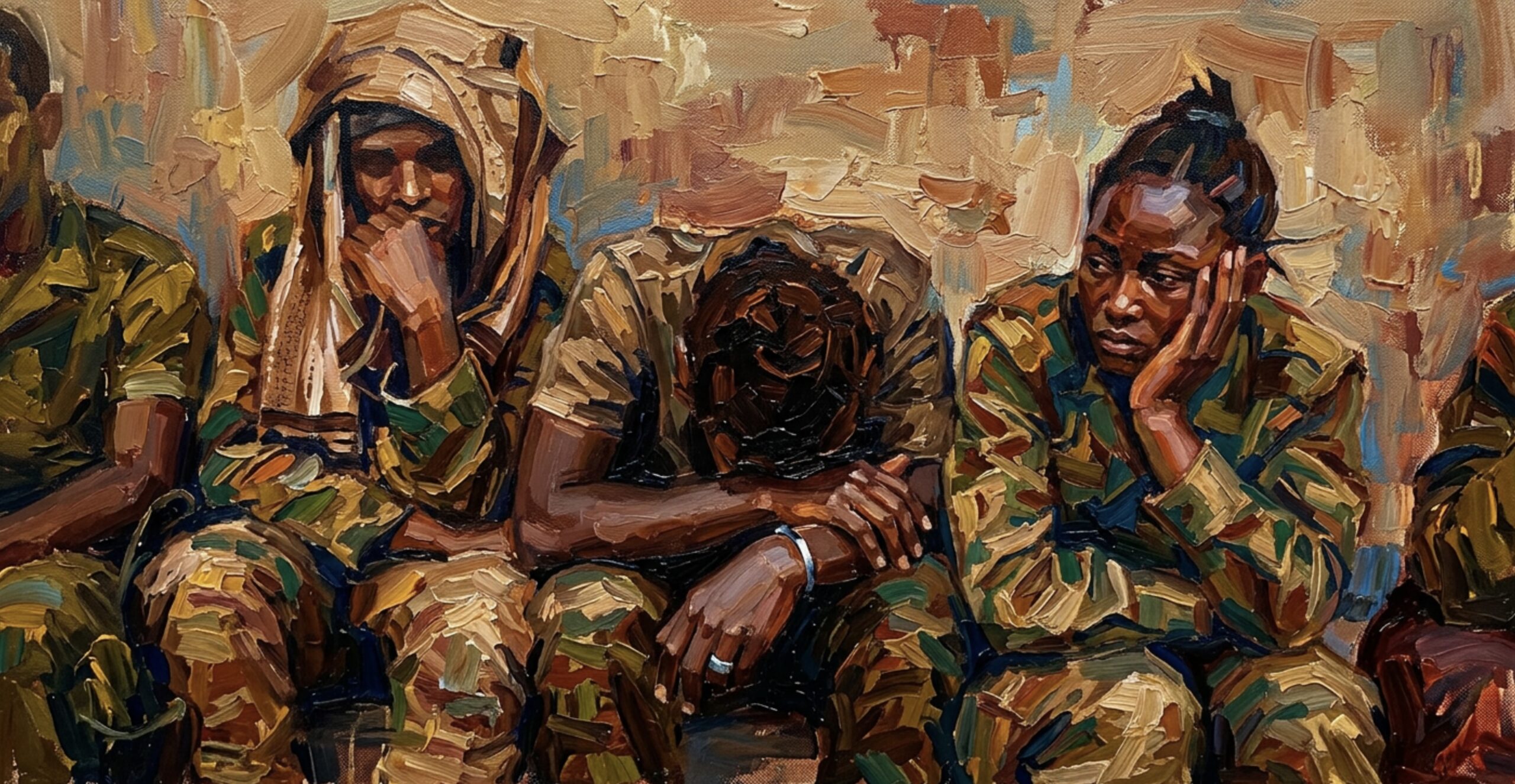
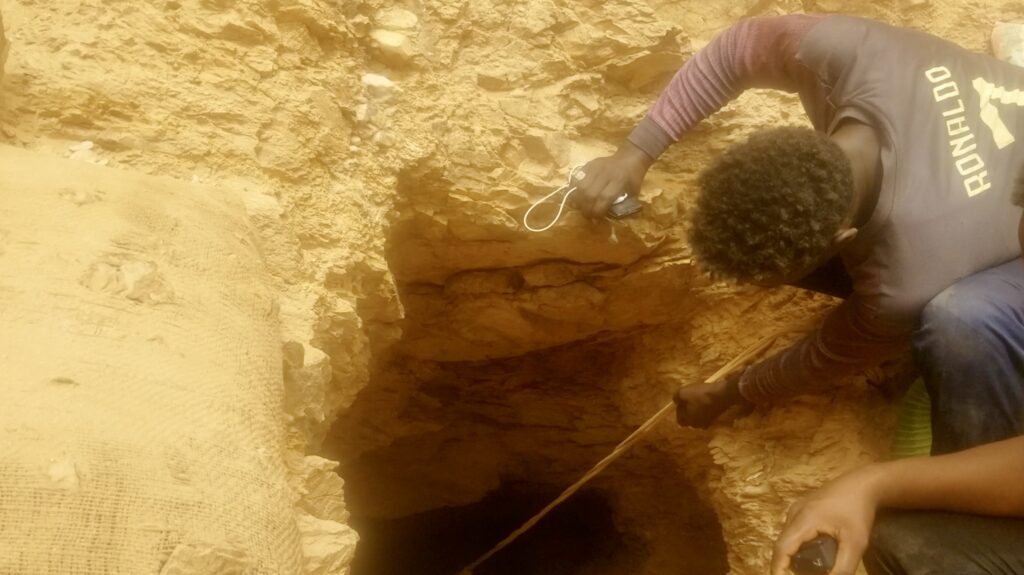
Moataz Ismail had just left childhood, but he did not find himself in school, as one would expect for an eighteen-year-old; instead, he was inside a mine shaft more than 30 metres deep, carrying primitive tools, including “chips and hammers”, to break rocks in search of gold.
Moataz was forced to leave school after the schools in the Ghabish locality of West Kordofan state were closed, following the outbreak of war between the Sudanese army and the Rapid Support Forces (RSF) in April 2023. Teachers either left the area or simply stopped teaching as a result of the collapse of the educational system.
Ismail waited for more than two years hoping for the return of studies, but that did not happen. So he packed his belongings along with a number of his peers and headed to northern Sudan, where thousands of miners are spread out in the desert and among the mountains in search of gold using traditional and arduous methods.
Gold wasn’t Ismail’s first choice, but it became his source of income and the means to support his family after his father’s farming career came to an end. The young man travelled from West Kordofan to Abu Hamed in River Nile State after a gruelling journey, taking unconventional routes to avoid RSF checkpoints. He says the RSF were preventing young men from travelling, claiming their actions were to stop them from joining the army. Three days after leaving Ghabish, Ismail arrived in El Obeid, a journey that normally takes no more than eight hours.
In Abu Hamed, Ismail works with a group of miners inside a mining shaft. The workers take turns inside the shaft in a two-week shift, breaking rocks and bringing them to the surface before they are taken to the grinding and washing plants to extract the gold.
“Thank God, we’re making a living,” Moataz said. “I earn about a gram or a gram and a half after each shift.” The young man doesn’t keep his earnings for himself; he sends part of his income to his father and two brothers, who depend on him completely after the family’s source of income from farming was cut off due to the war.
While Moataz is grateful for the opportunity to earn a living, he and other local miners in Abu Hamed are also very aware of the precarious nature of his work. “Every day we take risks,” says Al-Rayeh Issam El-Deen, another local gold miner in Abu Hamed. “It is the only employment available so this prevents us from finding alternative work. We’ve just accepted the fact that we could die at any time.”
Traditional mining: the largest contributor to gold production
Moataz Ismail was not an isolated case. The collapse of economic sectors and the decline in job opportunities during the years of war drove thousands of Sudanese to traditional mining areas in search of a source of income that could provide for their families’ needs.
Artisanal and small-scale mining plays a major role in gold production in Sudan that is growing annually. Data from the Sudanese Mineral Resources Company (SMRC) indicates that the number of people employed in traditional mining reached roughly four million by 2025, compared to around two million in the company’s 2021 data. Despite the daily dangers local miners face, production estimates suggest the numbers of artisanal miners will only increase. The SMRC announced in 2025 gold production had reached 70.6 tons creating roughly $1.54 billion in revenue. Traditional miners accounted for roughly 83% of this production. This year, the SMRC announced record-breaking gold production rates, reaching $2.3 billion between January and September alone.
A Chatham House study indicates that artisanal and small-scale mining was already the largest contributor to Sudanese gold production before the war and that its widespread, traditional nature made it more difficult to regulate. The lack of regulation and often makeshift setups used in traditional gold mining are two major contributors to the high-risk nature of the work.
Ismail and his colleagues work inside the mining shafts without proper protective equipment, he says, using only pieces of cloth wrapped around their faces to try to avoid inhaling the dust. He adds that the miners burn the gold particles using mercury and don’t pay much attention to the fumes they inhale while working.
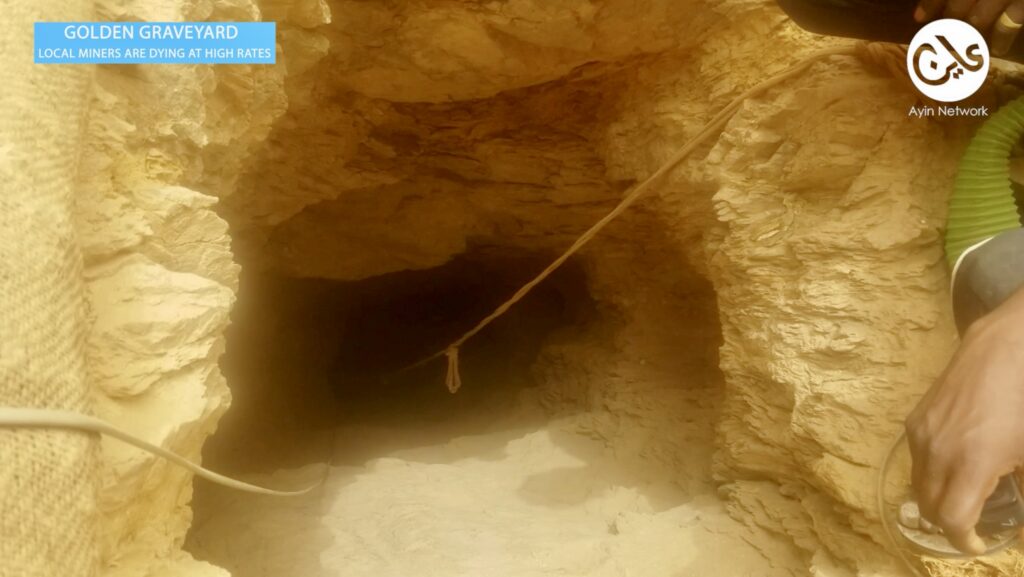
But the greatest and most immediate threat to traditional gold miners, according to several local miners in different parts of the country, is the risk of the gold mine collapsing on top of them.
Risk of collapse
In the mining areas of West Kordofan and Darfur, the risks associated with the terrain are increasing, according to traditional miner Salah Hassan Abu Jadin, who works in the Fuga area of West Kordofan. Abu Jadin told Ayin that the soil in northern Sudan is more stable in some areas due to its stony nature, while in Kordofan and Darfur it is fragile sandy soil, which increases the risk of collapses, especially when drilling operations expand and shafts are built close together.
He says that the Fuga region is hosting thousands of displaced people whose numbers have doubled since the war, and they are working in a high-risk environment with declining security and the absence of authorities in the area controlled by the Rapid Support Forces.
Geological engineer Wadah Ghazi says that one aspect of these risks is the nature of the geological formations in many traditional mining areas in Kordofan. Layers of sand, gravel, clay and loose materials lie on top of the rocks, Wadah told Ayin, and can easily collapse, especially with increasing water levels during the rainy season.
Wadah says that closely spaced and haphazard drilling is one of the most dangerous factors because it weakens the earth mass between the shafts. “As material removal continues, the remaining area may lose its load-bearing capacity, causing a collapse that could spread to adjacent shafts,” he added.
Geologist Hossam Hassan, who works in the Turkmen area of the Northern State, says that random mining operations are often carried out without sufficient consideration for the engineering properties of the surrounding rocks, as prospectors focus on tracking the “vein” that contains gold without paying attention to the stability of the shaft or the presence of cracks and fractures that could lead to its collapse.
Hossam told Ayin that traditional miners dig long shafts, sometimes reaching 100 metres, with little consideration for supports to prevent the ceiling from collapsing. Hossam points out that supports are usually added only after a problem occurs in the shaft, and even then they are not standard engineering supports. Instead of sturdy beams, local miners use bags filled with dirt to support areas prone to collapse. “There are indicators that can precede a collapse, including the falling of small pieces of rock or the appearance of cracks, fractures and geometric breaks in the rocks, but ignoring these indicators leads to the collapse of the shafts,” he added.
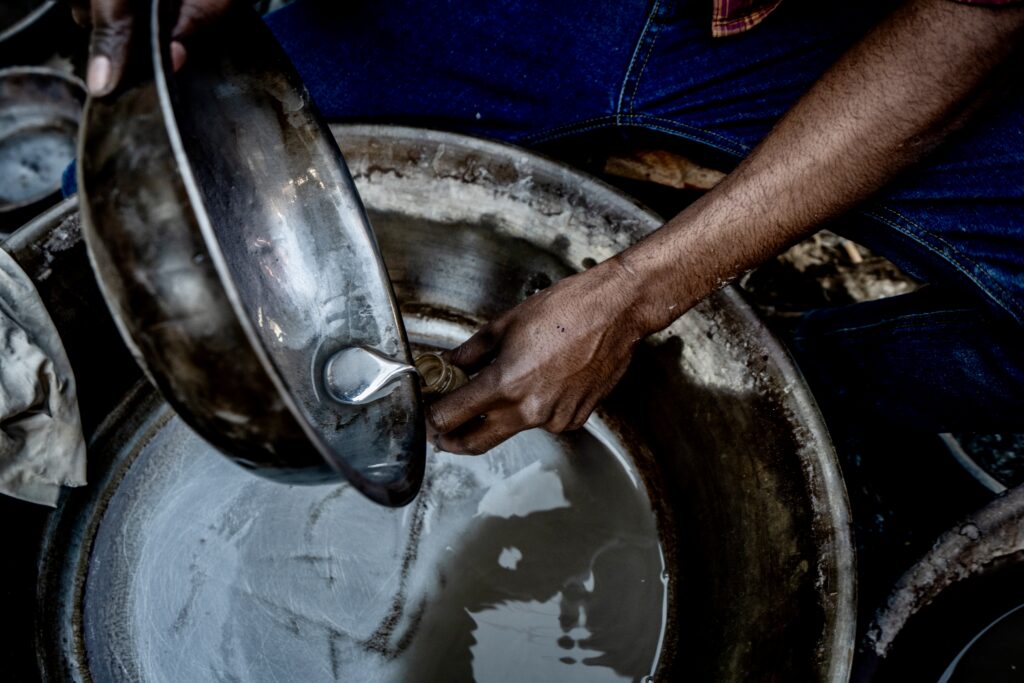
Goldmine graveyards
In the Fuga area of West Kordofan State, the dangers of mining have taken on a more deadly form. Salah Hassan Abu Jadin says the area witnessed one of the biggest mining disasters in recent times when a group of shafts collapsed, trapping dozens of miners inside in the absence of rescue teams and the necessary equipment to extract them.
On September 13, 2026, about six adjacent traditional mining shafts extending over a distance of more than one kilometre in the “Al-Zar’a” area of the Fuga administrative unit, northwest of Al-Nuhud in West Kordofan State, collapsed, resulting in the death of more than 80 traditional miners. Salah says the absence of specialised rescue teams and the fragile, sandy soil make local efforts to dig the victims out even more difficult.
The Fuga incident was not an isolated event; it was part of a series of similar accidents. Ayin documented approximately 83 additional deaths linked to mine collapses outside of Fuga in the first nine months of 2026 alone.
In some cases, morbid apathy seems to surround any solutions to the problem, with some mining areas experiencing repeated deadly mine collapses.
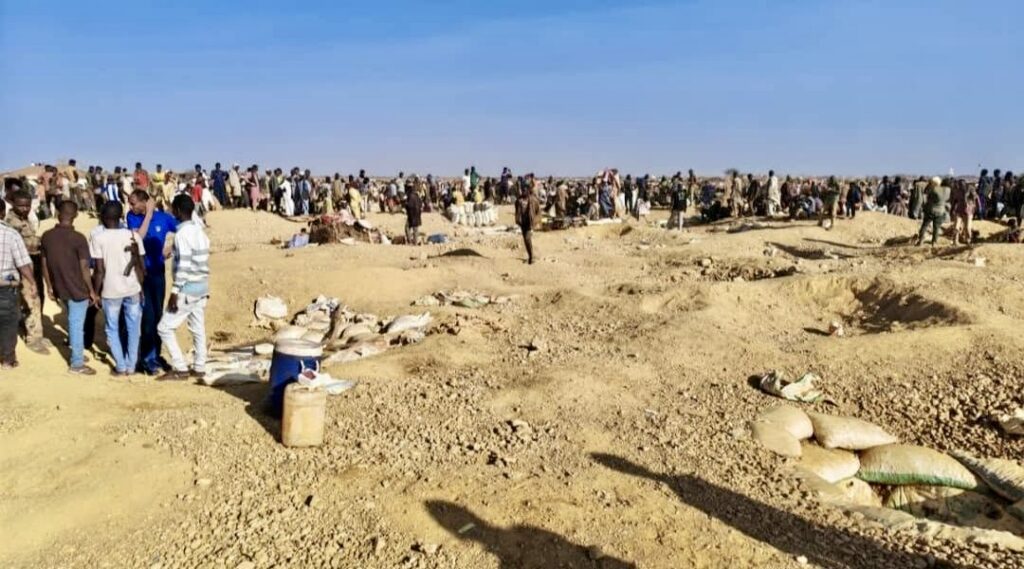
Repeated collapses
The Umm Fakroun artisanal gold mine in Abu Jubaiha, South Kordofan State, has collapsed four times this year alone, killing at least 27 people and causing dozens of injuries. Sometimes authorities fail to regulate mine safety, and other times local miners, desperate to raise an income, choose to ignore the warning signs. In mid-March this year, the SMRC issued an administrative order permanently closing the Umm Fakroun mine, given repeated deadly mine collapses. Despite this decree, local miners continued to use the mine and four more local miners died on May 13, and again, on June 7, another four miners died in a collapsed shaft.
“What is happening in the Umm Fakroun mine is chaotic, leading to the deaths of many innocent workers trying to earn a living,” says Hamaad Mahdi Hussein, a Sudanese doctor. “There’s a lack of oversight of relevant authorities,” he adds. In some cases, Hamaad writes, the local miners face problems with the soldiers who control the mines and insist on a percentage of the profits. “Sometimes they (the soldiers) take all the money despite the danger of the situation and the fact that they are standing guard outside, supposedly protecting it, while they profit from the workers’ hard work without any effort or exertion.”
Umm Fakroun is not the only site where repeated casualties occur. On July 6, 2026, in the Semma area of Wadi Halfa, Northern State, the Mohamed Tawfiq mine collapsed, killing 15 local minters. Authorities had previously closed the mine due to ground instability but local miners, desperate to find an income, continued to dig.
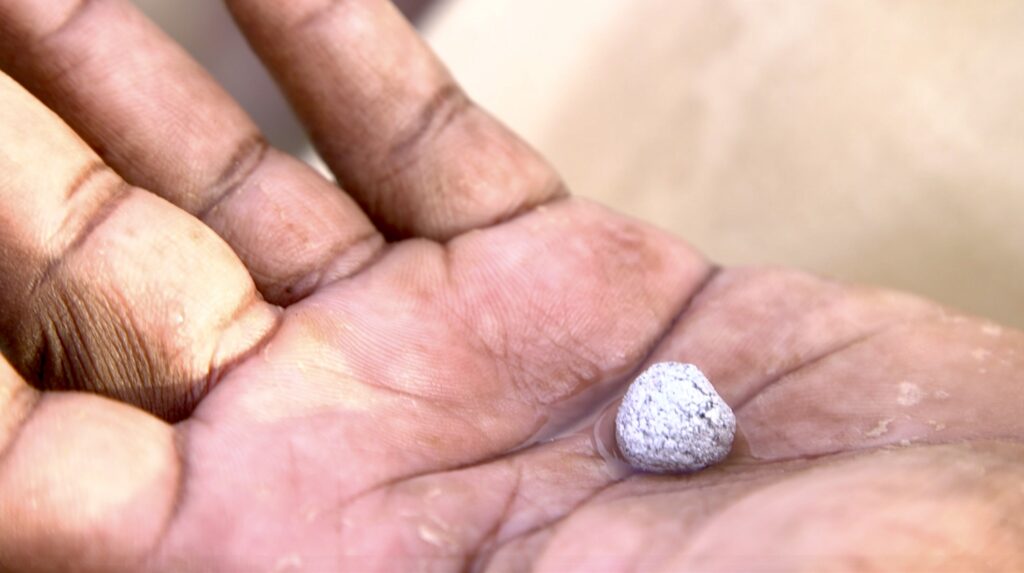
Profits vs investment
While traditional miners represent the main contributors to one of Sudan’s main sources of revenue, they continue to work in haphazard conditions without protective equipment or security measures put in place. For Moataz Ismail, the risk seems less important than the need for income, which has become his family’s livelihood in a country where war has disrupted education, agriculture, and employment opportunities, and where the shaft could turn into a mass grave at any moment.