













Deadly skies, empty plates: How escalating drone warfare is starving Sudan
7 August 2026
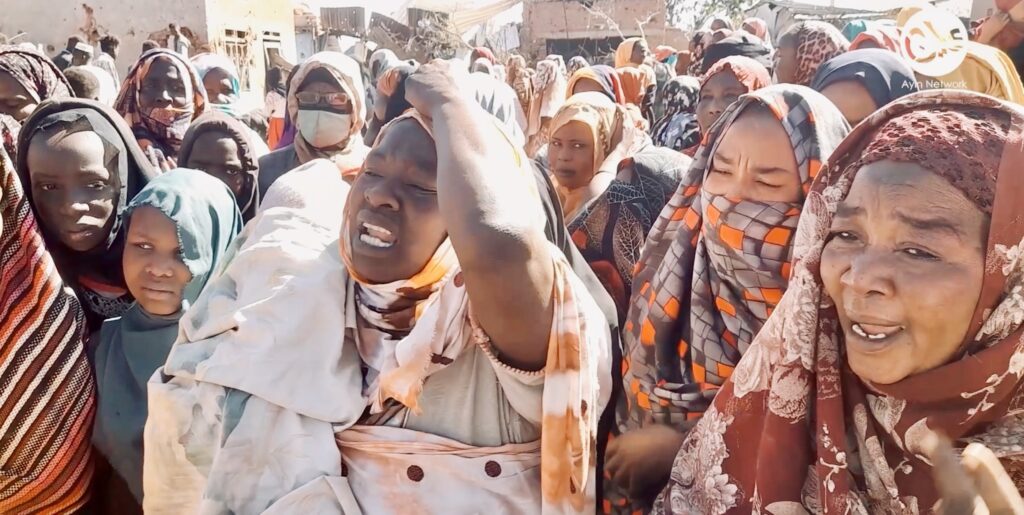
When a truck loaded with relief aid arrives at displacement camps in the restive North and West Darfur regions, humanitarian workers ask displaced people to wait in long lines and not to gather in tight circles near the camps. The long lines are not for distribution purposes but for security; too often, drones target the aid trucks.
“People gathering to obtain food now make us feel constantly under threat,” says Abdel Salam Ishaq, spokesman for the local Emergency Response Room volunteers in Serba, West Darfur State. “We ask them to stand at a distance from one another, because air raids have begun targeting trucks and civilian gatherings in new patterns of attacks in the Darfur region.”
A total of 522 air and drone strikes took place between January and June this year – roughly three per day, according to the latest report by the Famine Early Warning Systems Network (FEWS). The volume of attacks is 38% higher compared to last year and the highest rate recorded since the outbreak of the war between the army and the Rapid Support Forces (RSF). According to the conflict monitoring organisation ACLED, drone strikes in Sudan are increasing, and they are using more deadly force against civilian targets. The organisation reported a 33% increase in the number of people dying from drone strikes. In June alone, 27 drone strikes took place on El Obeid, North Kordofan State – the highest rate recorded at any one location in Sudan.
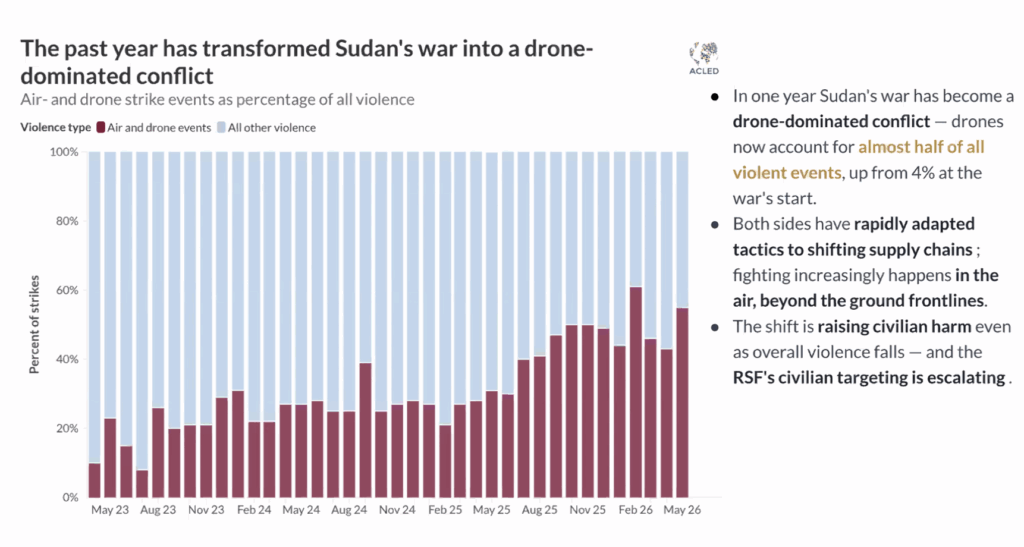
“The air attacks have turned the lives of citizens in the city of Al-Obeid and the neighbouring villages into an unbearable hell,” said Mudathir Abdel Rahman, a humanitarian volunteer in North Kordofan State. “Tens of thousands have lost access to drinking water, electricity, bread, fuel and transportation because all these basic services were subjected to repeated air raids between May and June.” The only reason residents of El-Obeid have refrained from leaving the city, Mudathir told Ayin, is because drones often target large vehicles, including buses. “In any case, you do not know how those who control these drones think, especially when they seem indifferent to international or local pressures and act without restraint.”
Targeting food
According to local and international humanitarian actors working in Sudan, drone strikes have played an increasingly pivotal role in curbing access to food, whether through humanitarian aid distributions or simply commodities in the marketplace. “The use of drones in the current conflict in Sudan impacts both access to food and affordability,” Shashwat Saraf, the Sudan Country Director for the Norwegian Refugee Council, told Ayin. “In terms of affordability, that’s probably a much bigger problem, I would say.”
There are direct drone attacks on humanitarian and commercial convoys, and there are drone strikes against civilian infrastructure – whether markets, roads, or fuel supplies – which inevitably make access to food extremely limited and, where available, prohibitively expensive.
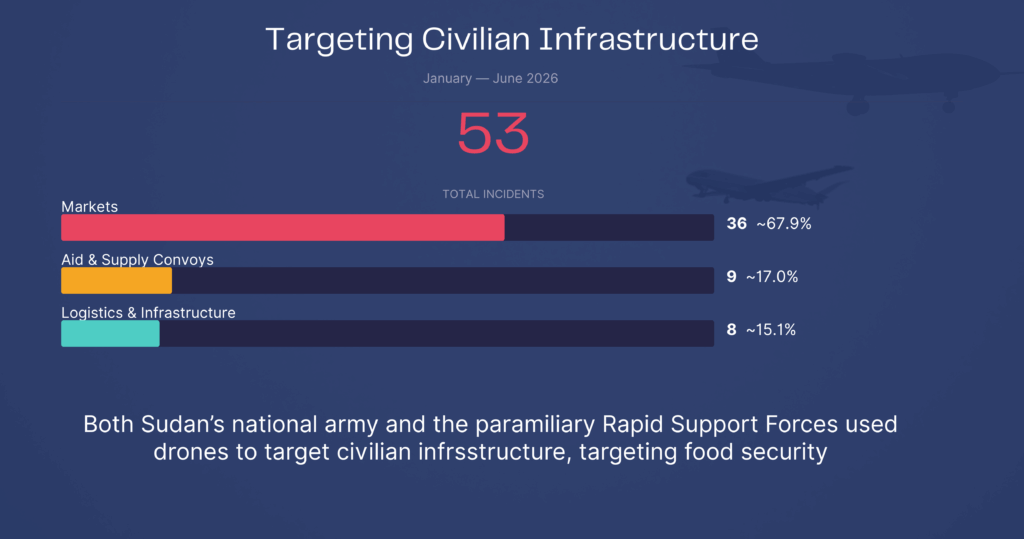
From 1 January to 2 July 2026, Ayin has documented 53 cases of the warring parties targeting civilian markets, critical logistics infrastructure, and humanitarian aid convoys across Sudan – primarily using drones. In the first half of the year, drone strikes hit nine humanitarian and commercial convoys and eight vital transit points for trade and aid shipments. By far the worst, however, were attacks on markets. Ayin recorded 36 drone attacks on markets across the country, with a focus on the Darfur, Kordofan, and Blue Nile regions. According to a recent report by The Reckoning Project, drones targeted markets more than any other civilian infrastructure, with deadly consequences. “Attacking markets have effects that go well beyond the day of the attack,” says The Reckoning Project Country Director, Jehanne Henry. “For one, they tend to have high numbers of civilian casualties.”

Direct and indirect targeting
It was only hours after the UN’s Chief Humanitarian Coordinator for Sudan, Denise Brown, had left El Obeid that a drone attack struck a World Food Programme (WFP) aid convoy. “The trucks were en route from Kosti to deliver life-saving food assistance to displaced families near El Obeid when they were struck, tragically killing at least one individual and injuring many more,” Brown said in a statement. “The trucks caught fire, destroying food commodities intended for life-saving humanitarian response.” Earlier in the week, another drone attack injured a WFP staff member in Yabus, Blue Nile State. In June, a drone strike hit a truck just six kilometres outside Al-Rahad, North Kordofan State, instantly killing the driver. The truck was carrying 50 tons of flour intended for emergency relief in El Obeid. According to Dan Teng’o, Head of Communications for UN OCHA Sudan, drone strikes have directly targeted nine humanitarian convoys this year.
In other cases, drone strikes have targeted roads, bridges, fuel depots and other civilian infrastructure, severely depleting both humanitarian and commercial deliveries of food to locations in desperate need, Saraf told Ayin. “So a (drone) attack, even if it’s not directly on the commodities itself but on civilian infrastructure – this has a very direct impact on the rise of prices for essential commodities such as fuel, water, and food, which are already in short supply. The affordability of food becomes very critical,” he said. “We have seen it in El Fasher, in Kadugli, and we are seeing it in El Obeid.” According to the latest FEWS report, fuel prices jumped from 20% to 69% in May 2026 alone, more than doubling year over year. This has driven up food transport costs and disrupted power for water pumps, the report added.
A pattern of drone attacks on bridges has been particularly damaging for both humanitarian actors and private traders to deliver essential commodities, especially with the onset of the rainy season. “Since the destruction of the Shambat Bridge in the heart of the Sudanese capital in 2024, a year into the war, there has been a prevailing belief that this strategy achieves military gains on the ground by weakening the supply lines and corridors of the other side,” says Nahla Hassan, a consultant at an international aid organisation. “However, this thinking completely ignores the fact that these facilities are designated for civilian purposes, including the passage of food and medicine.”
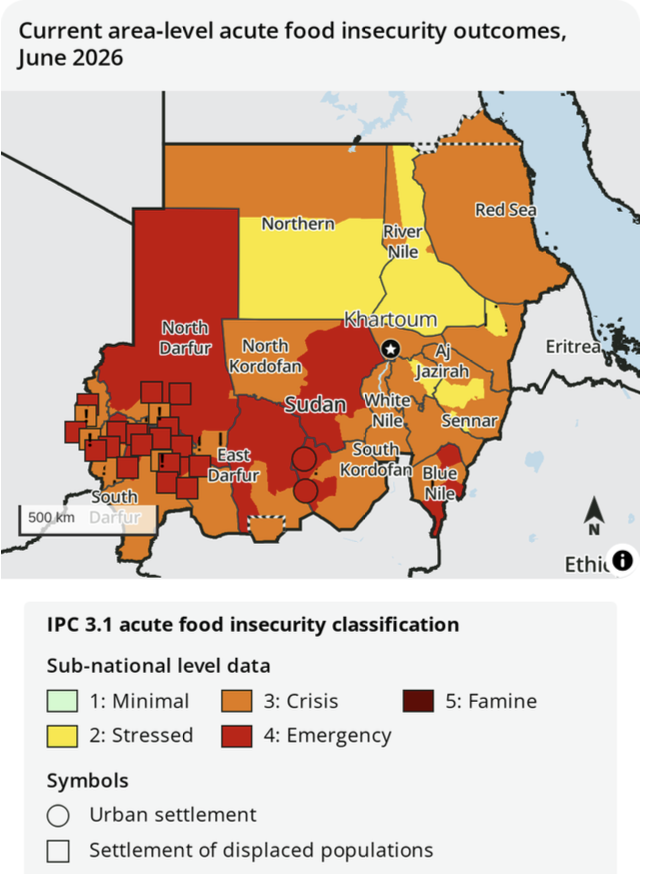
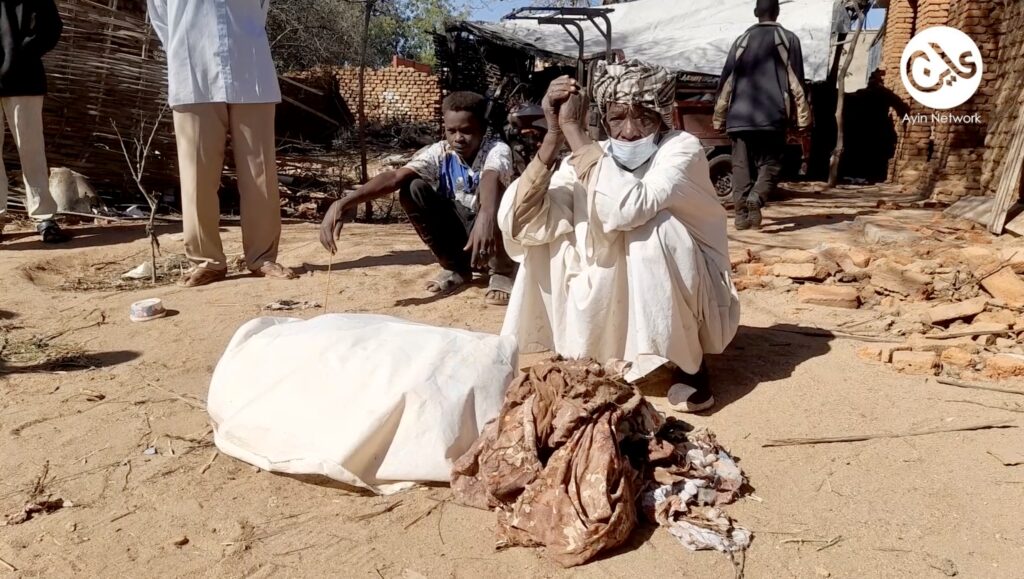
By far the most frequent target of drone attacks on civilian infrastructure are markets. In the first half of the year, Ayin has managed to document 36 incidents of drone attacks on markets across the country. In June alone, five such events occurred, with the majority targeting vital markets in North Darfur State, a region that FEWS classifies as experiencing the highest and most catastrophic level of acute food insecurity. On June 23, an army drone struck Al-Sayah Market in Melllit, North Darfur State, killing two civilians and injuring dozens more. According to a statement from the Emergency Lawyers, a local pro bono legal organisation, the strike triggered extensive fires that swept through the commercial area, destroying large sections of the marketplace and causing massive property and inventory losses for local vendors. Al-Sayah Market serves as a central supply hub for food and essential goods, catering to nearby population centres including Mellit, Al-Malha, and Al-Koma, as well as more than 70 surrounding villages.
“It is absolutely the case that attacks on markets are having a huge impact on food supplies,” Jehanne Henry told Ayin. “In many of the incidents, witnesses talked about the destruction of their livestock, so hundreds and hundreds of livestock have been killed in just a few minutes. There are so many repercussions to this kind of insidious drone warfare – it’s not just the food and fuel and other supplies – it’s also ripping apart the social fabric of the people,” she added.
Less food access, more hunger
According to local and international humanitarian actors, there is a direct correlation between the increase in drone strikes and heightened food insecurity. In May this year, humanitarian aid reached fewer than 20% of the population in need, according to the FEWS report. The ongoing insecurity and aerial targeting meant that the greater Kordofan area, one of the most food-insecure regions, along with Darfur, received less than 15% of the overall May beneficiaries.
Drone warfare has prevented farmers from accessing fields and carrying out summer season land cultivation. Consequently, the upcoming October 2026-January 2027 harvest is not expected to provide a meaningful source of food along active frontlines, the FEWS report stated. Drone-driven access disruptions of both humanitarian aid and commercial commodities will ensure famine-like conditions persist through the harvest period across North Darfur, Greater Kordofan (El-Obeid, Dilling, Kadugli) and Blue Nile.
Drone impunity
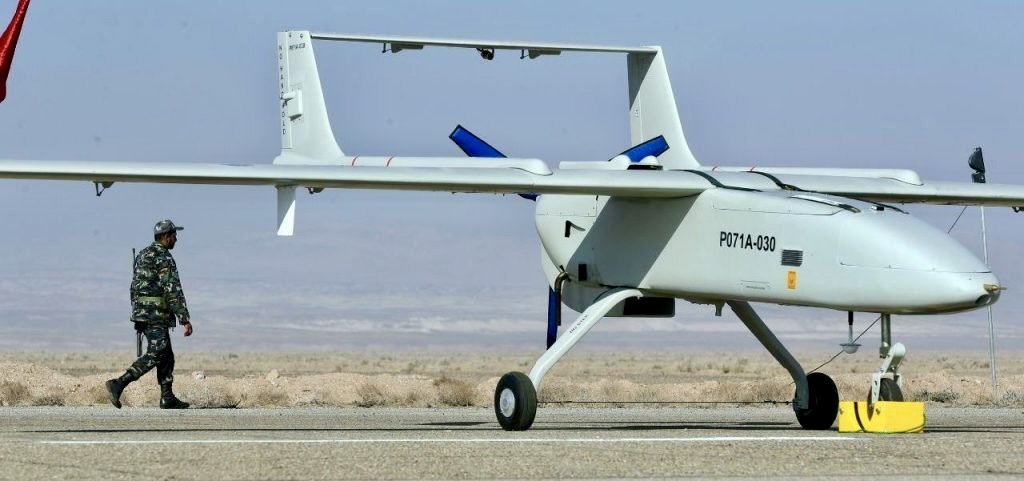
As a cost-effective weapon with long-range capabilities – especially useful during the rainy season, when ground movements are often impossible – there appears to be very little incentive for the warring parties to desist from using drones. Throughout the war, now in its fourth year, both sides have targeted civilians with impunity, dismissing any reaction by the international community as feckless, piecemeal efforts.
“When giant cargo planes transport drones to airports in the Darfur region, they are immediately used to attack military and civilian facilities together without the slightest concern for distinguishing between them,” says Mohammed Yaqoub, a humanitarian worker who has worked with international organisations in the Kordofan region. “This situation is because the international community has become passive and even complicit at times with the military parties.”
The international community is either providing toothless public denunciations to Sudan’s ongoing war or actively supporting it, says economic analyst Mohamed Ibrahim. “The main problem with the continued airstrikes in Sudan and their direct impact on civilians lies in the fact that there are international entities, akin to a mafia, managing arms deals worth over $250 million this year alone for both sides.” He added, “While the Sudanese Armed Forces are confident that their relationship with Turkey allows them to obtain such weapons, the Rapid Support Forces receive similar shipments from the UAE via airports in Libya and Chad, with planes landing during the day at Nyala Airport.”
While the international community are fully aware of these arms deals, conflicting interests have silenced any further action, he added. “The international community possesses extensive information about these details, but regional interests prevail, taking precedence over the protection of civilians and the preservation of infrastructure.”