











From chalkboards to fishing nets: How high prices threaten livelihoods in Sudan
24 July 2026
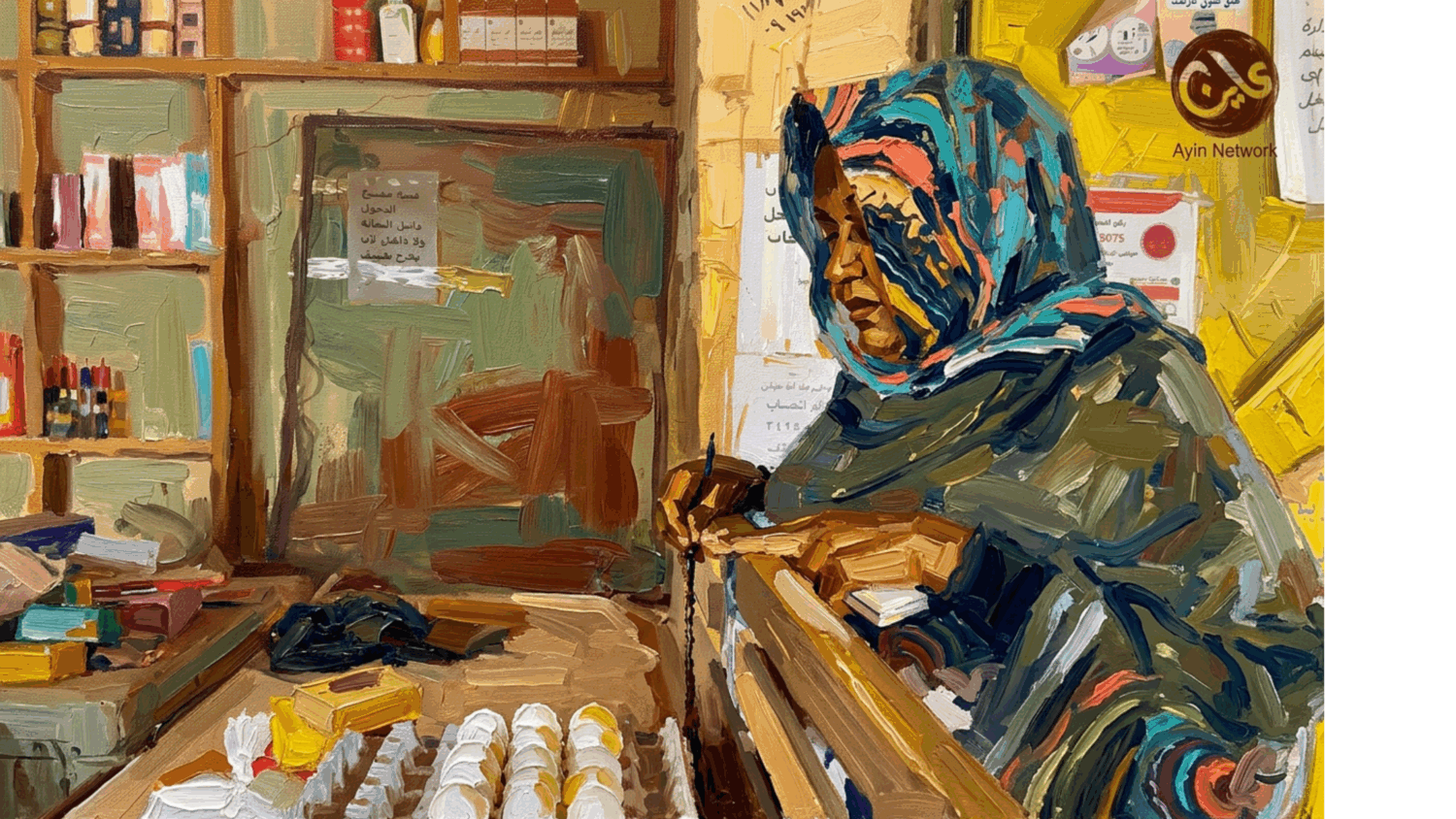
After more than four decades in the education sector, educational supervisor Salim Khaled* never imagined he would end up a fisherman, traversing the Nile in search of sustenance after midnight, before starting his day as an employee in one of Khartoum State’s education departments. But the war, the ensuing economic collapse, and the sharp decline in wages forced him to combine his government job with fishing to secure the bare minimum for his family amidst continuously rising prices.
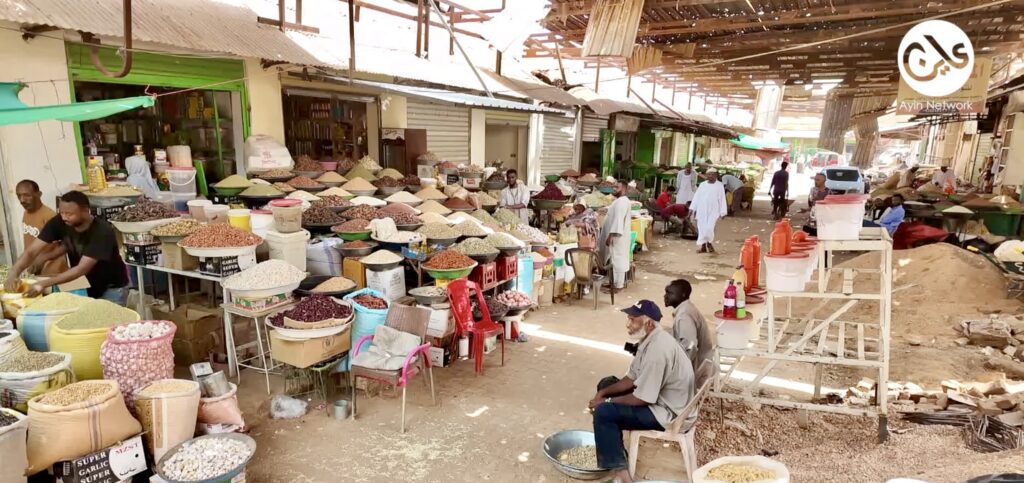
Sudanese markets have been witnessing an unprecedented rise in the prices of basic commodities and consumer goods, which has exceeded the purchasing power of the vast majority of Sudanese people. The war, now in its fourth year, has seen fuel prices ratcheting upwards while the value of the Sudanese pound against the US dollar has plummeted. The annual inflation rate climbed to 51.28% in June, up from 44.5% in May, according to the country’s latest consumer price indices.
Salim spent 43 years in the teaching profession, moving between schools before he transferred to the educational guidance department. Despite his promotion in 2024, he says his salary has not been adjusted yet, and he still receives 168,000 Sudanese pounds, or about $33, an amount that is only enough to cover his family’s needs for a few days, he told Ayin.
Fishing was not a personal choice but a necessity after his salary became insufficient to cover even the minimum needs of his family. “A simple meal of bread, beans, and a vegetable salad costs over 15,000 Sudanese pounds (roughly $3), so we usually make do with two modest meals a day. I can’t remember the last time we had a proper meal.”
Salim’s story is not an isolated case but reflects an economic crisis shared by thousands of Sudanese since the outbreak of war in April 2023. The Sudanese pound has steadily declined against foreign currencies while food and fuel prices have increased. According to World Bank estimates, the economy has suffered a sharp contraction as a result of the cessation of productive activities and the expansion of the conflict. The net result, the UN reports, has left over two-thirds of the country’s population in need of humanitarian assistance.
High prices, a drastic change in lifestyle
In Khartoum, the price of a cooking gas cylinder reached approximately 110,000 Sudanese pounds (roughly $22); in eastern Sudan, Kassala, it will cost you 125,000 ($25). “The prices of everything have gone up; costs have become outrageous,” says Mustafa Amin, a former resident of Khartoum, now displaced and living in Atbara, River Nile State. “A cylinder of cooking gas is roughly equivalent to a government employee’s monthly salary.”
“What we see in the markets today is greed and exploitation from the war and current circumstances,” says Abdelrahman Othman, economics professor at Nile Valley University. “A single product may pass through four, five, or even six middlemen. Many people now make a living simply by acting as intermediaries, without producing anything of real value.” Another major factor racheting inflation, Abdelrahman says, is the government’s excessive printing of money. “A large amount of money has been printed – there is too much cash chasing too few goods. This has driven prices to astronomical levels.”
High food prices, high malnutrition
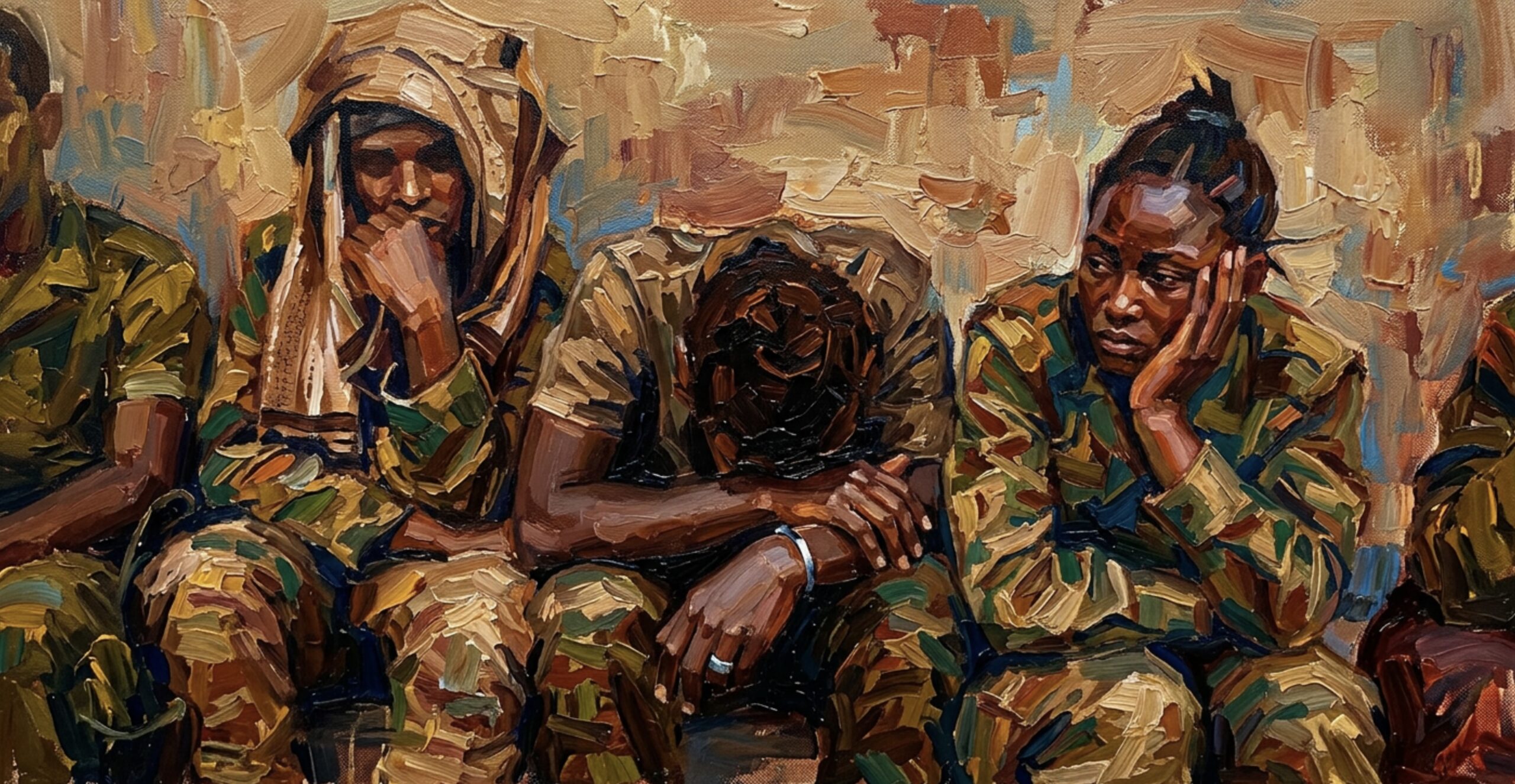
Raw’a Ibrahim Hussein, a general practitioner working in multiple health facilities in southern Khartoum, reports that health centres in the area have seen a large influx of patients suffering from complications of acute malnutrition, especially those who remained in Khartoum throughout the conflict.
With severe food shortages, Raw’a says, patients are unable to fight off diseases and respond to treatment. She has witnessed a significant increase of night blindness that has only declined once she provided patients with vitamin A and nutritional supplements. “We were able to treat most of the cases, and night blindness cases are now very limited compared to previous months.”
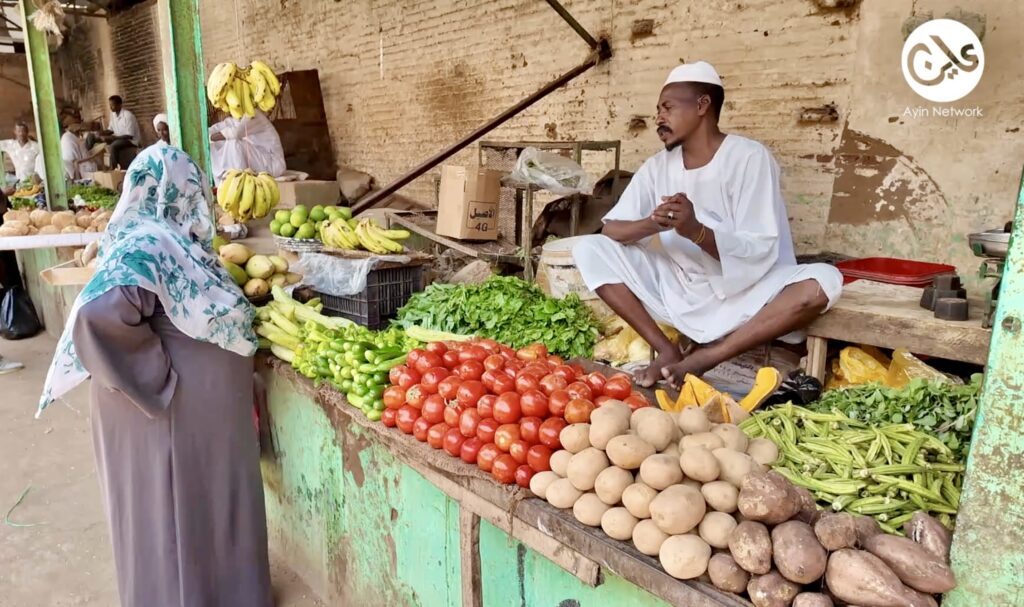
The latest Integrated Food Security Phase Classification (IPC) analysis indicates that approximately 19.5 million people are facing critical levels of food insecurity. Around 825,000 children are also projected to suffer from severe acute malnutrition in 2026.
Kordofan
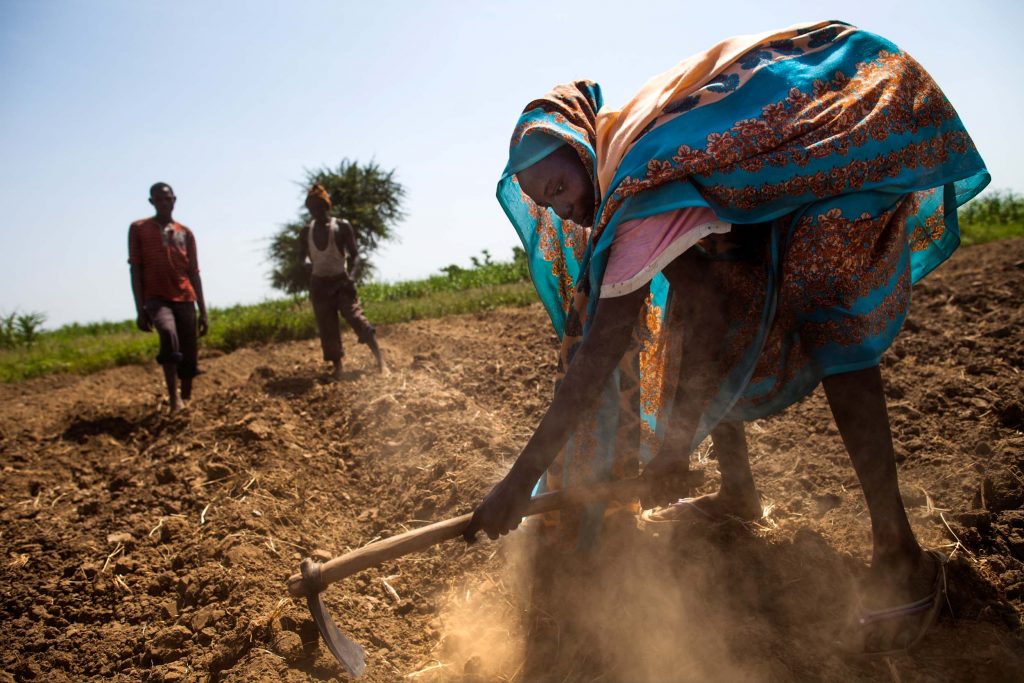
One of the worst-hit areas in Sudan remains the Kordofan region, where civilians remain trapped or displaced from the conflict. Poor rainfall and insecurity have led to a general failure of the millet planting season, the main crop for the region, according to farmers in the Ghabish locality, West Kordofan State.
A sack of millet now costs 350,000 Sudanese pounds; last year it went for 100,000, says Salem Fathi, a resident of the Ghabish locality. Few can afford the spike in prices, Salem says, but the closure of trade routes from the east has left them with no other options. Many people in Sudan cannot afford to eat bread or add sugar to their tea, he added, as these are two fundamental staples to the Sudanese diet. “No bread and no sugar in tea is like telling a Sudanese to stop existing,” says Atif*, a Sudanese refugee who fled the war and resettled in Kampala, Uganda. “These are the two basic things we can’t live without.”
Can authorities stop the decline?
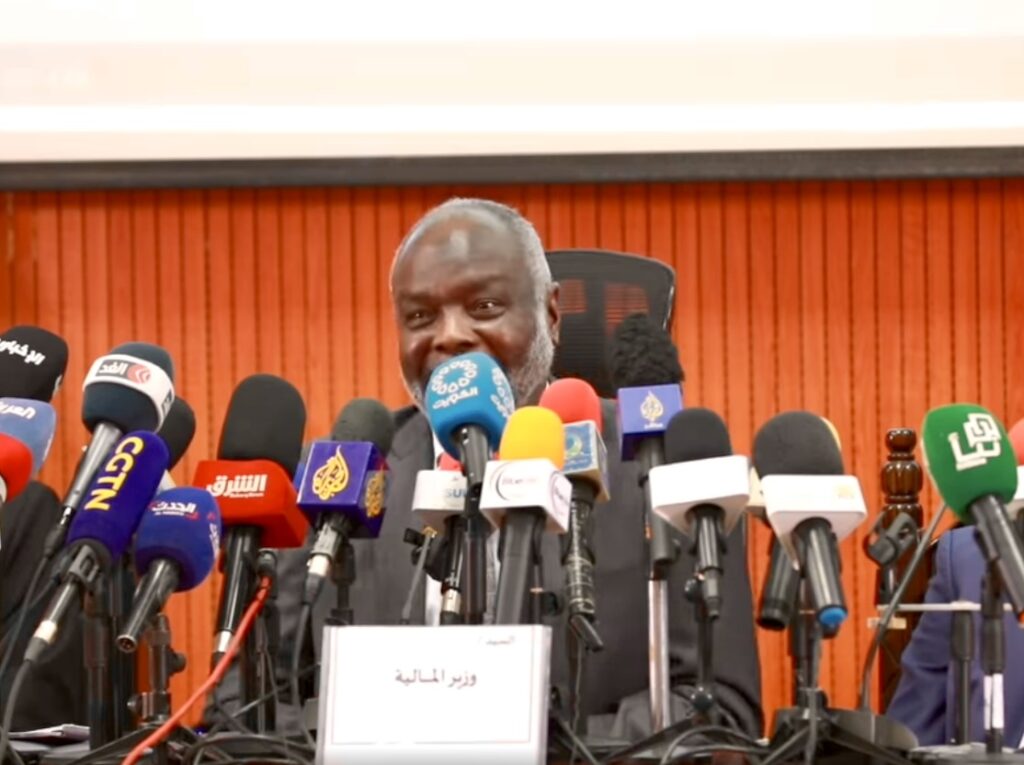
Contrary to the picture painted by citizens’ testimonies, Finance Minister Jibril Ibrahim said after a cabinet meeting last week that the government “is in control of the economic situation” and that they plan to introduce measures that will lead to a stable exchange rate and lower prices for basic commodities.
Despite the war, economic analyst Hossam El-Din believes Sudan’s economic decline may be stopped if resources are correctly used, corruption is combated, and public funds are handled. “Stopping the economic decline begins with good management of public revenues and working to increase them, and this goal will not be achieved without combating corruption, stopping tax evasion, and not imposing unjustified financial burdens on fuel, food, and energy companies,” Hossam told Ayin.
However, economic researcher Assem Abdel Aziz believes government mitigation attempts would be restricted as long as the war continues. “Any improvement in the exchange rate of the pound will remain temporary unless the country regains its security stability, because the continuation of the war means the continued decline in production, investment opportunities and foreign currency flows,” Assem said. Foreign investment needs legal guarantees and security, he adds. “Even if Sudan receives billions of dollars in grants or loans, such assistance will not permanently halt the decline of the pound unless the economy regains its capacity for production, exports, and attracting investment.”
While these debates continue and the war drags on, Salim Khaled continues his daily routine. Salim carries student files to the office by day and his fishing net to the river at night, trying to adapt to the stark reality imposed upon him.