













Al-Roseires Dam, Sudan’s most sensitive frontline
20 June 2026
Though often overlooked, Sudan’s Al-Roseires Dam is the central backbone of Sudan’s water, energy, and agricultural survival system. Any military disruption, targeting, or seizure of the dam would trigger a cascading national collapse.
The Roseires Dam, built in 1966 and raised in height in 2012, has a storage capacity of approximately 7.3 billion cubic metres, making it the primary regulator of Blue Nile waters in Sudan. The dam’s location near shifting military frontlines also makes it one of the most strategically sensitive facilities in the entire Horn of Africa, analysts told Ayin. Any strike or sabotage could prove calamitous.
If hit, the dam would suffer a significant electrical problem, since it would lose its 400-megawatt capacity and leave central and eastern Sudan in constant darkness. An agricultural collapse would also occur, since disturbed irrigation would impair food production on millions of acres, including the critical Jazeera Scheme.
This sensitivity has led Sudanese military intelligence to impose strict security measures around the dam. According to sources in Al-Roseires, authorities have restricted the movement of engineers, workers, and administrative staff, placing them under intense surveillance while sharply limiting access to technical and operational information. They describe a near-total tightening of information flow not only at the dam itself but also across affiliated administrative offices in Blue Nile’s capital city, Damazin.
Increased attacks around the dam area
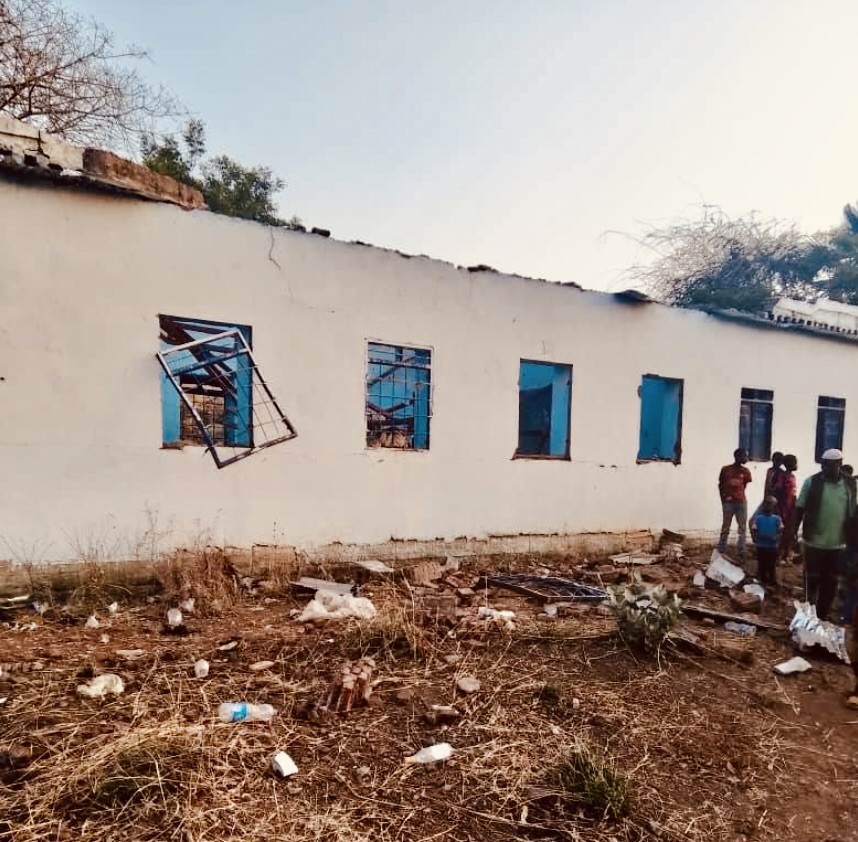
Given its strategic relevance, military confrontations between Sudan’s army and the paramilitary Rapid Support Forces (RSF) and allied Sudan People’s Liberation Movement-North (SPLM-N) have increased recently, local military sources said. The Sudanese army maintains its strongest positions in Ad-Damazin and Al-Roseires, while Wad Al-Mahi and Bau remain volatile zones of intermittent clashes. On the opposing side, the RSF and allies have concentrated their forces in Kurmuk, which has functioned as a forward operational base since March 2026.
Despite repeated attempts by the RSF and allied forces to advance through Qaisan on the eastern axis bordering Ethiopia and Al-Tadamon on the western edge toward Sennar State, the army continues to strengthen its defensive perimeters around key infrastructure linked to the dam corridor.
The battles north of Kurmuk have taken on a more decisive character following the army’s recapture of Al-Kaili and surrounding areas, including Karan Karan and Dukan, according to local sources. The army is seeking to establish a 100-kilometre buffer zone around the dam to reduce exposure to artillery fire and drone-based attacks, the same sources reported.
In May, the RSF and allied forces launched multiple attacks in the Sali area, which is located roughly 37 kilometres from the dam. They did the same in the Maqaja area, which is about 96 kilometres away. The immediate dam protection perimeter around Sali represents the most sensitive zone, where even short-range advances can alter strategic calculations.
A wider, war for water security
The dam has now become entangled in a conflict that cannot be separated from the broader tensions between Cairo and Addis Ababa over water security and control of Nile flows. This scenario is especially true given reports of RSF and allied forces’ military camps based in Ethiopia, less than 40 kilometres from the Sudanese border, analyst Ashraf Hassan says. “The area is fast becoming a direct proxy battleground between Ethiopia and Egypt,” Hassan added, “fuelled by foreign logistical support and military activity.”
If the RSF seized control of the dam, they would also gain strategic leverage against the Sudanese army and their Nile water-dependent Egyptian allies. For Cairo, any change in who physically controls the Nile waters crosses an existential red line that it cannot negotiate. The Blue Nile is Egypt’s primary source of water, says former Egyptian water minister Mohamed Nasr Allam. “Any aggression against the Al-Roseires Dam represents direct harm and aggression against the national security of both Sudan and Egypt and will have serious destructive repercussions for the people of Sudan and also for the people of Egypt,” he told Ayin.
But according to RSF advisor Suleiman Abu Shotal, Roseires Dam is not a military target for the paramilitary forces. “We do not view the dam itself as a direct target that could be attacked with missiles because it is ultimately a Sudanese facility that belongs to the people as a whole,” claims Abu Shotal.