










The global food industry is funding the war in Sudan
24 March 2026
This report was cross-published with permission from the French investigative media outlet, Mediapart, and written by investigative journalist Gwenaelle Lenoir.
One of Sudan’s resources is gum arabic, essential to numerous industries. There is therefore a significant risk that those involved in this trade are financing the Sudanese conflict. Two French companies are leaders in the processing of this miracle product.
The miracle product
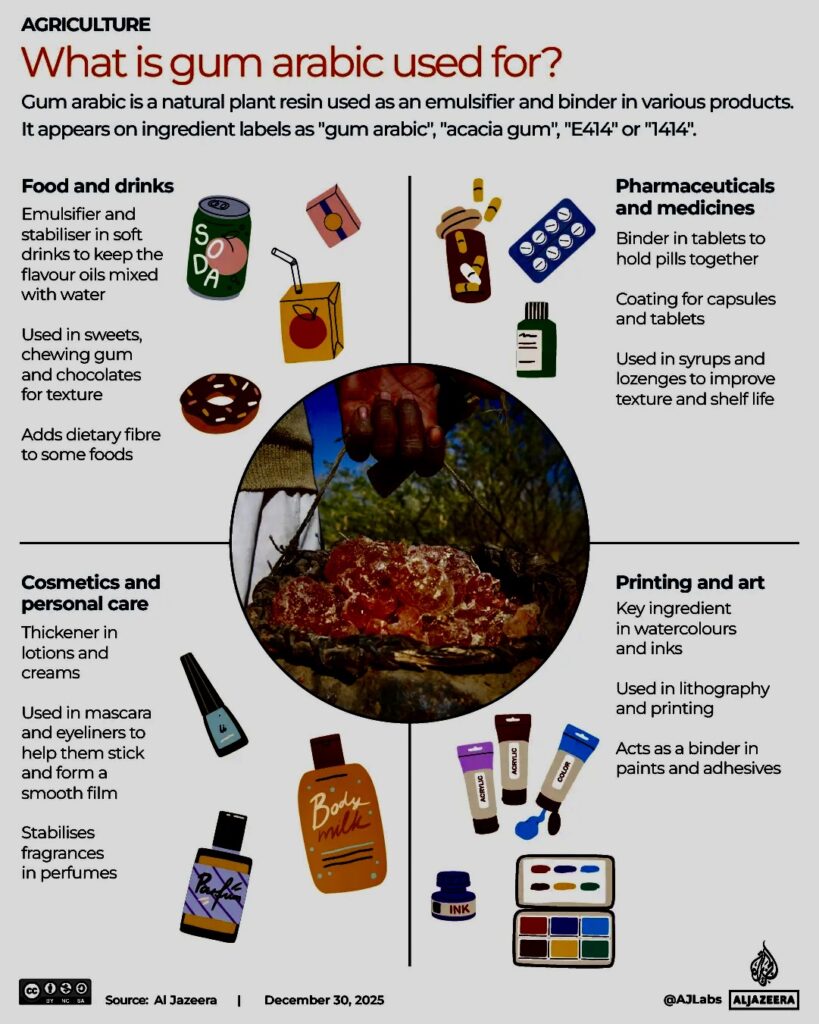
You may not be aware how ubiquitous it is. From soft drinks, cosmetics, pharmaceuticals, paints and certain foods – gum arabic is everywhere, even if you fail to notice it.
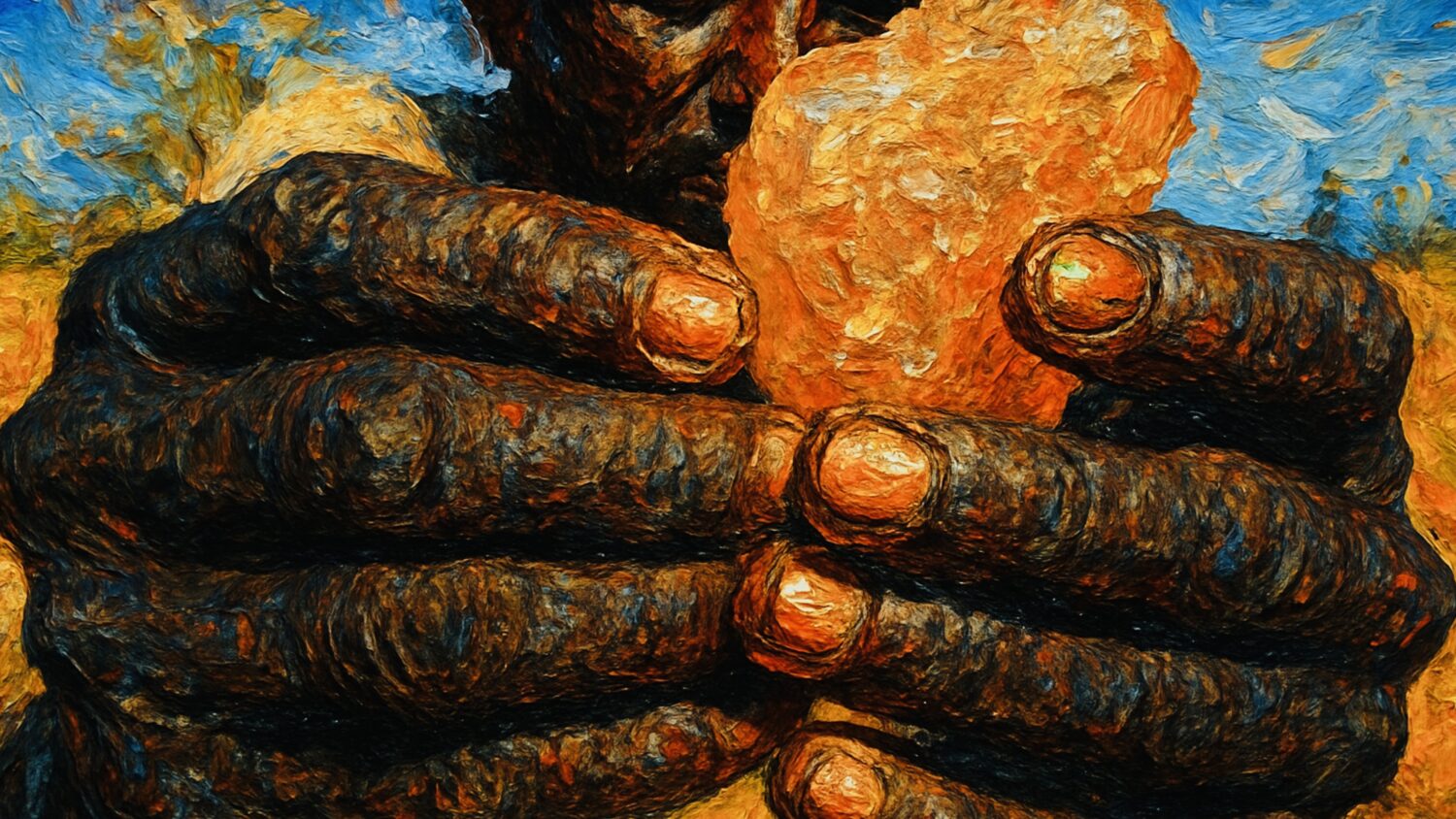
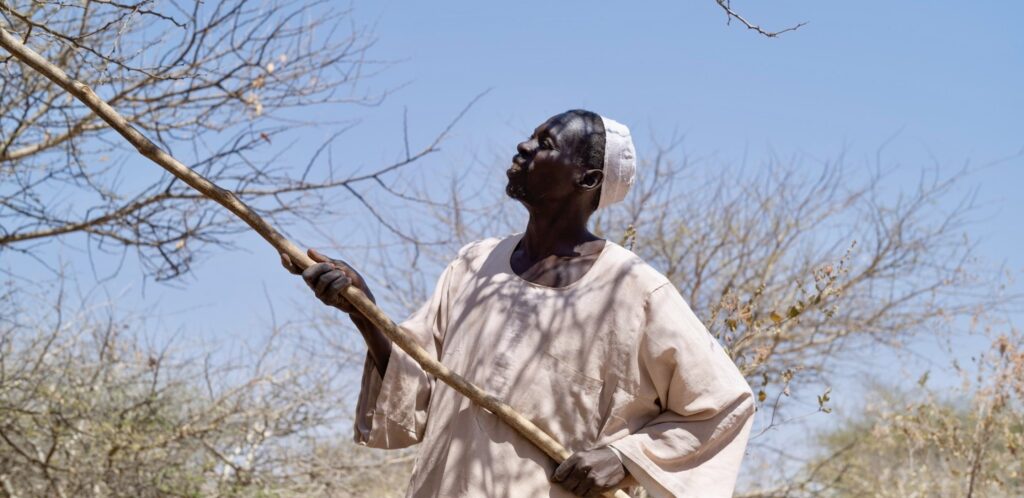
Processed by industry, its name on labels is E414. In its raw form, it is called gum arabic, or acacia gum. For poets, it embodies the “golden tears of Africa”. It is harvested by making incisions in the trunks and branches of two types of acacia trees: the Senegal acacia and the seyal.
It’s a magical tree: its sap possesses so many qualities that it’s indispensable to a multitude of industries. It acts as a binder, stabiliser, and natural thickener. It’s thanks to gum arabic that sugar doesn’t crystallise at the bottom of a bottle of a world-famous soft drink. It’s also thanks to gum arabic that some lipsticks last so well. And it’s also thanks to gum arabic that some yoghurts have their much-appreciated creaminess.
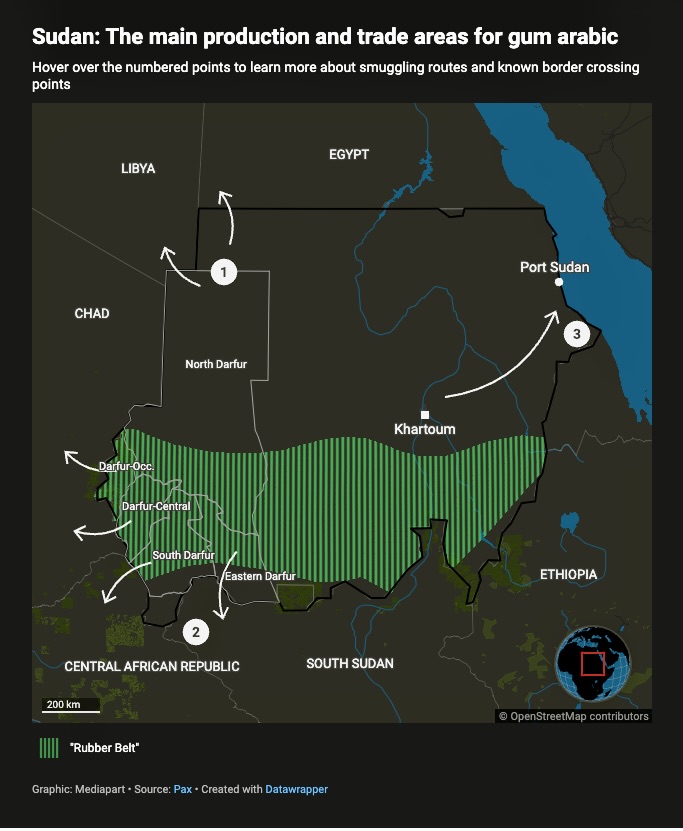
Acacia trees grow in arid and semi-arid lands, from Somalia to Senegal. But it’s Sudan that holds a near-monopoly on gum arabic production. Seventy to eighty percent of the world’s production comes from the Sudanese “gum belt”, which stretches from Darfur to Blue Nile State. It is here that the acacia tree grows and produces the hashab variety, the best of the bunch.
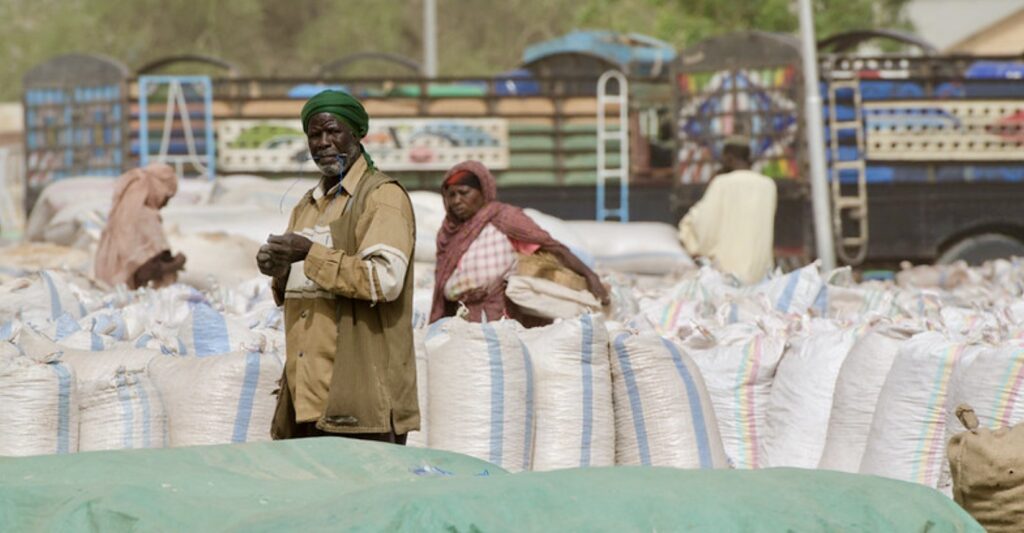
Traditionally, the harvesters are small landowners, farmers who, from October to May, make incisions in the trunks and branches, let the secretions dry on the tree and then pick these golden heaps, which they sell to traders. Raw gum arabic is bought mainly by European companies, which process it and sell it to multinationals like Coca-Cola, L’Oréal, PepsiCo, Nestlé, Mars, and Danone, among others.
An ingredient of the war economy
The two world leaders are French: two family-owned companies from Normandy, founded at the end of the 19th century. Nexira, established in 1895 and owned by the Dondain family, alone accounts for more than 40% of the world’s processed gum arabic. Alland & Robert, which celebrated its 150th anniversary in 2024, is second in the market, well ahead of its main competitor, a German company from Hamburg.
Nexira and Alland & Robert, like the entire gum arabic industry, are facing a huge problem today: the war that broke out in mid-April nearly three years ago between the national army and the paramilitary Rapid Support Forces (RSF). The latter, having seized control of most of the Darfur and Kordofan regions, also seized the lucrative gum arabic trade.
“I would say that the RSF and its affiliated militias now control 80% of the gum trees,” says a Sudanese trade expert, who wishes to remain anonymous for security reasons. “Gum arabic plays a significant role in the RSF’s war economy, alongside gold extracted from mines in the regions they control. Livestock comes next. But gum arabic is increasingly taking precedence over everything else because it is a reliable commodity and easily smuggled.”
Questionable certification
Due to this, Nexira decided to halt all imports of Sudanese gum arabic. The suspension, the company told Mediapart, lasted four months in 2023, and another three-week suspension was planned for 2025. Even though the main port for export, Port Sudan, remains under the control of the regular army, the situation is chaotic, and insecurity makes it impossible to guarantee the origin of the shipments.
Alland & Robert, also contacted, told Mediapart that it is continuing its business with all necessary precautions because, having been involved in Sudan for a century and a half and having developed an organic and fair trade supply chain, it also bears a social responsibility.
“Acacia gum is one of the few sustainable economic levers for millions of Sudanese harvesters and one of their last sources of income during times of conflict,” the company told Mediapart. “Abandoning the supply chain would deprive these communities of an essential income and further weaken an already particularly strained social fabric.”
The two companies guarantee that official authorities certify all the gum exported via Port Sudan. However, according to several sources, some of it might still originate from Darfur or West Kordofan.
“During the first two years of the war, we saw gum arabic and even livestock from the west of the country, from regions controlled by the RSF, arriving in Port Sudan and being exported,” the trade expert said. “Simply because local agreements existed: private sector actors transported gum arabic on behalf of the RSF and paid bribes at the army checkpoints to get through. This trafficking has decreased but still exists, I think, on a smaller scale. The money has continued to circulate.”
Therefore, some of the gum arabic certified by the official government could still originate from areas controlled by the RSF and circulate outside Sudan with forged certificates. However, it is impossible to confirm these allegations with certainty.
A Bloomberg investigation published in March 2025 shows, based on data from Sayari, a consultancy that tracks international trade and business transactions, that Nexira imported 3,679 tonnes from Sudan between May 2023 and January 2025.
When contacted by Mediapart, Nexira responded without specifying the volume of its imports. “To date, almost all of the acacia gum purchased by Nexira in Sudan is shipped from Port Sudan, where our suppliers have relocated their operations since the beginning of the conflict,” the company told Mediapart. “Regardless of the port of shipment, our merchandise complies with current traceability requirements and is systematically accompanied by certificates of origin validated by the authorities.”
Sudanese gum exported via neighboring countries
The Sudanese Armed Forces (SAF) also control regions of the country that produce the precious substance. Moawiyya Ibrahim heads the Tayseer producers’ cooperative in Blue Nile State and owns the wholesaler Field Trading Enterprises. He told Mediapart that the cooperative employs approximately 1,400 people. “The Blue Nile region’s production is cleaned and processed in our warehouse in Gedaref, eastern Sudan, before being sold and exported to French, Thai, and American companies,” he wrote, attaching his company’s registration certificates to his message. Despite the war, Ibrahim says the company continues to operate in Blue Nile, but it grapples with soaring inflation costs related to transport and increased government export taxes.
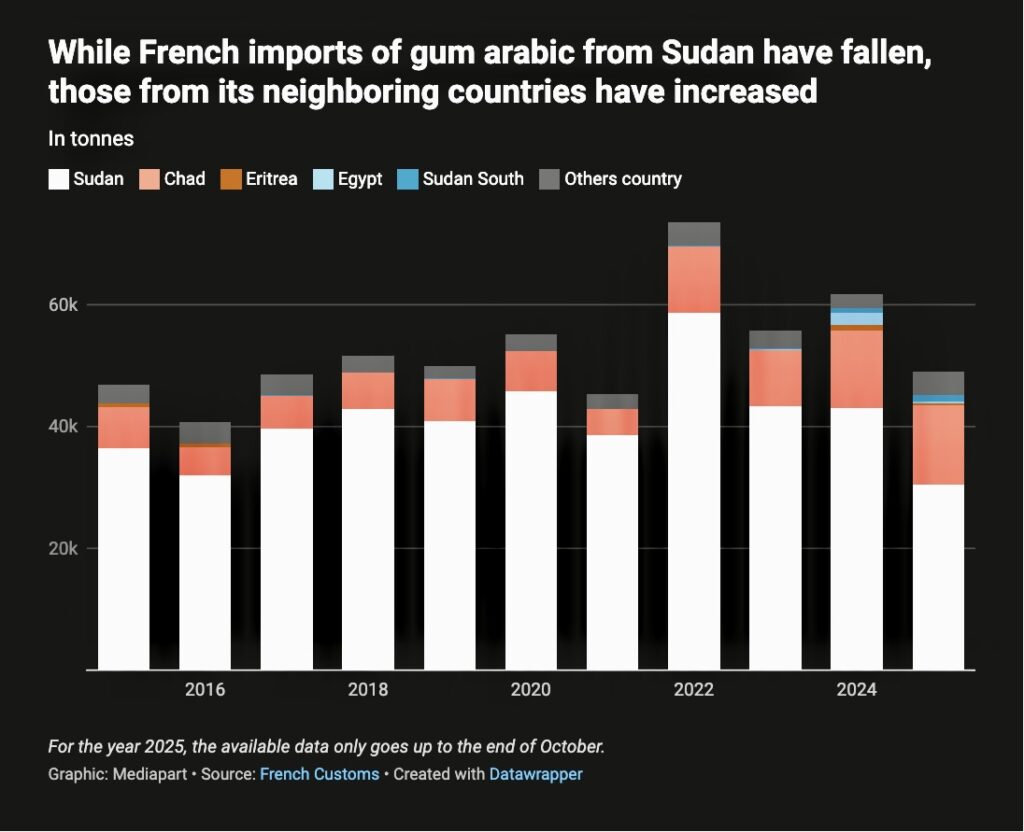
This situation, at least, partially explains the increase in the value of gum arabic imports into France between 2023, the first year of the war, and 2025, while the volume itself has significantly decreased, according to French customs figures. From 34,351 tons in 2023, the year the war began, it fell to 30,436 tons in 2025. The value, however, rose from €52.2 million in 2023 to €63.6 million two years later.
Conversely, during the same period, exports of gum arabic to Sudan’s neighbouring countries skyrocketed. “Real markets have sprung up at the borders. “The one on the border with South Sudan, near Abyei, is now one of the main ones,” Sudan researcher Mohamed Salah explains. “The gum arabic then heads to the port of Mombasa, Kenya. It’s very difficult to trace because it’s most often labelled not as Sudanese but as Kenyan, South Sudanese, or Chadian.”
Chadian exports to France, according to French customs figures, have almost doubled in three years: from 7,710 tons in 2023 to 10,620 tons in 2024 and 13,050 tons in 2025. While the country is indeed a gum producer, such an increase can hardly be attributed to increased tree productivity. The most impressive figure, however, is the leap achieved by South Sudan: 154 tons in 2023 and 1,160 tons in 2025.
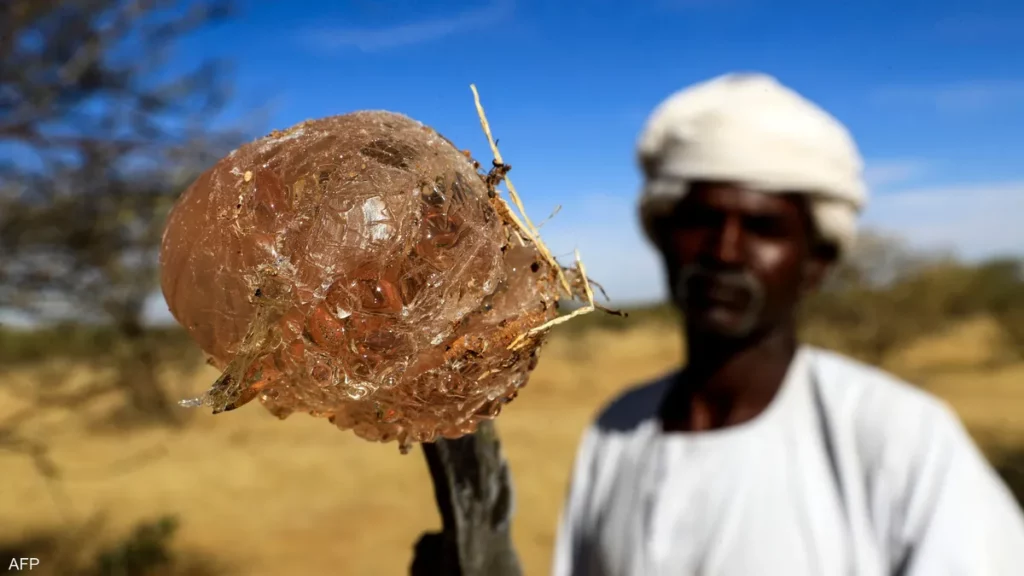
Even gum arabic harvested in areas under the control of the Sudanese Revenue Authority (SRA) is, in fact, smuggled to neighbouring countries and exported, Reuters reported in an investigation published in March 2025.
“These are not official exports; we have no data concerning the regions under the control of the RSF where there is no central authority,” Salah told Mediapart. “It is very difficult to estimate the volume and value of these exports.”
According to Bloomberg’s analysis, Alland & Robert purchased 484 tons of gum arabic from Sudanese companies and 1,161 tons from Chad in 2024. “We are diversifying our purchases and sourcing primarily from Chad, Senegal, and Kenya,” the French company responded when Mediapart questioned them about supply difficulties.
Egypt, Libya, but especially Chad and South Sudan: smuggling is taking on the characteristics of a veritable trade. Smuggling is undoubtedly illegal, but it remains highly organised. Since the end of 2025, the RSF has directly controlled the entire trade. They buy from traders within allied communities and tax the others.
Salah also points out that this trade allows the RSF to build proto-state relations with the authorities of neighbouring states, a fundamental point for Mohamed Hamdan Dagalo, who seeks political recognition.
But the main objective, Salah says, is to pay for the war. “The majority of the profits go to the militias. The trade in gum arabic from Sudan fuels the war,” he asserts.