

The secret route of colombian fighters joining the RSF
2 June 2026
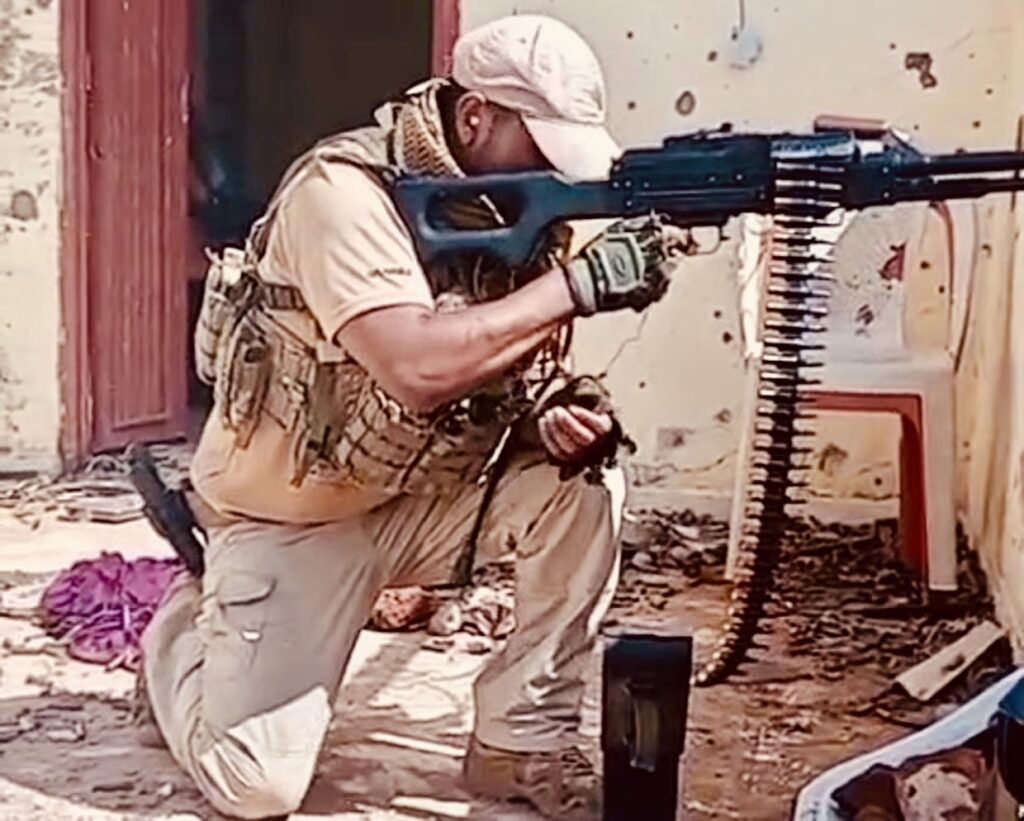
More evidence from multiple sources strengthens claims that the United Arab Emirates (UAE) is supporting a covert network to recruit and transport Colombian private military contractors to Sudan to fight alongside the paramilitary Rapid Support Forces (RSF). The latest shipment of Colombian mercenaries appears to have taken place in early May. Ayin investigations found that the foreign fighters travelled through the Central African Republic and were eventually deployed in Nyala, South Darfur State.
According to a recent report from Human Rights Watch (HRW), an Abu Dhabi-based security company licensed to work for the Emirati government appears to have hired Colombian mercenaries who were later deployed to Sudan. The company, Global Security Services Group (GSSG), reportedly has links to senior UAE officials and members of the ruling family.
The findings add to growing accusations that the UAE has continued to provide military support to the RSF despite repeated denials from Abu Dhabi. Human Rights Watch warned that such support, including the recruitment and transfer of foreign fighters, could amount to aiding and abetting war and crimes against humanity committed by the RSF in Sudan. According to Human Rights Watch, at least 300 Colombians had already been deployed by August 2024, at a time when the RSF was intensifying its siege on El Fasher.
The Colombian fighters were recruited through A4SI, a Colombian agency that targeted retired military personnel searching for overseas security work. While the operation was presented as a private security contract, evidence collected by Human Rights Watch suggests the process involved direct interaction with UAE military infrastructure.
One contractor told HRW that he departed Abu Dhabi from a “smaller special airport” outside the city. Another told HRW that when he arrived in the UAE on a private flight, he skipped immigration controls and, with other contractors, was immediately transferred to a UAE military base in Ghiyathi. “They didn’t stamp our passports. We went in and went out and there was a bus waiting for us to take us to a military base,” he said.
The deployment of foreign fighters comes as the RSF faces mounting international accusations over atrocities committed across Darfur and other regions of Sudan, including mass killings, ethnic targeting, sexual violence, forced displacement, and attacks on civilians.
The Bangui route
Separate reporting by Africa Intelligence provides additional details on the logistical route allegedly used to bring Colombian fighters into Sudan. According to the publication, Colombian paramilitaries quietly transited through the Central African Republic before entering RSF-controlled territory in Darfur.
The report states that Colombian fighters boarded a Royal Air Maroc Boeing 737 on 1 May 2026, that was travelling from Casablanca to Bangui via Douala. The aircraft reportedly landed in the Central African capital shortly before 6 a.m.
From Bangui, the men were transferred onto smaller aircraft heading north toward Birao, a remote town near the Sudanese border. According to Africa Intelligence, the fighters then crossed into Nyala, South Darfur, to join RSF forces operating in the region.
A source familiar with the operation told Ayin that some of the mercenaries used a small Russian aircraft to travel from Bangui to Birao before continuing toward Sudan. Ayin also obtained a passenger list linked to the Casablanca-to-Bangui flight. The document includes at least seven Latin/Colombian names, potentially linking the flight to the movement of foreign fighters toward Sudan.
The reported use of Bangui and Birao as transit points highlights the increasingly regional dimension of Sudan’s conflict and raises questions over how foreign fighters are able to move across multiple borders with apparent logistical coordination.
The route also underscores the strategic importance of the Darfur region for the Rapid Support Forces. Since the outbreak of the war, Darfur has transformed into one of the RSF’s most important military and logistical hubs. The region has become central to supply operations that connect Darfur with neighbouring countries, including Chad, Libya, and the Central African Republic.
Foreign fighters and a widening war
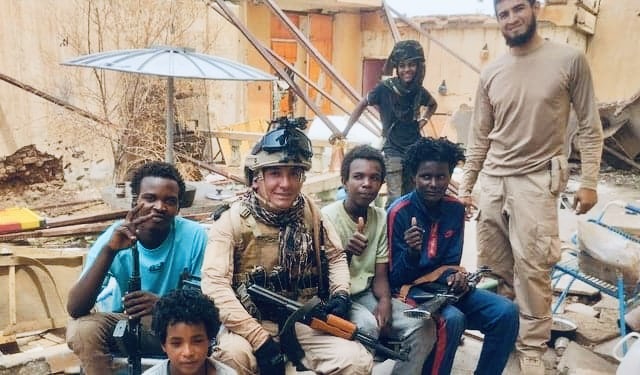
The alleged deployment of Colombian mercenaries represents an important step forward in the internationalisation of the conflict in Sudan. What began as a power struggle between the Sudanese Armed Forces and the RSF has increasingly evolved into a regional conflict shaped by foreign networks, arms flows, and cross-border military support.
The involvement of private military contractors also reflects a broader global trend in which retired soldiers from economically vulnerable backgrounds are recruited into foreign conflicts through opaque security companies. For many Colombian veterans, overseas contracts offer salaries impossible to earn domestically after years spent fighting insurgencies and armed groups inside Colombia.
But Sudan’s war presents a far more dangerous environment. The conflict has devastated major cities, displaced millions, and triggered one of the world’s worst humanitarian crises. In El Fasher alone, months of siege and bombardment have left civilians trapped in catastrophic conditions, with repeated warnings from humanitarian organisations of famine and mass civilian casualties.
The reported deployment of foreign fighters into such a conflict risks further intensifying violence while complicating efforts toward accountability. The allegations also place renewed attention on the UAE’s role in Sudan’s war. For Sudanese civilians trapped between frontlines, the arrival of foreign mercenaries signals another dangerous phase in a conflict that is becoming increasingly difficult to contain.