










Survival is impossible – Sudanese fighters in Russia
21 December 2025
A recruiter involved in enlisting young Sudanese men to fight in the Russian army told Ayin that only 15% of those recruited by Russia are actually fighting in Ukraine. Another recruiter, speaking about the risks, said that the probability of death or injury reaches 80%, with no opportunities to change their minds and return to Sudan.
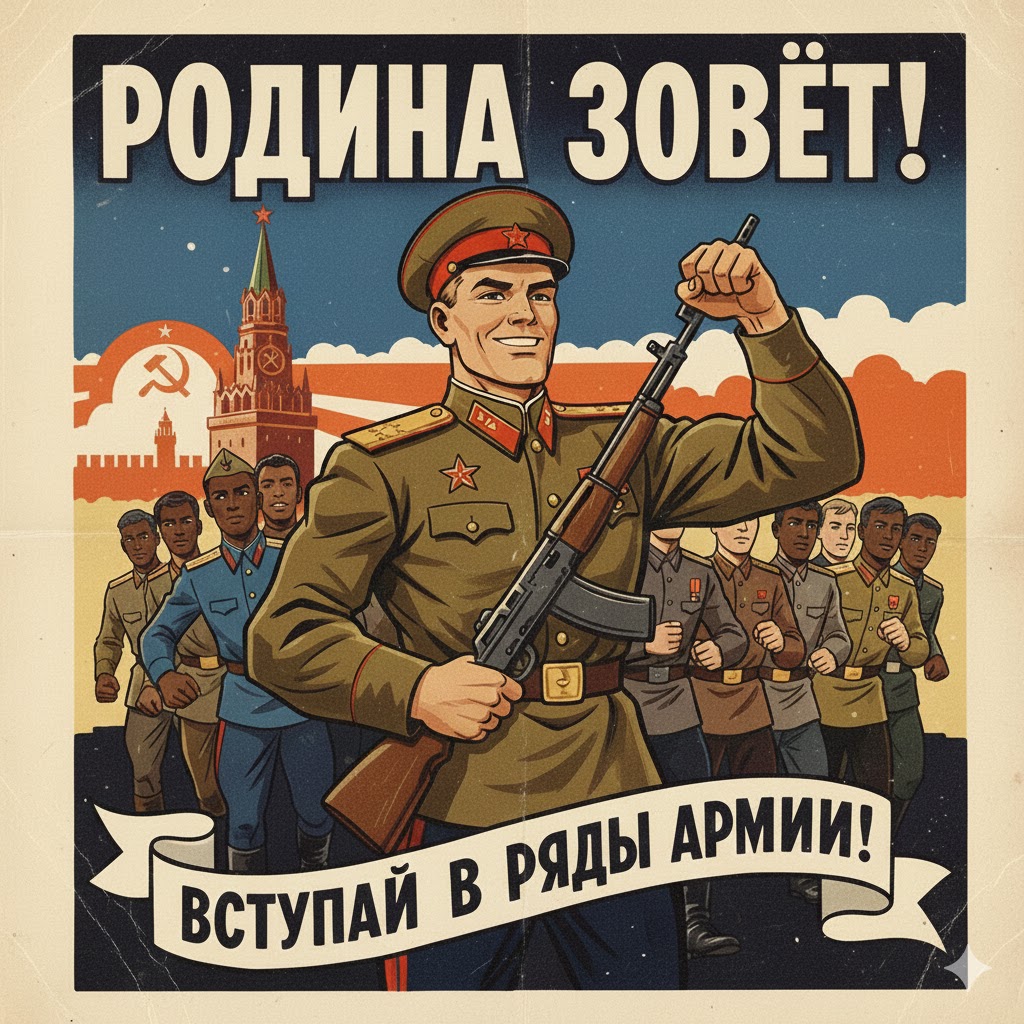
Networks that have been investigated by Ayin are actively recruiting Sudanese youths who are offered contracts for military service in Russia, with financial promises and Russian citizenship. Recruitment methods range from offering attractive salaries to engaging in brutal extortion inside Russian detention centres.
Enticed to join
A 32-year-old Sudanese man named Abdullah* arrived in Moscow on a tourist visa from the outskirts of Jeddah, Saudi Arabia. He then signed a military contract, which compelled him to take part in the fighting in Ukraine. According to his account, the main incentive was the monthly salary of $2,400 and the $20,000 start-up bonus, so he signed the contract immediately. With limited employment opportunities back home, such contracts are enticing for young Sudanese men – even if the price is risking one’s life.
“I wasn’t looking for glory; I was looking for a decent life for my family,” Abdullah told Ayin. “My parents need treatment, and my family is going through a very difficult financial situation,” he said from inside Russian territory.
After the outbreak of war in Sudan, Abdullah left for Saudi Arabia in search of a source of income to support his family: “We are a large family, and my parents are elderly and need medical treatment and have many expenses,” Abdullah says. He worked briefly as a driver but lost his job five months ago and has been unemployed ever since, which has left him feeling—as he describes it—“greatly frustrated and fearful of the future.”
One night, while browsing Facebook, Abdullah came across a post by a Sudanese man named Wael Mahjoub, who identified himself as a volunteer in the Russian army and invited young men to join for a “generous” salary, promising to facilitate all procedures. “I saw Wael’s post; he said he was in the Russian army, inviting young men to volunteer, and that he would help with every step,” Abdullah said. Wael contacted Abdullah directly and referred him to a company that could obtain a tourist visa for a fee. They met him at the airport upon his arrival in Russia and took him to his contracting location.
“I signed the contract in the presence of Wael Mahjoub, and frankly, I didn’t pay attention to the details of the poorly arranged contract.” According to Wael and the terms of the contract, Abdullah was supposed to receive a monthly salary of $2,400 and a bonus of $20,000. He then underwent 14 days of training and is now, he says, “on his way to the front lines.”
From Khartoum, the capital of Sudan, a statement by 24-year-old Ahmed* recounts how military conscription in Russia became a collective solution for a group of his friends. After months of following posts on Facebook by young Sudanese men who had gone to Russia, received generous salaries, and obtained Russian citizenship, he says, he began to consider joining. He wasn’t alone; five of his friends shared the idea, and their discussions transformed into a practical decision to apply.
The six young men contacted a middleman. Ahmed says the process was “easier than expected”: they only needed to show their passport, no fees were charged, and the agency paid for the visa. They agreed on a salary of $2,400 per month for a year, plus a $15,000 bonus to be paid—as they were told—in the first month. Ahmed adds, “We’re now waiting for the visa… and as soon as it arrives, we would travel immediately.”
But the most sensitive aspect of the story for Ahmed was within his family. He knew very well that his family would not accept him going to a war front. So he resorted to an alternative story: “I told my family that I had gotten a job as a building guard – they were convinced because it was impossible for them to accept the idea of me going to fight in the Russian army.”
Brutal blackmail
However, recruitment in the Russian army is not solely based on enticement; Sudanese men residing in Russia also face a different form of exploitation.
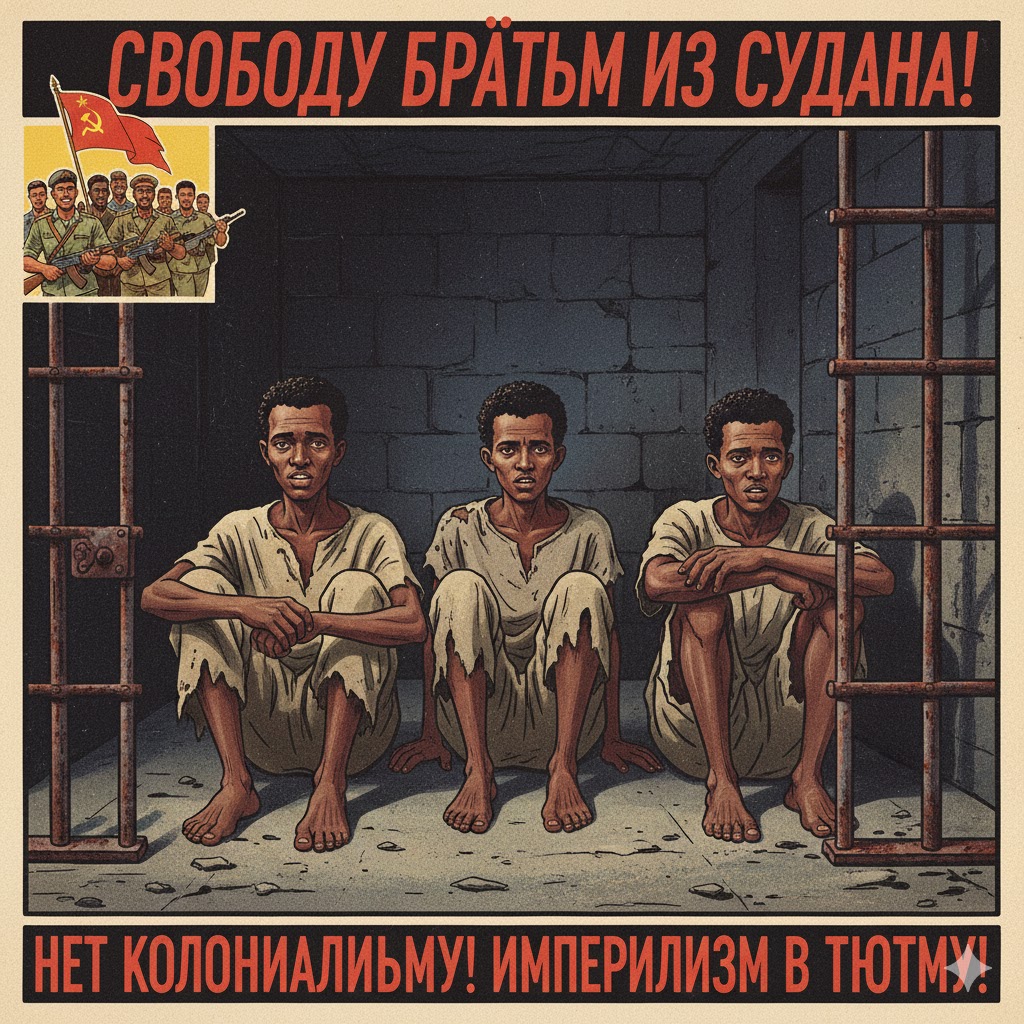
Ali* recounted to Ayin his harrowing experience, detailing how he went from being a legal resident in Russia to a detainee whose suffering is being used as leverage to force him into military service. Ali asserts that his troubles began when he moved to another city within Russia for work. Police raided the company’s premises and demanded to see the employees’ documents. Ali reiterates that his legal status was sound. “I have a valid visa and a valid residency permit, and foreigners have the right to regularise their status. This is what the Russian president, Vladimir Putin, has said.”
But the local authorities did not follow their own laws regarding the status of foreign residents. “I was taken to a detention centre with three others in a cramped room no larger than two metres by two metres, brightly lit and under camera surveillance. We remained there for 31 days in detention, two of which were without food or water,” Ali said. They constantly monitored the room and never turned off the lights. For Ali, “it was a mental slaughterhouse”. Eventually, a sham trial was held for the four men on a public holiday.
In the expedited hearing, Ali was sentenced to deportation, a fine, and a five-year ban from entering Russia. “Then they asked me if I would agree to join the Russian army—all these decisions would be overturned—and that’s when I understood the real objective.”
Ali returned to Sudan without his phone, without his residence permit, and with only the clothes he was wearing, stressing that he had never thought about fighting and did not want to. “I am not ready to be part of a war between brothers. I have Russian and Ukrainian friends, and I wish peace for both sides.”
The recruitment agency
The network behind the recruitment operation uses an attractive online interface and reputable Russian civilian companies as a cover to transport fighters to the battlefronts.
Wael Mahjoub, who runs a Facebook page under his name, appears as one of the most prominent promoters of the idea of joining the Russian army. In a lengthy post, Mahjoub defends the stereotype of Sudanese joining the Russian army as “mercenaries” and presents clearly promotional content, highlighting financial incentives.
“A monthly salary of $2,400, a starting bonus of $10,000 or $15,000 depending on the intermediary company, and the possibility of obtaining citizenship within six months” is what Mahjoub advertised in his post. He also mentions a $50,000 end-of-service bonus upon completion of one year but later clarifies that “profit-driven” companies pocket this bonus in exchange for handling all the procedures.
According to Mahjoub, applications submitted through the direct government link have been discontinued, and the process is now conducted exclusively through “tourism or security companies contracted with the Ministry of Defence.” He specifically names three companies—”Express to Russia” and “PGS,” while also warning of the presence of companies offering “poor services.”
Mahjoub uses a discourse that connects economic despair in Sudan to the desire for combat migration, stating that many Sudanese individuals seek his assistance with applications and are fully aware of the associated dangers. He also uses his discourse to reframe risks as “a normal part of life”, compared to what he describes as insecurity within Sudan.
The recruitment process occurs through multiple networks; another recruiter who spoke to Ayin mentioned that it sometimes involves more honest but harsher terms. According to this source, Sudanese recruited to join the Russian army are placed “on the front lines, within the trenches. The survival rate is extremely low, at 15 percent.”
One of the recruitment agencies mentioned in the testimonials from young Sudanese men who joined the Russian army is “Express to Russia”, an online company that claims to be registered in Moscow as a travel and visa agency. The Ayin investigation team was unable to find any official documents or data linking the company to the Russian Ministry of Defence, contracts indicating a role in recruiting foreigners, or any declared activities beyond traditional travel services.
Another recruitment agency mentioned by the testimonies, the Bi-GJS Group, has no official website or verifiable business registration data in the Russian register, despite being listed in a Russian business directory.
Russian Rhetoric
Since the outbreak of war in Ukraine, Russia has reshaped its approach to foreign fighters, consistently referring to them as “volunteers” in official discourse. In March 2022, President Vladimir Putin announced to the National Security Council that “thousands of volunteers from the Middle East” had expressed their willingness to fight “of their own accord, not for money.” In subsequent remarks, former Defence Minister Sergei Shoigu stated that his ministry had received “around 16,000 applications” from foreigners to join the fighting in Donbas.
But this rhetoric later shifted. In September 2023, Putin endorsed a Defence Ministry proposal in June 2023 to require paramilitary groups—such as Wagner—to sign formal contracts with the state. In January 2024, Putin issued a decree granting Russian citizenship to any foreigner fighting under government contracts, and in October 2025, the government approved regulations prohibiting the deportation or extradition of foreign contract fighters to their countries of origin.
This legislative shift – as explained by Russian legal analysts – aims to transform the presence of foreigners on the front lines from “mercenaries” to “regular soldiers with contracts”, as Article 15 of the Federal Law stipulates that military service for foreigners is only carried out through contracts with the Ministry of Defence.
However, the file is not without sharp criticism. Russian human rights organisations, including the Migrant Rights Centre and the Prisoners’ Rights Service, have documented widespread cases of coercion by foreign migrants and prisoners to sign petitions, including torture and the deprivation of water. Human rights activist Olga Romanova considers these practices illegal and contrary to Russian law itself.
In this complicated situation, bringing in foreigners to fight in Russia seems to involve both official methods linked to government contracts and secretive ways that use middlemen and financial pressure, with no clear information about how many or which nationalities are really involved in the war.
“Contracted soldiers”
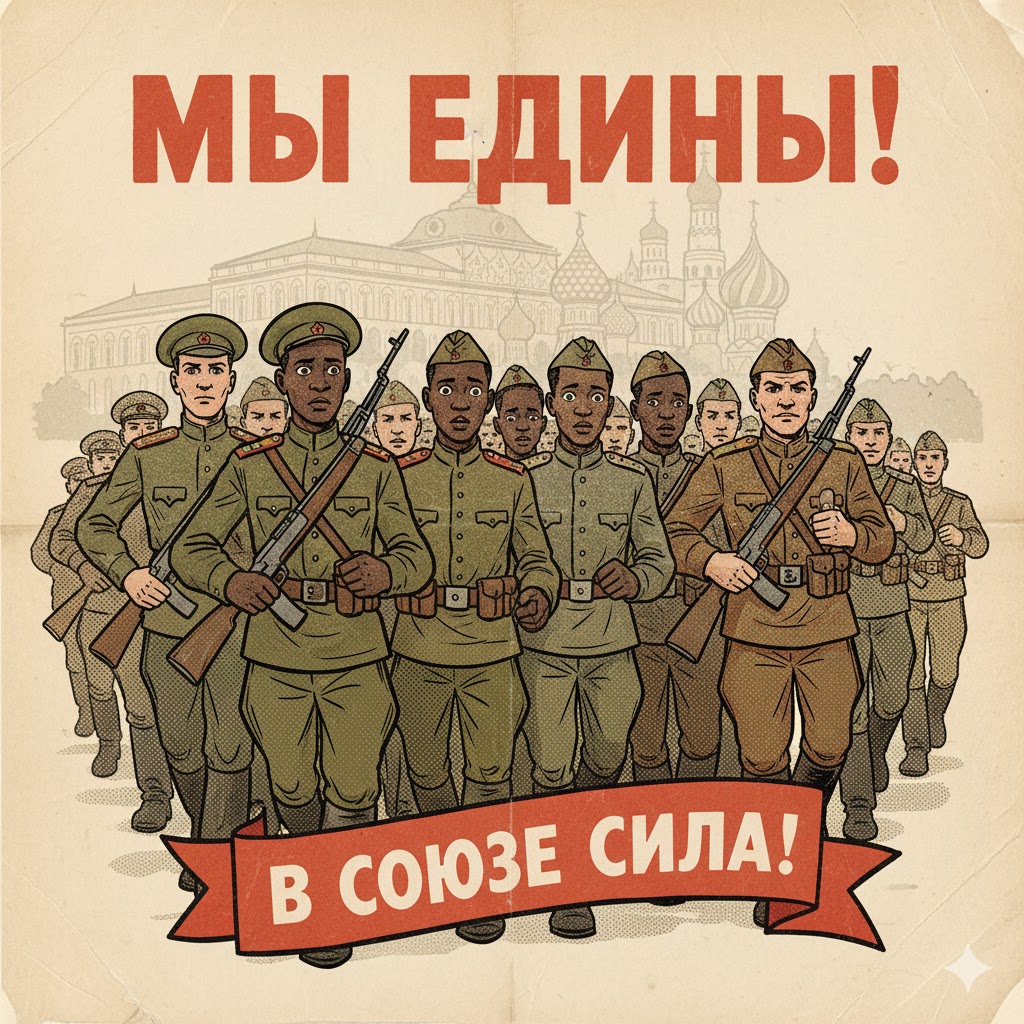
Legal expert Abdelrahim Mohamed points out that Russia has succeeded in creating a legal framework that legitimises the presence of foreign fighters by transforming them from “mercenaries” into “contract soldiers”. Since November 2022, Putin’s decrees have allowed foreigners to sign military contracts and facilitate their rapid acquisition of Russian citizenship, a powerful incentive that attracts young Sudanese men, Mohamed added.
The lawyer asserts that the huge sums being promoted (such as a $50,000 end-of-service bonus) are most likely marketing promises from intermediaries and not fixed clauses in the Russian military service law.
The lawyer notes that even though the contracts protect them as “regular soldiers” in Russia, foreign nationals working under private contracts in conflicts unrelated to their home countries may be considered mercenaries by their home countries and international law, which could lead to legal trouble.
As recruitment networks become more apparent and the number of young Sudanese risking their lives grows, Sudanese authorities remain silent on the matter. The Sudanese Ministry of Foreign Affairs, the Ministry of Information, and the Sudanese embassy in Moscow did not respond to repeated attempts to contact them.
* A pseudonym was used to protect the source’s identity.