












Egyptian F-16s struck Sudanese gold miners with 400 kg bombs
15 October 2026
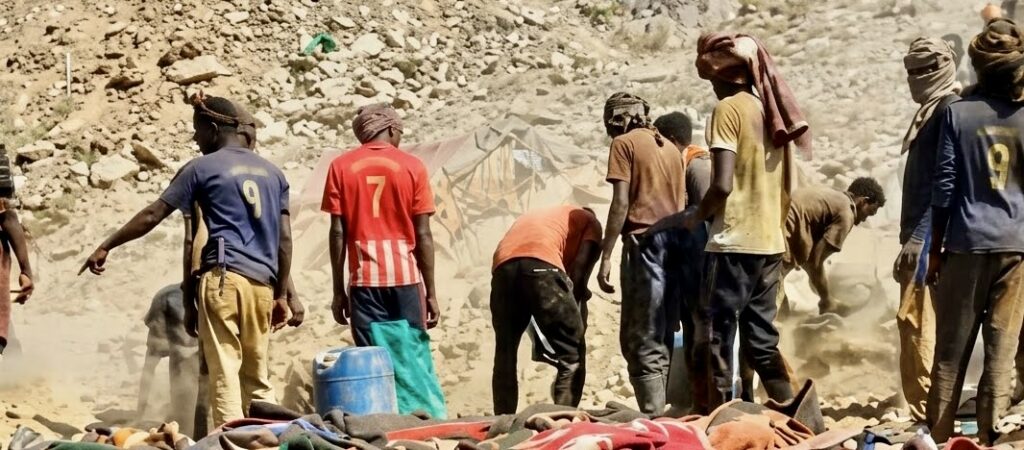
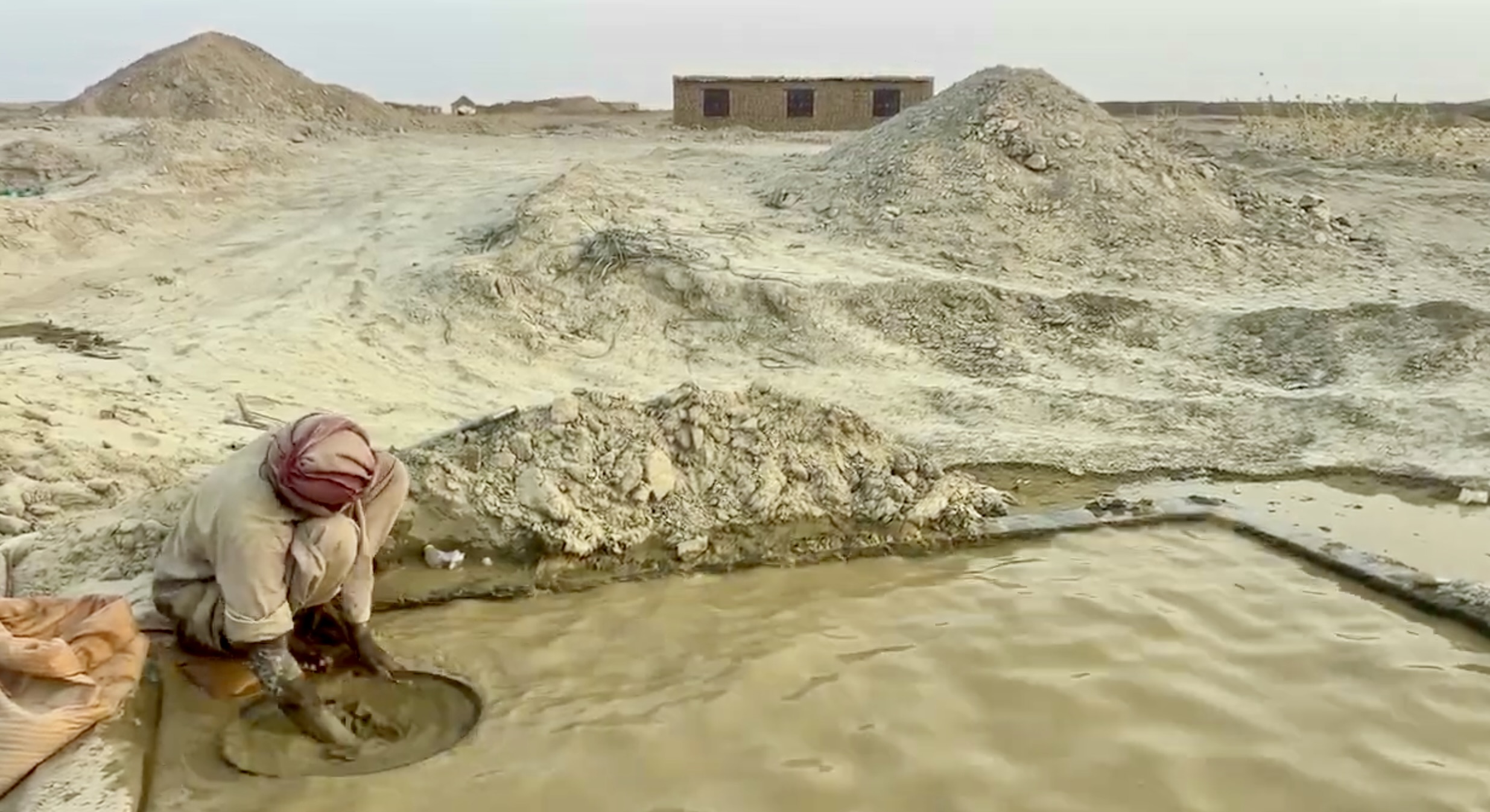
The Egyptian military conducted at least five air strikes using US-made F-16 fighter jets on Saturday targeting artisanal miners in the Al-Agaidat gold mine in the North Al-Wadi area. The strikes killed an estimated 72 people, hitting miners working in the disputed Egypt-Sudan border region known as the Hala’ib Triangle, the Emergency Lawyers reported. One health official treating the wounded told Ayin the number of casualties is likely higher, ranging from 150 to 250 deaths.
The air strike, using Egyptian-made, unguided Naser bombs, took place on land overseen by the Sudanese Armed Forces (SAF), closely allied to the Egyptian government, and located several hundred miles from Sudan’s conflict zones.
In collaboration with open-source and satellite investigators, Faisal al-Sheikh, Tom Bike, and Ali Ibraihim, Ayin managed to identify two locations associated with the strikes and evidence linking the operation to US-made F-16 fighter jets, Egyptian-made bombs, and two Egyptian military checkpoints within Sudanese territory.
“The first bombing took place on Saturday, 10 October, at approximately 10 am,” one eyewitness requesting anonymity told Ayin. “This time coincides, to some extent, with the period when workers gather and prepare to engage in or continue their activities at the mining sites, depending on the nature of the work in the area.”
According to the same source, the Egyptian warplanes struck once and then stopped for a period before launching a second attack. “During the interval between the two attacks, miners and workers attempted to check on their colleagues, friends, and brothers who were working alongside them in North Wadi,” the source said. They tried to ensure their safety and rescue the injured, but the aircraft returned, increasing injuries and deaths.”
Artisanal miners
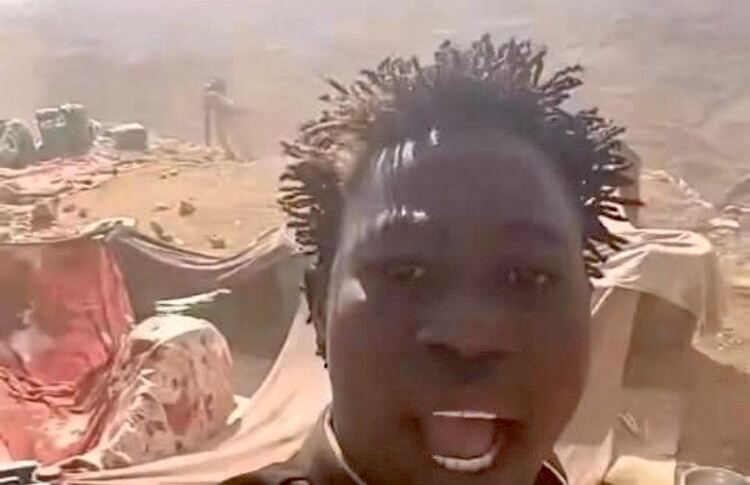
Following the strikes, online footage showed the billowing smoke of the attack, along with dozens of bodies and body bags scattered across the area. Among the footage was an emotional message from a 16-year-old victim identified as El-Ttayeb al-Hadi Ahmed Hamed, who, sadly, later died.
Addressing his family, he spoke about forgiveness, debts and his final wishes. “I forgive you all, and I hold no grudges against you. All I ask is that you forgive me too,” he said. He then turned to the practical details he wanted his family to settle. “And don’t forget to tell Adam, the shopkeeper, that he is owed two kilos of sesame seeds. Give them to him.” He also asked his family to settle a debt owed to Wad Ahmed Mohamed. “Wad Ahmed Mohamed is owed four sacks of sorghum. Make sure you give them to him. This is the most important part of my will.” Finally, he referred to someone who owed him 5,000 Egyptian pounds, approximately $100 USD, asking his family to tell the person to donate the money as charity on his behalf.
The message, focused on settling modest debts and seeking forgiveness, offered a personal account of the lives caught up in the attack. It also underscored the human consequences of military operations against people whose activities, whatever their legal status, do not by themselves establish that they are legitimate military targets.
Egypt’s response
On Monday, an Egyptian military spokesperson stated that its soldiers were engaged in a “campaign to combat illegal gold ore mining” and “to impose full sovereignty within the borders of the Egyptian state and protect its capabilities and national resources.” The campaign allegedly dropped warning pamphlets in specified locations, the spokesperson stated, and advised people to disregard “misleading rumours that aim to destabilise the brotherly relations between the Egyptian and Sudanese peoples.”
This incident is not the first time. In June, the Egyptian military confirmed in a statement that they conducted a ground and air offensive in the same mining area, killing 23 miners. The offensive, according to the statement, was part of Egyptian security operations in its southern border territory against gold prospecting and smuggling.
The disputed Hala’ib Triangle, which Egypt controls militarily, is a mineral-rich area both Sudan and Egypt claim sovereignty over. Egypt’s position on the border dispute is relevant to its explanation of the latest operation. But the existence of a territorial dispute does not, in itself, resolve questions about the treatment of civilians or the legality of military action against them, says political analyst Kholood Khair.
“This is the second time Egypt has bombed Sudanese miners and the second time there has been silence from the authorities,” says Khair, director of the Confluence Think Tank. “There is no earthly reason that Egypt should strike civilian artisanal miners, whether they’re on the Sudanese or Egyptian part of the border – no reason except that the Egyptians know full well that the SAF authorities won’t challenge them on it.”
SAF’s response
Khair’s assessment raises a question beyond the attack: whether Egypt’s repeated use of military force against Sudanese miners reflects an expectation that Sudan’s military leadership will refrain from challenging Cairo since Egypt is the army’s main backer in its war with their former allies, the paramilitary Rapid Support Forces.
On the same day as the Egyptian statement, the Transitional Sovereignty Council, under the leadership of Army Chief Lt-Gen Abdelfattah al Burhan, issued a statement of condolence to the Sudanese miners. Burhan said a fact-finding committee would investigate the circumstances of the incident and submit a report of its findings. The Sovereign Council leader had announced a similar investigation for the June attack. The authorities have yet to release the findings of this earlier investigation.
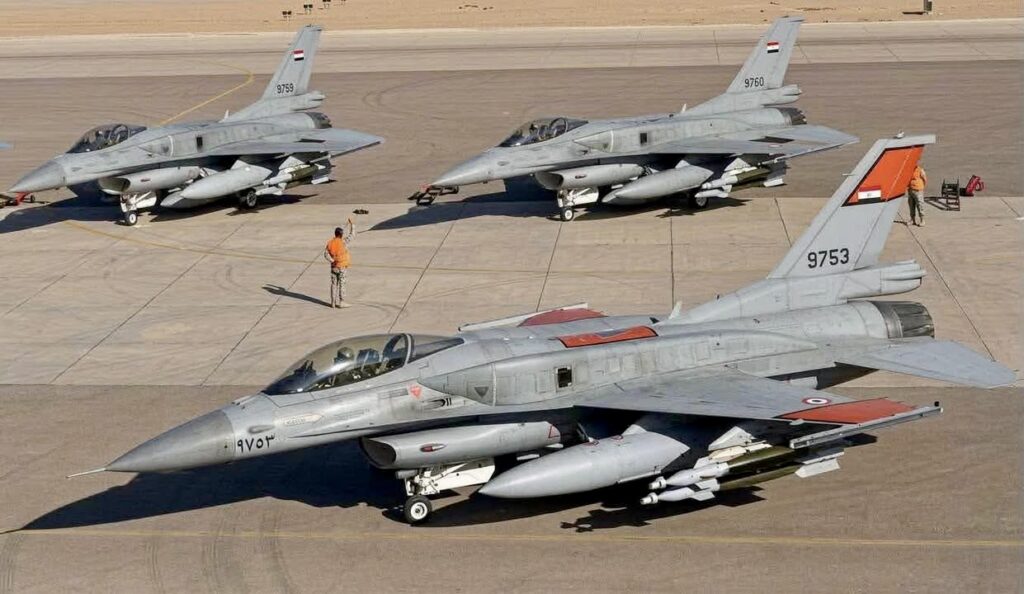
F-16s and Egyptian-made bombs
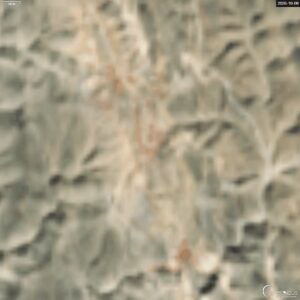
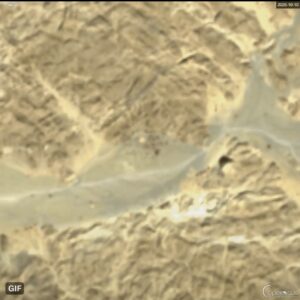
Ayin’s investigation identified two locations associated with the latest attack at coordinates 22.078340, 34.906890 and 24.842480, 34.579230. The coordinates provide geographical reference points for examining the attacks and comparing available visual evidence with the reported locations. Their precise relationship to the international border, which is the disputed Hala’ib Triangle, is crucial for understanding the attacks.
Ayin also identified US-made F-16 fighter jets as the aircraft used in the airstrikes. The F-16 Fighting Falcon is a multirole combat aircraft capable of carrying different types of air-to-ground weapons. Its identification is significant because it helps establish the military capabilities involved in the operation.
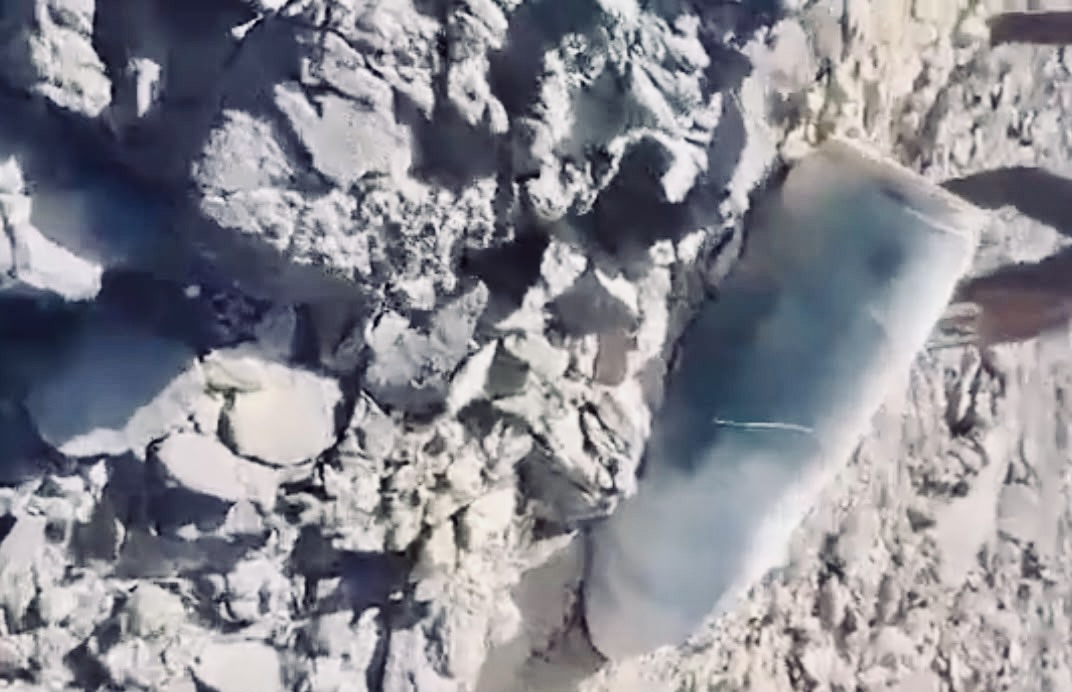
Ayin further identified the munitions used in the two strikes as Egyptian-made Naser unguided bombs, each weighing approximately 400 kilograms. Unlike precision-guided weapons, unguided bombs lack a guidance system that steers them toward a target after release.
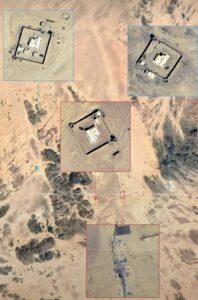
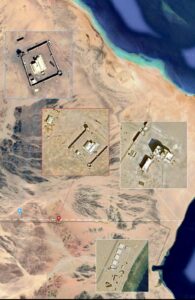
Ayin’s findings also identify two Egyptian military checkpoints that satellite imagery indicates have been present inside Sudanese territory since the beginning of the war. The first location is at 21.9964177, 36.8764284, the second is at 21.9970615, 36.7078000. The checkpoints, according to one security expert, are set up to survey the border region and prevent gold smuggling.
Targeting civilians
The findings raise a fundamental question: why were fighter jets and heavy air-to-ground unguided munitions used against artisanal gold miners? And what would allow one sovereign nation to target nationals of another nation in such an egregious manner while the former maintains a military presence in the latter?
The Egyptian army has presented the operation as a measure to protect its borders. The miners’ presence near an international border, or even an allegation that they crossed it illegally, would not automatically make them legitimate military targets. Under international humanitarian law, where applicable to an operation, the principles of distinction, proportionality and precautions in attack govern the conduct of hostilities.
According to one gold trader and miner who spoke to Avaaz, Sudanese miners had been working in the area for many years, and an influx came during the war in search of work. “These miners are not criminals,” he said. They risk their lives every day, going several metres underground with ropes, not knowing whether they will come back alive. They work very hard just to earn enough money to feed their families.”
The health worker Ayin spoke to, who is treating some of those wounded from the air strike, shared similar sentiments. “In truth, what happened represents a painful humanitarian tragedy for anyone with a living conscience. It is difficult to accept what happened to Sudanese citizens who were working in mining areas in search of a livelihood […] they were not in a situation that would make them legitimate military targets simply because they were present in the area.”