

7 October 2026
We have developed a series of weekly news briefs covering major topics of the week to keep our readers informed about the multitude of events taking place in Sudan amidst the ongoing, devastating war.
In this week’s edition:
- Battles in the Blue Nile region displace thousands near Roseires Dam
- Importers: A decision to ban fava beans will deprive millions
- Airstrike targets two WFP trucks in South Kordofan
- Washington discusses with UN envoy for UN presence in Darfur
- El Alamein Summit: Ethiopia calls for Red Sea access
- Army and joint forces make gains in North Kordofan, West Darfur
- UN extends mandate of Sudan fact-finding mission for another year
- Sudanese motorists queue overnight for fuel amid worsening shortages
 1) Battles in the Blue Nile region displace thousands near Roseires Dam
Military clashes in Sudan’s Blue Nile state escalated sharply over the past week, with heavy fighting in the Al-Kadalo area of Al-Roseires province—located 50 to 60 kilometres from the Roseires Dam—displacing thousands of civilians. Militias shelled civilian and government sites, culminating in suicide drone attacks targeting the governor’s residence in the regional capital of Damazin, while displaced families face urgent shortages of food, shelter, drinking water, and medical care.
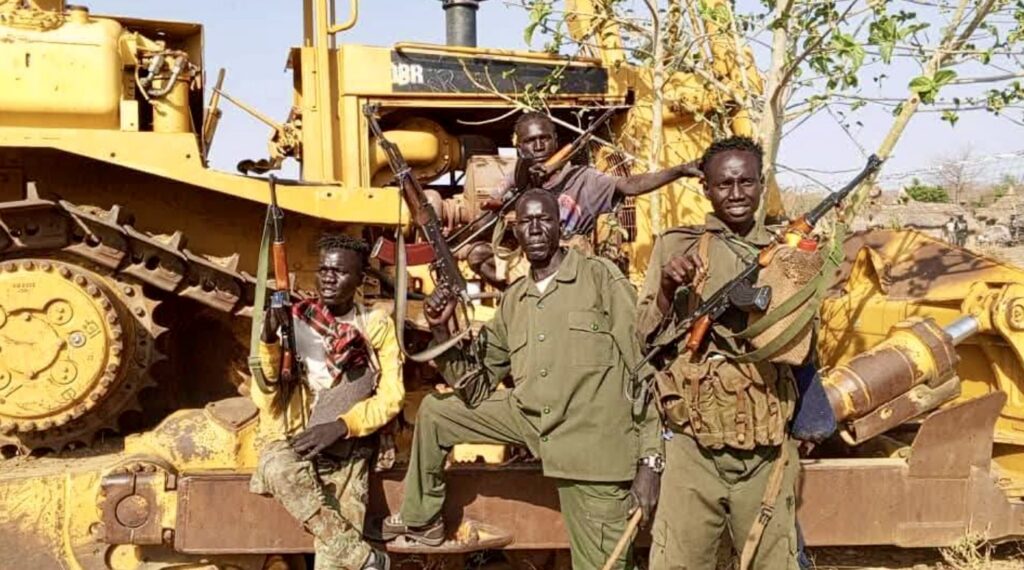
The confrontations on October 2 and 3 centred around Minza and Jabal Al-Nimr. On Saturday, the RSF-controlled Tas’is (“Foundation) Alliance claimed control over Al-Kadalo and surrounding areas, including Minza, Bashkarkat, and Jabal Al-Nimru, stating it engaged government forces and seized military vehicles. Conversely, the Sudanese armed forces’ 4th Infantry Division Command reported that its troops and allied units repelled the attack, dealing a heavy blow to the Rapid Support Forces (RSF) and the SPLM-N in Minza and Bashkarkat.
The fighting triggered a widespread exodus from the Kadalo administrative unit, scattering families toward Al-Azaza, Al-Roseires, Qunays Sharq, and nearby rural areas. A government official stated that the entire population of the Kadalo unit fled in confusion, making an accurate headcount difficult. “The displaced people arrived in a state of fear and confusion, and the process of counting all the families in Al-Azaza has not yet been completed, while other numbers were distributed between Al-Rusayris and Qunays,” he said
In the town of Al-Roseires, Emergency Response Rooms teams registered 483 families (2,415 individuals) across five temporary shelters, including the Marhab, Taha Al-Shaib, Nusaybah Bint Ka’ab, and Al-Shuhada schools, while noting two children separated from their families. An Al-Roseires Emergency Room volunteer emphasised that censuses are ongoing and warned of vulnerable populations fleeing on foot. “There are large numbers of elderly and disabled people continuing their journey on foot, which needs a rapid follow-up and an urgent humanitarian response.”
The sudden influx comes as neighbouring Wad Al-Mahi province is already struggling to accommodate thousands who fled earlier conflict in Geiysan province. A government official speaking anonymously to Ayin noted that “the number of displaced people from Geisan received by Wad al-Mahi, according to provincial data, has reached approximately 64,000, distributed across 14 camps and shelters.”
Local authorities, youth and women’s initiatives, and overseas Sudanese donors are mobilising emergency aid alongside local Zakat offices. “The governorate receives displaced people from their arrival points and coordinates with vehicle owners and benefactors to provide fuel and transport them to shelter camps,” the government source said.
Beyond active combat zones, economic activities have ground to a halt, forcing several mining companies to abandon the Balqwa area. Government officials cautioned that panic driven by unverified security rumours—such as false reports of an RSF attack that sparked displacement from Balqwa and City 4—must be managed with care. “Failure to deal firmly with rumours could lead to new waves of displacement,” stressed another government source, who requested anonymity.
Meanwhile, terror gripped Damazin following drone and suicide strikes targeting critical sites, including the governor’s residence, which suffered damage to its outer wall, kitchen, and guard post. Describing the aftermath, a regional government official told Ayin that “the attack resulted in minor injuries to three members of the security detail, who received the necessary medical treatment.”
 2) Importers: A decision to ban fava beans will deprive millions
Sudan’s recent decision to ban Egyptian fava bean imports has sparked fierce criticism from traders and severe concern among citizens as prices for the primary dietary staple skyrocket. Announced earlier this month by Agriculture Minister Ismat Qureshi to encourage local farming, the ban has already pushed the price of a bean sack in local markets to 1.05 million Sudanese pounds ($140 USD), severely compromising food accessibility across the country.
Importers contend the policy is disconnected from market realities, noting that Sudan has failed to achieve self-sufficiency in fava beans for over 30 years. According to import trader Ahmed Abdel Hamid, foreign markets cover up to 60% of domestic demand, with Egyptian food exports to Sudan alone topping $76 million in the first half of this year. Hamid cautioned that the ban carries political dimensions rather than agricultural feasibility, warning it will deprive millions of their core daily meals.
The price surge compounds a broader economic crisis that has been escalating since April 2026, forcing a drastic shift in consumer behaviour. With individual fava beans orders reaching up to 10,000 pounds ($1.50 USD) in some cities, many low-income families are being priced out of their traditional daily meals. In response, residents are increasingly substituting fava beans with lentils or cheaper vegetables served with peanut butter.
Because Sudan remains heavily reliant on agricultural imports from neighbours like Egypt and Ethiopia to bridge its supply deficit, critics warn that domestic farming cannot immediately absorb the resulting shortfall. Without alternative supply solutions or policy adjustments, the import ban risks worsening food insecurity for vulnerable households nationwide.
 3) Airstrike targets two WFP trucks in South Kordofan
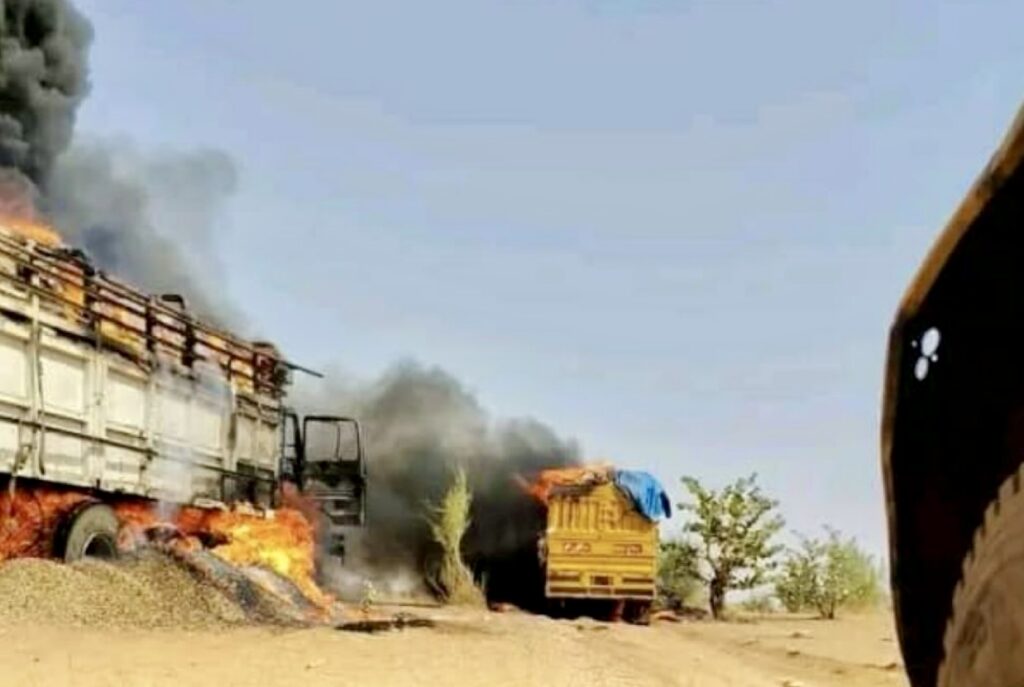
The World Food Programme (WFP) has strongly condemned a deadly airstrike that targeted two of its contracted food aid trucks in Sudan’s South Kordofan state, killing one driver. The incident occurred in the early hours of Saturday, October 3, as the vehicles—clearly marked as humanitarian transport—were en route from Dilling to Kadugli.
The United Nations agency reported that work is underway to gather further details regarding the circumstances of the strike and determine the extent of damage to the food shipment. While the WFP did not name who was responsible for the attack, it called for an immediate and impartial investigation to ensure those accountable are held to task.
The airstrike came just one day after an improvised explosive device hit another WFP truck in Dilling shortly after it delivered life-saving food assistance. WFP emphasised that both incidents underscore the increasingly perilous security environment in Sudan and the extreme risks aid workers face when delivering assistance to vulnerable communities.
Expressing deep condolences to the fallen driver’s family, friends, and colleagues, the WFP called on all warring parties to respect international humanitarian law, protect civilians and infrastructure, and ensure the unhindered movement of humanitarian personnel. Despite the heightened danger, the agency reaffirmed its commitment to safely delivering critical support to the millions across Sudan who depend on aid.
 4) Washington discusses with UN envoy for UN presence in Darfur
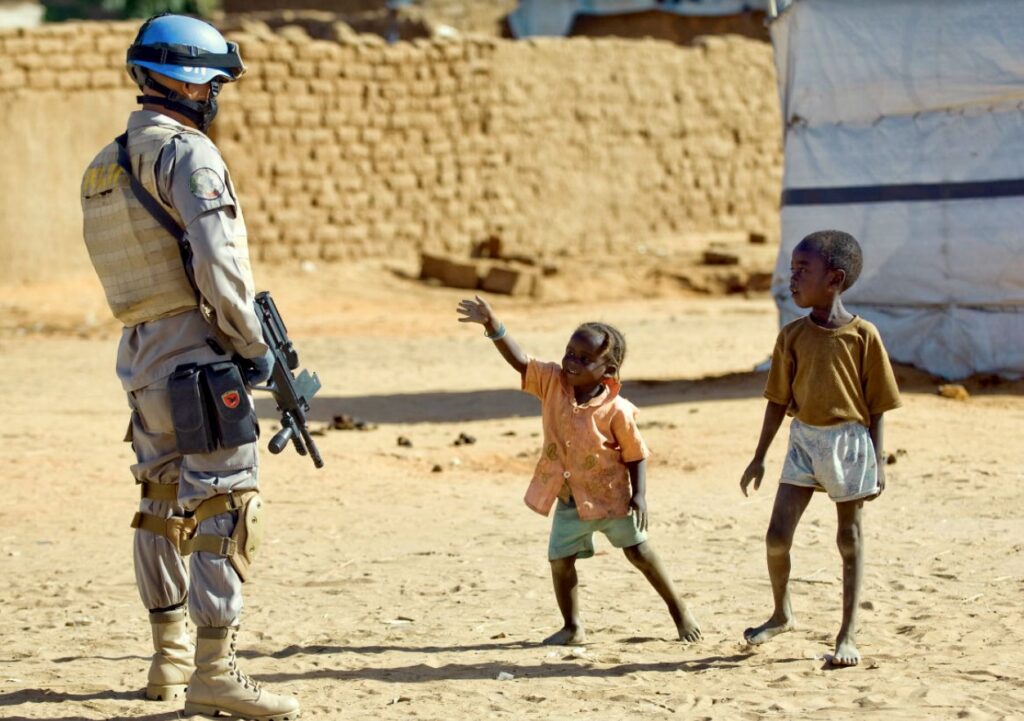
Massad Boulos, the US presidential advisor on Arab and African affairs, has held talks with United Nations Personal Envoy Pekka Haavisto regarding a proposal to expand the UN’s presence in Sudan’s Darfur region. In a statement published on X on October 3, Boulos confirmed the meeting and reiterated Washington’s stance that a nationwide arms embargo must be enforced across all of Sudan, rather than limiting restrictions strictly to Darfur.
The proposal follows Washington’s August draft resolution seeking a country-wide arms embargo, which the UN Security Council ultimately restricted solely to Darfur during a September 12 vote. The Sudanese government strongly rejected the measure, opposing any diplomatic framework that equates the official Sudanese armed forces with the paramilitary Rapid Support Forces (RSF). Weapons restrictions under UN Resolution 1591 have been active in Darfur since 2004, while the joint UN-African Union mission (UNAMID) formally withdrew in 2020 following a peace agreement and at Khartoum’s request.
Diplomatic analyst Omar Abdel Rahman noted that expanding the UN footprint would require establishing permanent headquarters and deploying humanitarian staff across Darfur cities—a move fraught with severe security risks. Much of the region remains under RSF control, while the Sudanese military regularly executes airstrikes and ground offensives in North and West Darfur. Abdel Rahman emphasised that securing reliable protection for UN personnel amid such widespread chaos remains a major obstacle.
According to the diplomatic analyst, Boulos’s proposal coincides with heightened international pressure on Sudanese army chief Abdel Fattah al-Burhan to accept a ceasefire. Because proposed humanitarian truce arrangements would likely require UN supervision, the push to expand operations suggests that international stakeholders are preparing for aid deployment should a truce take effect.
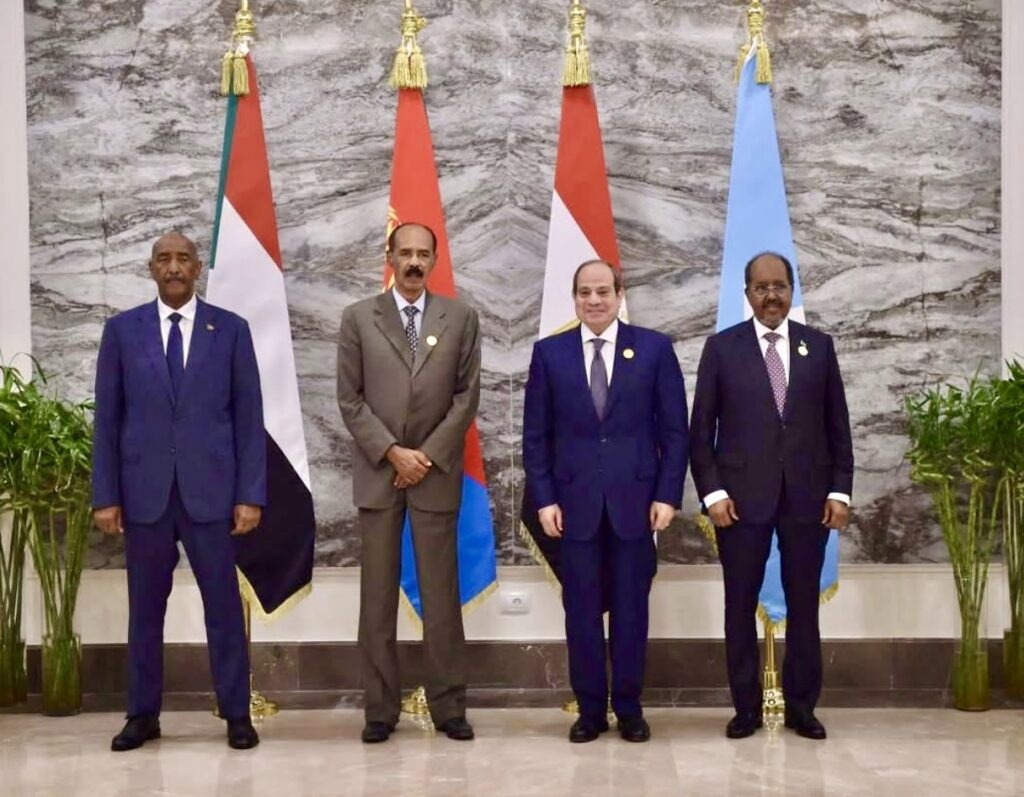 5) El Alamein Summit: Ethiopia calls for Red Sea access
The Ethiopian government has responded sharply to declarations made at the El Alamein Quadrilateral Summit, asserting its “legitimate interests” in both the Red Sea and the Nile River. In a press statement issued Monday following talks between the leaders of Egypt, Sudan, Eritrea, and Somalia, Addis Ababa warned that political pressure and regional destabilisation tactics would not alter the geographical and historical realities.
The summit’s joint declaration affirmed that Red Sea governance remains the exclusive prerogative of coastal states and called for strict adherence to international law regarding transboundary rivers to protect existing water uses in Egypt and Sudan. In response, Ethiopia’s Ministry of Foreign Affairs emphasised that its borders are barely 30 miles from the coast, insisting that any serious discussion of regional maritime security must take into account its strategic connection to the Red Sea.
Horn of Africa expert Ammar Al-Arki described the El Alamein summit as a significant political effort to align security and economic interests among the four participating nations amid heightened regional friction. Al-Arki noted that bundling Nile water security and Red Sea governance within a unified framework reflects a shift from isolated disputes to a broader arena of geopolitical competition across the Horn.
In its statement, Addis Ababa tied maritime access directly to the Nile River, emphasising that the Blue Nile river originates in the Ethiopian highlands and contributes roughly 85 percent of the river’s total flow. Addressing this claim, Al-Arki argued that serving as the river’s source does not grant Ethiopia unilateral authority over a transboundary waterway, which remains subject to established principles of international water law.
The diplomatic friction coincides with renewed conflict in northern Ethiopia, where government forces recently recaptured Mekelle following clashes with the Tigray People’s Liberation Front. Ethiopian Army Chief of Staff Berhanu Jula accused Egypt, Sudan, and Eritrea of providing military supplies and backing to opposing armed factions—allegations that all three neighbouring nations rejected as completely baseless.
While analysts suggest the El Alamein summit is unlikely to form a direct military alliance against Ethiopia, Addis Ababa’s rapid pushback underscores its sensitivity to any diplomatic arrangements that exclude it. The ongoing dispute highlights an evolving regional landscape where maritime rights, transboundary water management, and internal stability remain deeply intertwined.
 6) Army and joint forces make gains in North Kordofan, West Darfur
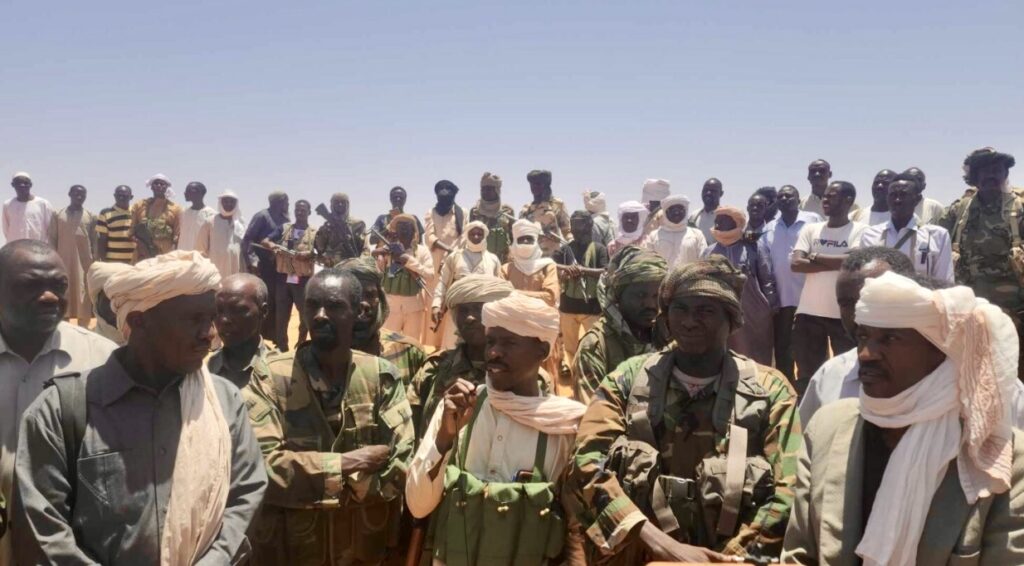
The Sudanese Armed Forces (SAF) and allied Joint Forces have secured notable territorial gains in western Sudan, recapturing the strategic area of Al-Mazroub in North Kordofan State and taking control of Bir Saliba in West Darfur. The military confirmed that army units retook Al-Mazroub following fierce battles with the Rapid Support Forces (RSF), inflicting heavy losses in personnel and military vehicles. Meanwhile, allied Joint Forces seized Bir Saliba following intense clashes with the Rapid Support Forces.
Building on the momentum in Al-Mazroub, army forces are advancing westward under air cover toward northern localities in West Kordofan state, moving toward Al-Khuwai and establishing Al-Nuhud as their primary objective for the next phase. As part of this push, the military reported that its air defence systems successfully intercepted and downed an RSF CH-95 drone northwest of Al-Khuwai on Monday morning.
In a distinct shift from previous operational patterns, military-backed groups appealed to residents in the Dar Hamar region to stay in their homes, offering assurances against displacement or retribution for alleged RSF collaboration. Unlike prior counter-offensives where the army systematically detained locals from pre-compiled suspect lists upon entering retaken areas, forces entering Al-Mazroub have refrained from carrying out arrests, accusing residents of RSF collaboration.
The army’s ground offensive unfolds alongside escalating RSF drone strikes on El Obeid, the capital of North Kordofan, causing severe civilian casualties and infrastructure damage. The Sudanese Doctors Network reported that a drone strike on a Kordofan University dormitory killed five civilians and injured 47 others, while separate drone strikes completely destroyed the local Wad Al-Toumi events hall.
These coordinated military advances across Kordofan and Darfur signal a broader effort by the Sudanese army to sever RSF supply routes and expand control into key western corridors. However, escalating drone warfare and ongoing hostilities continue to place heavy strains on civilian populations caught in the crossfire.
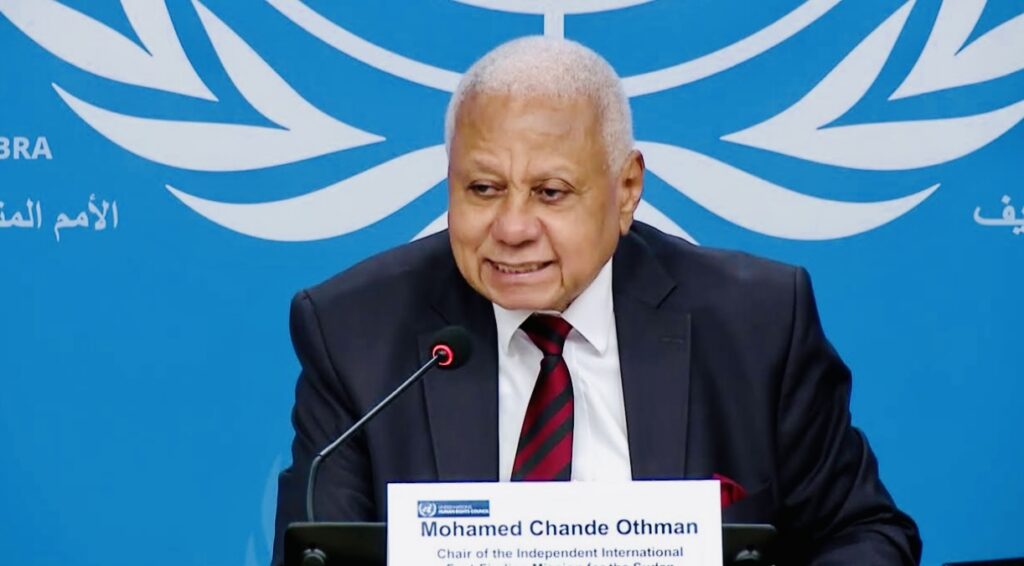 7) UN extends mandate of Sudan fact-finding mission for another year
The United Nations Human Rights Council has voted to extend the mandate of its Independent International Fact-Finding Mission on Sudan for an additional year. Adopted under Resolution A/HRC/63/L.26 with 28 votes in favour, 10 against, and 9 abstentions, the measure requires the mission to provide an oral update and a comprehensive report on the conflict. While Sudanese civil and political groups widely welcomed the decision to maintain international scrutiny, the army-controlled Sudanese government renewed its opposition, insisting that international roles must complement national judicial mechanisms rather than replace them.
The resolution comes amid a staggering humanitarian crisis that has escalated since fighting broke out on April 15, 2023. According to UN data, over 33 million people currently require humanitarian assistance, 11.3 million are still internally displaced, and 4.6 million have sought refuge in neighbouring countries. Additionally, 19.5 million people face severe food insecurity, with famine threatening 14 areas across North Darfur, South Darfur, and South Kordofan amid growing concerns over starvation being used as a method of warfare.
Sudanese political and civil society organisations strongly endorsed the council’s move. The General Coordination for Displaced Persons and Refugees described the extension as vital for keeping civilian suffering at the forefront of global attention, declaring justice an inherent right and pledging full cooperation with investigators. Similarly, the Civil Democratic Alliance of Revolutionary Forces (Somoud) commended the resolution’s focus on civilian protection, its rejection of a military solution, and its support for the International Criminal Court in holding perpetrators accountable.
In contrast, Sudan’s permanent representative in Geneva, Hassan Hamid, condemned the extension as an infringement on national sovereignty. Hamid noted that the Sudanese government established its own national commission to investigate violations in July 2023 and has submitted five progress reports to the UN. Pointing out that the resolution lacked explicit text respecting the principle of complementarity with local courts, Hamid confirmed that Khartoum will maintain its refusal to grant entry visas to members of the fact-finding mission.
The vote highlighted sharp diplomatic splits among council members. Opposing countries—including Egypt, Qatar, Cuba, China, and Indonesia—argued that the resolution sent the wrong political message by treating the national army and the paramilitary Rapid Support Forces equally. Conversely, nations supporting the resolution, led by the United Kingdom, emphasised that the mission remains the only independent body actively documenting widespread atrocities and tracking accountability across the country.
Resolution A/HRC/63/L.26 ultimately affirmed that lasting peace requires an immediate ceasefire, an end to external weapon flows and foreign mercenary intervention, and full compliance with the arms embargo on Darfur. It urged all parties to uphold the Jeddah Declaration to ensure unhindered humanitarian access and engage in an inclusive, Sudanese-led dialogue aimed at restoring a civilian-led democratic transition.
 8) Sudanese motorists queue overnight for fuel amid worsening shortages
Drivers across Khartoum and army-controlled states in Sudan are enduring all-night waits at gas stations due to severe fuel shortages. Official prices for a gallon of petrol and diesel have spiked to 42,000 Sudanese pounds, while black-market rates have reached 100,000 pounds. In Kassala, 23-year-old resident Osman Hassan described spending entire nights near city stations waiting for supply trucks coming from Port Sudan, calling the hardship a direct reflection of the country’s worsening economic collapse.
Currency devaluation and severe foreign exchange shortages are heavily driving the ongoing crisis. Economic analyst Mohamed Ibrahim noted that Sudan’s annual fuel bill stands at $1.4 billion in the external trade balance, with $150 million required immediately to pay importing companies. Although the Ministry of Energy reported importing roughly eight ships per month—each carrying 40,000 tons of fuel—Ibrahim warned that pump prices will continue to track the soaring parallel market exchange rate if the government fails to halt the domestic currency’s decline.
Despite long queues and soaring costs, government leadership continues to reject claims of a shortfall. During a recent visit to a Khartoum gas station, Prime Minister Kamil Idris brandished a fuel gauge to claim supplies were sufficient, explicitly denying the existence of a fuel crisis and blaming the reports on “enemies of the nation.”