




Darfur: The right to return the land before the International Criminal Court
7 October 2026
More than two decades after the mass displacement of Darfur’s population, the issue of reparations for victims of crimes is no longer solely about financial compensation. In the International Criminal Court’s hearing on reparations for the victims of Ali Muhammad Ali Abd-al-Rahman, known as “Ali Kushayb,” land and traditional grazing rights emerged as a fundamental aspect of the harm inflicted on communities uprooted from their homes.
On September 8, the General Coordination of Displaced Persons and Refugees in Sudan posed to the court a question that goes beyond the possibility of paying money: What is left for the victims if the court is unable at present to return the families to their lands?
In its arguments, the Coordination Committee representing the displaced stated that the court cannot currently return a family to their land in Sudan, nor can it issue orders against individuals occupying that land who are not parties to the case. However, it requested that the court take measures to protect the victims’ land claims, including establishing that the displacement of communities from their land was unlawful and that they have a legal right to return.
Hawakir
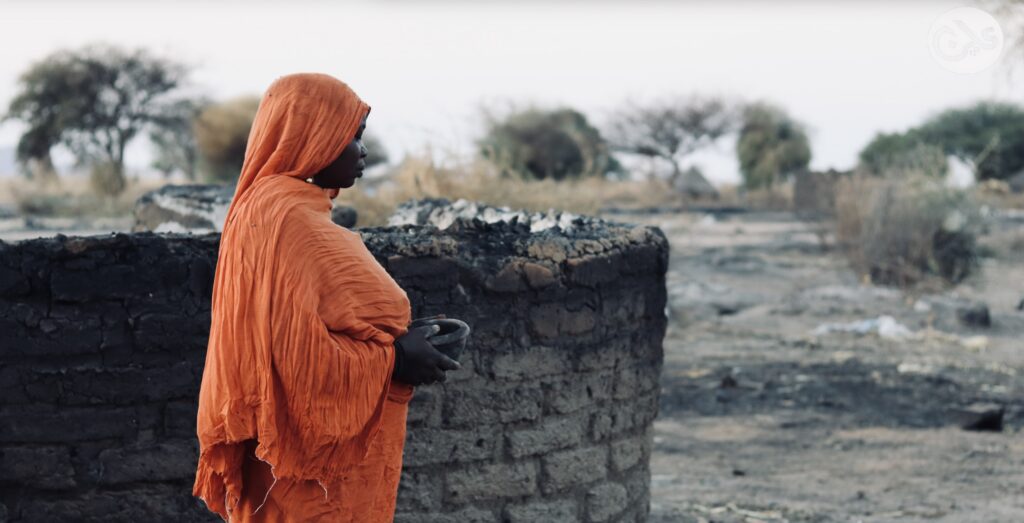
The importance of this request, according to the case, is based on the nature of the land tenure system in Darfur. In Wadi Saleh, where Qarsala is located, the committee described the land as not merely property, but rather “hawakir”. The local term suggests that families and cultures are connected to places of origin across generations. It is not just farmland; it is an intrinsic part of their identity. It is where they were raised and where they bury their dead.
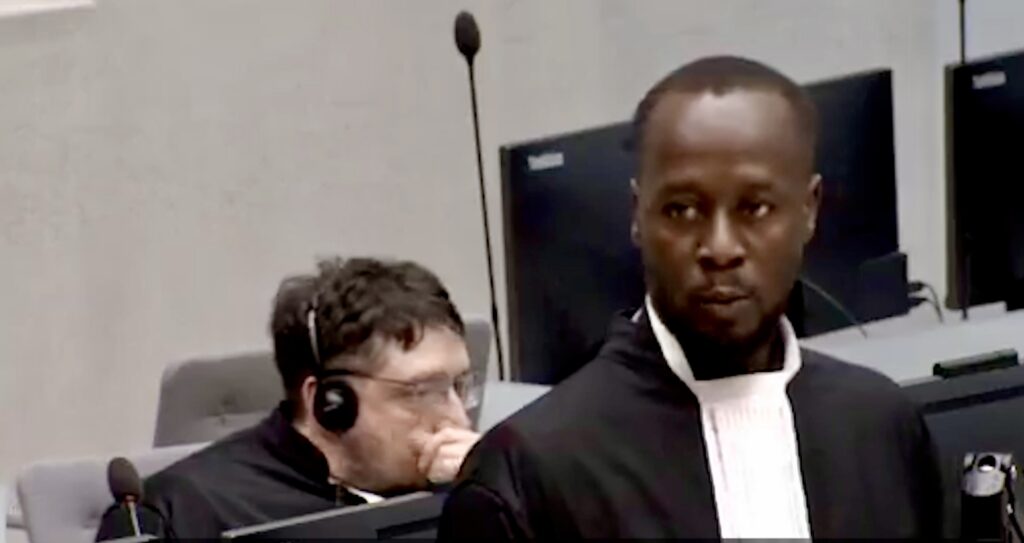
“The relationship between these communities (in Wadi Saleh) and their land is historical and cannot be separate,” argues lawyer Abdelbasit Al-Haj, who presented this argument to the International Criminal Court (ICC) on behalf of the General Coordination Committee for Displaced Persons and Refugees in Sudan. “For the victims, the land means life, history, and the ancient heritage passed down from ancestors for centuries,” he told Ayin.
Abdelbasit believes allowing the displaced to return to their places of origin and regain control over their land should be an intrinsic part of reparations for both past and future generations. “Establishing this right in the judicial ruling and the decision to compensate for damages can make it possible to rely on it in the future before national mechanisms, when it becomes possible to address the land issue in Darfur.”
He also pointed out that demarcating the boundaries of farms and villages preserves the rights of future generations and maintains community memory, given that nearly a quarter of a century has passed since the displacement and refuge of large numbers of Darfur residents,
Local knowledge
Abdul Basit places particular importance on documenting villages and agricultural estates, stating, “This is essential to prevent them from being forgotten and to stop their being seized by force.” He believes that this documentation process can be undertaken by community leaders, local administrations, and elders who possess knowledge of the historical boundaries of the lands.
The committee noted that the sheikhs and village heads killed during the conflict effectively served as the land registry within their communities, knowing which family owned each plot, maintaining its boundaries, and adjudicating disputes over it. According to the argument, their deaths destroyed the traditional land registry upon which rights were based, making return difficult not only physically but also institutionally.
The documentation process, says a researcher and expert in conflict and development studies from West Darfur, who asked not to be named, believes this process is both critical and time sensitive. All too often, the research said, aggressors seize the land, displace the original occupants, and change the original names to suit their own backgrounds.
“The documentation should include the lands and villages whose inhabitants were displaced to preserve their original names and the rights of their owners,” the researcher said. “Especially if there are people currently living in those areas who do not necessarily know the names of the former villages or their history.”
Widespread culpability
The Coordination Committee’s demands are not limited to the land alone. It also demanded that responsibility for the damage be placed not on Kushayb and those who participated with him in committing the crimes.
“The court should hold not only Kushayb responsible but also his partners in committing crimes, i.e., the individuals who constituted the Sudanese government forces,” said Michael Delagrange, senior international legal advisor at the Wayamo Foundation and co-counsel representing the Coordination Committee.
“This shared and collective responsibility, according to his proposal, will make all of these people, including former President Omar al-Bashir, responsible for the full extent of the damage and will give hundreds of thousands of victims a tool to pursue justice in other forums as well.”
This argument relates to a broader point in the Committee’s argument, namely that the absence of all those responsible for the crimes from the court should not, in its view, lead to the complete disappearance of the harm from the judicial record.
As for the land, the committee wants the establishment of the right of return to serve a similar function: not to return the land immediately, but to create a legal basis that can be carried into future proceedings.
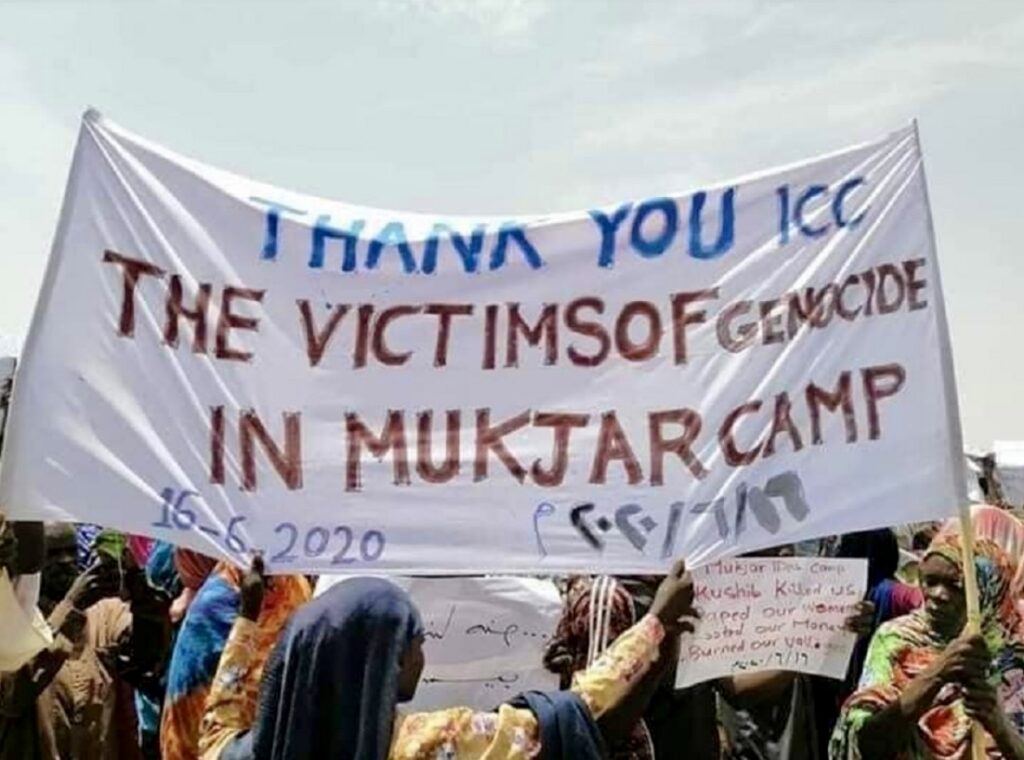
What can the court do?
The fundamental question that emerged in the court session was not whether the victims of Darfur wanted to return to their lands, but rather what the International Criminal Court could do practically and legally given its current inability to return families to their lands or issue direct orders against occupants who were not before it.
In its arguments, the Coordinating Committee explicitly acknowledged these boundaries. However, it maintained that the court could nevertheless establish the illegality of the displacement, recognise the affected communities’ legal right to return, and use this conclusion as a basis for protecting future land claims.
In concluding its arguments, the committee stressed that affirming the right of communities to return should not be viewed as a substitute for financial compensation but rather as a tool that victims can leverage in any future mechanism dealing with land and reparations. It stated that such a conclusion could form the basis for future efforts to address the land issue in Darfur.
For Abdelbasit, the ICC’s response to these demands would be a victory for the victims and the displaced. It would mean that their right to the land had not been forfeited and that returning to it could become possible in the future.