


From Yemen to Sudan: How a modified G3 rifle exposes UAE arms smuggling to the RSF
The appearances of Heckler and Kosh G3 rifles in the hands of Sudan’s paramilitary Rapid Support Forces (RSF) are not isolated battlefield anomalies. It is the visible endpoint of a clandestine supply chain that stretches across the Red Sea, linking Yemen and Sudan through smuggling routes shaped by war, political patronage, and regional power projection. An Ayin investigation, supported by open-source intelligence analysis and visual verification, traces how these rifles were trafficked, modified, and delivered to the RSF – despite international scrutiny and arms embargoes.
The G3, a 7.62×51 mm battle rifle originally designed in Germany during the Cold War, is no longer produced in large numbers for frontline armies. Its presence in contemporary conflicts often signals recirculation through illicit markets rather than direct state procurement. Since at least 2017, Yemen has emerged as the primary illicit supply source and a central modification hub for these weapons. From there, the rifles have surfaced across the Horn of Africa, including in Somalia’s black markets, before appearing in Sudan’s war.
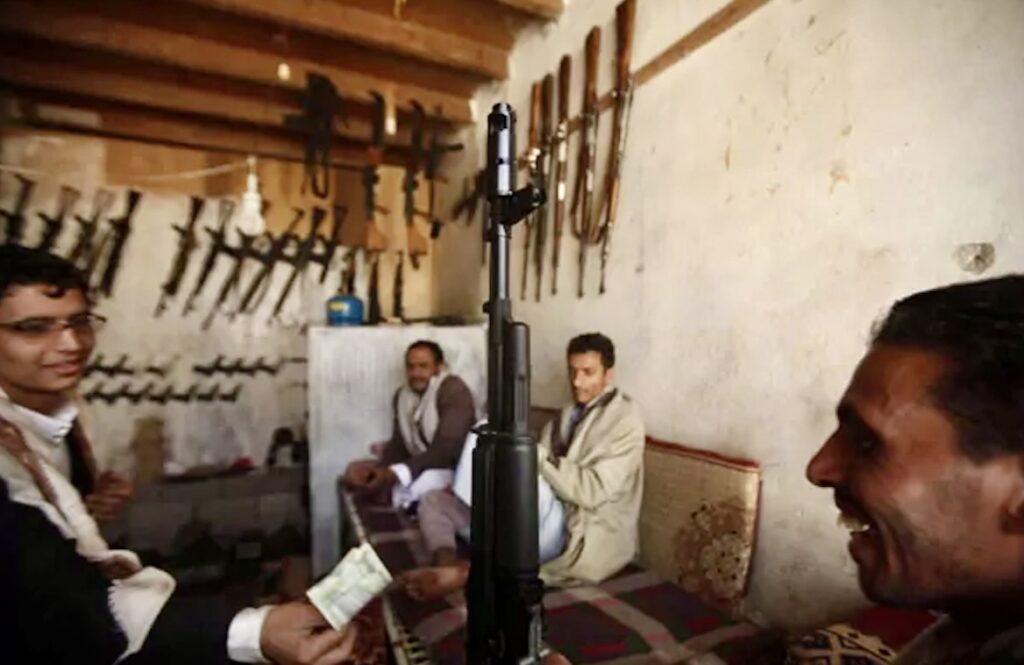
Yemen as a modification and redistribution hub
Yemen’s prolonged conflict has transformed the country into a regional marketplace for weapons, with gunsmiths operating in parallel to armed factions. Ayin’s findings reveal that the G3 rifles in circulation in Yemen undergo modifications to enhance their desirability and resale value. Local gunsmiths apply distinctive post-production markings, a practice that has become a signature of Yemeni modification networks.
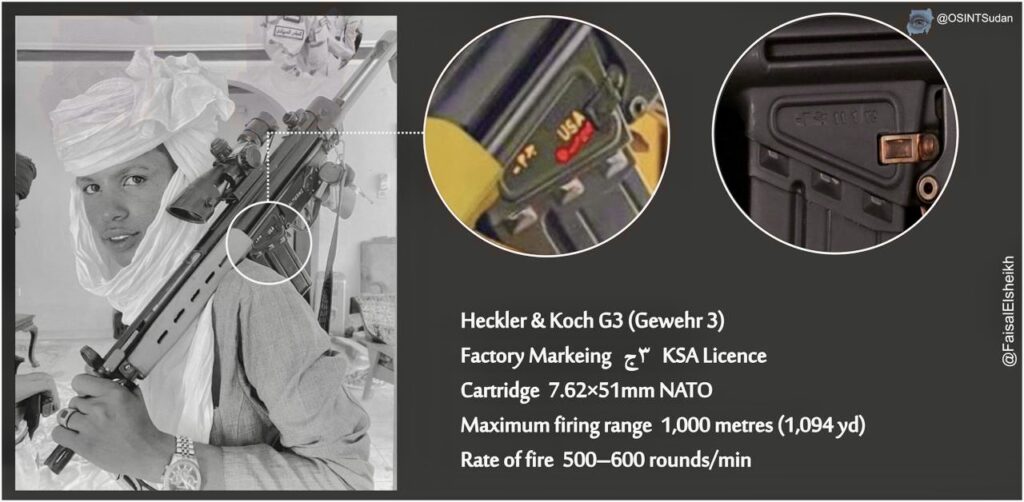
Among the most notable markings are variations of the word “AlMRENZ”, a transliteration of “the Marines” in Arabic, alongside counterfeit “USA” stamps. These markings, according to a weapons expert and reported by the investigative organisation, Conflict Armament Research, are intended to mislead buyers into believing the rifles were manufactured in the United States or previously used by US Marines. In reality, the US military has never adopted the G3 as a standard-issue weapon. The markings serve no technical function; they are a form of branding, designed to inflate price and prestige in illicit markets.
OSINT analysts say these alterations are consistent across multiple G3 rifles documented in Yemen, indicating a centralised, or at least coordinated, modification practice rather than isolated acts. The markings act as a forensic trail, allowing investigators to link weapons across different conflict zones.
From Yemen to Somalia: the Bosaso corridor
Ayin’s OSINT analysis suggests that the G3 rifles documented in RSF hands were likely smuggled out of Yemen via maritime routes into Somalia, specifically through Bosaso, a long-established hub for arms trafficking. Bosaso has repeatedly appeared in investigations into weapons flows across the Red Sea and the Gulf of Aden, benefiting from weak oversight, entrenched smuggling networks, and political fragmentation.
The route itself is not new. According to analysts, the same corridor has been used by the United Arab Emirates to extract and transport leaders of Yemen’s Southern Transitional Council (STC) from Yemen to the UAE. Reusing this route for weapons transfers implies an established logistical pipeline rather than a spontaneous operation.
Once in Somalia, weapons can be temporarily absorbed into local illicit markets, repackaged, or quietly transshipped onwards. This layered movement helps obscure origin and responsibility, ensuring that by the time the rifles reach Sudan, their trail has passed through multiple jurisdictions and armed actors, a weapons expert who spoke to Ayin. The UAE may only use the Bosaso transit route for a brief period going forward, however, after recent tensions between Riyadh and Abu Dhabi, according to the same source and an investigation by Middle East Eye.

The facilitator in Abyan
A source familiar with the smuggling network told Ayin that Lt Col Abdullah Rabee, commander of the 2nd Battalion of the STC’s Security Belt Forces on the Abyan coast, plays a central role in facilitating arms transfers from Yemen to the RSF on behalf of the Emiratis. Rabee hails from the influential Bakazim tribe, which is based in Ahwar, Yemen – a key coastal smuggling point.
Ahwar’s strategic importance extends beyond one armed group. It has long been identified as a critical smuggling hub, not only for STC-linked networks but also for Houthi supply lines. Control over Ahwar enables access to maritime routes, storage facilities, and tribal protection mechanisms that allow illicit cargo to move with minimal interference.
Despite his alleged role, Rabee maintains a remarkably low public profile. Ayin identified only a single photograph of him circulating in local Yemeni media, underscoring the covert nature of his activities. Analysts say such low visibility is often intentional, designed to shield key facilitators from international attention while allowing operations to continue uninterrupted.
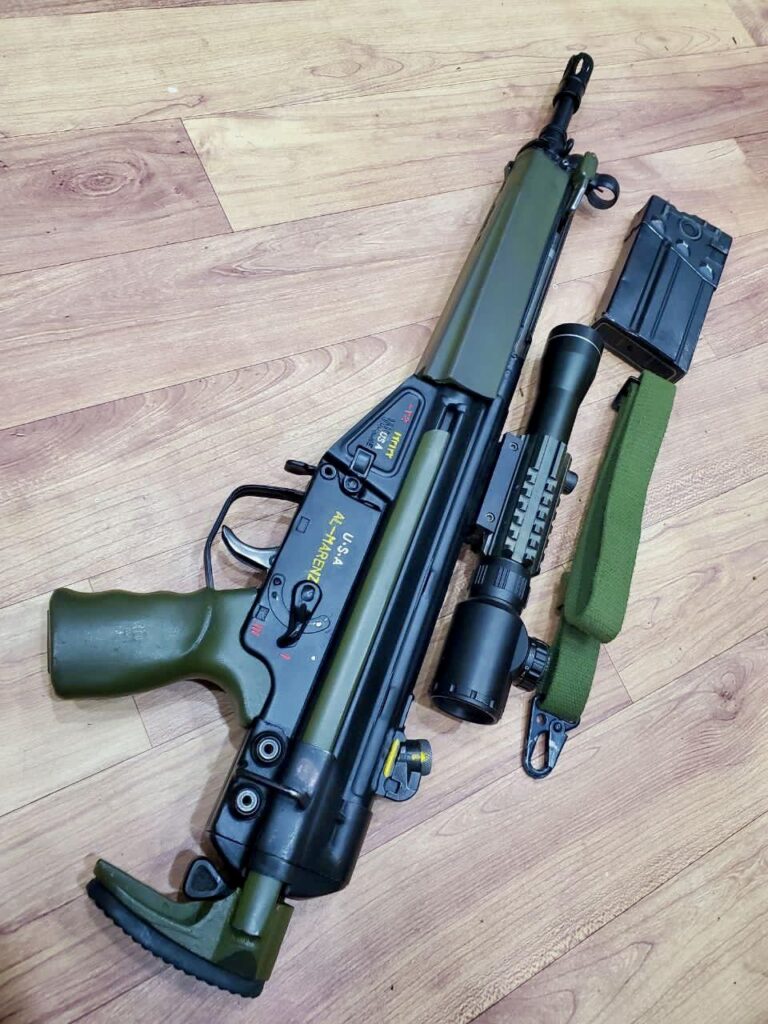
Visual confirmation inside Sudan
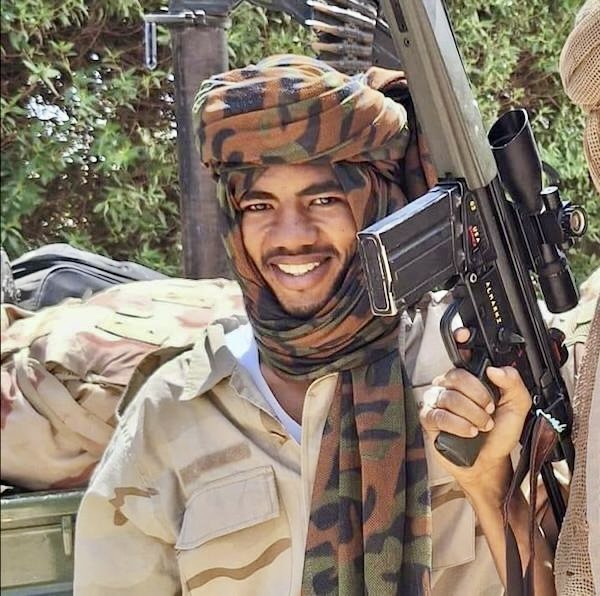
Ayin obtained visual confirmation of the modified G3 rifles in the hands of the RSF across three distinct structures. In each case, the weapons displayed the same post-production markings associated with Yemeni modification practices, including counterfeit “USA” stamps and Arabic inscriptions referencing “the Marines.”
The rifles were documented in RSF-controlled areas, carried openly by fighters and integrated into regular units rather than appearing as isolated trophies. This suggests not a one-off acquisition, but a pattern of supply sufficient to arm multiple formations. Analysts note that such consistency points to organised delivery rather than battlefield capture.
By cross-referencing visual material with known modification signatures and trafficking routes, the weapons were likely smuggled from Yemen through Somalia before reaching Sudan, with UAE involvement at the logistical level.
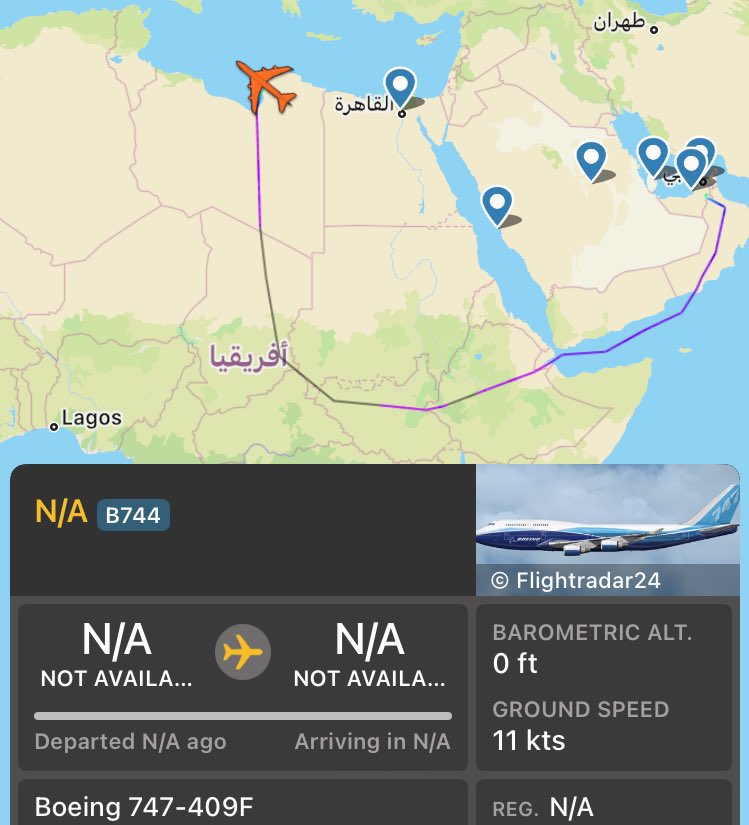
UAE involvement and plausible deniability
Direct military support to the RSF would carry significant political and legal risks for any state actor. Instead, the alleged UAE role fits a broader pattern of indirect engagement through intermediaries, allied forces, and commercial or semi-covert routes.
This method permits the movement of weapons without official documentation connecting them to a state sponsor. Each stage of the journey – modification, transport, resale, and subsequent shipment – adds another layer of separation. By the time the rifles appear in Sudan, they are technically “unattributed” despite the clear logistical fingerprints connecting the chain.
The use of older, widely circulated weapons like the G3 further reduces scrutiny. Unlike advanced systems, these rifles do not immediately raise concerns, despite their continued lethal role on the ground.
Implications for Sudan’s war
The confirmed presence of these rifles within RSF units highlights how external supply networks continue to sustain Sudan’s conflict. Weapons smuggled through Yemen and Somalia do not arrive in isolation; they are part of a broader ecosystem that includes ammunition, spare parts, and logistical support.
For civilians, the impact is immediate and devastating. Each successful shipment strengthens armed actors, prolongs fighting, and undermines any prospect of accountability. For regional stability, the case underscores how interconnected conflicts around the Red Sea have become, with weapons and fighters moving fluidly between wars.
The G3 rifles now visible in Sudan are not relics of past conflicts. They are evidence of an active, adaptive smuggling system – one that thrives on war, secrecy, and the deliberate erosion of borders. As Ayin’s investigation shows, tracing a single weapon can illuminate an entire network, revealing how regional powers, local militias, and illicit markets converge to fuel one of the world’s most devastating wars.