

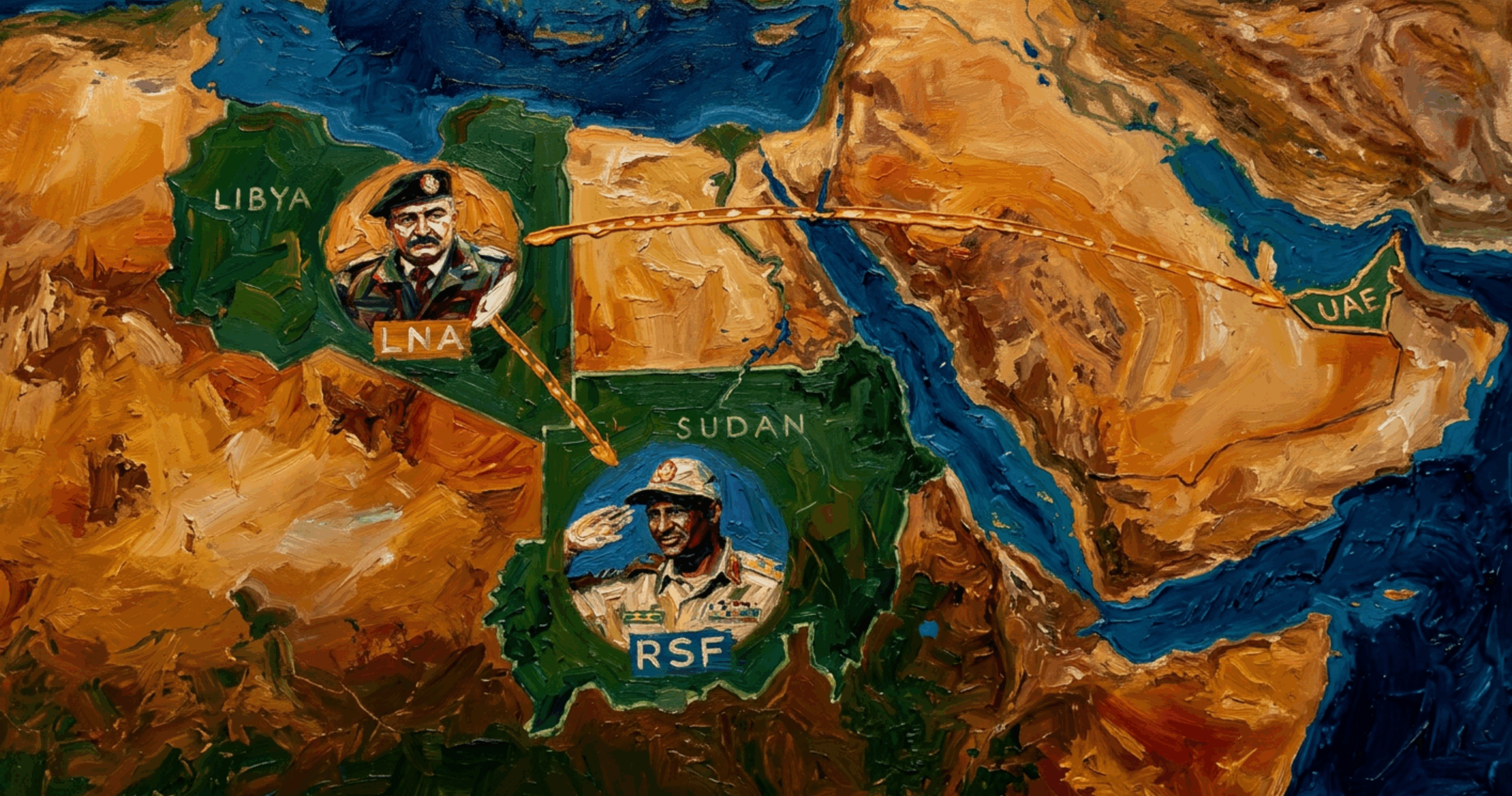
How the UAE is fuelling the RSF through Libya
29 June 2026
A sprawling, covert network of military bases, complex logistics, and weapons trafficking routes operating out of eastern Libya has been exposed as a central artery sustaining the Rapid Support Forces (RSF) and the ongoing war in Sudan.
A groundbreaking joint investigation by Lighthouse Reports, Evident, and Sudan War Monitor using open-source intelligence (OSINT) and on-the-ground reporting, has revealed a cryptic supply chain network from the United Arab Emirates (UAE) to Libya, supporting RSF operations.

Uncovering the desert pipeline
The network operates deep within territory controlled by the Libyan National Army (LNA), led by Field Marshal Khalifa Haftar. Equipment enters Libya by sea through Benghazi’s port and via cargo flights landing at various interior bases, including an old Gaddafi-era airbase southeast of Kufra. From there, weapons, fuel, and fighters move south toward staging areas near the Sudanese border, the joint investigation revealed. This alliance, though publicly unacknowledged, is brazenly displayed at a base in Sabha in the Fezzan region, where a sign features portraits of both Haftar and RSF leader Mohamed Hamdan Dagalo side by side.
Further cementing this logistical pipeline, a November 2025 investigation by The Sentry revealed that the Haftar coalition acts as a strategic fuel supplier to the RSF. The report identified Saddam Haftar, the field marshal’s son, as personally directing the diversion of subsidised fuel via Kufra at the UAE’s behest.
For the RSF, Libya provides a vital lifeline that Sudan cannot: a secure rear base shielded from aerial attacks, where logistics flow freely, and where foreign trainers can operate without the deadly risks and public scrutiny of Darfur.
Hidden camps, Russians, and mercenaries
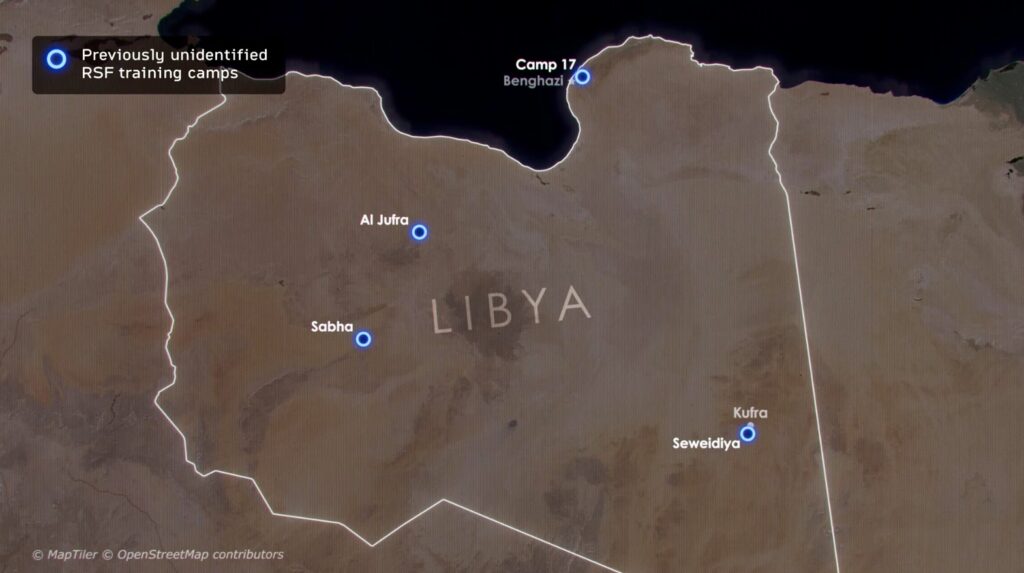
The investigation uncovered four previously unidentified RSF camps in Libya, contradicting claims by LNA insiders that RSF operations in Libya had been wound down by late 2025. The investigation also provided further evidence of foreign mercenaries training RSF troops. Working closely with Conflict Insights Group (CIG), the investigation identified at least two Colombian mercenaries present at an RSF training camp known as “Camp 17”, an LNA facility located 20 kilometres outside of Benghazi, Libya.
Interviews with RSF defectors corroborated these findings. One defector described spending three months at Camp 17 training on drones, heavy machine guns, and rocket launchers. The trainers, he noted, were neither Libyan nor Sudanese. They were heavily tattooed, spoke English, held a special rank, and recruits widely understood them to be Colombians paid by the UAE.
Meanwhile, at a separate base in Jufra, another defector described Russian personnel maintaining operational command of the base, with Libyan subordinates handling administration and coordination, the Sudan War Monitor reported.
RSF defectors also noted that while cargo planes bringing vehicles and ammunition were mostly unmarked, their Emirati origins were obvious. At least one armoured vehicle bore explicit “Made in UAE” markings—a detail independently corroborated by open-source analysts who recently assessed that a new batch of armoured vehicles filmed in Nyala, Darfur, was almost certainly purpose-built for the RSF in the UAE.
Lieutenant Enheish Fattah of the LNA’s Subul Al Salaam brigade, however, dismissed allegations of LNA complicity as mere rumours designed to create conflict between the Libyan and Sudanese armies. In Nairobi, Kenya, Dr Alaa El-Din Nugud, a spokesman for the RSF-led Tasis Alliance, also flatly denied the existence of Libyan training camps and questioned the credibility of the defectors. Yet, when pressed on the influx of UAE-provided armaments, he offered a startling concession. “The Emirates gave it to us,” Nugud acknowledged to the investigative team.
The human toll
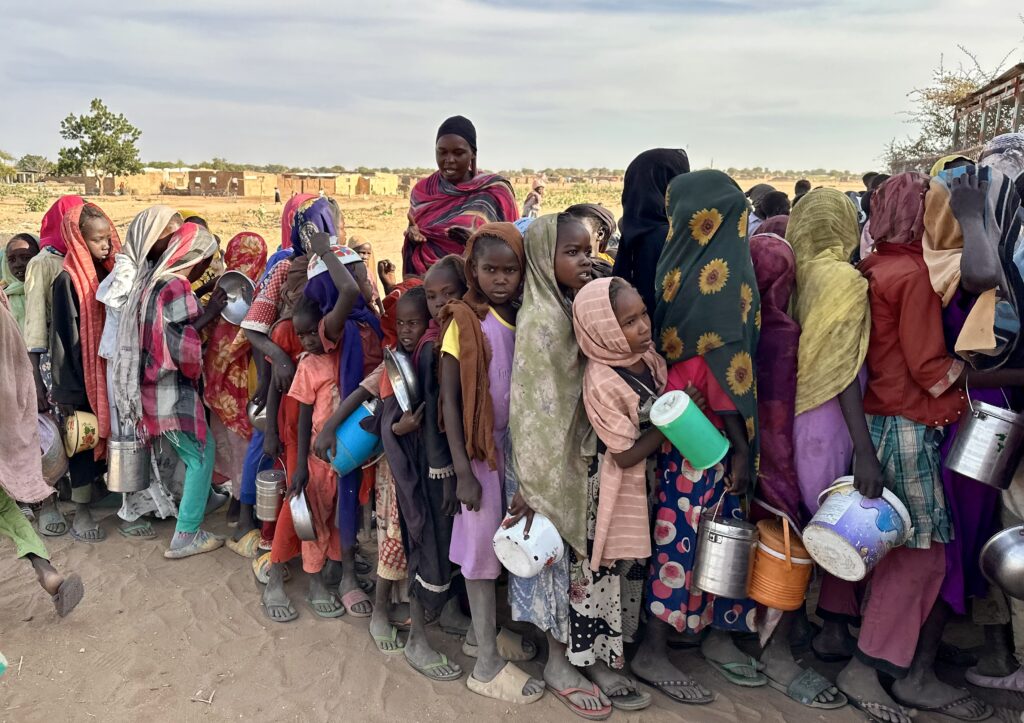
Inevitably, it is civilians who suffer the most from this ongoing, seemingly endless supply chain of military equipment and training from the UAE and Libya. Fatima, a mother who fled to Kufra, lost her husband—a merchant with no military ties—when he was detained at gunpoint at an RSF checkpoint in Khartoum and never heard from again. Left alone with a newborn in a besieged capital, she sold her dowry jewellery to fund a gruelling 25-day desert journey to Libya, crossing paths with the very weapons that flowed south to destroy her home.
“When we reached Libya, we had nothing left,” Fatima said. “It’s safe here, but my mind is not at ease. We lost family and have long been separated from my parents… I have nothing left but my children and my honour. That’s the last thing I have left in life.”
Another survivor recounted fleeing Zamzam Camp in North Darfur after an RSF drone attack killed her husband. She described a terrifying escape through RSF lines—a gauntlet where women were raped, men were murdered, and survivors were robbed of whatever they had left. Asked whom she blamed for her shattered life, her answer was simple: “I blame all parties, all of them,” she said. “There is no reason for this fight… Because it is the civilians who are being harmed. The harm falls on the civilians.”