


SPLM-N: Gold potentially ignites fighting in Kauda and Blue Nile
10 October 2026
Last Tuesday, a senior military and tribal delegation from Sudan’s paramilitary Rapid Support Forces (RSF) arrived in the Nuba Mountains to help mediate deadly internal clashes between the Sudan People’s Liberation Movement-North (SPLM-N) and local fighters from the Atoro community.
The fighting in Heiban and Kauda and surrounding areas in the Nuba Mountains has killed more than 500 people from the Atoro ethnic group, displaced over 25,000, and burnt dozens of villages, according to local tribal leaders. While Ayin was unable to verify these estimates, the conflict data research organisation ACLED recorded 49 incidents of infighting, resulting in at least 158 deaths between March and August this year.
Local sources told Ayin that the warring factions have agreed to a cessation of hostilities to allow the mediation initiative to proceed. RSF leader Mohamed Hamdan Dagalo (aka ‘Hemedti’) formed the joint peace committee, which includes senior RSF commanders and traditional leaders from Darfur and Kordofan, the Sudan Tribune reported. The RSF team held separate discussions in the nearby town of Kuya with top SPLM-N figures, including military chief of staff Izzat Kuku and Jagod Mukwar, the group’s deputy chairman and governor of the Nuba Mountains, respectively.
While these peace efforts are commendable, political analysts told Ayin, the core of the dispute could very well be the same resource the RSF routinely fight over: gold.
Gold ignites Kauda and Blue Nile
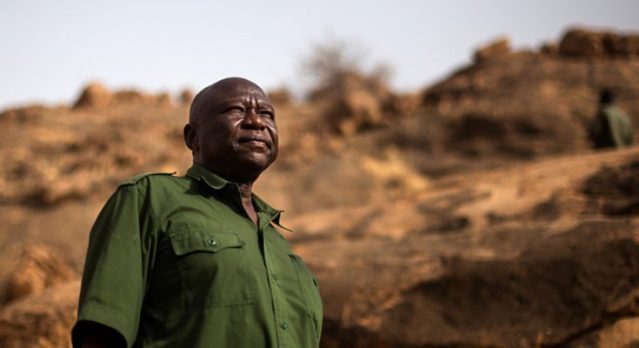
The SPLM-N battles taking place in the Kauda region and Blue Nile State along the border with Ethiopia are no longer just about controlling cities, roads and military sites. In the Ethiopian border region, where the RSF and their ally, the SPLM-N led by Joseph Tuka, are advancing, the lines of fighting intersect with areas rich in natural resources, most notably gold. The same is true in the Nuba Mountains, amid internal fighting in Heiban and Kauda in areas controlled by the SPLM-N led by Abdel Aziz al-Hilu.
Recently, the fighting in southern Blue Nile has moved to a more intense stage, with the coalition forces expanding into the provinces of Geisan and Kurmuk and the surrounding areas. These areas, along with other areas south and east of the Blue Nile, contain sites of artisanal gold mining. The RSF and SPLA-N military control over large parts of southern Blue Nile coincides with their tightening grip on most of the gold mining areas in Geisan and Kurmuk, according to activists and local sources.
According to local sources who spoke to Ayin, groups from the Atoro tribe accuse the leadership of the SPLM-N and its ally, the Rapid Support Forces, of attempting to seize their lands in the Nuba Mountains for mining activities. In turn, the SPLM-N leadership accused the other faction of rebelling against its authority. The ongoing disputes between some of the SPLA-N military leaders and members of the Atoro community in Nuba take place amid disputes over landownership, demarcation, and control of mining areas.
Beni Shangul, Blue Nile
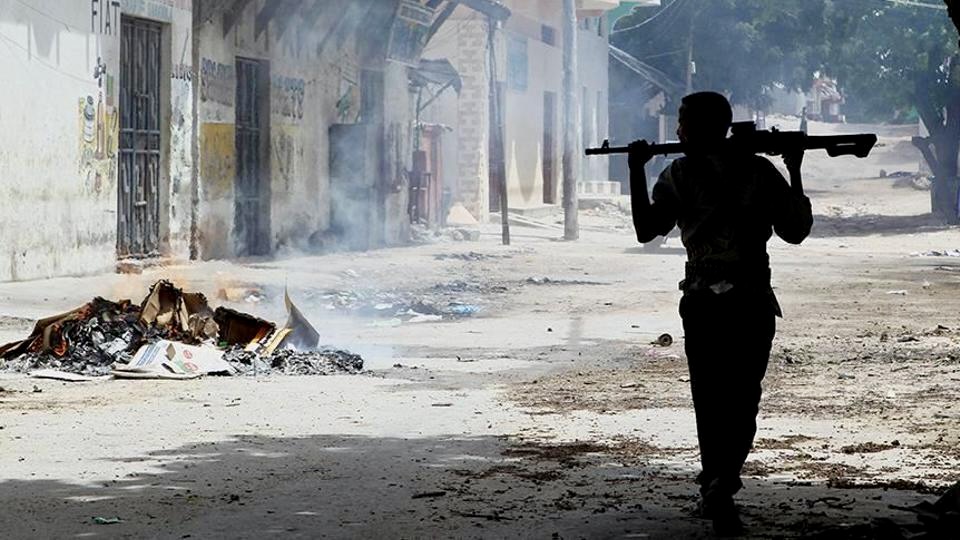
“The Rapid Support Forces and the SPLA allied with them currently control all the gold mines in Geisan province, historically known as the gold of Beni Shangul, in addition to a large part of the mining areas in Kurmuk province,” says Ashraf Hassan, a community activist. Only one area in Kurmuk, Buling, is under army control, he added.
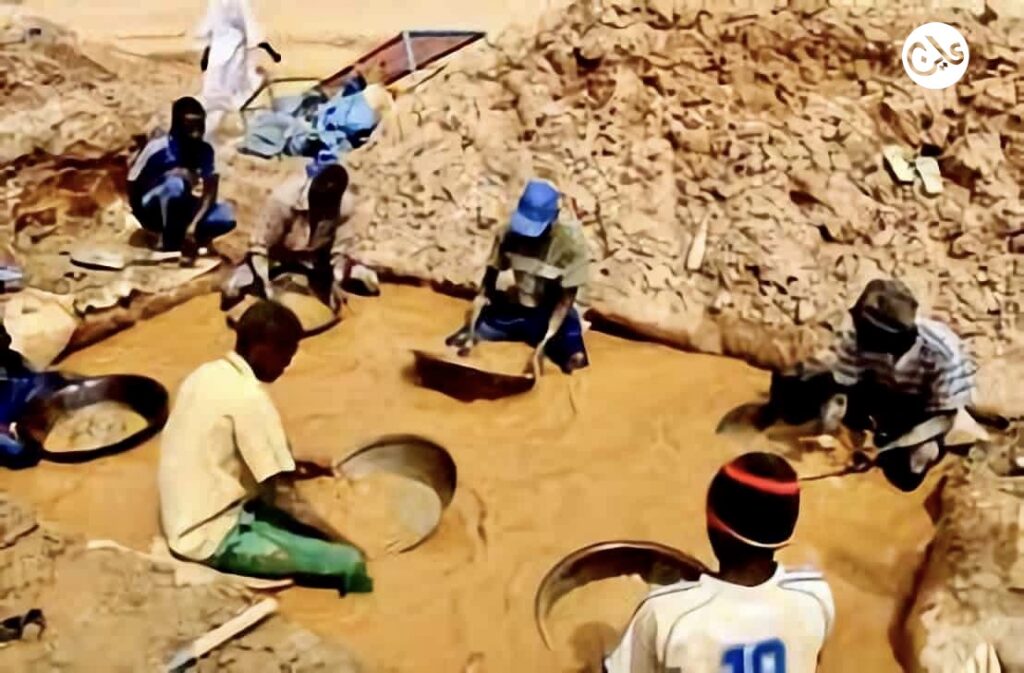
Testimonies from miners reveal the scale of production in these areas. Local miners told Ayin that Bakuri market in Geisan alone produces more than 100 kilograms of gold per month. However, according to activists in the region, gold has not been a resource that directly benefits local communities over the years. “Gold production in Blue Nile State has long been controlled by individuals, security companies, and the Sudanese Mineral Resources Company, while its revenues have not been clearly reflected in the region’s budget, with the exception of some limited projects implemented by mining companies as part of their social responsibility, such as the Wad Al-Mahi water project,” Ashraf said.
As the war has widened, control of these mines now appears increasingly linked to control of territory, transportation routes, and local markets. The mines, once a source of livelihood for thousands of miners, traders, and local residents, now lie within a fluid military landscape, controlled by competing armed groups. This raises concerns that the gold revenues themselves could become a new source of funding for the conflict and a means of consolidating the power of these armed factions.
New gold and an old dispute
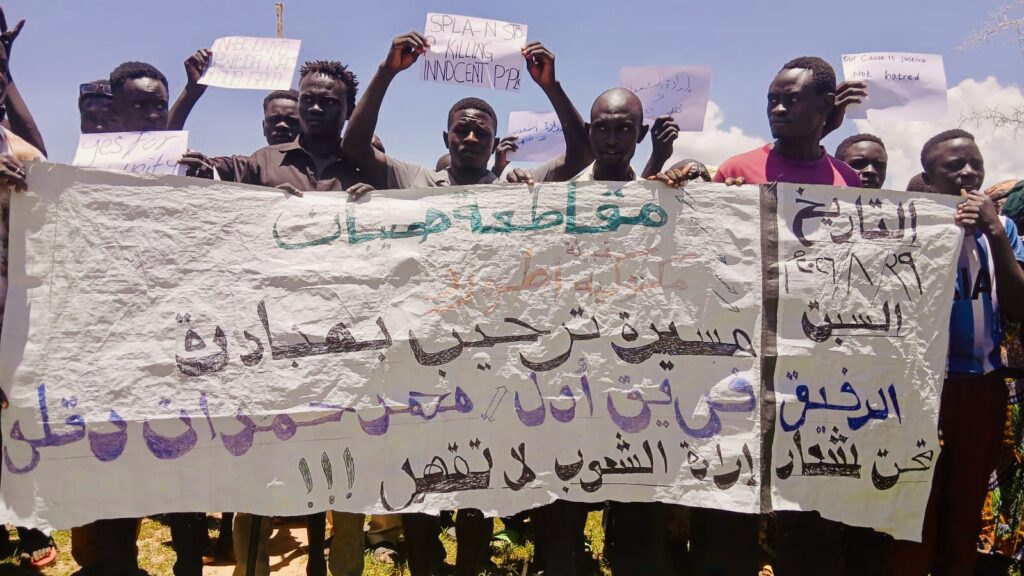
In the Nuba Mountains, the takeover of mining areas was preceded by clashes between the SPLM-N and local tribal groups, most notably the conflict with the Atoro tribe in and around Kauda since last April. “The main reason for the clashes is the SPLM-N’s attempt to displace the Atoro from their lands, which they claim are rich in gold and natural resources,” says Babiker Mohamed Madawi, an engineer from the area. “The proposal was rejected by the people of the area, including members of the tribe holding leadership positions in the SPLM-N, leading to armed clashes between the two sides.”
Clashes between the SPLA-N and Atoro were around areas where mining sites are located, including Heiban, Kamleila, Mandi, Um Dolo, Luiri, Kamo, Shiri, Madri, Karbala, Al-Qumair, Shawri, Dooli and Namoli. Targeted attacks on the Nuba capital, Kauda, have also taken place. “They attack us every day. We can no longer drink water or eat. They burnt all the sorghum we had, and we do not know where to go,” one elderly man told Ayin in June after the SPLA-N attacked and looted his home in Kauda. “We were one movement, and we grew old together, but then they turned against us. We do not know why. We don’t understand why they are doing this to us,” he added.
According to Babiker, the SPLM-N was seeking to evacuate Atoro and bring in members of the Shawaya tribe to the area, which, he claimed, would allow companies affiliated with the SPLM-N and the Rapid Support Forces to operate in gold mining. “Gold mining in SPLM-N-controlled areas is subject to strict restrictions,” he said. “Gold cannot be removed from production areas except through companies belonging to SPLM-N leaders or other companies allied with them, and the revenue from production goes primarily to these entities.”
Sources among the miners in the Nuba Mountains speak of high production volumes, estimated to range between 500 and 750 kilograms of gold per month. This figure, however, was not independently verified. Babiker points out that some of the clashes between the SPLA and the Atoro civilian component were around areas where mining sites are located, reinforcing fears that the conflict is linked to control over gold and natural resources.
But the people of the region do not universally accept this narrative. “The basis of the dispute is related to the demarcation of borders between the tribal components and their areas of influence,” says Munim Hassan, a political activist from the Nuba Mountains.
Negligible impact
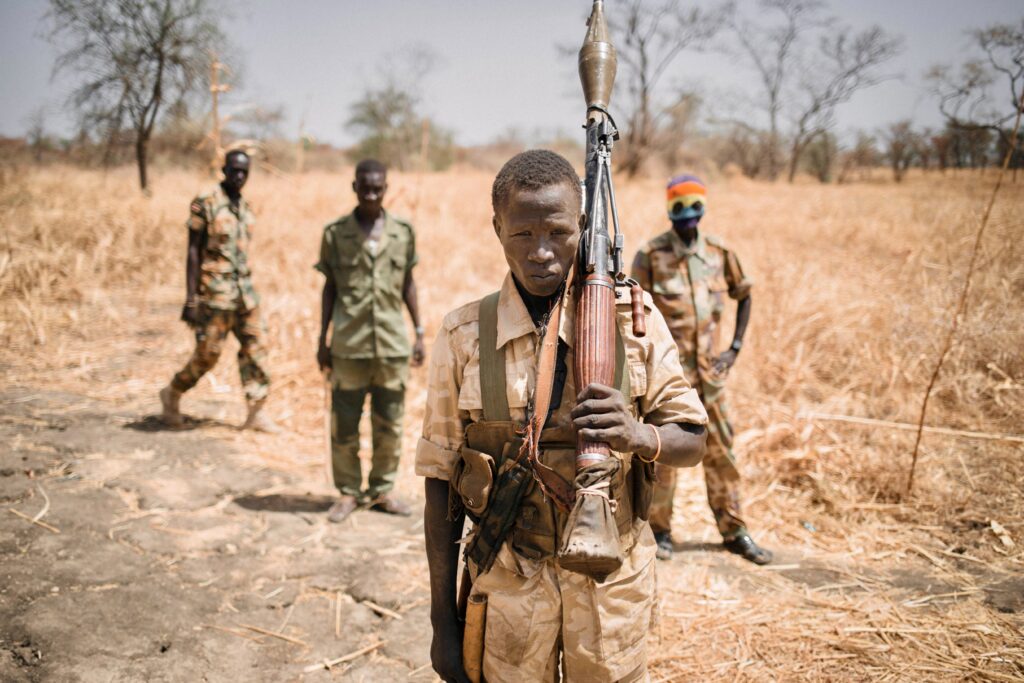
Munim does not believe that gold is the primary driver of these clashes, but he points out that the timing of the fighting was particularly dangerous for the population, as the clashes erupted during the planting season, disrupting agricultural activity and threatening food supplies in the region. “Continued fighting disrupted the agricultural season in the Nuba Mountains and further deteriorated an already critical food-security situation, increasing the risk of famine,” says ACLED’s Sudan Analyst, Ali Mahmoud Ali.
Economic analyst Ahmed bin Omar told Ayin that controlling gold-producing areas could give the controlling forces an additional economic gain, but he does not consider gold to be a primary or direct target for military operations. The ability of any warring party to translate military control into regular gold production remains limited by the very nature of warfare, Ahmed said. He explained that in artisanal mining areas across various battlefields, the continuity of mining activity cannot be guaranteed on a regular basis, as these areas are vulnerable to drone attacks and other risks associated with military operations.
Precedents for similar conflicts
The clashes currently taking place around mining areas in Blue Nile and the Nuba Mountains are not an isolated incident in Sudan. In Darfur, areas rich in gold and mineral resources have previously become battlegrounds between local groups and armed forces, with Jebel Amer being a prime example. In 2013 and 2014, violent clashes erupted between the Beni Hussein and Rizeigat tribes over the area and its gold mines before control of the mines was later transferred to forces affiliated with the Rapid Support Forces. This made the area a prime example of the intertwining of military control with the gold economy.
With the ongoing conflict, the copper mines of Sunqo in South Darfur have gained even greater importance, falling within areas controlled by the Rapid Support Forces and linked to cross-border mining and trade networks. Recent reports indicate that the region contains gold production sites and that control over it is also linked to movement, supply, and trade routes with South Sudan and the Central African Republic.