












Deadly skies, the rise of civilian drone strikes across Sudan
7 November 2026
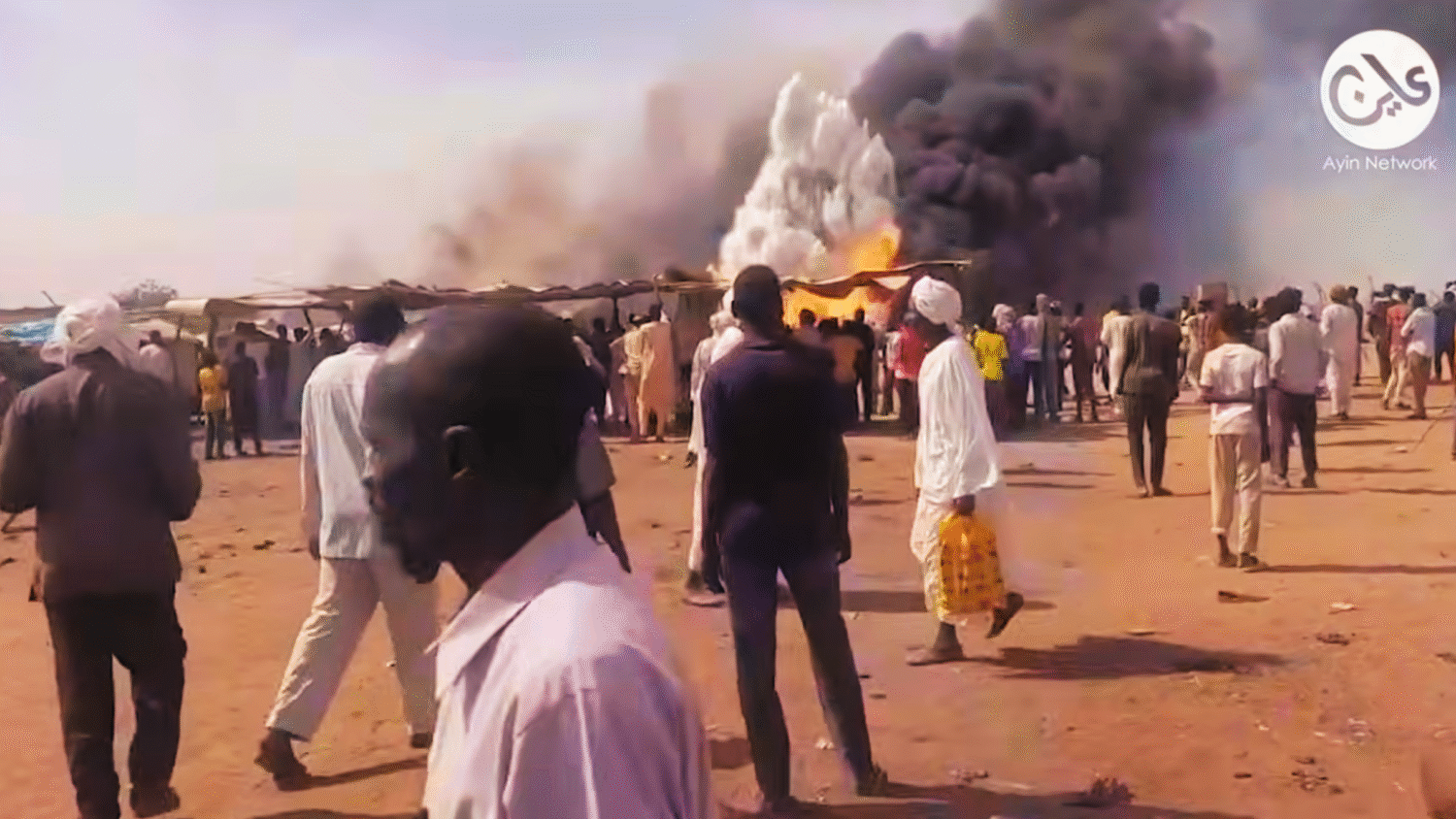
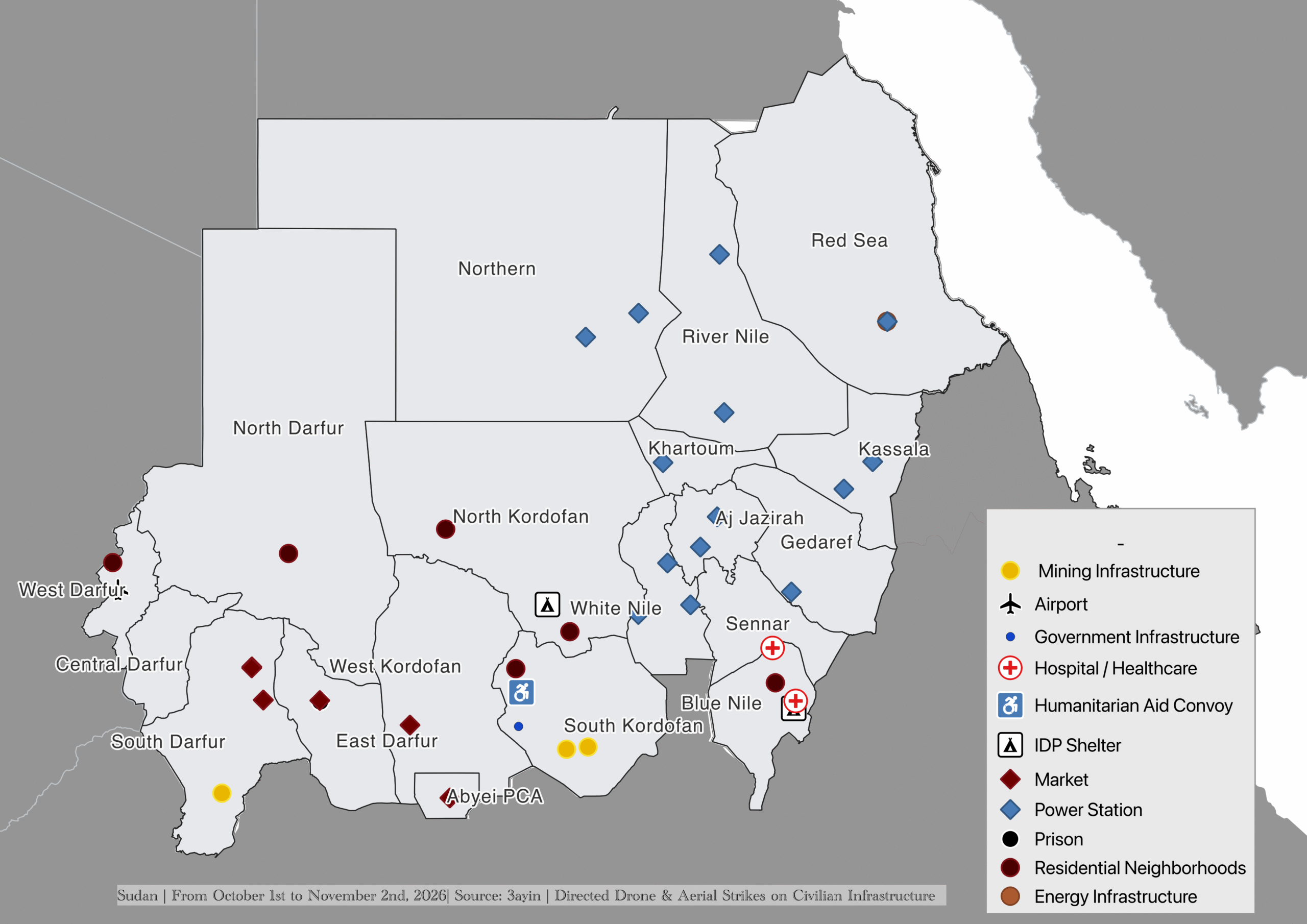
Since October, an unprecedented number of drone strikes – almost exclusively targeting civilian infrastructure – have taken place. As of Monday, Ayin monitored at least 42 drone strikes across the country, with only one targeting a military target. In the first three weeks of October alone, drone strikes killed at least 306 people. In the last ten days, the warring parties have stuck at least 28 civilian targets in different areas, including 15 power stations, markets, shelters for the displaced, mining sites, and even a hospital.
On Monday, drones hit two power stations in Kassala and an electricity sub-station in Merowe, causing widespread outages. Last week, at least 102 civilians were killed and 113 were injured, including women and children, in a drone strike on a market in the South Darfur city of Nyala, according to the Emergency Lawyers human rights group.
According to the monitoring of the drone attacks during October, the strikes focused on commercial markets in Darfur and Kordofan, while power stations, fuel depots, and electrical substations were targeted across a geographical area across north, east, and central Sudan.
Targeting power
The Sudan Electricity Holding Company said in a statement that on October 26, Rapid Support Forces (RSF) drones targeted the Sinja, Hawata, Faw, and Mashkour power stations, as well as the Al-Junaid station in Jazeera State. The attacks continued in the following days, targeting the Al-Manaqil, Al-Murkhiyat, Umm Dabakir, Shendi, Abu Hamad, Ad-Dabba, and Merowe power stations, in addition to Halfa Al-Jadida and Aroma in Kassala State.
According to the electricity company and the relevant authorities in each state, the attacks caused severe damage to the components of the targeted stations, resulting in the southeastern network going dark and service being cut off in the states of Sennar, Gedaref, White Nile, Al Jazeera, Khartoum, River Nile, Kassala, and parts of Northern State.
Economic expert Hossam El-Deen says the material and economic losses from the bombing of electricity substations are significant, explaining that a single substation contains about seven transformers, and the price of one of these transformers is no less than $250,000. “The total losses for the number of stations that have been bombed so far range between approximately $4 and $5 million, and the figure includes logistical costs, ordering expenses, waiting, and installation,” Hossam told Ayin. In addition to the costs, the time required to manufacture and ship these units adds at least four months. Everyone has to pay more. The electricity company loses revenue and citizens face a higher cost of living as a result of an increased reliance on gas and coal.
In Shendi, farmland has become barren from a lack of pumped water, destroying vital crops at a time when Sudan struggles with rampant food insecurity. “This field used to be planted with alfalfa. It was green and beautiful,” a farmer in Shendi told Ayin. After the electricity station was targeted, the field is now a barren, dry landscape. “Now it is worth nothing. There is nothing left. We lost nearly $150,000 on this farm, including land preparation and seeds, not to mention fertilisers and other costs.”
Markets in the line of fire
In turn, the Sudan Armed Forces (SAF) targeted vital commercial markets in Darfur, Kordofan, and Abyei in which residents and traders depend on for food, consumer goods, and fuel.
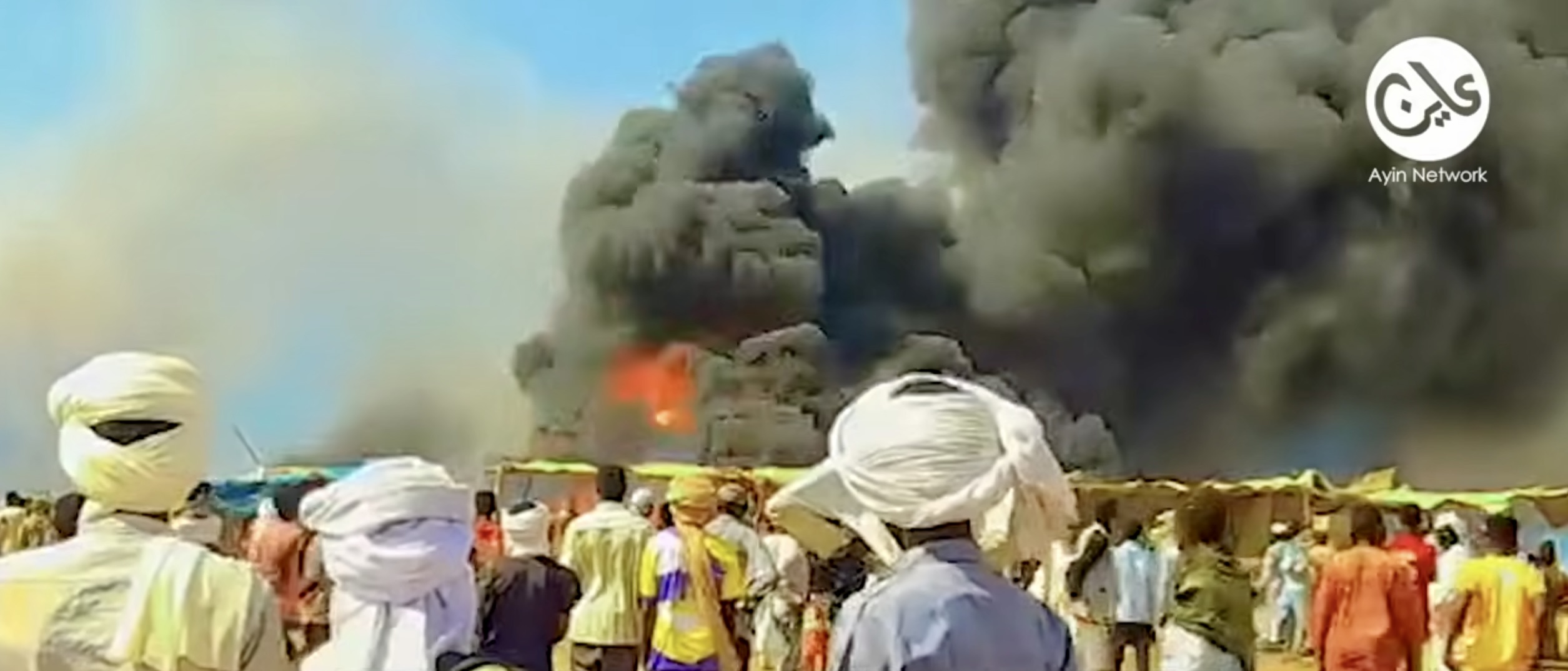
On October 19, a suspected SAF drone hit Na’am market, known locally as the Amiet market, in the Abyei border region with South Sudan. The attack killed over 80 people and brought the market to cinders. A trader in the market told Ayin that he was present during the attack and that the aircraft bombed the fuel market with eight missiles, causing a massive fire and killing dozens of people, including three Somali fuel traders. He added that the fire resulted in the loss of at least 3,000 barrels of fuel, along with about 20 tankers that were ready to depart for areas in Kordofan and Darfur. The merchant pointed out that the market did not resume its activity until the end of October due to the extent of the destruction and losses.
The disruption of supplies from the Al-Naam market has led to a fuel crisis in parts of Darfur and Kordofan. Local residents in Al-Nuhud and Ghabish, located in West Kordofan State, report that fuel prices have risen sharply since the supply from the market was cut off, with the price of a barrel jumping from three million Sudanese pounds to five million. This price hike has also impacted travel fares and the cost of obtaining water in areas where pumping stations rely on fuel.
The army’s bombing also struck other locations beyond the Al-Na’am market. During the last ten days of October, attacks targeted markets in Al-Dabab, Nyala, Al-Fasher, Abu Jabra, and Al-Daen. The attack on the Al-Dibab market alone resulted in the deaths of more than 80 people, while the bombing of the Tanqong market in Nyala on October 26 left over 100 dead. “We are ordinary people living in villages. People come and bomb us from a distance,” one Nyala resident told Ayin. “More than 30 people died when the bombing hit the valley. Not one of them was a soldier. They were ordinary civilians, most of them women,” he added. The assault followed a previous attack on the livestock market in the same town on October 16, which caused both human and material losses, according to local human rights organisations.
In West Kordofan, a drone strike targeted the Al-Mujlad market on October 17, resulting in dozens of casualties, including children, according to documentation by Emergency Lawyers. On October 22, attacks spread to East Darfur, targeting the Abu Jabra market and a crude oil tanker, as well as the Nyala market in the Al-Arab neighbourhood of Al-Daen, according to monitoring by Ayin.
Bombing of shelters and mining sites
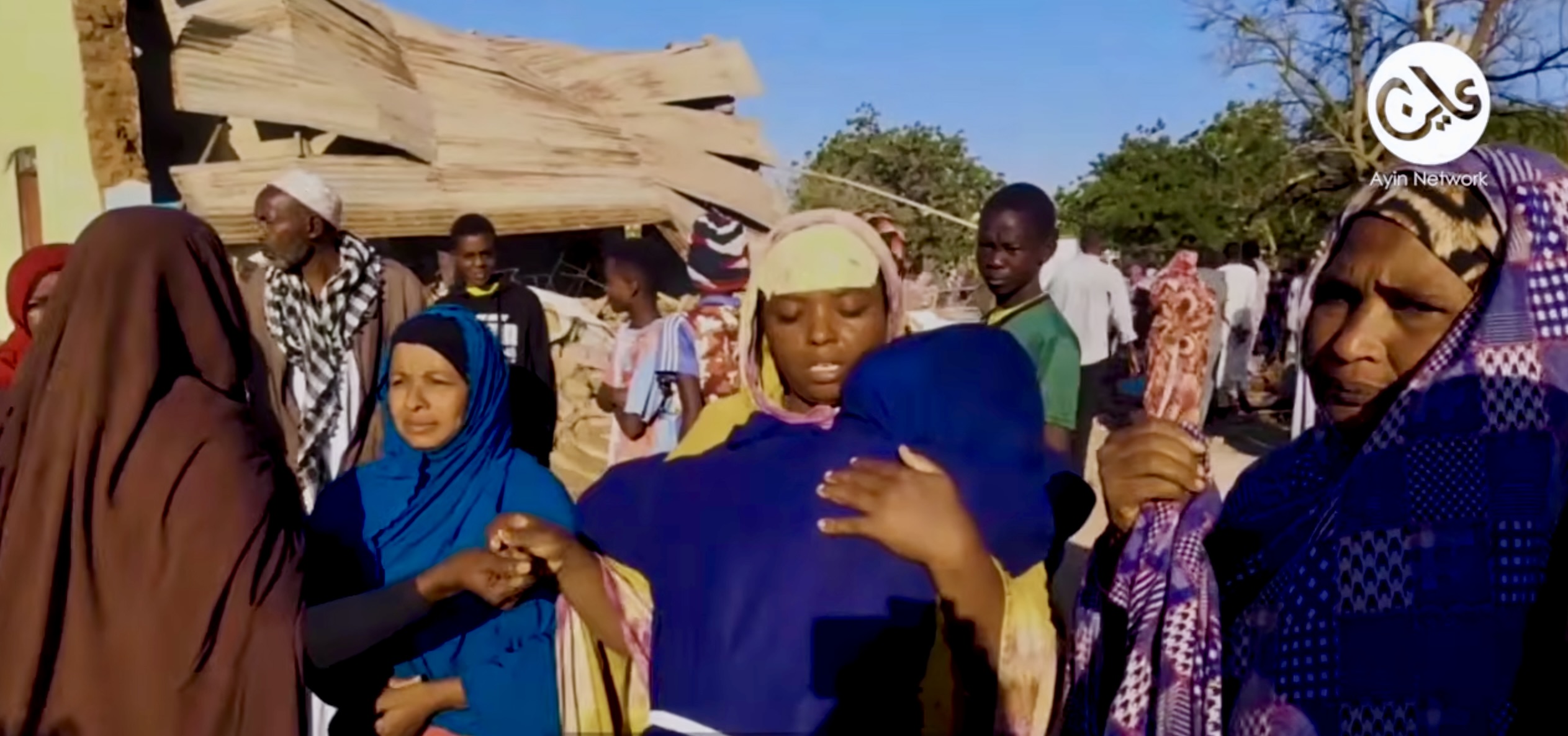
The airstrikes targeted not only power stations and markets but also camps for displaced people, aid convoys, health centres, and local mining operations. In early October, a suicide drone targeted the Al-Mina camp for displaced people in El Obeid, killing one child and injuring 12 others, according to a statement from UNICEF. In the same city, a similar attack on a dormitory at Kordofan University killed five civilians and injured 47 others, according to the Sudanese Doctors Network.
On October 3, two World Food Programme trucks were attacked from the air on the Dilling-Kadugli road, killing one aid worker, according to a WFP statement. On October 11, the Umm Darfa Hospital in Wad al-Mahi locality, Blue Nile State, was completely put out of service after being struck by a drone, which seriously injured several of its medical staff, according to the Sudanese Doctors Network.
Artisanal mining sites were not spared from the attacks. Gold mill complexes in Bajun, South Kordofan State, were bombed, as were the Taqoula mine in Talodi and the Aghbash mine in the Sungu area. On October 19, Al-Jalabi prison in Al-Da’in was targeted by an airstrike, resulting in the collapse of parts of its walls and a mass escape of inmates, according to circulated videos.
Lower costs, higher reliance
The reason for the influx of drone attacks since October is still a mystery. One practical explanation could be the limited costs involved. While Sudan is, by far, using the most drones in Africa, drone warfare has spiked in the past four years across the continent, according to Dr Nate Allen, Associate Professor of Security Studies at the Africa Center for Strategic Studies.
“We are seeing as a result of innovation in unmanned systems the drastic falling costs for various types of drones,” Dr Allen told Ayin. The larger, long-endurance drones that cost around $100 million in the past now go for $1 million or even less. Cheaper and relatively easy to transport, both warring parties are receiving a steady supply of drones from external actors. “It’s the most important factor by a wide margin,” Dr Allen said. While the army receives drones via China and Turkey, the RSF gets its drone supplies via the United Arab Emirates. “It is really the UAE that I think has helped equip and train both itself and potentially through mercenaries and intermediaries and built up the RSF’s drone capabilities.”
Facing recruitment shortages, adds economist Hossam El-Deen, it is only natural that both warring parties are resorting to more drone usage. “These asymmetric weapons are used by weaker armies to inflict heavy losses at the lowest possible cost.”