

While Washington calls for an arms embargo, Sudan’s arms market increases
23 September 2026
As Washington pushes for a nationwide arms embargo, Sudan’s warring parties continue to acquire increasingly sophisticated military technology, including drones and air-defence systems.
While the United States is working at the United Nations Security Council (UNSC) to expand the existing arms embargo to cover the whole of Sudan, the country’s warring parties continue to acquire increasingly sophisticated military technology, including armed drones, surveillance platforms, loitering munitions and air-defence systems.
More than three years into the war between the Sudanese Armed Forces (SAF) and the paramilitary Rapid Support Forces (RSF), the battlefield is changing. The conflict now involves more than just conventional weapons and artillery. Unmanned systems are playing an increasingly important role in the fighting, analysts say, allowing both sides to conduct surveillance, identify targets and launch attacks from considerable distances.
Ayin, with the assistance of multiple open-source intelligence (OSINT) experts, has examined the different types of drones and air-defence systems being used in Sudan and traced their reported origins and supply routes. The picture emerging is of a battlefield increasingly dependent on foreign military technology, with Turkey, Iran, China and Pakistan among the countries linked to systems identified in use by the warring parties.
The systems vary considerably, from Turkish-made combat drones and Iranian unmanned aircraft to Chinese surveillance platforms and commercially available quadcopters modified for military purposes. Out of this diverse arsenal, says OSINT expert Faisal El Shiekh, Chinese and Turkish weapons are the most prevalent in Sudan.
SAF: An increasingly sophisticated drone arsenal
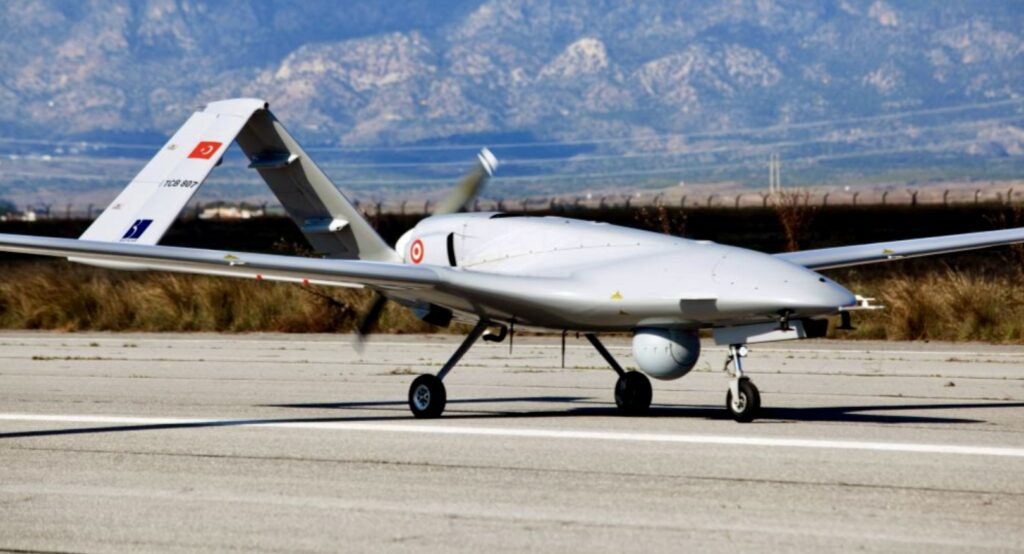
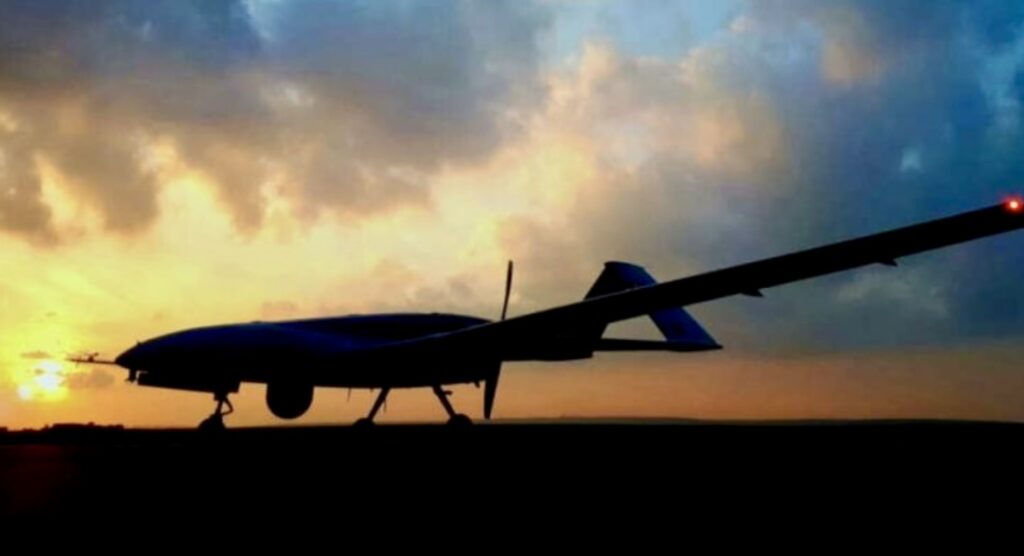
The Sudanese Armed Forces have assembled a diverse collection of drones from several foreign sources. Among the systems identified is the Bayraktar TB2, a Turkish medium-altitude, long-endurance unmanned combat aerial vehicle. According to the information reviewed by Ayin, the system was linked to a November 2023 contract between Turkey’s Baykar and Sudan’s Defence Industries System.
The reported contract was worth approximately 110.7 million euro and included six TB2 drones, three ground control stations and 600 warheads. The reported supply route was through Port Sudan.
The SAF has also been associated with the more advanced Bayraktar Akinci, a Turkish high-altitude, long-endurance unmanned combat aerial vehicle. The reported supply route is again through Turkey and Port Sudan.
The presence of the Akinci is significant, as it indicates an evolution in the type of technology available to the SAF. Rather than relying solely on relatively smaller unmanned systems, the army is increasingly operating platforms capable of carrying more sophisticated weapons and conducting longer-range operations.
Iran is another major source of drone technology linked to the army.
The army has used the Mohajer-6, an Iranian unmanned combat aerial vehicle, among its systems. According to the information reviewed by Ayin, deliveries were made through Port Sudan. The SAF has also been associated with the Zajil-3, described as belonging to the Ababil-3 family and used for intelligence, surveillance and strike missions. Unlike some of the imported platforms, the supply route for the Zajil-3 is via the local military-industrial complex.
Pakistan
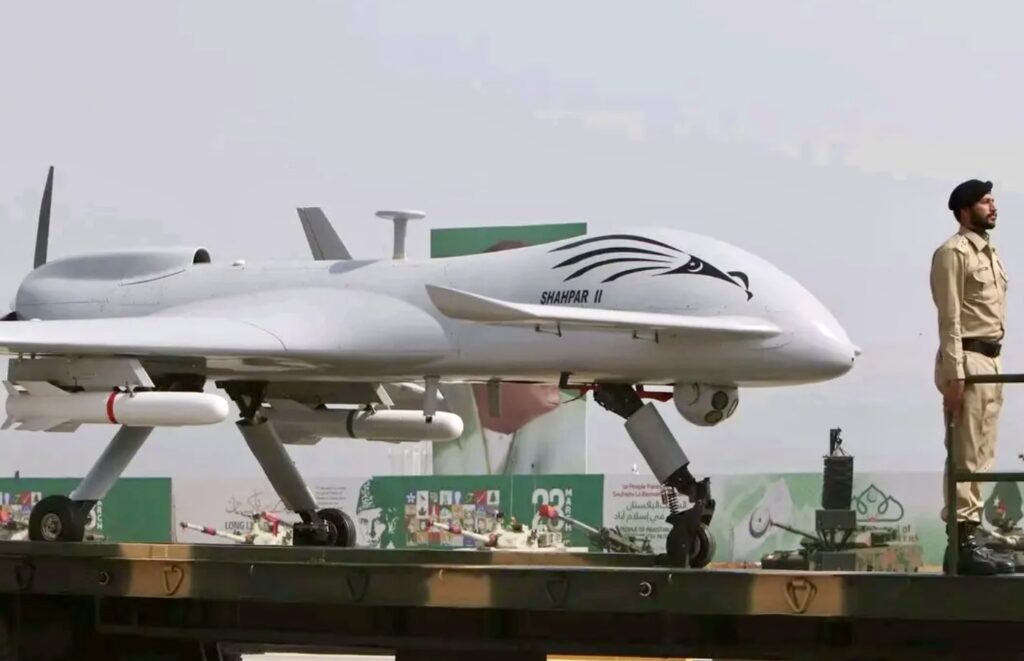
Pakistan also features in the SAF’s growing drone arsenal. Ayin’s review identified the Hahpar UAV, associated with Pakistan, as an ISR and strike platform used by the SAF.
Another system identified is the YIHA-III loitering munition, jointly developed by Turkey’s Baykar Technologies and Pakistan’s National Aerospace Science and Technology Park, or NASTP. The reported supply route is through Port Sudan.
Alongside these more sophisticated platforms, the army is also using modified commercial quadcopters. These include FPV drones and mortar-dropping drones, many of which originate from commercial markets in countries including China and Serbia before being modified for military use.
The battlefield now accommodates everything from relatively simple commercially available quadcopters to advanced armed UAVs capable of operating at much greater distances.
RSF: Chinese systems and a different supply network
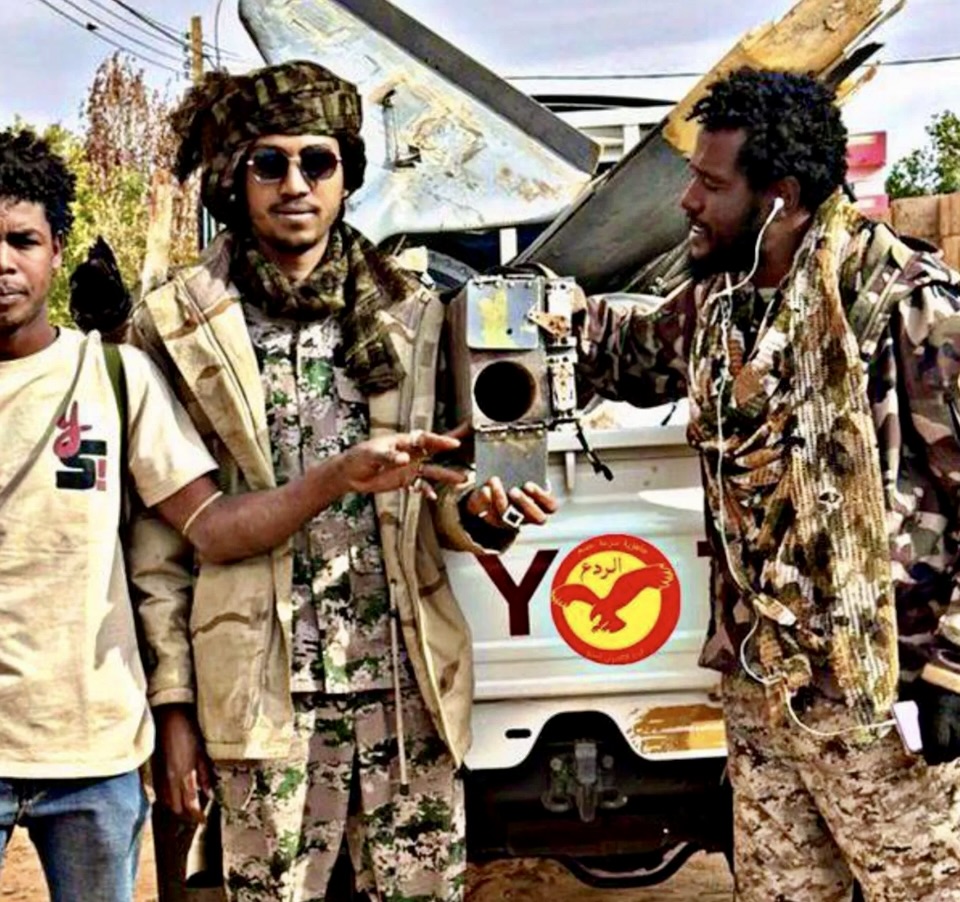
The paramilitary Rapid Support Forces (RSF) have also developed a growing drone capability, with Chinese technology featuring prominently among the systems identified by Ayin’s open-source analysis.
One of the most significant systems associated with the RSF is the FeiHong FH-95, along with the Ch-95c, which is a Chinese intelligence, surveillance and strike platform. The supply network for the systems connects to the United Arab Emirates (UAE).
The RSF is also using modified commercial quadcopters, including FPV and mortar-dropping drones. These systems come from commercial markets, including China and Serbia, and the RSF then adapts them for military use.
Tracking the network, not just the source
The RSF has additionally been associated with the Bayraktar Akinci, the same advanced Turkish UCAV identified in the army’s arsenal. In the case of the RSF, however, the reported supply network connects to UAE networks.
The appearance of the same type of advanced Turkish platform on both sides illustrates the complexity of Sudan’s emerging weapons market. It also demonstrates how difficult it can be to understand the conflict simply through the traditional distinction between the weapons industries of individual countries. Weapons manufactured in one country can reach Sudanese actors through multiple networks, intermediaries and routes.
For the RSF, the UAE-linked supply network is particularly significant.
“Based on my analysis, the most dominant supply network is the UAE-linked networks for the RSF bloc,” says OSINT analyst Dinlas, who provided Ayin satellite imagery and requested anonymity for security purposes. The assessment points to the importance of looking beyond the country where a weapon was manufactured and examining the networks through which it reaches the battlefield.
The battle above Sudan
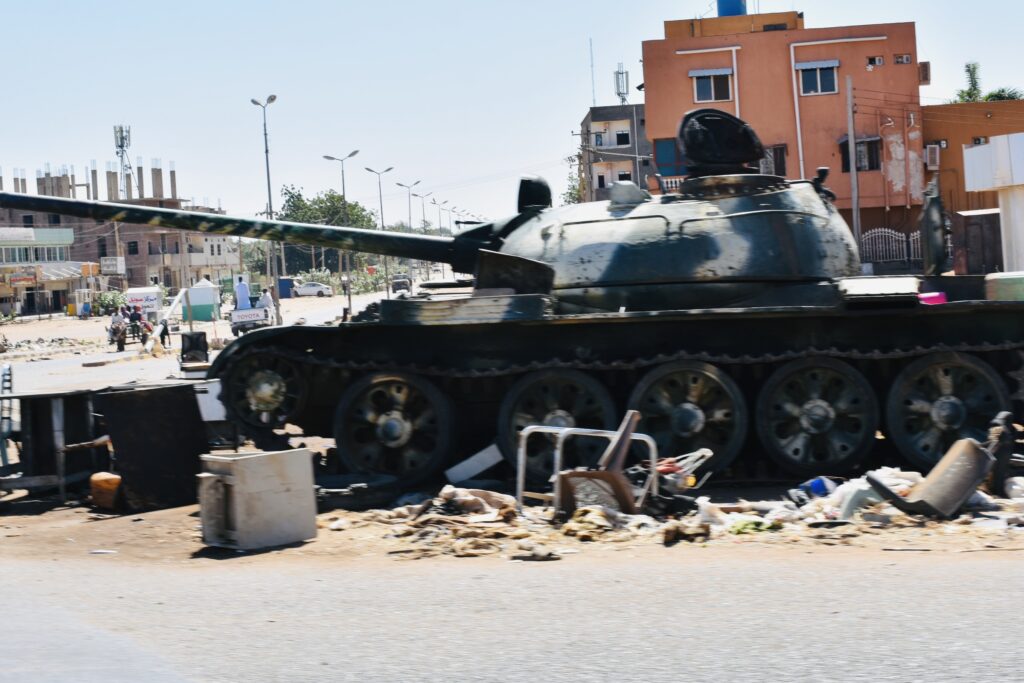
The expansion of drone warfare is accompanied by another development: the growing presence of sophisticated air-defence systems.
Ayin has obtained exclusive satellite imagery from OSINT expert Dinlas, showing what his analysis identified as Turkish air-defence systems, including Hissar AD and Hisar-O, operated by the army at its main military air base at Wadi Seidna in the capital Khartoum. The systems have become part of the broader contest between the two sides, as the ability to deploy drones increasingly depends on the ability to defend against them.
The RSF claims to have targeted the Turkish air defence system in Omdurman in May this year, highlighting the importance of the military installation and the air-defence capabilities deployed there. The RSF has also been identified as operating the Chinese FK-2000 air-defence system.
As one side increases its ability to conduct aerial surveillance and strikes, the other must develop the ability to detect, intercept and destroy those systems. The result is a cycle in which drones drive demand for air defence, while improved air defence creates demand for more sophisticated drones and alternative methods of attack.
Increasing complexity
“In recent months SAF has been gradually increasing the complexity of the procured weapons that are becoming a force multiplier,” Dinlass said. The result is a weapons market that extends well beyond Sudan’s borders.
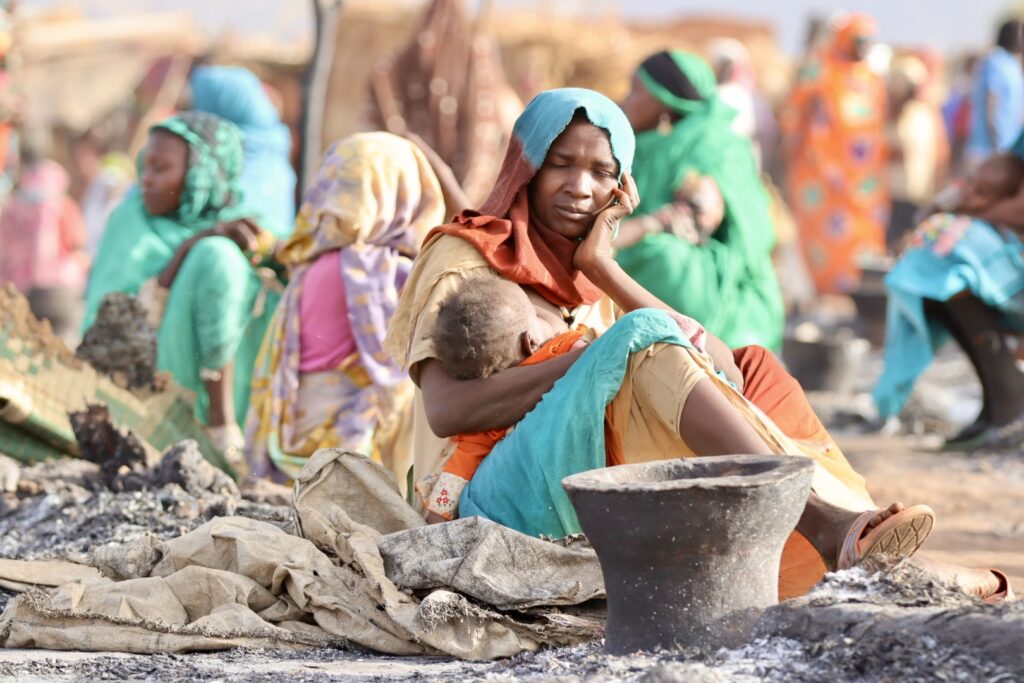
Foreign-made technology is entering a war that Sudanese civilians overwhelmingly bear the consequences of. The question now is not simply how many weapons are entering Sudan, but how advanced those weapons are becoming — and how the competing supply networks are changing the balance of technology between the warring parties.
The evolution from modified commercial quadcopters to advanced UCAVs and modern air-defence systems suggests that Sudan’s drone war is entering a more technologically complex phase.