












The Tigray War: lines of fire extending to the Sudanese border
14 August 2026
In northwestern Ethiopia, war doesn’t need to cross the border to reach Sudan. Near the Tekeze-Setit River, villages on the Sudanese side can hear the explosions, and civilians begin searching for ways to flee towards the border. There, in the geography stretching between the Shiraro, Humera, and Tekeze regions, the Ethiopian-Sudanese border appears as a thin line on a map, but it is, in reality, one of the most volatile points in the Horn of Africa.
On August 1, clashes erupted in the Shererina area of western Tigray, near the Sudanese border, between forces of the Tigray People’s Liberation Front (TPLF) and Ethiopian federal forces. Heavy artillery and drones were used in the fighting. Shelling also crossed into Sudan, hitting refugee camps on Sudanese territory and resulting in an unspecified number of casualties, according to the Sudanese Interior Ministry and Commission for Refugees. After a day of clashes, the fighting subsided, but an unspecified number of civilians and wounded TPLF fighters fled towards Sudan and are now receiving treatment in hospitals in eastern Sudan, according to a correspondent for Ayin in the region. On August 10, an Ethiopian army drone hit a secondary school and nearby riverbed in Merewa, killing three TPLF fighters and injuring seven others, the BBC reported.
These clashes were not merely a passing border incident. They followed months of mutual military buildups, escalating tensions between Addis Ababa and the Tigrayan leadership, deteriorating relations between Ethiopia and Eritrea, and the increasing interconnectedness of the crisis in northern Ethiopia with the Sudanese war. Crucially, the fighting erupted in a region geographically close to Sudan and bordering Eritrea. Here, three wars intersect: the Tigrayan war, the Sudanese war, and a brewing Ethiopian-Eritrean conflict. What appears today as a skirmish on the edge of an Ethiopian region could, if it expands, escalate into a crisis that transcends borders.
Sudan, Ethiopia trade accusations
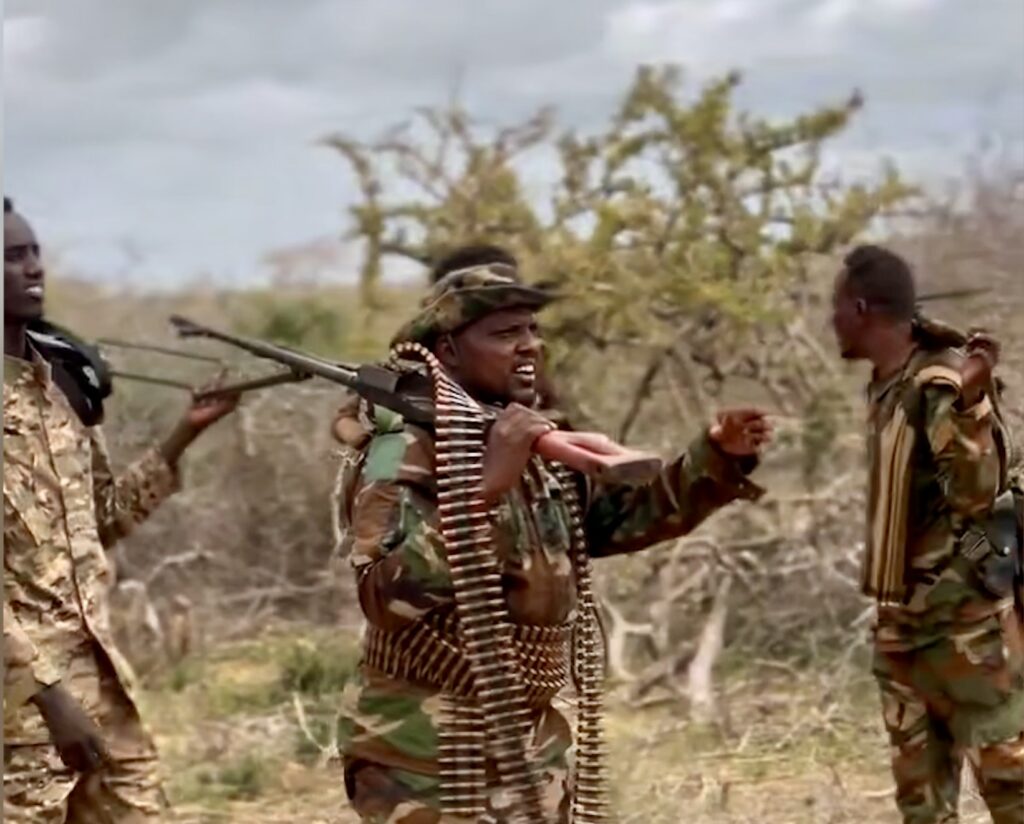
Both Sudan’s national army and Ethiopia’s government continue to trade accusations over supporting their opponents. On one hand, Ethiopian authorities claim that the Sudanese army is supporting elements of the TPLF, while TPLF fighters also support Sudan’s army in the current Sudanese conflict. The relationship between the Sudanese army and the Tigray People’s Liberation Front (TPLF) is not entirely new. Historically, the Sudanese border has been a crucial strategic depth for Ethiopian opposition forces, and eastern Sudan has served as a transit point for refugees, fighters, and weapons throughout various periods of the Horn’s history. In the context of the current conflict, multiple sources have observed movements of Tigrayan forces – specifically the Army 70 – in eastern Sudan along the border with Ethiopia.
The Ethiopian government considers the refugee camps in Sudan, which house Tigrayan refugees who fled during the 2020-2022 war, to be recruitment centres for fighters from the Tigrayan authorities. Earlier, Ayin quoted a source in Um Rakuba camp in Gedaref State, who says the TPLF are conducting military recruitment drives within the camp that houses thousands of refugees from Ethiopia’s Tigray ethnic group. The source claims that officials from the Tigray People’s Liberation Front (TPLF) organised extensive mobilisation efforts and broadcast calls to arms via loudspeakers in the camp.
In contrast, Sudanese authorities have accused the Addis government of arming and training the Rapid Support Forces (RSF) within its territory, while the TPLF claims the RSF participated in this month’s fighting in western Tigray. “If this allegation is true, then this is a major escalation into the war,” says political analyst Chalachew Tadesse. “But I do not think the RSF were involved in this one-day conflict. The TPLF are trying to regionalise the war because it is advantageous for them to do so; involving Eritrea and Sudan will help their war effort.”
In February, Reuters, citing sources and satellite imagery, revealed a secret camp in Ethiopia’s Benishangul-Gumuz region, which it said was being used to train an estimated 4,300 RSF fighters. Both RSF and allied Sudan People’s Movement Liberation-North commanders have stated that Ethiopia has provided them with military support via Asosa, the capital of Beninshangul-Gurmuz. Reuters also reported that the United Arab Emirates (UAE) funded the camp’s construction, something Abu Dhabi categorically denies. Ethiopia has also rejected these claims, while other political analysts question the strategic rationale for hosting such a camp. Nonetheless, a recent military attack by the RSF and allied forces in parts of Geisan, a town bordering Ethiopia, suggests that their forces crossed into Sudan via the Ethiopian border, analysts say.

A regional war
According to security expert and former Sudanese army Major-General Jaafar Hassan Mohamed, the real crisis for Sudan lies in this exchange of accusations between Sudan and Ethiopia. Both sides may respond in kind, facilitating or supporting rebel factions – whether the TPLF or the RSF – and escalating a potential regional conflict. The fact that Eritrea, seen as supporting Sudan’s army, has now swapped sides and supports the TPLF, adds to the stakes.
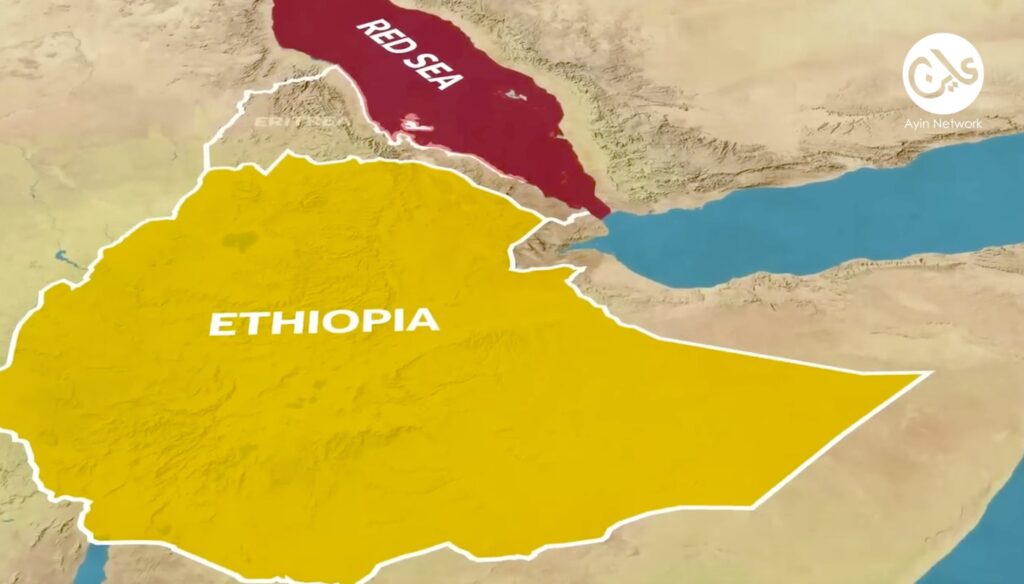
During the previous battle, the Eritrean army fought the TPLF alongside Ethiopian and Amhara forces. Some of the tension between the two countries stems from the lack of consultation with Eritrea during the 2022 peace talks and accusations that Eritrean forces occupied Ethiopian territory afterward. The Red Sea becomes another significant factor. Ethiopia, which has been landlocked since Eritrea gained independence in 1993, wants sea access. Eritrea sees any Ethiopian attempt to gain access by force as a threat to its security and sovereignty. In this sense, the Tigray crisis is no longer separate from the struggle for control of the Red Sea.
While political analysts do not believe the conflict in the Shererina area of western Tigray earlier this month will necessarily trigger a longer, wider conflict, regional influences could provide the spark. For one, Tadesse told Ayin, neither Sudan nor Ethiopia wants to be dragged into a wider conflict. “Both Sudan and Ethiopia know their limits,” he said. “Ethiopia is entangled in an internal war within Oromia and in Amhara, and Sudan is also involved in an internal war. So I don’t think either side is interested in escalating any conflicts in Tigray.”
Researcher Khalid Taha, a specialist in Horn of Africa affairs, also rules out the likely possibility of a wider, regional war in Tigray but does not rule out the potential influence of Eritrea and regional actors such as Egypt, Saudi Arabia, and the United Arab Emirates. Taha says that regional alignments in the area do not form rigid blocs, as key powers pursue distinct, self-interested agendas. While Egypt prioritises Nile water rights and Saudi Arabia focuses on Red Sea security and Sudanese stability, the UAE maintains deep strategic ties with Ethiopia and is accused of supporting Sudan’s Rapid Support Forces.
“What is important and certain is that the Gulf rivalry is part of the regional environment within which the Ethiopian-Sudanese crisis is unfolding, and the region is moving according to the intersections of interests, shifting rivalries, and the independent calculations of each country,” Taha told Ayin. “This is precisely what makes the situation more dangerous.”