








Climate extremism and Sudan’s agricultural future
8 July 2026
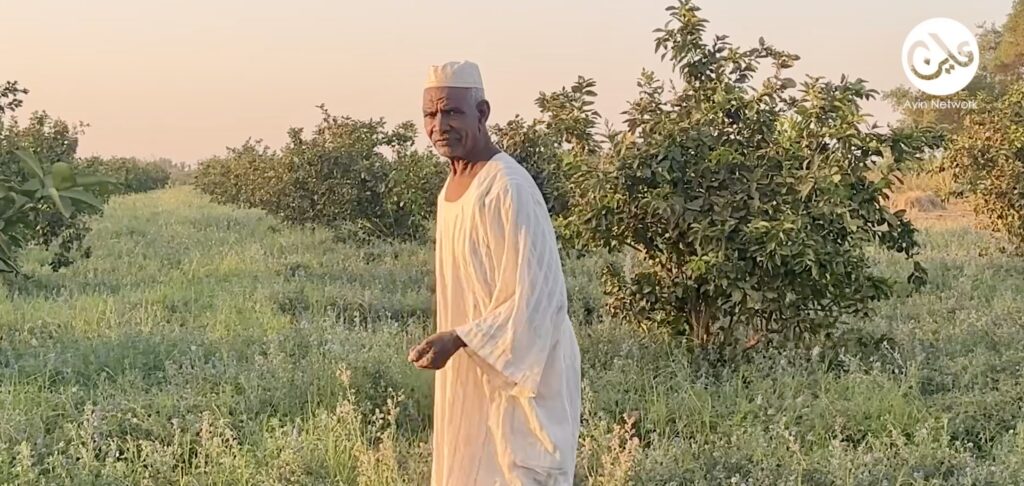
For generations, the date palm harvest in Sudan’s Northern and River Nile states followed a predictable, sun-drenched rhythm. But recently, violent disruptions have shattered that rhythm. Mohammed Ibrahim, a veteran date-palm farmer from the Northern State, stands among his trees with a growing sense of desperation. The culprit is ironic for a region historically defined by its aridity: sudden, heavy rainfall during the peak of the harvest season.
“In recent years, rainfall has increased, impacting the date harvest and causing damage to the fruit shortly before ripening. Even the fruit that can withstand the rains is now susceptible to rapid decay,” Ibrahim told Ayin. “Previously, light rains were beneficial for palm trees, washing them clean and removing harmful insects like ants and spiders. However, what has happened recently is directly affecting the fruit.”
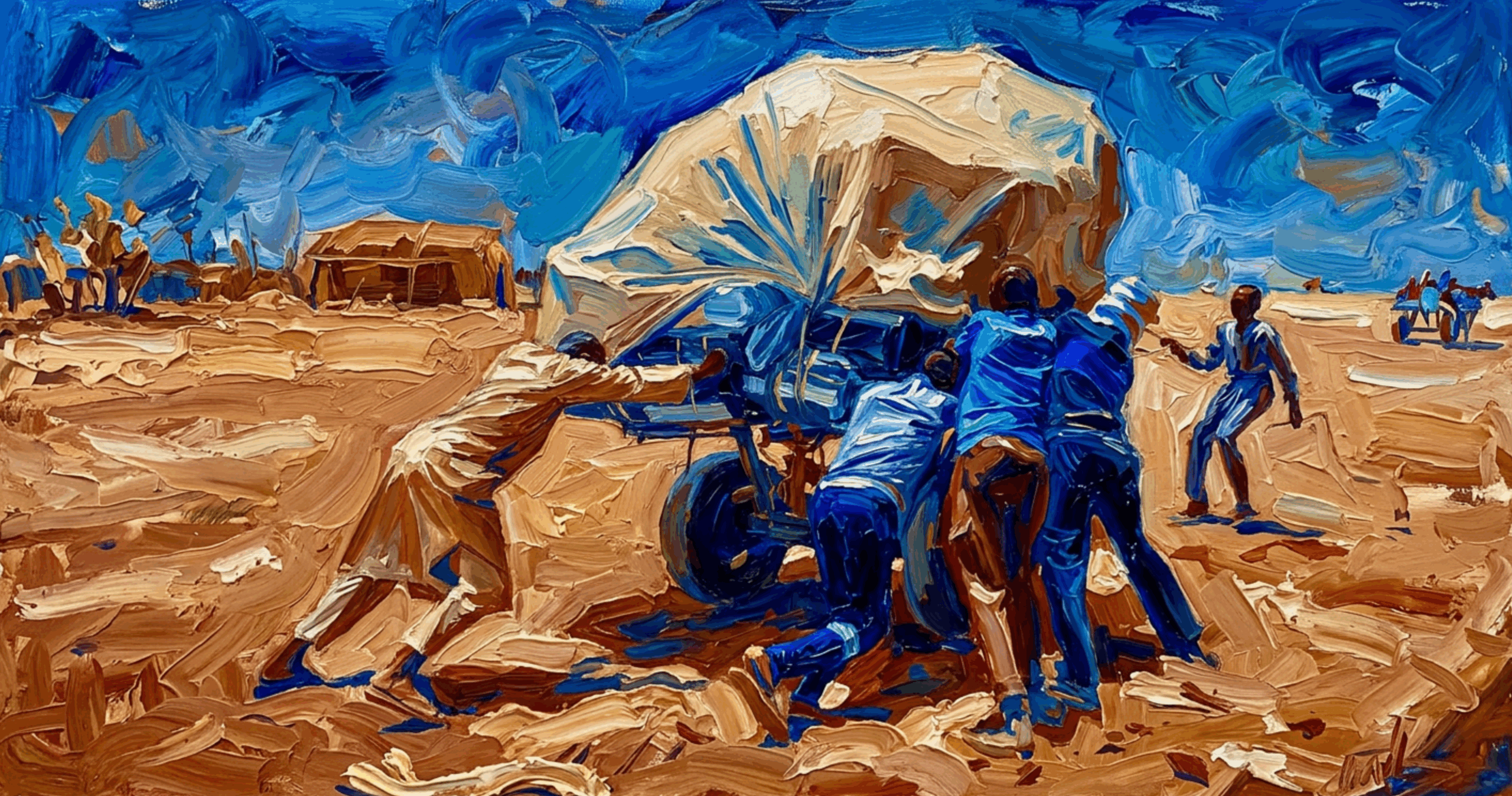
If these torrential patterns persist, Ibrahim warns that local farmers will face a pair of costly, logistically daunting dilemmas. The first option is the protective route, which involves individually wrapping vulnerable date clusters in specialised plastic bags—an immense financial and labour burden. The second option is the replacement route, where farmers eradicate native palm offshoots entirely and replace them with imported, early-ripening Saudi varieties like Barhi, Medjool, Shishi, among others. Without these interventions, Ibrahim fears date cultivation—the economic bedrock of the region—will become entirely unprofitable.
Shifting Skies and Flooded Deserts
Ibrahim’s struggle is not an isolated agricultural anomaly. Across Sudan, weather patterns have mutated. Rain is falling heavily in hyper-arid zones and sudden flash floods are erasing entire agricultural fields. At the same time, neighbouring regions are experiencing prolonged, punishing droughts, with temperatures that are breaking historical records. “In the past, the seasons followed a regular pattern. Summer, winter, and autumn all arrived on time,” says farmer Gism El Sayeed from Al-Damir, River Nile State. “But now, the seasons have become very unpredictable and overlap with one another.”
Data from the early warning unit of the River Nile State paints a surreal picture of ecological disruption. The state has witnessed the sudden emergence of entirely new, previously unknown grass species in lake areas, alongside an unprecedented explosion of the rat population following the 2024 valley corn plantings. Conversely, the region experienced a complete, unexplained absence of traditional autumn locust infestations. Meanwhile, devastating flash floods continue to tear through desert valleys, echoed by the catastrophic flooding of cities like Tokar.
The scientific verdict
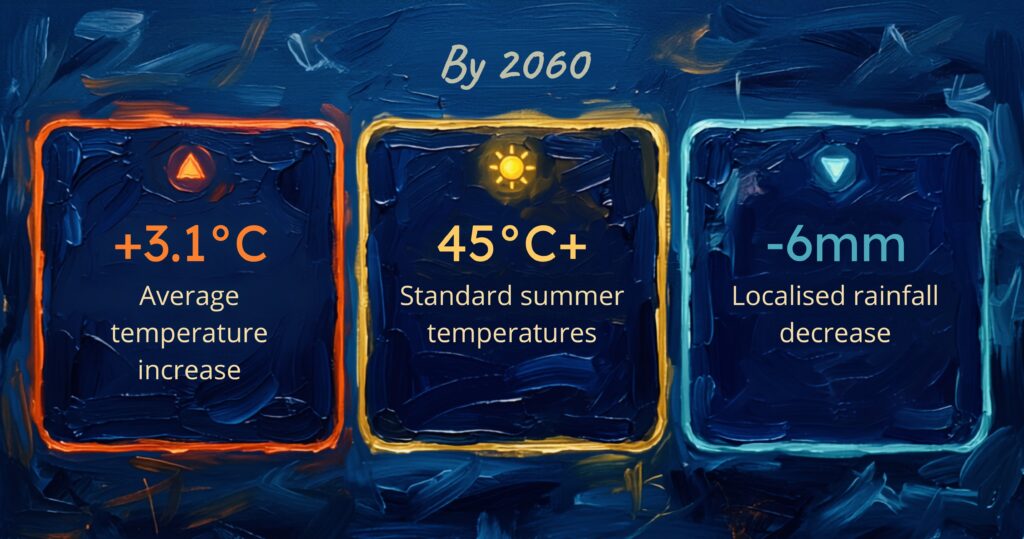
For years, scientists debated whether these shifts were part of a natural cyclical variation. Today, the consensus has shifted toward a grim certainty. Sudanese meteorologist Mohamed El-Sharif states that Sudan is undeniably facing extreme weather events. He notes that the scientific community now views these shifts with certainty rather than mere probability, pointing to the relentless compounding of floods, record-breaking heatwaves, highly erratic rainfall, severe dust storms, and prolonged droughts as definitive indicators of a climate in crisis. Sudan’s temperature is expected to increase significantly. By 2060, it is projected to rise between 1.1 °C and 3.1 °C.
Environmental and forestry expert Talaat Dafallah echoes this assessment, stating that Sudan has crossed a dangerous threshold. “What the country is witnessing today has exceeded the limits of natural climate fluctuations,” Dafallah told Ayin. “Sudan has entered a stage of increasing climate extremism.” International climate bodies have responded by classifying Sudan as one of the world’s most vulnerable nations, ill-equipped to handle an environment rapidly changing from what was experienced in the late 20th century.
The breadbasket at risk
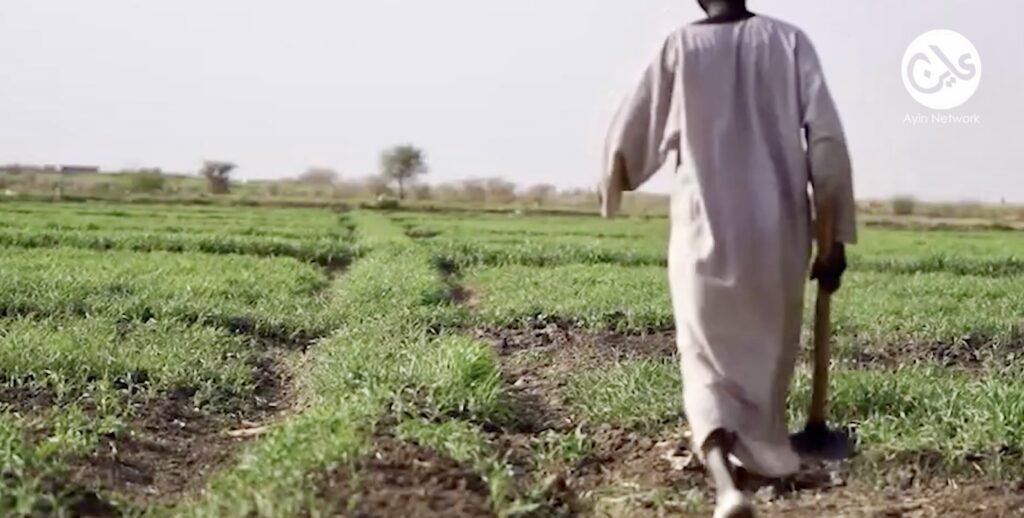
Millions of Sudanese rely entirely on traditional pastoralism and rain-fed agriculture. When the weather fails, the country’s entire socioeconomic fabric begins to fray.
Ismail al-Jazouli, a leading Sudanese climate expert and former chairman of the Intergovernmental Panel on Climate Change (IPCC), warns that even a seemingly minor drop in average rainfall can trigger systemic collapse. Al-Jazouli projects a localised rainfall decrease of up to six millimetres in certain areas, along with routine summer temperatures soaring past 45 degrees Celsius (113 degrees Fahrenheit).
Currently, al-Jazouli says, drought threatens about 12 million hectares of mechanised rain-fed agriculture and 6.6 million hectares of traditional rain-fed agriculture. Between 2030 and 2060, maize production in the Kordofan region is expected to decrease by between 13 and 82 percent, while millet production may decline by between 20 and 76 percent. Even gum arabic production, a critical economic driver, faces a projected decrease by 25 percent.
Water scarcity
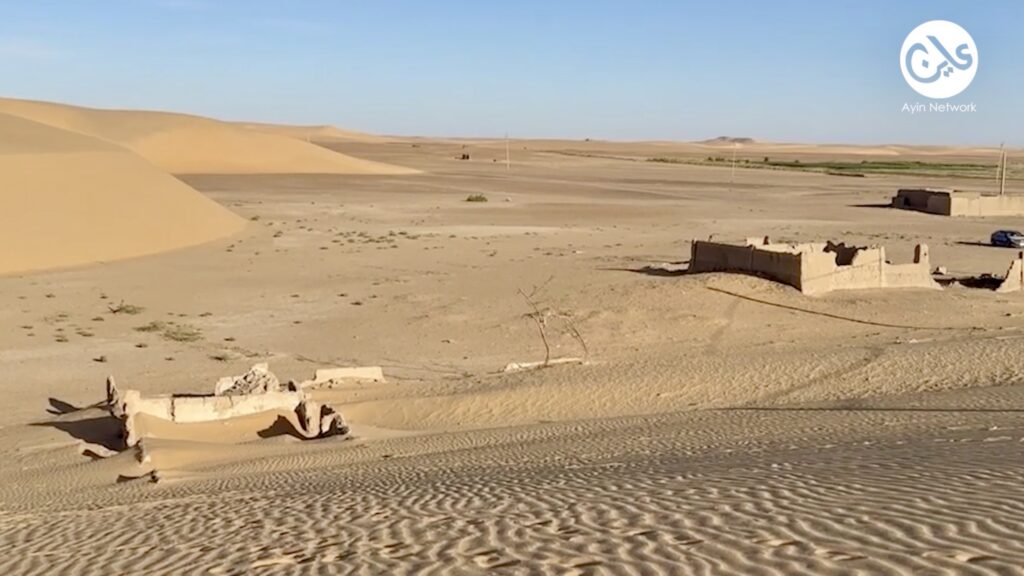
Beyond the fields, Sudan’s vital water lifelines are drying up. Driven by soaring temperatures and accelerated evaporation rates, surface and groundwater reserves are shrinking. According to data cited by al-Jazouli, the Nile water supply could decrease by 20-30% over the next forty years. Critical groundwater reserves are also projected to plummet by roughly 40 percent, with the Kordofan region bearing the brunt of the shortage. With rapid population growth driving up urban and agricultural demand, water scarcity is poised to become Sudan’s single greatest developmental hurdle.
Back in the Northern State, farmers like Mohammed Ibrahim are left to adapt on their own, caught between a desert that is growing hotter and skies that are growing unpredictably wetter. For Sudan, climate change is no longer a distant existential warning—it may make parts of the country uninhabitable.