Blocked sanctions: The UAE factor in Europe’s Sudan policy
2 December 2025
The European Union issued one of its strongest statements yet on Sudan in late November, condemning “grave and ongoing atrocities” carried out by the paramilitary Rapid Support Forces (RSF), including those reported after the paramilitary seized the city of El Fasher. Despite this, the EU Foreign Affairs Council announced sanctions against a single figure, Abdelrahim Hamdan Dagalo, the RSF’s second-in-command and brother of RSF leader Mohamed Hamdan “Hemedti” Dagalo.
The decision drew international attention for its limitations. With the scale and brutality of the RSF’s campaign across Darfur and Sudan documented for more than two and a half years, observers expected a broader sanctions package.
An EU diplomat familiar with the internal deliberations explained to Ayin why the sanctions list remains so narrow. Every name proposed for designation must be approved unanimously by all 27 member states. “Sometimes countries simply do not know the Sudan context well enough, so they don’t approve the proposed names,” the diplomat said. The EU lacks its intelligence service, the diplomat added, and relies heavily on open-source information when considering accountability measures. This situation further reduces the political appetite for designations that could strain bilateral relationships.
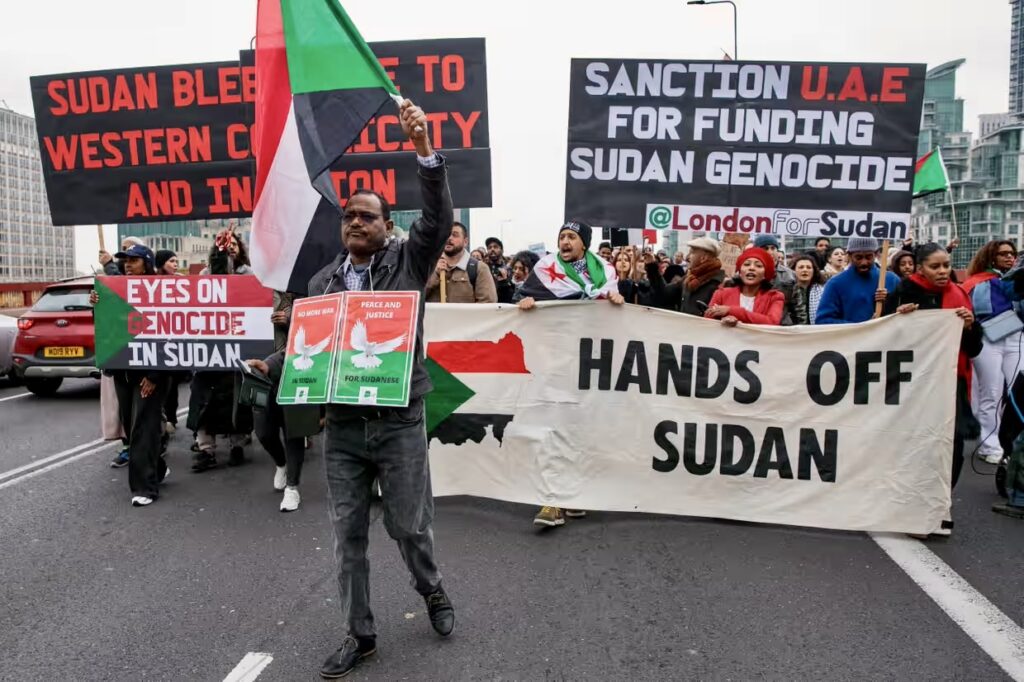
The UAE
Another factor — rarely acknowledged publicly — weighs even more heavily on the process: the United Arab Emirates (UAE). “When there is mention of the UAE’s role in Sudan’s wars, attention shifts immediately to EU-UAE agreements on artificial intelligence, trade, and energy,” the diplomat said. “A number of EU officials are willing to sanction Emirati individuals believed to be fuelling the conflict, but others, concerned about maintaining lucrative and strategic partnerships with the UAE, block such moves,” he added.
According to Euro News, the EU statement also withdrew any references to the United Arab Emirates’ role in supporting the RSF, after lobbying by the UAE Minister of State, Lana Nusseibeh. The minister of state was in Strasbourg during the plenary session of the Members of the European Parliament in late November.
During the plenary session, members of the European Parliament discussed whether to demand a complete halt to talks of an EU free trade deal with the UAE. The news follows a UN expert panel investigating the discovery of European-manufactured weapons in a Rapid Support Forces (RSF) supply convoy, as well as a report by the human rights watchdog Amnesty International that the RSF paramilitary is receiving European arms through resales via the UAE.
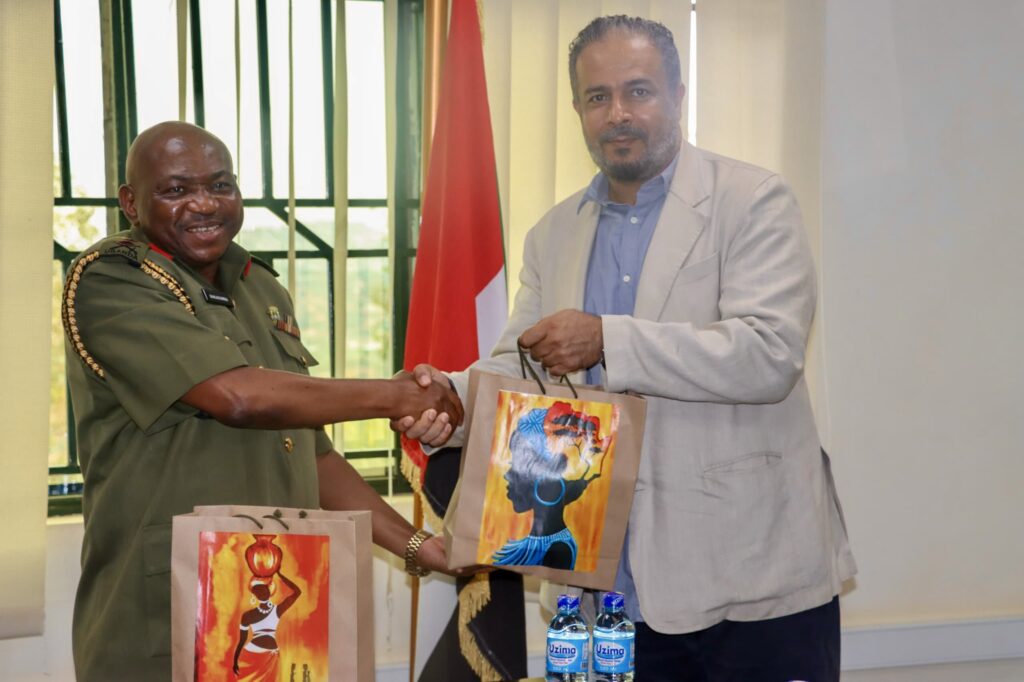
Mohamed Hamdan Al-Zaabi
While the EU remains cautious, the United Nations Security Council (UNSC) is quietly considering the first potential Emirati national to be listed under its Sudan sanctions regime. A UN diplomat told Ayin that Mohamed Hamdan Al Zaabi, CEO of the Dubai-based Global Security Services (GSS), is under review by the Darfur Committee.
According to the diplomat, Al Zaabi’s name has already appeared in multiple lists submitted to the committee, reflecting a growing body of evidence linking him and GSS to military activities inside Sudan.
GSS described itself on its own website as “the only armed private security service provider for the UAE government,” offering “professional, compliant, and cost-effective risk management and security solutions” to clients around the world. However, investigations by the investigative organisation The Sentry suggest that GSS has recruited and transported Colombian mercenaries to fight alongside the RSF in Sudan.
The UN Security Council’s interest in Al Zaabi represents a significant moment. If listed, Mohamed Hamdan Al Zaabi would become the first Emirati figure formally linked to activities that influence Sudan’s war under the UN sanctions framework. Any decision will depend on consensus among the council’s members, including Western states, Russia, and China, all of which maintain significant relationships with Abu Dhabi.
Diplomatic sources say the discussion is ongoing and contentious. Some member states argue that ignoring non-Sudanese actors risks allowing an entire support network to operate unchecked. Others insist that the UNSC requires incontrovertible proof before escalating tensions with the UAE, a standard rarely applied to Sudanese actors themselves.
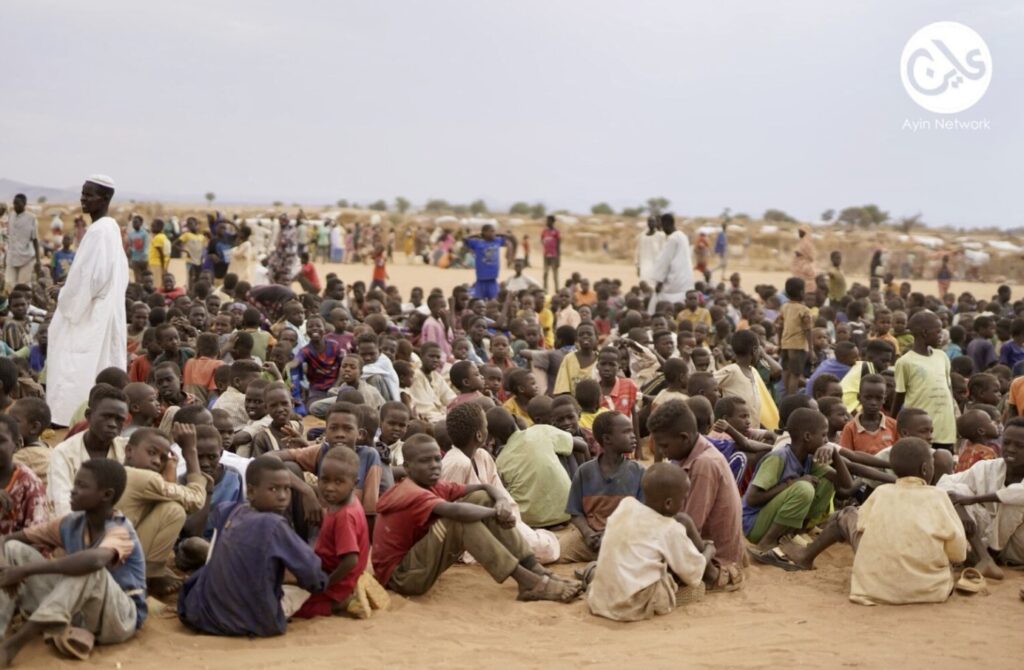
Little comfort
For Sudanese civilians trapped in the conflict, these diplomatic calculations offer little comfort. The fall of El Fasher, a city that has resisted RSF encirclement for over a year, marked a grim turning point — one that may become emblematic of how global indecision enabled the militia to expand. The EU’s condemnation, though forceful in language, stops short of addressing the full network behind the RSF’s rise. While the UNSC considers whether to take action against a single Emirati national, the external enablers of the war continue to operate with few consequences.
The looming famine, accelerating displacement, and deepening violence across Darfur and Kordofan have made Sudan’s war increasingly international, despite the narrow focus of diplomatic accountability. The current question is whether global actors will finally confront the broader system of support that sustains the RSF, or if political interests will continue to outweigh the human cost.