

Cautious optimism as UN appoints new Sudan envoy
3 March 2026
The United Nations (UN) has appointed Pekka Haavisto as its new Special Envoy to Sudan, replacing Ramtane Lamamra at a moment when the country’s war risks being eclipsed by global crises elsewhere.
Diplomatic sources told Ayin that Haavisto was selected after being shortlisted alongside Ma’een Abdulmalik, former Yemeni prime minister, in a process that sought a candidate capable of managing the complex regional and international dynamics surrounding Sudan’s conflict.
His appointment comes amid mounting criticism of the UN’s performance in Sudan, with civil society actors, researchers and policy experts arguing that Lamamra’s tenure was marked by partisanship, weak engagement with civilians, and a failure to generate diplomatic momentum to end the war.
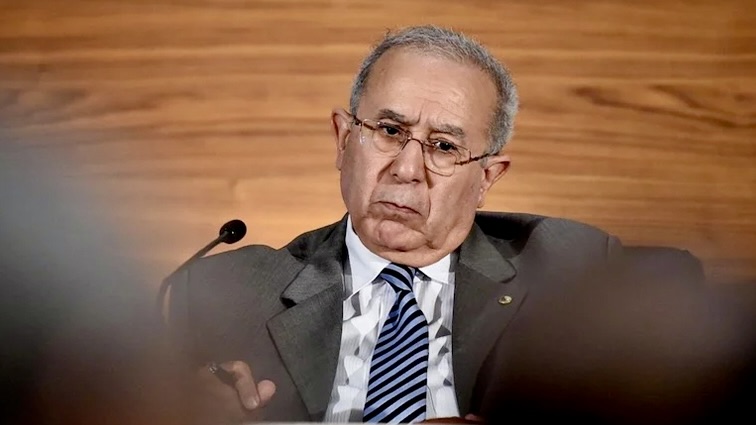
Lamamra’s tenure: “A neutral party who took sides”
From the outset, Lamamra’s mission was political: to act as the UN Secretary-General’s representative on Sudan’s war and to help steer efforts toward a negotiated end to the conflict between the Sudanese Armed Forces (SAF) and the paramilitary Rapid Support Forces (RSF).
But critics argue that he failed in that mandate.
Kholood Khair, founding director of Confluence Advisory, was among the most vocal. She described what she saw as a fundamental breach of neutrality. “He failed in his position as a neutral party,” Khair told Ayin. “He became partisan very quickly. He was an army supporter.”
Khair said he focused overwhelmingly on SAF while sidelining civilians and other actors, reducing the conflict to a binary struggle between the two main armed factions, despite the existence of hundreds of armed groups and political constituencies across Sudan.
Hamid Khalfallah, a Sudanese researcher, echoes this view. “Lamarma served more as an Algerian diplomat than he served as a UN Special Envoy,” Khalfallah said. “He was very biased. He was influenced by the interest of the Algerian government in supporting the army.”
According to Khalfallah, Lamamra’s engagement with civilian actors was brief and reactive. He only reached out to them after a Quad statement suggested that neither of the warring factions would have a political future in Sudan. Once that moment passed, Khalfallah said, the envoy returned to focusing almost exclusively on the army.
MIA
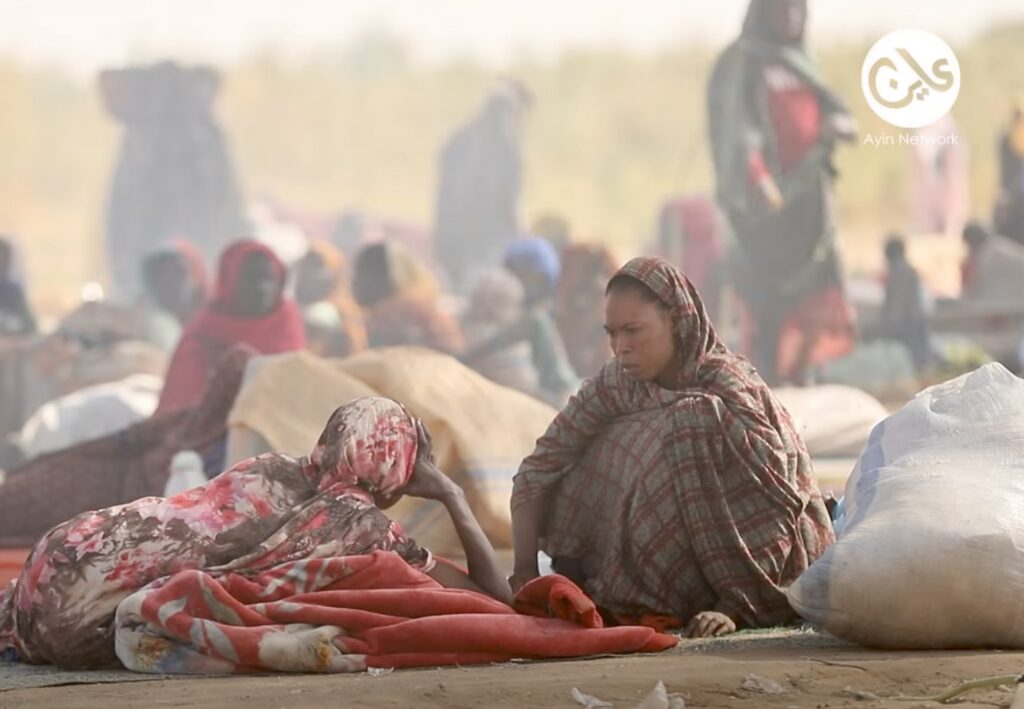
Critics also point to what they describe as troubling absences during key moments. Khalfallah noted that as warnings mounted over the risk of atrocities in El-Fasher, Lamamra was reportedly on extended leave. For many Sudanese observers, this prolonged absence represented what they saw as a broader lack of urgency.
Perhaps most damaging, Khair said, was his absence from Sudan’s civil society. “The biggest disappointment that many people felt, especially within civil society, is that he did not engage civil society,” Khair said. “Civil society has been the backbone of Sudanese politics… So why not engage them?” For Khair, the decision was not simply a tactical error but a strategic one. Any sustainable peace, she argued, would depend not only on armed actors signing agreements but also on civilian networks capable of sustaining and defending it.
Cameron Hudson, a US-Africa policy expert, believed Lamamra appeared more focused on managing the conflict than ending it and was never perceived as a passionate advocate for the Sudanese people. His diplomatic footprint, he said, was barely felt — either by those fighting the war or by international actors trying to stop it.
“Lamamra’s tenure was marked by a lack of energy, organisation, or transparency about what he was doing,” Hudson told Ayin. “He rarely used the bully pulpit or public diplomacy to elevate Sudan on the international stage.”
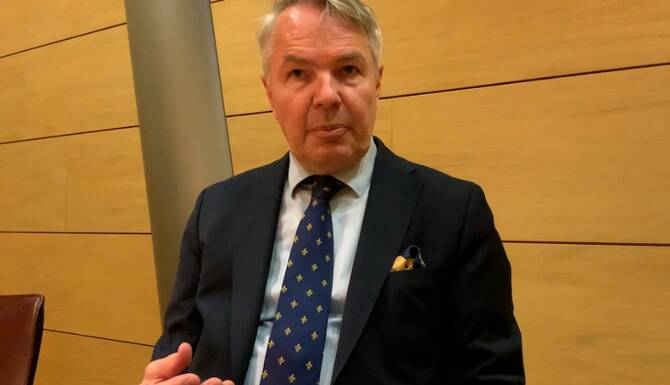
A different profile: what Haavisto brings
Haavisto’s appointment has generated cautious optimism among Sudanese civil society actors and international observers alike. Khair draws a sharp contrast between the two men, both politically and culturally. “Haavisto comes from the Nordic political tradition of democracy and consensus, while Lamamra comes from the Algerian tradition of autocratic rule,” she said. “They are very different political personalities.”
Haavisto previously served as a European Union special representative and worked extensively on Horn of Africa issues. Khair said he understands both civilian political spaces and military dynamics in the region and is not considered aligned with either of Sudan’s warring parties.
Khalafallah described Haavisto as “a massive improvement” and someone who appreciates the importance of civilian democratic rule. Both Khair and Khalfallah insist that any durable peace must focus on Sudan’s civil society. Armed actors may sign agreements, but civilian networks – resistance committees, professional associations, women’s groups and humanitarian volunteers – will ultimately determine whether peace holds.
They believe Haavisto understands this dynamic and is willing to engage broadly across political and civic spectrums. That willingness, they say, could differentiate him fundamentally from his predecessor.

The test ahead
Despite this optimism, observers emphasise that success is not a guarantee.
Haavisto inherits a fragmented mediation architecture. The AU, the UN, regional blocs and ad hoc groupings – including the Quintet – all operate with overlapping mandates. Coordinating these tracks without duplicating or undermining them will require strategic clarity.
There is also the question of global attention. With crises in the Gulf and elsewhere dominating headlines, Sudan risks slipping further down the international agenda. That said, Hudson believes Haavisto’s former position as foreign minister of an EU member state will provide him direct access to senior officials in Europe and beyond—relationships that could prove crucial at a time when Sudan risks losing international attention.
Sudan’s war has devastated cities, displaced millions, and entrenched one of the world’s worst humanitarian crises. The role of a UN envoy is neither omnipotent nor decisive on its own. Yet the tone, priorities and alliances set by that envoy can influence the trajectory of international engagement.
Haavisto’s appointment signals an opportunity for recalibration: away from perceived partisanship, toward broader civilian inclusion and stronger regional anchoring. Whether that opportunity translates into tangible progress will depend not only on his diplomatic skills but also on his ability to convince Sudanese actors—military and civilian—that he is an impartial actor pushing for peace.