The Quad’s latest ceasefire proposal for Sudan
24 February 2026
A new ceasefire proposal backed by the Quad has emerged as the latest diplomatic push to halt Sudan’s devastating war. The Quad, comprising the United States, the United Arab Emirates (UAE), Egypt, and Saudi Arabia, was formed in 2025 to leverage collective influence to pressure a ceasefire among Sudan’s warring parties. According to a senior European Union diplomat who spoke to Ayin, the latest proposal consists of a 90-day arrangement applying to all forces, including affiliates.
The stated objective, the diplomat said, is to facilitate humanitarian aid and ensure the protection of civilians. The plan seeks to stabilise the battlefield long enough to allow aid to reach affected populations and minimise direct harm to non-combatants.
Under the framework, parties would maintain their current position, disengage from active fighting, and adopt a defensive posture only. The proposal is structured to prevent further advances while lowering the intensity of clashes, the EU diplomat said.
It also involves demilitarising agreed-upon locations to establish humanitarian corridors. The arrangement would cover withdrawal from cities, including El Fasher, as well as from locations along humanitarian corridors, including in the Kordofan region. These withdrawals are considered essential to making corridors functional.
The United States would chair a body that would handle oversight, while the UN would play an advisory role. On civilian protection, discussions are also ongoing about financing mechanisms. Some actors are pushing for the implementation of United Nations Security Council Resolution (UNSC) 2719 to finance a UN-AU mission.
A question of enforcement, political posturing
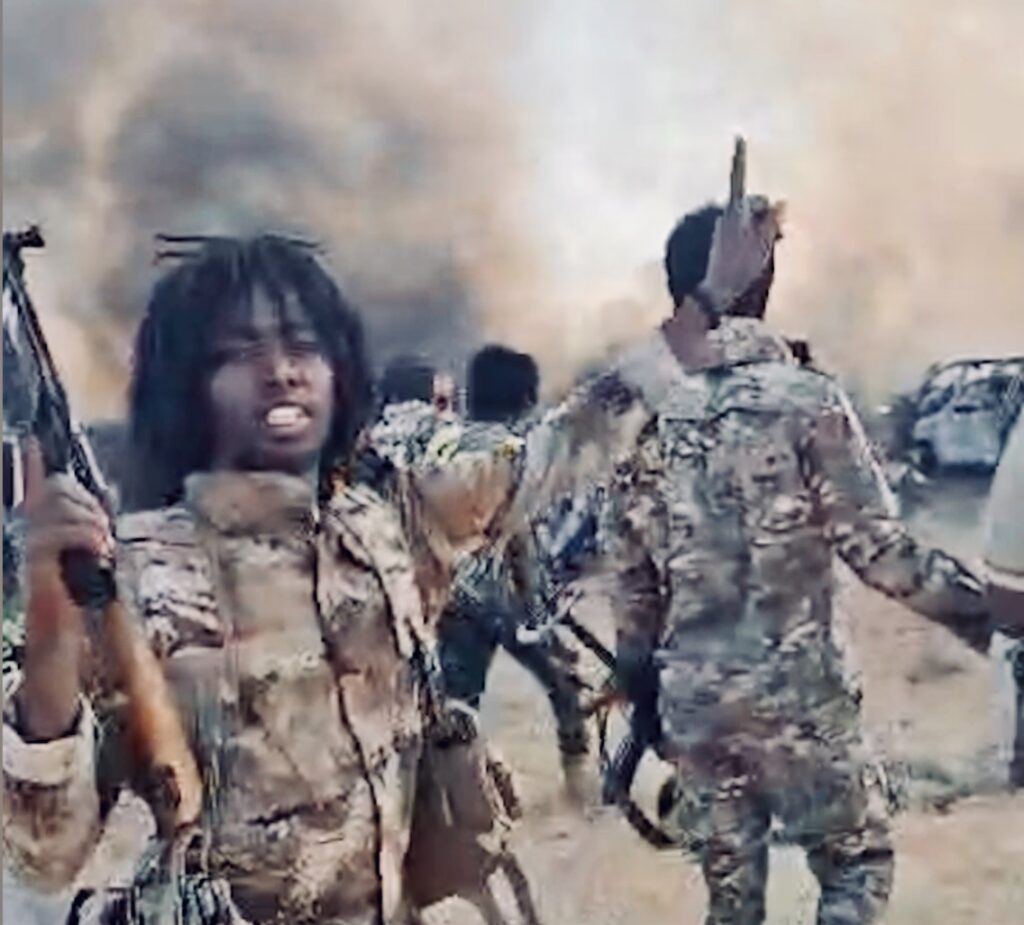
Given the poor track records of both warring parties in adhering to agreements, concerns over enforcement remain. The proposal, seen by Ayin, outlines positions, disengagement, defensive posture, demilitarised zones, corridors, and oversight – but enforcement mechanisms remain unclear. Without clarity on consequences, compliance could become contested.
Coordinated implementation would be required for withdrawal from cities such as El Fasher and from corridor areas in Kordofan. Verification and monitoring would be critical to ensure both sides adhere to commitments.
There is also scepticism about the political motives behind the initiative. According to the diplomat, the proposal appears aimed more at promoting the United States, President Donald Trump, and his special envoy Massad Boulos than at delivering a breakthrough toward peace. Overly positive remarks by Boulos claiming positive feedback from the warring parties, for instance, suggest a desire for quick political wins rather than genuine results.
Questions also remain about the positions of key regional sponsors. The source suggested that meaningful progress requires pressure on the UAE and Saudi Arabia. “I think he [Massad Boulous] needs to push the sponsors,” the source added. “I don’t think Saudi Arabia and the UAE agreed.”
The Army’s counterproposal, diplomatic friction
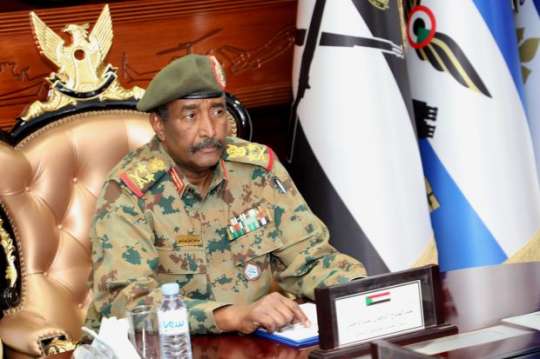
Another source familiar with the Sudanese Armed Forces (SAF) position told Ayin that the army drafted its own ceasefire proposal and submitted it to the Quad. According to the source, the army’s proposal exceeds 50 pages, with a nine-page summary shared with Quad members. The Quad’s version, in contrast, is between 10 and 11 pages, according to the source.
According to the source, no Quad member has responded to the SAF’s proposal. This is why the SAF has yet to respond to the Quad Initiative. The same source sharply criticised Massad Boulos, claiming that no party agreed to his proposal and that others were merely humouring him. “Everything Boulos says is a lie or, at best, an exaggeration,” the source said. “Presenting proposals does not necessarily mean that we accept them,” Sudan’s army-controlled foreign ministry said in a recent statement.
Meanwhile, a US State Department spokesperson confirmed to Africa Intelligence that they “are aware of General Burhan’s peace proposal” but remain focused on the Quad’s initiative. “The comprehensive plan the Quad developed in consultation with all parties is the best path forward,” the spokesperson added.

Between paper and practice
The current diplomatic moment presents two parallel realities. On paper, the Quad proposal outlines a structured 90-day ceasefire applying to all forces and affiliates. But attaining the acceptance and adherence of the warring parties remains doubtful. The army has presented its own comprehensive proposal and asserts that it has received no attention. “The problem is that our war chiefs, General Burhan and General Hemedti, are not ready for a negotiated truce,” says political analyst Dr Suleiman Baldo. “At that time they weren’t and up until today they don’t seem to be anywhere closer to agreeing to a negotiated peace,” he told Ayin. “So we can’t blame the mediators for what the generals are doing – which is insisting on fighting the war until the very end, the last man standing.”
Regional sponsors remain central yet uncertain in their positions. Discussions about financing a UN-AU mission add another layer to an already complex picture.
Whether this initiative represents genuine progress or diplomatic positioning will depend on alignment between the warring parties, their external backers, and the oversight mechanism envisioned. For now, the proposal exists in full detail on paper. Its transformation into reality remains the unanswered question.