

Tracking the shadow wealth of Sudan’s Islamists
20 April 2026
In March 2026, the global financial landscape shifted dramatically for the Muslim Brotherhood in Sudan. Following years of scrutiny, the U.S. State Department officially designated the group as a “Global Terrorist Entity” and a “Foreign Terrorist Organisation” a week later. According to the State Department, the designation was designed to cripple the Brotherhood financially due to the group’s violent ideology, mass executions of civilians, and ties to the Iranian Revolutionary Guard.
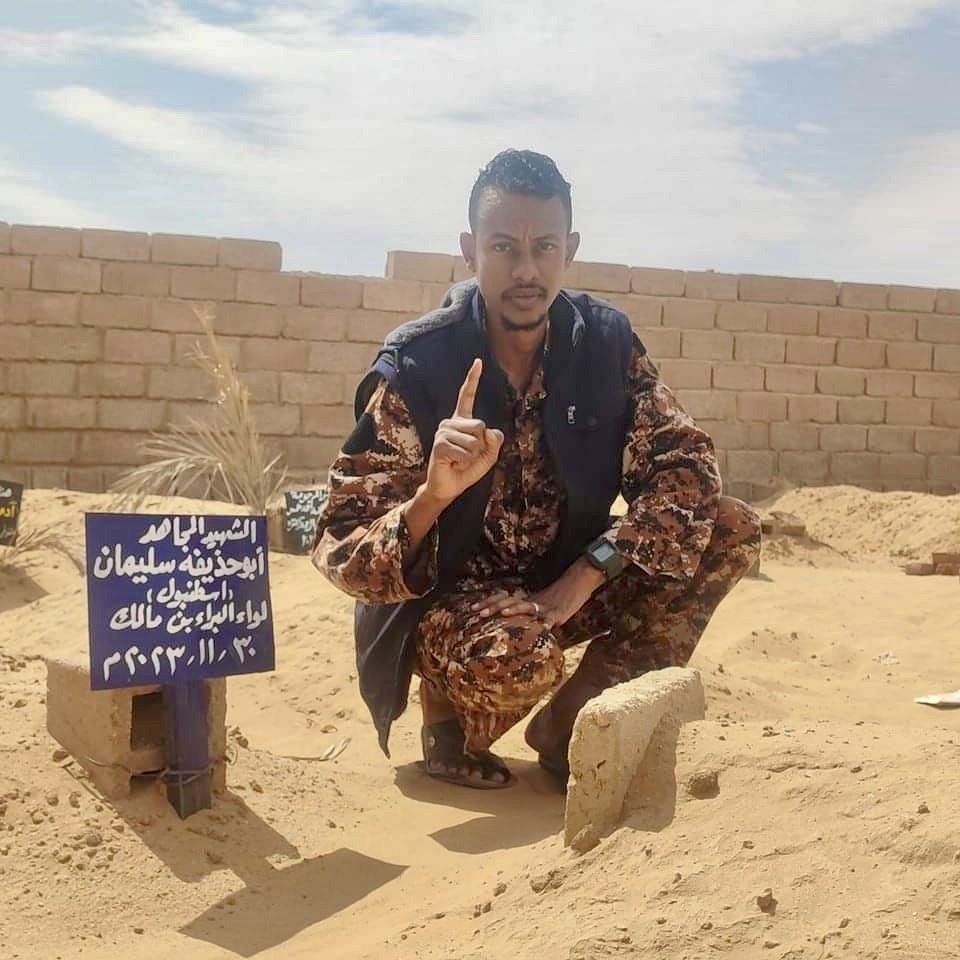
However, tracking the wealth of these “Sudanese Islamists” has proven fiercely complex. The group quickly adapted by shifting vast fortunes into the shadows, anticipating the crackdown that would follow the September 2025 sanctions against its Al-Bara’ bin Malik Brigade.
Rather than freezing under the weight of U.S. sanctions, Islamist assets were “liquidated” and funnelled into a massive shadow economy. According to Ahmed Khalifa, a specialist in Islamic groups, the group’s financial network spans from East Africa to the Gulf and Europe.
“While Washington was tightening its economic siege by issuing a series of decisions and regulations, there were invisible funds belonging to Islamists in Sudan weaving a parallel network that was beyond imagination in its flexibility,” Khalifa told Ayin. “It was not just balances in banks, but rather it turned into a “political money octopus” that was deposited and moved in secret havens,” Khalifa explains.
 Money laundering mastery
Khalifa notes that these assets are often hidden behind “front companies” and “second-tier figures”, allowing the organisation to operate undetected. “The architects of these funds have mastered the art of financial obfuscation, transforming massive investments into small, anonymous entities, making their pursuit by the US Treasury akin to chasing a ghost on a stormy night.”
The strategy relies heavily on decentralisation. The Islamic organisation deliberately scatters its funds across nations like Britain, Egypt, the UAE, Turkey, and Malaysia, Khalifa added. The group parks much of this wealth in real estate assets instead of cash to avoid scrutiny from financial regulators and immigration authorities. This is particularly apparent in real estate transactions in Malaysia and Britain, economic analyst Mohamed Ibrahim told Ayin.
Domestically, the group also continues to wield immense financial power, Ibrahim says, as targeted individuals bypass sanctions by reinvesting heavily inside Sudan.
“If there are individuals and entities linked to Islamist movements and subject to sanctions imposed by the US Treasury in September 2025, they are also investing substantial sums of money within Sudan through other fronts,” Ibrahim states. “At least 27 fuel import companies, with a capital of no less than $500 million, have been established recently, led by public figures to mislead public opinion into believing that Islamists have no connection to them, but this is untrue.”
Operating in the “grey zone”
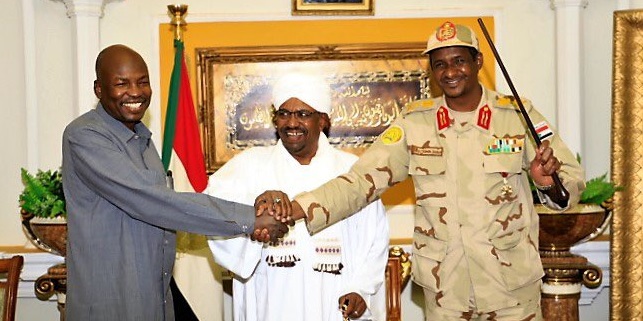
Ousted President Omar al-Bashir’s regime laid the foundations for this evasion strategy, says political economist Othman Abdelmoneim. Decades of US sanctions served as a powerful motive for the Islamic movement to operate in a “grey zone” and develop alternative financial transaction routes outside the global SWIFT banking system. Today, their financial footprint remains challenging for international watchdogs to unravel.
“While international reports speak of economic paralysis in Sudan due to banking and economic sanctions, there were cash flows crossing the borders through the traditional (hawala) system,” Abdelmoneim told Ayin. “At times, the trade in gold and precious metals is used, while at other times, investments are made in real estate and agricultural portfolios in countries that do not strictly implement US sanctions. This movement was managed by Islamists or by government officials and generals in the Sudanese army who have loyalty to the Islamist organisation.”
Resource depletion vs. hidden wealth
Despite these intricate networks, some experts argue the group’s financial power is waning. Economic analyst Ammar Ismail suggests their foreign funds have “eroded” since their apparent loss of power in 2019 deprived them of key monopolies on imports.
Ismail believes that Islamists have funds operating within the economic systems of the UAE, Turkey, and Malaysia, but these funds are not substantial. Most of these assets are real estate holdings that may grow by $60 million annually. Islamists manage companies and commercial activities abroad in Egypt, Britain, the United States, East Africa, the UAE, and Turkey, using the names of family members, acquaintances, or friends, he added. These activities are managed by teams that may be foreign or Sudanese, or funds are deposited in banks under the names of individuals who have no direct connection to the organisation.
While Sudan remains “fertile ground” for generating wealth, Ismail notes this path has largely stalled for the group. He asserts that the Sudanese army’s companies are “wealthier” and currently the most capable of raising funds, followed by the Rapid Support Forces, leaving the Islamists in third place.
Khalifa, however, disputes the notion of modest wealth within the Sudanese Islamic Organisation. He estimates the group’s global asset value at no less than $50 billion, generating at least $200 million annually in real estate income alone. He further argues that military companies survived and grew largely because elements of the Islamic groups supported them.
Yet, choking off these funds will not necessarily end the ongoing violence. As Khalifa points out, “There are large arms deals concluded between the Sudanese army and some countries, and these fall outside the Islamists’ control because financing requires guarantees from established entities such as the military establishment and its companies or the Ministry of Finance. Therefore, pursuing Islamist funds will not completely dry up the sources of the war in Sudan.”
Uncertain future
Washington is expected to issue new measures later this year that could further sideline the group politically. However, until profound political change disrupts the status quo, the intricate financial fortress built by Sudan’s Islamists means their hidden wealth will likely remain exceedingly difficult for international authorities to touch.