










Volkswagen: Tracking Sudan’s blood gold from a war zone to global supply chains
9 April 2026
As foreign governments prepare for the International Sudan Conference in Berlin next week to address the humanitarian catastrophe, some corporations linked to these countries are accused of buying conflict gold from Sudan. A new investigation by the Center for Environmental and Social Studies (CESS) shows how major international companies, including Germany’s automobile giant, Volkswagen, are implicated in this trade.
Since the outbreak of devastating conflict in April 2023—a war that has displaced over 13 million citizens—gold has become a lifeblood of the violence. The conflict has dissolved the few checks and balances that existed prior to the violence, allowing both warring parties to smuggle gold without censure and fuel the war effort.
Multi-national corporations, whether unwittingly or not, have fed into this illicit trade in their bid to build up gold reserves. Global gold demand is unparalleled. Market volatility and mounting concerns about the US currency are driving central banks and corporations to hoard gold at record levels. The quest for speedy sourcing has driven supply chains into high-risk situations where control is a phantom. The CESS investigation has managed to trace this poor sourcing to gold originally found in the country’s gold refinery.
The fall of “CID002567”
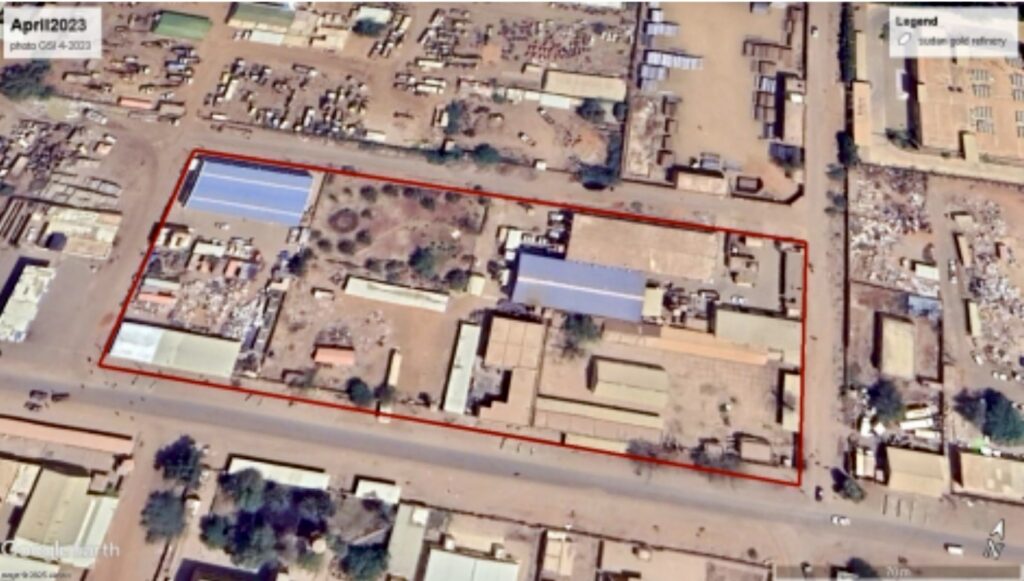
The Sudan Gold Refinery, established in Khartoum in 2012, acted as a lifeline during an economic crisis following the independence of South Sudan and was designed to regulate the gold sector. By refining gold to a high degree of purity, it allowed the government to accurately assess exports, calculate the state’s share, and generate vital foreign currency. The refinery was given a permanent digital ID number, CID002567, as a required step for international trade tracking within the Responsible Minerals Initiative (RMI).
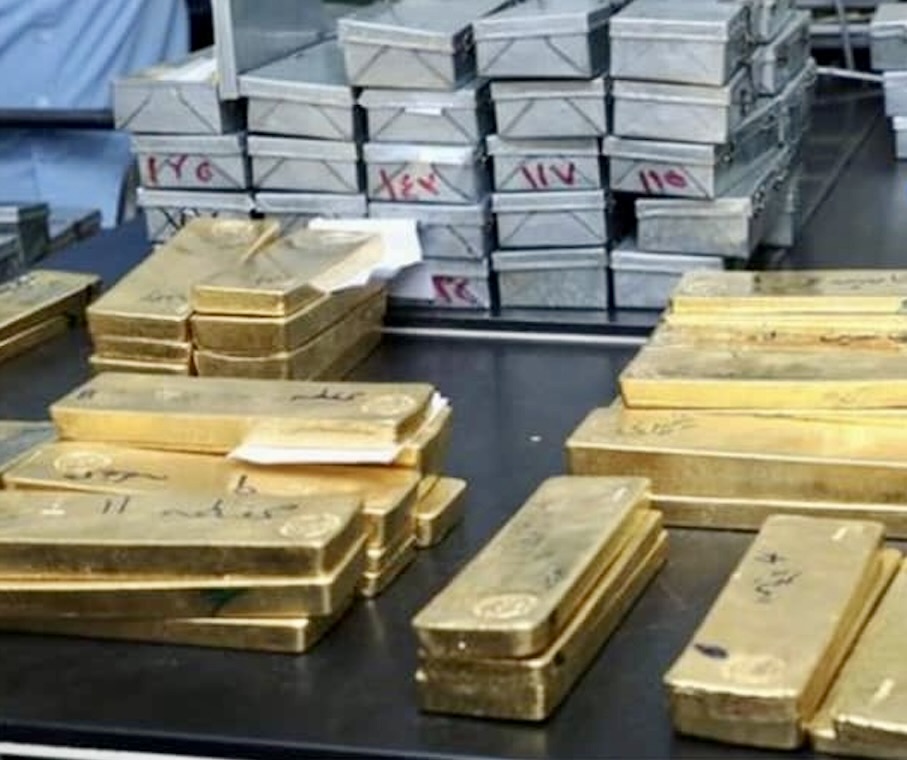
That system violently collapsed on May 24, 2023, barely a month into the war. The Rapid Support Forces (RSF) seized the refinery, looting an estimated 1.3 tonnes of unrefined gold and 15 tonnes of silver—a stockpile valued at over $150 million. The RSF instantly converted these reserves into war capital.
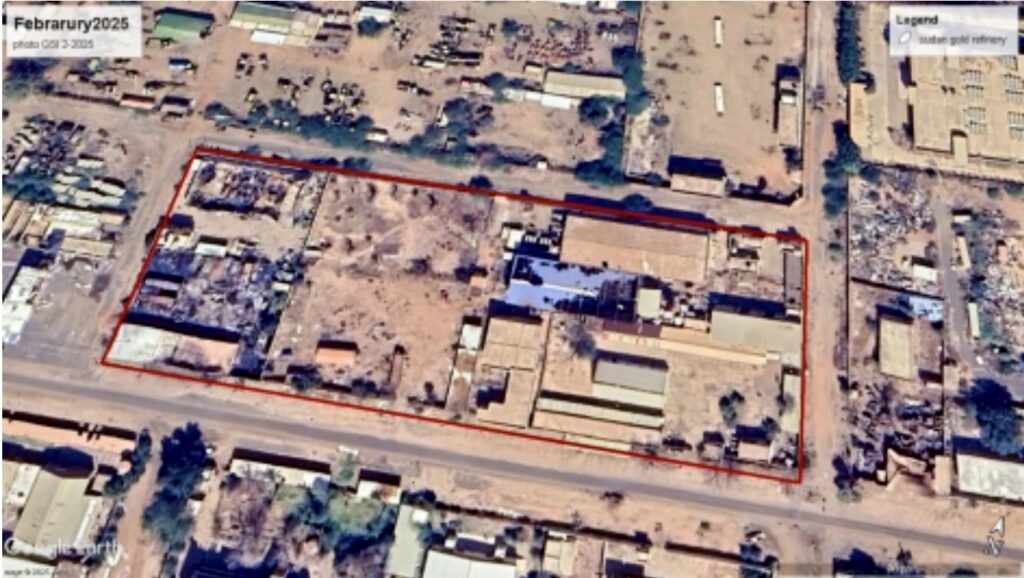
The CESS investigation used satellite images to demonstrate the destruction of the refinery following the RSF takeover. April 2023 photos reveal undamaged roofs and working industrial structures. By February 2025, major areas of the facility were empty, matching military control maps that put it under RSF authority.
The satellite evidence presents an undeniable truth: the Sudan Gold Refinery was entirely incapable of producing or refining new gold. Any mineral attributed to CID002567 on global markets after its shutdown is not the product of regulated industry. These are more likely the stolen spoils of war.
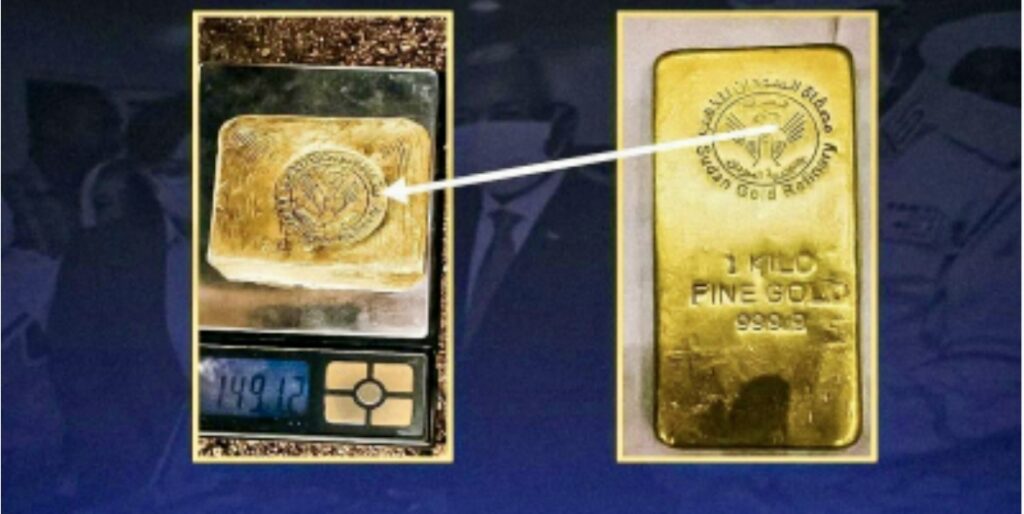
The smuggler’s highway (photo of refinery gold found in Chad)
With the formal domestic system in ruins, the war economy simply moved underground and across borders. Transnational economic networks sustain the war in Sudan by bartering resources for weapons, liquidity, and logistical support.
Independent investigations detailed in the CESS report track this looted gold westward into Chad and southward through South Sudan. The transit points funnel the gold to re-export markets, with a significant concentration in Dubai. The statistics are staggering. In 2024, despite diplomatic tensions, over 96 percent of Sudan’s gold was exported to the United Arab Emirates (UAE), while 84 percent of Sudan’s fuel was imported from the UAE.
This is not a mere trade imbalance; it is a direct line of conflict financing. Various security and media reports indicate that the RSF generates approximately $2.5 million to $3 million per day from gold and other resources, allowing them to independently sustain rearmament. These funds are used to acquire four-wheel-drive vehicles and advanced military systems—some manufactured in France and Germany—frequently routed through the UAE, the Center reported. By 2024, RSF-affiliated sites absorbed more than $860 million worth of Sudanese gold. Meanwhile, the parallel market across Sudan ballooned to an estimated $4 billion—a figure that doubled in 2025, signalling the near-total erosion of state institutions in favour of militarised commerce.
The corporate blind spot: Volkswagen and beyond
Despite the documented destruction of the refinery and the well-publicised nature of Sudan’s blood gold, “CID002567” has remained a fixture in international supply chains. Multinational corporations must legally and ethically filter out non-compliant smelters, as required by the OECD Due Diligence Guidance for Responsible Supply Chains of Minerals. Few did so.
The Volkswagen Group is the most well-known example of this kind of negligence. In its 2024 Responsible Raw Materials Report, Volkswagen listed the Sudan Gold Refinery among its smelter suppliers. This incident occurred even though Volkswagen publicly touted the development of “red-flagging” systems and outreach programmes meant to eliminate non-conforming smelters, CESS reported.
When questioned by Deutsche Welle in 2025 about this precise supply chain vulnerability, Volkswagen deflected. They cited the “complexity” of supply chains and issued a vague statement claiming that the appearance of the refinery in their report did not necessarily mean it was part of their direct supply chain.
“Supply-chain complexity does not exempt a corporation from its burden of verification,” says Moneim Adam, a human rights advocate and contributor to the CESS report. “This is particularly true for a corporation that promotes its social responsibility record. Volkswagen is solely responsible for determining the source of its gold.”
But Volkswagen is not alone. A review of corporate disclosures up to 2024 reveals a list of 34 other corporations, including big names such as Nokia, Mitsubishi, and Tesla, had invested in gold directly linked to Sudan’s former refinery.
The cost for complicity
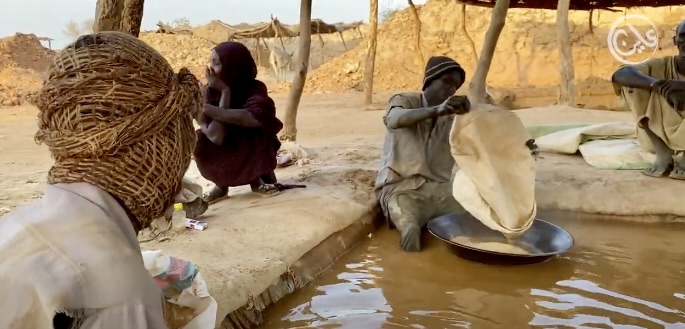
The continued circulation of conflict-linked gold on the international market is actively devastating Sudan. Beyond the direct financing of artillery and warfare, the extraction process itself is destroying the country. Mining operations use toxic substances like cyanide and mercury that poison local populations, devastate nature reserves, and destroy generations’ livelihoods. The use of child labour in gold mines is also common, but it remains unregulated.
The CESS report concludes that stopping the flow of this gold is a structural prerequisite for ending the war. It calls for immediate and uncompromising accountability to make the trade of Sudanese conflict gold legally and reputationally ruinous.
The war in Sudan relies on a global infrastructure of denial. As long as multinational corporations cite “complexity” as an excuse for financing conflict, and as long as regional trading hubs launder stolen resources without consequence, the violence will continue.