


New evidence suggests Ethiopia is supporting the RSF, sparking fears of regional insecurity
8 April 2026
New evidence gathered by Yale University’s Humanitarian Research Lab (HRL) suggests Ethiopia is supporting the Rapid Support Forces (RSF) through an Ethiopian National Defence Force (ENDF) base in Asosa, Ethiopia.
Using satellite imagery and open-source data, the lab reports that the ENDF installation in Asosa Town has been used to support RSF operations across the border into Blue Nile State. The findings, which span a five-month period, include what HRL describes as clear visual indicators of logistical coordination, vehicle transfers, and on-site modifications to military equipment.
Yale’s HRL also documented increased air activity and defensive fortifications at Asosa Airport, including the construction of fighting positions, a new hangar, and expanded concrete infrastructure. These developments, the lab noted, align with recent reporting by Reuters and point to a broader pattern of militarisation at the site.
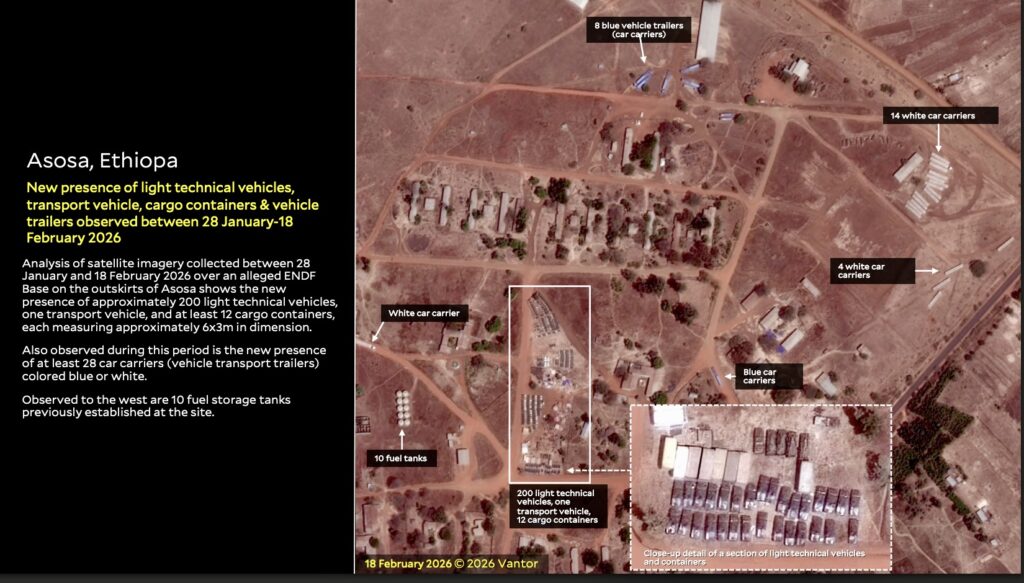
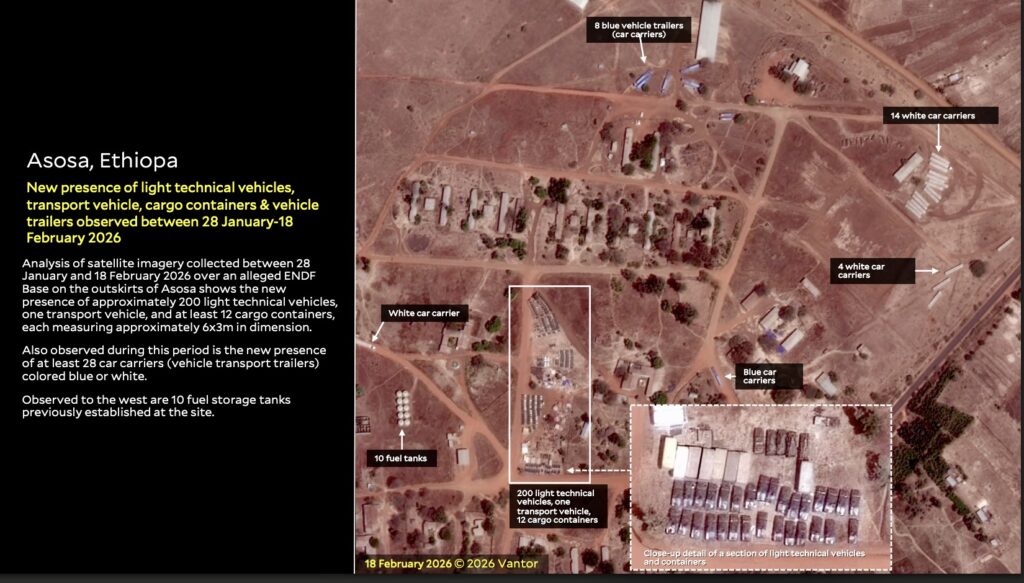
Beginning in late December, photos from the Asosa facility showed commercial auto carriers unloading “technicals” (essentially modified pickups used by the RSF in combat). The number of technicals varies over time, but at one point in February, at least 200 were present.
Yale HRL reports that the facility has also received shipping containers and tents capable of accommodating up to 150 people.
‘Technicals’
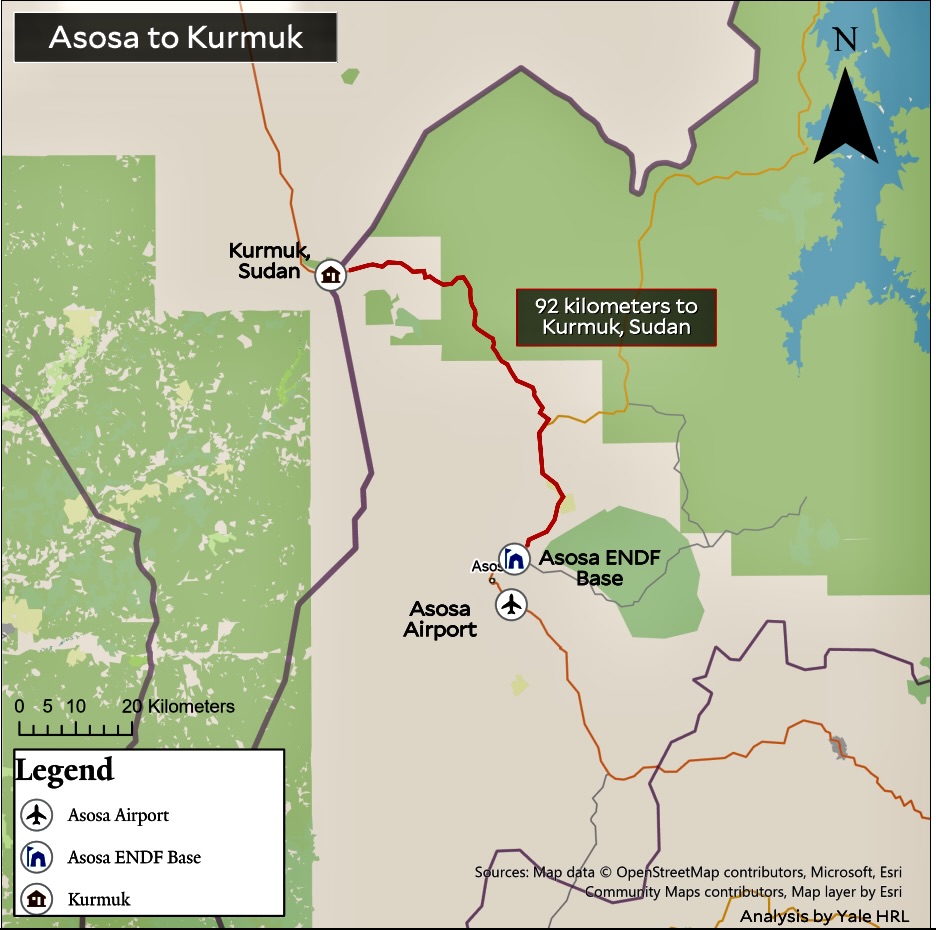
The cars identified by the HRL were similar to those seen being used by RSF militants in social media recordings of fighting near Kurmuk, a town on the Sudan-Ethiopia border. The ENDF’s base in Asosa lies roughly 100 kilometres from Kurmuk, where the RSF claimed control of the border town in late March.
Yale’s findings are further confirmed from the Conflict Insights Group (CIG). Justin Lynch, the group’s managing director, confirmed that commercially available satellite analysis has pinpointed locations inside Ethiopia linked to RSF operations.
“Satellite imagery and other commercially available analyses conducted by GIC have identified locations that facilitate RSF fighters in Ethiopia,” Lynch said. “In addition, GIC has identified how foreign fighters travel to Sudan via Ethiopia.”
Ethiopia and the RSF
With backing from the United Arab Emirates, analysts say Ethiopia is becoming increasingly a part of Sudan’s conflict while contending with intensified military tensions both within the country and in neighbouring Eritrea.
Ethiopia’s alleged facilitation of RSF activity is deeply tied to broader geopolitical pressures, most notably from the United Arab Emirates (UAE).
“There is an assumption and an assertion by the ENDF officers that Ethiopian support comes from direct pressure from the UAE on Prime Minister Abiy to facilitate this support,” says Cameron Hudson, a US-Africa policy expert. However, he cautioned that Ethiopia would likely expect incentives in return. “Presumably Abiy would get something out of this deal beyond the support he already receives from the UAE.”
Sudanese analyst Dallia Abdelmoniem argues that Ethiopia has its own strategic motivations for weakening the Sudanese Armed Forces (SAF). “It’s in Ethiopia’s interest that SAF is weakened considerably due to their close ties with both Eritrea and Egypt,” she told Ayin.
Abdelmoniem pointed out that the relationship between the SAF and Ethiopian authorities has been strained by border disputes and historical grievances. “History between the former and Ethiopia has been fraught, and various reports point to current tensions arising,” she said. “Historically, the Sudanese army and Ethiopia have contested the Al Fashaga area as well, reportedly supporting the Tigray fighters against Addis Ababa.”
The expanding footprint of Gulf nations in the region is exacerbating these divides. “With the continuing issues over the GERD relations and the rising role of the UAE in Africa, especially in the Horn region, one can see why Ethiopia would support the RSF, as they would appear to be more allied politically speaking,” Abdelmoniem explained.
A new, deadly, “can of worms”
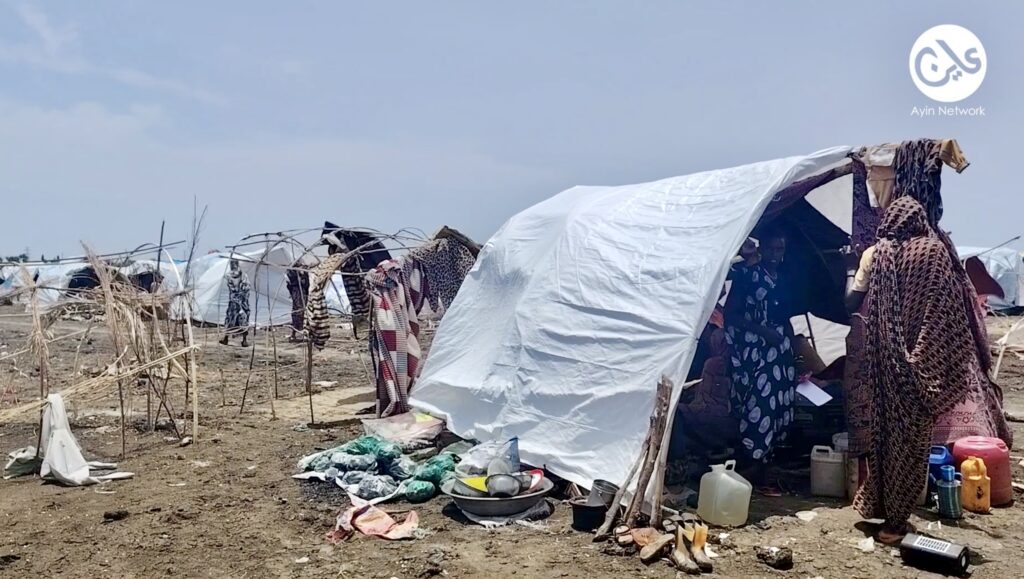
Abdelmoneim fears Ethiopia’s support for the RSF and allied forces will only induce further chaos in Sudan’s already tumultuous state. “It will open a whole new can of worms that no one will know how to deal with,” she said. “It will not just open up a whole new route that would allow for more weapons to come through but expand the war front that would have a spillover effect regionally,” Abdelmoniem cautioned.
Hudson, however, remains cautious about the battlefield impact. “I am sceptical that such a supply route will fully reshape the war in Sudan,” he said, noting that the SAF and its allies could counter these moves. “The army has alliances with Eritrea and Egypt and could use them to help create new domestic pressures on Abiy that will make his continued support for the RSF costly to him.”
Ethiopia vs. Eritrea
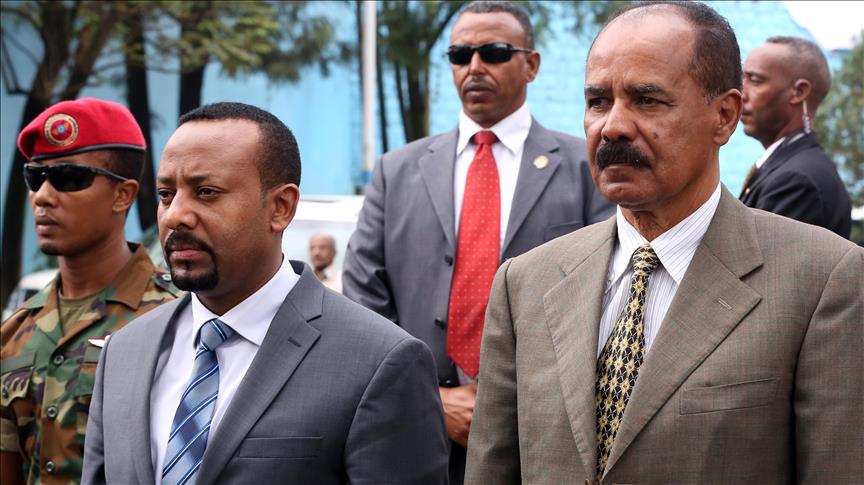
Ethiopia’s escalating brinkmanship with Eritrea over Red Sea access cannot isolate its moves in Sudan. Landlocked since Eritrea’s secession in 1993, Ethiopia relies almost entirely on the port of Djibouti. Recently, Prime Minister Abiy Ahmed has framed maritime access as a “legal, historical, and existential question,” declaring in September that Ethiopia’s past loss of sea access would be “corrected”.
The strategic alliance between Ethiopia and Eritrea that defined the 2020-2022 Tigray war collapsed after the Pretoria peace agreement sidelined Asmara. Tensions are now escalating to a critical level. Ethiopia accuses Eritrea of funding Amhara insurgents, while Eritrea views Ethiopia’s sea access ambition as a threat to its sovereign coastal territory.
As its neighbours teeter on the brink of conflict, Sudan risks becoming the ultimate collateral damage. Eritrea currently supports the army, providing territory to house its aircraft far from RSF drones and training armed factions in eastern Sudan.
Political analyst Khalid Mohamed Taha told Ayin that Eritrea views Sudan “not merely as a neighbouring state but as a security vacuum that can be exploited for pre-emptive security adjustments should its relations with Ethiopia deteriorate.”
A global security risk
The international community is watching with growing alarm. Hudson noted that Washington is monitoring the escalation of hostile regional rhetoric issued by Egypt against Ethiopia, warning that miscalculation could lead to an unintended escalation. “This danger is very much present in light of the continued arming and offensive movements of some regional parties, such as Saudi Arabia, the UAE, and Iran in the Red Sea,” he added.
Western powers fear that Sudan’s institutional collapse will turn the country into a client state for regional powers, enabling malign influence along the vital Red Sea trade routes.
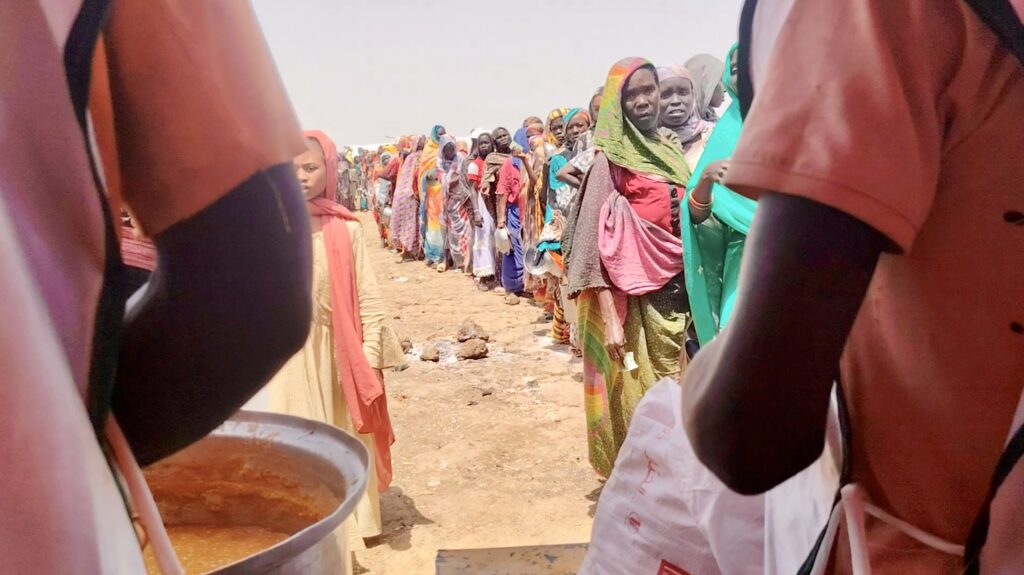
For the people of Sudan, however, the geopolitical manoeuvre simply means prolonged suffering during the world’s largest humanitarian crisis. “In the midst of all these developments the civilians will bear the brutal brunt of this conflict, like they already have,” Abdelmoniem concluded.