


Burhan seeks backchannel deal with the UAE
18 May 2026
In a surprising diplomatic pivot, Sudanese army chief Lt Gen. Abdel Fattah al-Burhan is quietly attempting to carve out a new negotiating track with the United Arab Emirates (UAE)—a nation Sudan’s military government has long accused of fuelling its adversaries, the Rapid Support Forces (RSF).
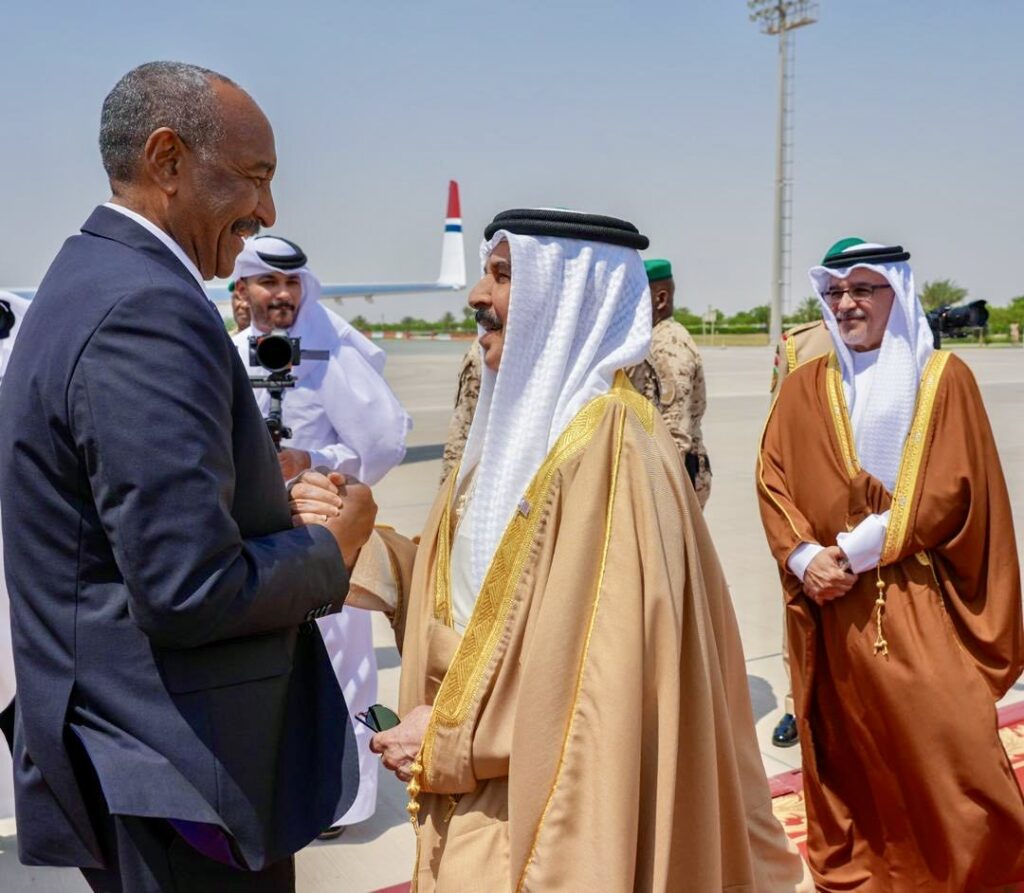
According to diplomatic sources, Burhan’s unannounced arrival at Bahrain’s Sakhir Air Base on May 13, 2026, was more than a routine state visit. Coming on the heels of late-April trips to Saudi Arabia and Oman, the meeting with Bahrain’s King Hamad bin Isa Al Khalifa is being viewed as a calculated move to use Manama as a proxy channel to Abu Dhabi.
For the past three years, relations between Khartoum and Abu Dhabi have been frozen in a bitter diplomatic rift. The Sudanese military has repeatedly escalated grievances to the UN Security Council, accusing the UAE of supplying weapons, heavy equipment, and mercenaries to the rival RSF via logistical routes in Chad and Darfur. The fallout led to severed civil aviation ties and heavily downsized diplomatic missions in both capitals. Yet, severe battlefield realities appear to be forcing a pragmatic shift.
A former Sudanese diplomatic source revealed that a faction within the military government does not believe the UAE’s allegiance to the RSF is fixed. “There is a growing belief that the UAE could abandon the Rapid Support Forces if both sides can reach an agreement that protects Abu Dhabi’s core economic interests and regional concerns,” the diplomatic source told Ayin on condition of anonymity. Direct talks remain off the table for now, with Saudi Arabia and Bahrain currently working behind the scenes to design a framework that both nations can accept before moving to formal negotiations, the same source added.
Reviving deals
To entice the Emiratis back to the table, Sudanese officials have reportedly signalled their openness to resurrecting major economic deals that were previously derailed by geopolitical tensions. Chief among these leverage points is the fertile Al-Fashqa agricultural zone in southeastern Sudan. In 2021, the UAE sought a 40% stake in this region for agricultural and livestock investment, a proposal the Sudanese military brass fiercely rejected at the time, sparking initial bilateral tensions. Khartoum is now also reconsidering the multi-billion-dollar agreement to build the strategic Abu Amama Port on the Red Sea coast. The project was frozen in 2025 by Finance Minister Jibril Ibrahim over Abu Dhabi’s alleged military backing of the RSF, but it has now returned to the table as a powerful economic carrot.
While some in Khartoum view these concessions as a viable path to ending the RSF’s primary supply line, strategic analysts urge caution. Mohamed Abbas, a researcher specialising in strategic affairs, notes that the UAE’s regional motivations may have evolved beyond simple commercial enterprises like the Abu Amama port or the central Al-Hawad agricultural project. Abbas warned that the Emirati position currently leans toward a deeper geopolitical restructuring, potentially even the partitioning of Sudan to secure footholds in Darfur and parts of Kordofan.
According to Abbas, the critical question now is whether Abu Dhabi is willing to abandon the idea of partition in exchange for guaranteed, long-term economic dominance in eastern, central, and northern Sudan.