

14 July 2026
To keep our readers informed of the multitude of events taking place in Sudan amidst the ongoing, devastating war, we have developed a series of weekly news briefs covering major topics of the week.
In this week’s edition:
- Sudan rejects inclusion of Abyei in South Sudan’s electoral districts
- Key issues in Sudan’s truce remain unresolved, US official warns
- Crocodile kills farmer in northern Sudan amid rising reptile sightings
- European Union bans Sudanese gold imports to choke war funding
- Extreme power outages spark widespread anger across Sudan
- Water crisis persists in El Obeid despite easing military tensions
- Rapid Support Forces claim capture of strategic positions in Darfur
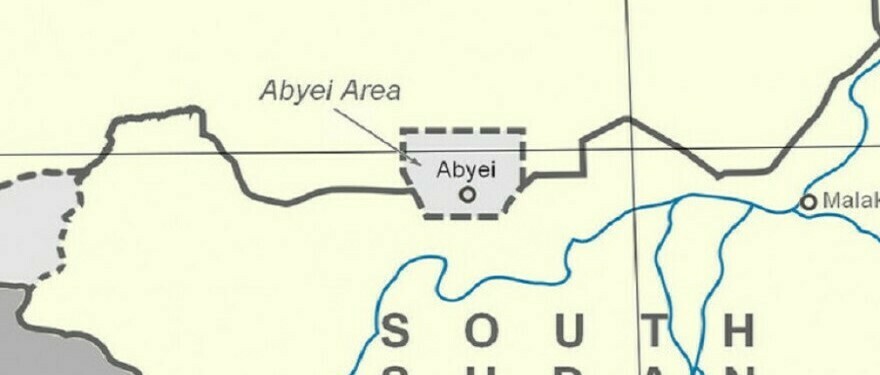 1) Sudan rejects inclusion of Abyei in South Sudan’s electoral districts
The Sudanese government has formally rejected a decision by South Sudan’s National Elections Commission to include the disputed Abyei region within South Sudan’s electoral districts for the upcoming general elections scheduled in December. Khartoum stated that the move represents a direct violation of the agreements and protocols regulating the legal status of the area.
According to a statement issued by the Sudanese Ministry of Foreign Affairs on Monday evening, the decision “clearly violates” the Abyei Protocol attached to the 2005 Comprehensive Peace Agreement (CPA) and the 2011 Agreement on Temporary Security and Administrative Arrangements. The ministry noted that these historical agreements paved the way for UN Security Council Resolution 2046, which urged both nations to negotiate a final solution without preconditions.
Khartoum called for the fulfilment of all legal obligations, urging adherence to a peaceful final solution to serve mutual relations and preserve regional peace. It urged the United Nations, regional organisations, and sponsoring states to reject “any unilateral actions outside the legal framework” and reiterated its commitment to good neighbourly relations.
Abyei remains a highly contested border region between Sudan and South Sudan since the 2005 Comprehensive Peace Agreement. It currently hosts the United Nations Interim Security Force (UNISFA) to monitor security arrangements amid the unresolved dispute over its future status.
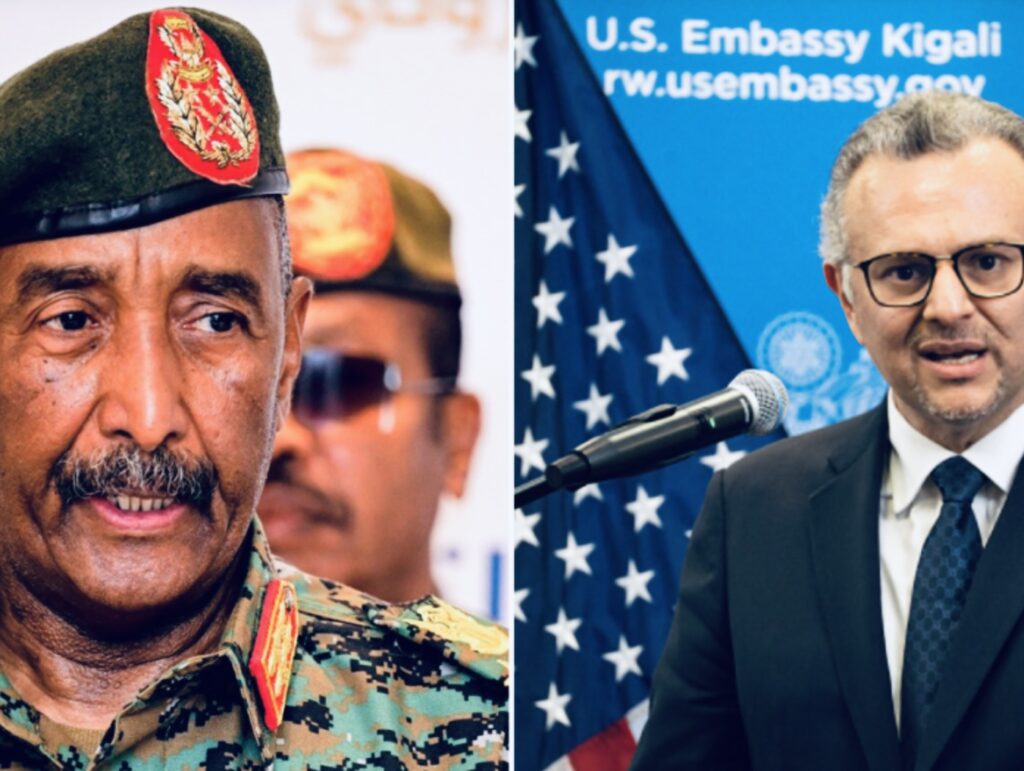 2) Key issues in Sudan’s truce remain unresolved, US official warns
The United States has denied reaching an agreement on a humanitarian truce and peace plan in Sudan, confirming that talks between the Sudanese army and the Rapid Support Forces (RSF) are ongoing with several core issues left unsettled.
A Sudanese diplomatic source revealed that mediators are still communicating with army chief Abdel Fattah al-Burhan. “There has been progress on some points, but the sticking points are the most complex and could undermine any progress on other issues,” the source said, adding that disputes extend beyond technicalities like mutual withdrawals to the future of the political process, as the military seeks “guarantees of remaining in power.”
President Trump’s senior advisor on Arab and African affairs, Massad Boulos, stated on Monday that recent reports “misrepresented the ongoing efforts to reach a humanitarian truce and a peace plan in Sudan.” Writing on the X platform, Boulos clarified that claims of full acceptance of major issues are “incorrect.”
Boulos explained that discussions are continuing, with both parties under pressure regarding specific proposals. He noted that “a number of core issues have not yet been accepted or explicitly rejected,” warning that public speculation or leaked documents “are not official and do not contribute to supporting the ongoing efforts.”
The US has proposed a 90-day humanitarian truce followed by permanent ceasefire arrangements and a political transition. However, Burhan recently stated that any proposal failing to achieve the security of the Sudanese people “will not go ahead, and we will not accept it.”
A senior Sudanese diplomatic source has revealed that Boulos is tying the execution of a new humanitarian truce to a mandatory agreement on “mutual withdrawals” between the army and the Rapid Support Forces (RSF). This condition has emerged as the primary sticking point between Sudanese army leadership and American mediators.
The proposed revisions would allow both factions to maintain their primary strongholds while executing coordinated pullbacks in select cities across Kordofan and Darfur. Despite holding firmly to its established institutional roadmap, the Sovereignty Council is reportedly open to adjusted frameworks that preserve its political and territorial standing.
 3) Crocodile kills farmer in northern Sudan amid rising reptile sightings
On Monday, local authorities in the town of Abri, northern Sudan, reported that a civil defence team had discovered the mutilated remains of a farmer. A crocodile devoured the victim, following recent warnings from local activists about a sharp increase in reptile sightings along the Nile River.
The attack occurred on Sai Island within the Abri administrative unit. A medical examiner confirmed that the recovered remains were limited to just the head and neck. In response, the Wadi Halfa locality has issued an urgent appeal to citizens and farmers to exercise extreme caution and avoid approaching the Nile riverbanks.
While crocodile attacks are historically rare in Sudan, sightings have surged recently, with local social media circulating videos of residents shooting crocodiles near the shore. Wildlife researcher Mohamed Hamida explained that the reptiles are drawn to the island’s banks to avoid strong water currents and to lay eggs.
Hamida warned that hundreds of farmers across the Northern and River Nile states are at severe risk because they rely heavily on Nile islands and use “rudimentary boats that offer no protection from crocodile attacks.”
The researcher criticised local authorities for failing to assess the situation properly, stating that officials merely issued warnings “instead of assessing the risks, studying this phenomenon, and identifying the locations of these reptiles so that fishermen and farmers could avoid them.”
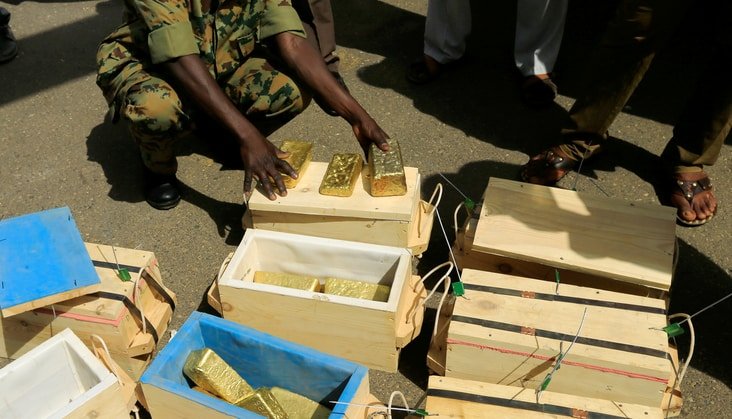 4) European Union bans Sudanese gold imports to choke war funding
The European Union has imposed new sanctions on Sudan by banning the import of gold produced anywhere in the country. The measure targets gold from areas controlled by both the Sudanese army and the Rapid Support Forces (RSF) to disrupt funding for the ongoing conflict.
In a statement issued on Monday, July 13, the Council of the European Union stated that “these measures may help reduce the dependence of the parties to the conflict on gold sales to finance military operations.” The new sectoral measures target the “war economy” to cut off revenue streams and escalate pressure on warring factions.
The sanctions package also prohibits the export of cyanide and mercury to Sudan, which are key chemical agents used in gold extraction. However, the EU has exempted these substances if they are destined for humanitarian disasters or health emergencies.
Sudan’s gold production in the army-controlled area reached 70 tonnes in 2025, surpassing the national target by 13% despite the ongoing civil conflict. This output—ranking among the highest in Africa—generated roughly $1.8 billion in government revenue. Meanwhile, the RSF commands significant gold revenues across Darfur and Kordofan. According to a UN Security Council briefing by Sudanese Ambassador Al-Harith Idris in late June, the paramilitary group secured 56 tonnes of gold this year alone.
 5) Extreme power outages spark widespread anger across Sudan
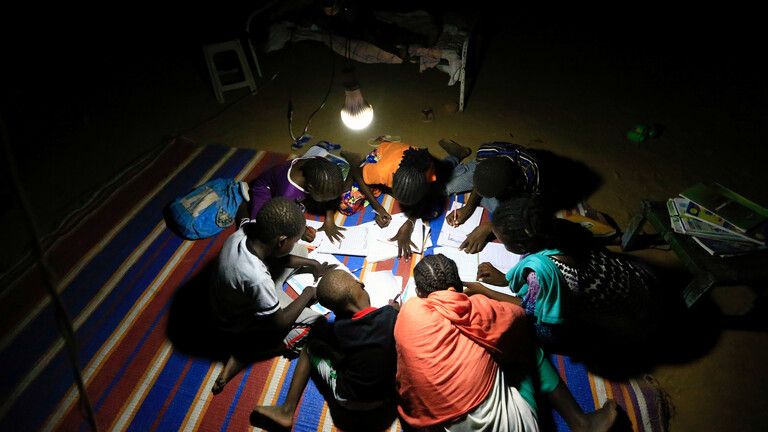
Residents across Khartoum, Port Sudan, and Nile River State are expressing deep frustration over severe electricity blackouts that lasted upwards of 20 hours on Sunday and Monday. The deteriorating service comes as summer temperatures in the region soar past 40 degrees Celsius.
Sudan’s public power grid has suffered an unprecedented production deficit during the war. “Electricity is now limited to a few hours a day, no more than 10, and the government isn’t providing any answers to citizens,” said Haneen Ahmed, a public sector employee in Port Sudan. She added that solar panels cost up to 3 million Sudanese pounds ($700 USD)—an expense most citizens cannot afford.
In the capital, Khartoum, neighbourhoods have been plunged into darkness for long periods. A resident from the Al-Sahafa neighbourhood reported that daily blackouts reach 12 hours and frequently extend to a full day. “Every day we face outages that last for long hours, and even at times outside of the scheduled timetable,” he said.
A government source from the Ministry of Energy stated that plans are underway to improve the supply by adding thermal units to fuel-powered complexes like the Turkish barge, “Qari”, and “Umm Dabakir” stations. The government also intends to increase electricity imports from neighbouring Egypt.
Infrastructure limits have compounded the energy crisis, as the Merowe Dam has failed to reach its full production capacity. The dam’s output has reportedly plummeted to less than 600 megawatts, well below its maximum potential of 1,250 megawatts.
 6) Water crisis persists in El Obeid despite easing military tensions
The Rapid Support Forces’ (RSF) military offensive against El Obeid, the capital of North Kordofan State, has decreased in intensity over the past two days. However, local residents continue to endure a severe drinking water crisis and skyrocketing commodity prices.
Sources report that the RSF reduced its presence around the city after pulling military groups toward the northwestern Darfur axis to counter an advancing joint force allied with the Sudanese army. On Monday, the Sudanese army reported that its ground defences had successfully shot down an RSF FH-95 strategic drone northwest of El Obeid.
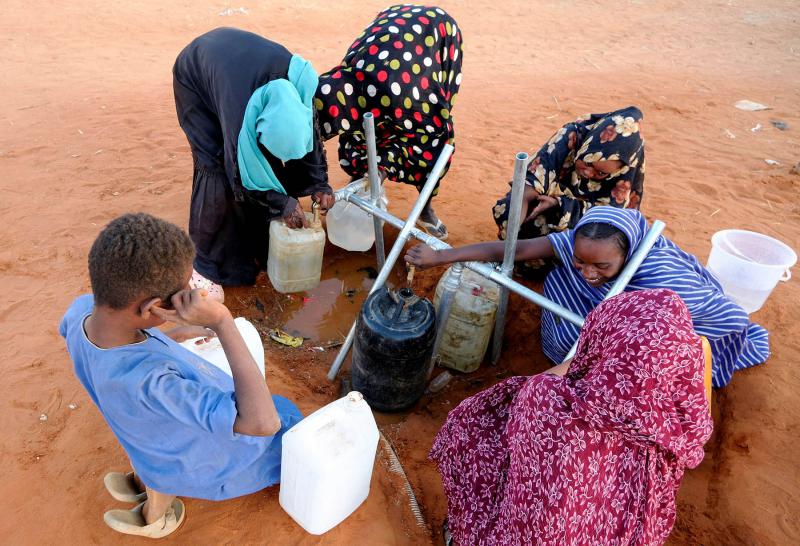
Despite the easing of clashes, El Obeid’s water crisis remains acute. Humanitarian organisations and government agencies have installed hand pumps and distributed water via tanker trucks, but the crisis cannot be fully resolved until the power grid stabilises and the main water stations, which were damaged by prior drone strikes, are fully rehabilitated.
The North Kordofan state government recently unveiled a recovery plan to survey and fix offline wells. The strategy includes drilling 60 new wells and installing desalination units in areas experiencing high salinity levels.
The lull in fighting follows mounting international pressure. The UN Human Rights Council recently ordered an urgent investigation into human rights violations around the city, while UN Under-Secretary-General Tom Fletcher held a call with RSF Commander Mohamed Hamdan Dagalo to demand the protection of civilian infrastructure and aid access.
 7) Rapid Support Forces claim capture of strategic positions in Darfur
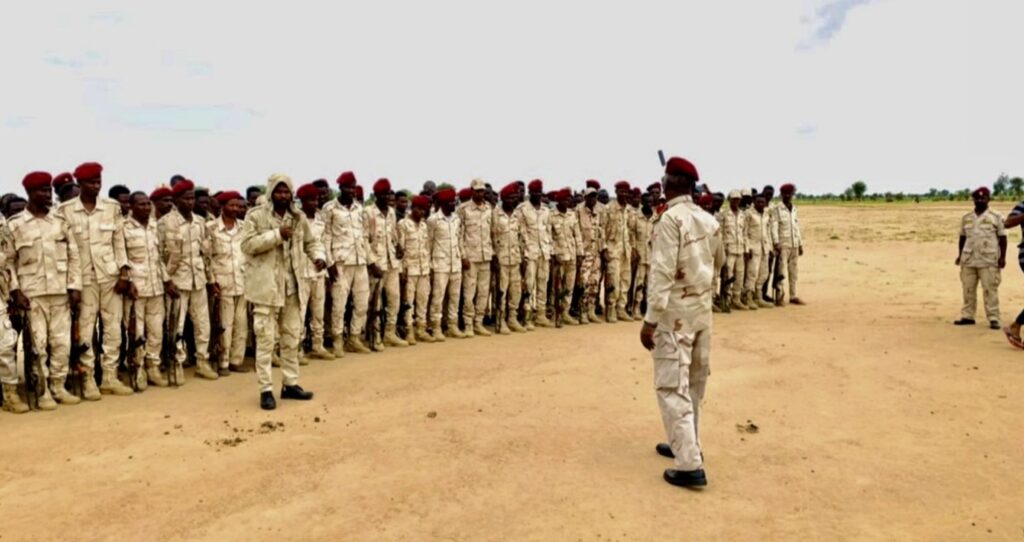
The Rapid Support Forces (RSF) announced they have seized several strategic territories in North and West Darfur states. The move rolls back recent gains made by the joint force allied with the Sudanese army.
Over the weekend, the RSF claimed control over Kulbus in West Darfur, alongside Abu Qumra and Bir Saliba in North Darfur. The paramilitary group vowed to push its military operations toward the border city of Al-Tina, a critical stronghold for army-aligned forces on the Sudanese-Chadian border.
Field sources confirmed that the joint force withdrew from these areas ahead of the RSF’s arrival, redeploying around Al-Tina. Verified video footage showed massive RSF military reinforcements arriving in Kulbus, drawing fighters from the Kordofan front and local West Darfur factions.
The military operations also featured participation from the Justice and Equality Movement (JEM), led by Suleiman Sandal, alongside other allied factions within the RSF’s “Ta’sis“ alliance, signalling a broadening of the coalition that backs the RSF in the region.
The targeted areas of Abu Qumra, Kornoy, and Ambro remain heavily contested frontlines, with control frequently shifting. Emergency room volunteers warn that the humanitarian situation is worsening rapidly, forcing thousands of civilians to flee into surrounding valleys and mountains for survival.