

16 June 2026
To keep our readers informed of the multitude of events taking place in Sudan amidst the ongoing, devastating war, we have developed a series of weekly news briefs covering major topics of the week.
In this week’s edition:
- El Obeid under bombardment from drones and fears of an imminent RSF attack
- Burhan meeting with EU ambassadors in Port Sudan
- RSF contain bloody civil conflict in South Darfur
- Dead and wounded in an RSF attack on the town of Urshi, North Darfur
- Health concerns for school students in northern Sudan due to heat and power outages
- Al Jazeera and Kassala: Teachers’ strike continues amid rejection of threats
 1) El Obeid under bombardment from drones and fears of an imminent RSF attack
The city of El Obeid, the capital of North Kordofan state, is experiencing a severe escalation in tension due to intensive drone bombardments. The attacks have resulted in dozens of civilian casualties and the widespread destruction of fuel stations, coinciding with a heavy mobilisation of the Rapid Support Forces (RSF) around the city’s perimeter.
Over the past two days, targeted drone strikes have hit fuel stations in the cities of El Obeid and Al-Rahad, as well as a fuel truck travelling along the connecting route. This has triggered an acute fuel crisis, crippling local water stations and halting public transportation networks, forcing residents to navigate the city entirely on foot.
Local eyewitnesses report that the price of a single barrel of drinking water has skyrocketed to 40,000 Sudanese pounds. With motorised public transport completely unavailable, traditional horse-drawn carts have become the primary means of transport. Many residents are trying to flee toward White Nile State but find themselves trapped because no buses are available.
According to additional local sources, drones are conducting constant surveillance over the city’s skies. The vital road linking El Obeid to White Nile State is under continuous aerial monitoring, sparking widespread panic among civilians who fear their private vehicles will be targeted by imminent airstrikes if they attempt to escape.
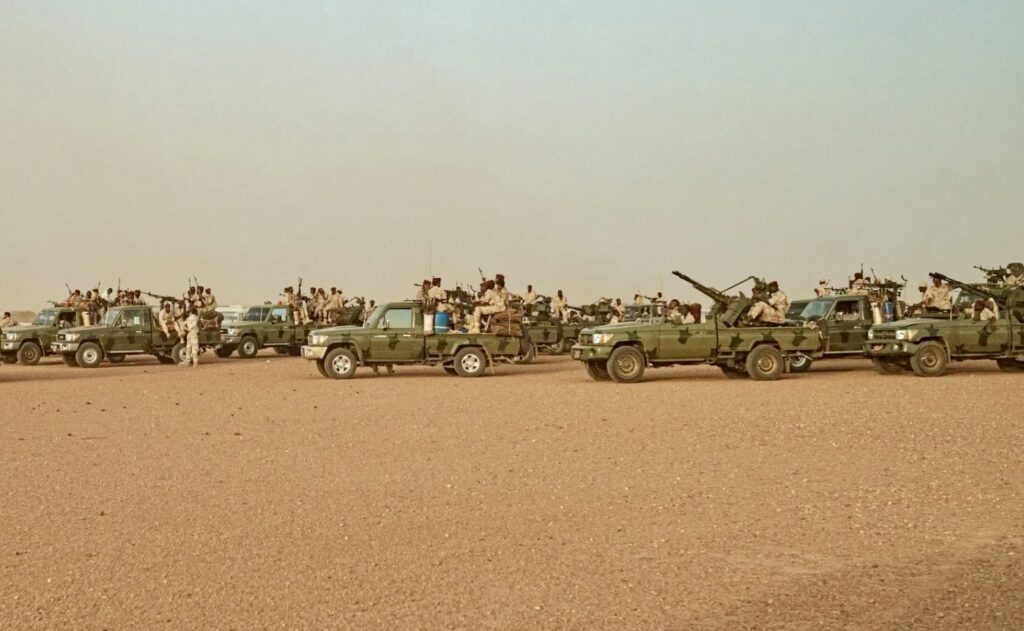
Meanwhile, the RSF has massed significant troop reinforcements to the west and north of El Obeid. Eyewitnesses near El Nuhud, located roughly 200 kilometres west, reported seeing dozens of combat vehicles packed with soldiers moving eastward toward the capital over the last 48 hours.
The RSF has established strategic strongholds near El-Obeid. They currently control the Jabal Abu Sunun area, 40 kilometres to the west; the Kazqil area, 70 kilometres to the south; and the city of Bara, situated just 60 kilometres to the north.
On Wednesday and Thursday a series of devastating airstrikes killed 23 civilians and injured 19 others. The bombardments struck residential homes in Al-Muzaffarin, areas near the airport, the perimeter of the 5th Infantry Division headquarters, and a local cemetery where crowds had gathered for a funeral.
 2) Burhan meeting with EU ambassadors in Port Sudan
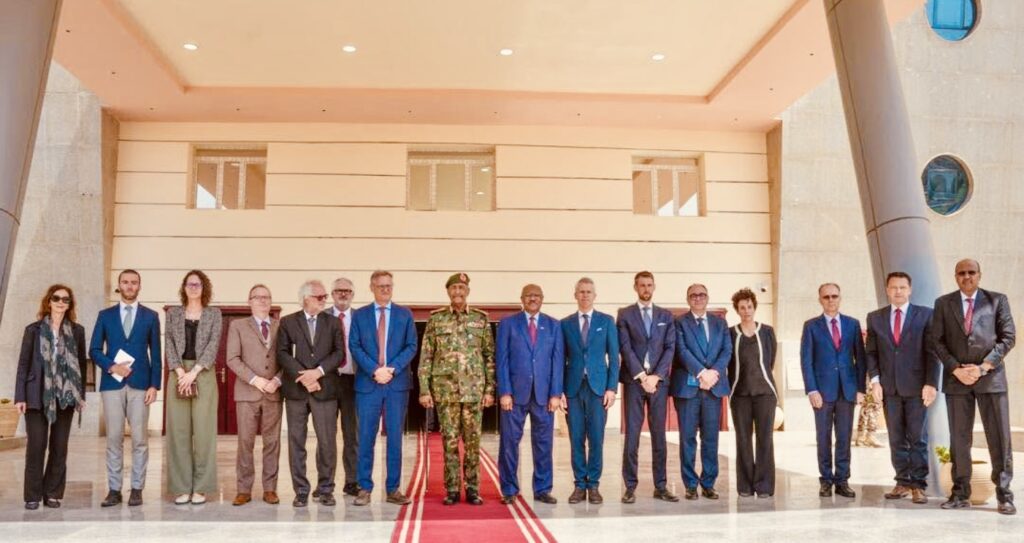
European Union ambassadors held a pivotal meeting in Port Sudan on Monday, June 15, 2026, with Sudanese army chief Abdel Fattah al-Burhan. The diplomatic delegation pressured military leadership to engage in an immediate ceasefire, establish humanitarian corridors, and cease all attacks on civilians.
In response to the diplomatic pressure, Burhan set strict parameters regarding any upcoming political resolutions. Addressing the delegation, Burhan firmly noted that the process “must be inside the country.” He further conditioned the success of a transition to a civilian government on it being dictated solely by the will of the Sudanese people.
Despite these conditions, Burhan stated that Sudan welcomes international cooperation that actively supports national stability, peace, and development, provided it strictly respects Sudan’s national sovereignty. Sources close to the Transitional Sovereignty Council told Ayin that Burhan explicitly demanded the EU help halt the flow of weapons to the RSF from neighbouring regional countries.
The European Union delegation sharply condemned the ongoing illegal influx of foreign fighters and weaponry into the conflict zone. Ambassador Wolfram Vetter, head of the EU delegation to Sudan, reiterated the bloc’s urgent demands for a cessation of hostilities and the immediate protection of critical civilian infrastructure.
Emphasising the international community’s stance, Ambassador Vetter stated: “The EU calls for renewed local, regional, and international efforts to promote de-escalation, peace, and a transition to an inclusive, representative, and independent civilian government.”
This high-level diplomatic visit marks the first joint meeting of European Union heads of mission in Sudan since the outbreak of civil conflict in April 2023. Vetter concluded by affirming the EU’s unyielding commitment to Sudan’s territorial integrity, noting that the widening conflict heavily threatens regional stability well beyond Sudanese borders.
 3) RSF contain bloody civil conflict in South Darfur
A government official has confirmed to Ayin that the death toll from a fierce civil conflict in South Darfur State has climbed to 36 lives. The Rapid Support Forces (RSF) have reportedly contained the internal warfare after deploying massive military reinforcements armed with broad mandates to use force and arrest violators from both warring factions.
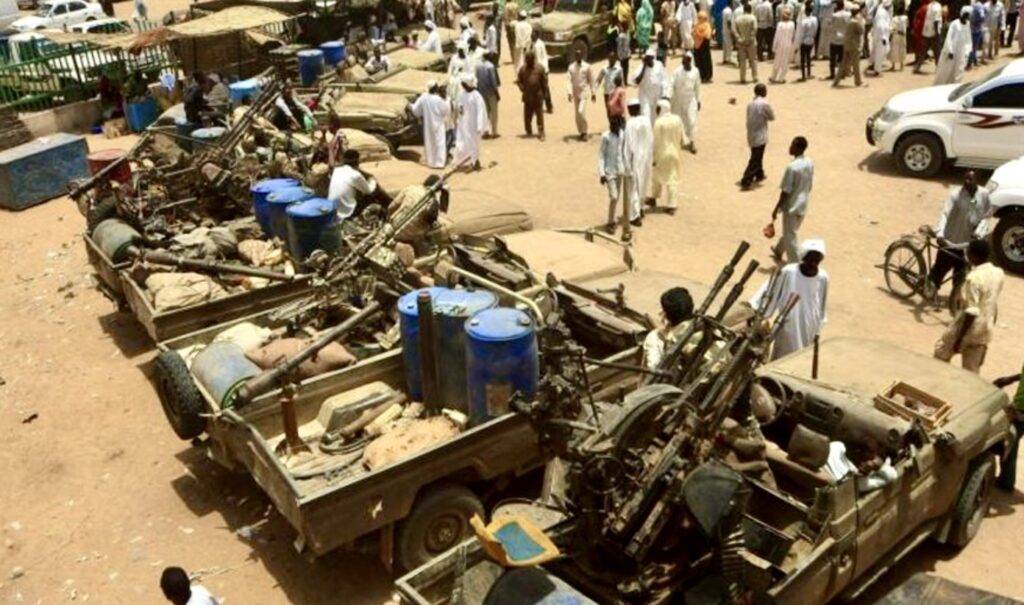
According to civil sources, the RSF dispatched an estimated 100 combat vehicles to the Kabm and Markandi areas, which have been the epicentre of the recent violence. Armed civilian crowds dispersed immediately when the heavy military contingent arrived, and the RSF detained several combatants and transferred them to Nyala.
The intervention to separate the clashing “Salammat” and “Beni Halba” tribal groups has received formal backing from local civilian leaders. Representatives from both sides have entered simultaneous negotiations that are expected to culminate in a formal peace conference following an upcoming meeting with RSF Commander Lieutenant General Mohamed Hamdan Dagalo.
The friction initially erupted in late May across Kabm, Markandi, and Umm Labasa, resulting in heavy casualties and displacing more than 11,000 people, according to the International Organization for Migration. The fighting worsened significantly because tribal militia members on both sides also belonged to the RSF, which gave them access to heavy military equipment.
To mitigate the crisis, the RSF quickly deployed units from Nyala tasked with repossessing heavy weaponry from the civilian armed groups. While this measure stabilised the immediate area, Nyala remains highly volatile following weekend protests that led to market closures and looting after the RSF briefly detained a tribal member before releasing him under family pressure.
In the wake of the unrest, the official spokesperson for the RSF issued a public statement claiming they had neutralised “desperate attempts by the arms and hands of the Islamic Movement to incite tribal strife and problems to undermine stability in conjunction with the Sudanese certificate examinations”.
The spokesperson further asserted that security forces successfully dismantled intelligence cells linked to the state military. The RSF accuses these elements of intentionally instigating tribal violence, burning local markets, and sabotaging public services through direct financial backing from leaders of the Islamic movement.
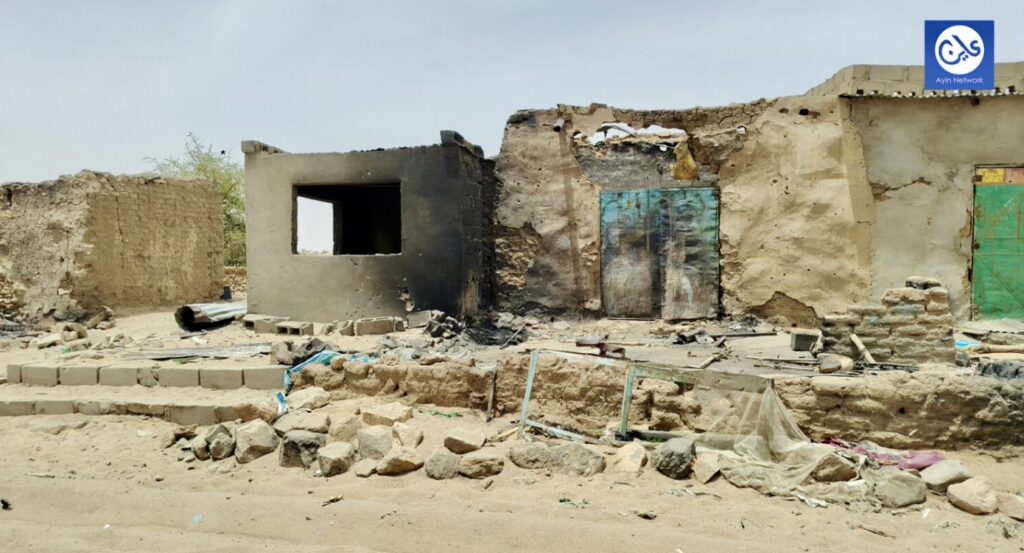 4) Dead and wounded in an RSF attack on the town of Urshi, North Darfur
Humanitarian volunteers have reported a deadly assault by the Rapid Support Forces (RSF) on the town of Urshi, located in the Um Buru locality of North Darfur State. The attack, which took place last Sunday, June 14, reportedly targeted trapped civilians and resulted in multiple casualties, including women and children.
The governor of the Darfur region, Minni Arko Minawi, issued an official press statement strongly condemning the RSF offensive. Characterising the raid as a severe atrocity, Minawi urgently appealed to the international community to intervene and save the region from a potential genocide.
A local humanitarian volunteer told Ayin that the sheer scale of the RSF attack made it impossible to safely calculate the exact number of fatalities. The volunteer relayed harrowing accounts from survivors, stating: “Civilians fleeing this attack to the valleys and neighbouring areas told us that they left behind dead civilians, including children and women, and that those forces burnt several sites in the main market after looting it.”
The RSF has not issued a formal comment addressing the accusations levelled by Governor Minawi or local volunteer networks. However, independent human rights groups have verified the widespread devastation and subsequent mass displacement affecting the locality.
The Human Rights and Advocacy Network for Democracy issued a press release confirming that the assault forced thousands of civilians to flee into surrounding valleys and rugged mountainous terrain. Their statement revealed that the total looting and burning of Urshi’s main market has effectively rendered the entire area uninhabitable.
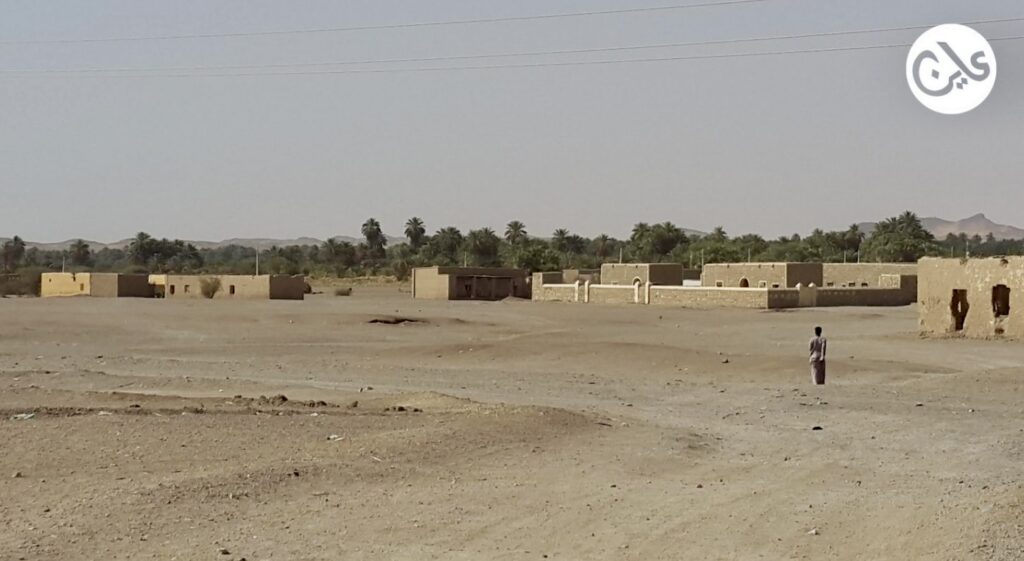 5) Health concerns for school students in northern Sudan due to heat and power outages
A humanitarian crisis is brewing in the villages and towns of Sudan’s Northern State as skyrocketing summer temperatures combine with prolonged power grid failures. Local volunteers are raising alarms over the severe health impacts facing children trapped in heavily overcrowded classrooms.
The region is grappling with unprecedented utility blackouts. Some areas have suffered continuous power failures lasting up to three months, while other municipalities endure strictly scheduled rolling outages that cut electricity for up to 18 hours every day.
“Children are now exposed to health risks due to high temperatures and overcrowding in schools,” says local volunteer Rawya Mohamed Ahmed. “The risks also extend to the elderly in homes because the temperature sometimes exceeds 45 degrees Celsius.”
The regional capital, Dongola, has seen its electricity infrastructure crippled since its primary power station sustained severe damage during RSF airstrikes last year. The ongoing energy deficit has also systematically undermined vital agricultural irrigation projects that depend entirely on electric pumps.
In response to the emergency, the minister of energy and oil, Al-Mutasim Ibrahim, met with the governor of the Northern State on Monday, June 15, 2026, to outline a grid stabilisation plan. Ibrahim announced the delivery of a major new transformer and a 250-megawatt expansion of the Merowe Dam’s generation capacity to restore steady power.
The lack of electricity has already sparked secondary disasters; residents near the town of Ibri reported being unable to extinguish large fires that swept through local palm groves due to a complete lack of water caused by dead electric well pumps.
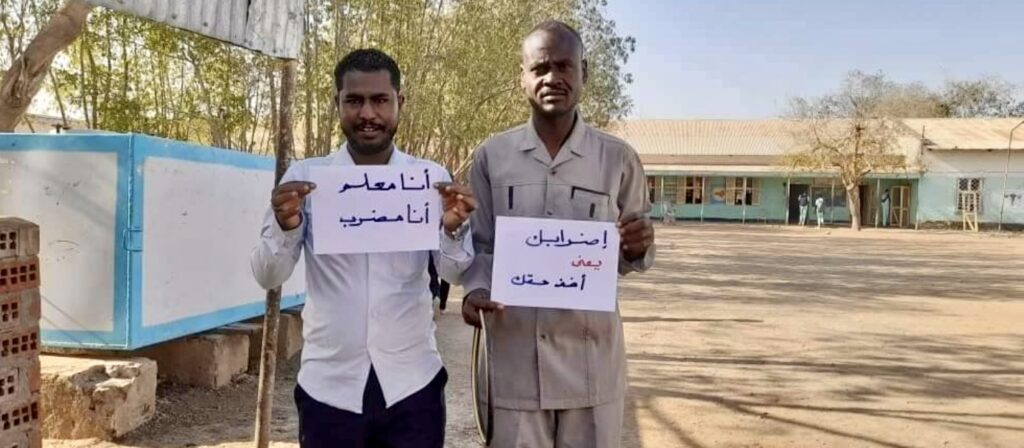 6) Al Jazeera and Kassala: Teachers’ strike continues amid rejection of threats
The Sudanese Teachers Committee has announced a comprehensive, open-ended strike in Al-Jazeera State to demand wage corrections and the immediate disbursement of overdue financial entitlements. The labour strike has effectively paralysed the educational system across both Al-Jazeera and Kassala states, leading to widespread school closures.
Data released by the committee indicates near-total compliance with the labour action in Al-Jazeera, with teacher participation rates hovering between 97% and 99.9% across all primary, intermediate, and secondary institutions. Administrative units praised the solidarity of the educators in defending their livelihoods.
In Kassala State, the strike has entered its second consecutive week with matching resolve. Despite aggressive attempts by local government officials to break the protest through a combination of empty financial promises and administrative threats, the vast majority of schools remain completely shut down.
By June 15, 2026, the committee confirmed that the industrial action remained highly effective, noting that only a tiny fraction of schools managed limited operations using external collaborators. The committee is calling for immediate high-level intervention to resolve the wage dispute and restore stability to the academic calendar.
Tensions escalated significantly following public statements from the director general of the Jazeera State Police, who threatened punitive security measures against the participating educators. The Sudanese Teachers Committee swiftly issued a public rejoinder firmly rejecting any securitised approach to what is fundamentally a labour dispute.
The committee emphasised that it declared the strike only after exhausting all diplomatic avenues following years of severe economic marginalisation. Warning that official intimidation will only worsen public anger, the committee held state authorities fully liable for any safety violations targeting teachers exercising their right to peaceful protest.