

7 April 2026
To keep our readers informed of the multitude of events taking place in Sudan amidst the ongoing, devastating war, we have developed a series of weekly news briefs covering major topics of the week.
In this week’s edition:
- Juba will seek Riyadh’s help to resolve the oil crisis with Sudan
- The Founding Alliance (Ta’sis) is close to forming the council of regions
- Army repels a second attack by the rapid support forces on Dilling
- Volunteer Hamed Al-Naeem arrested in Khartoum
- UN envoy meets with Rapid Support Forces commander in Nairobi
- WHO: Sudan faces a serious humanitarian and health crisis
 1) Juba will seek Riyadh’s help to resolve the oil crisis with Sudan
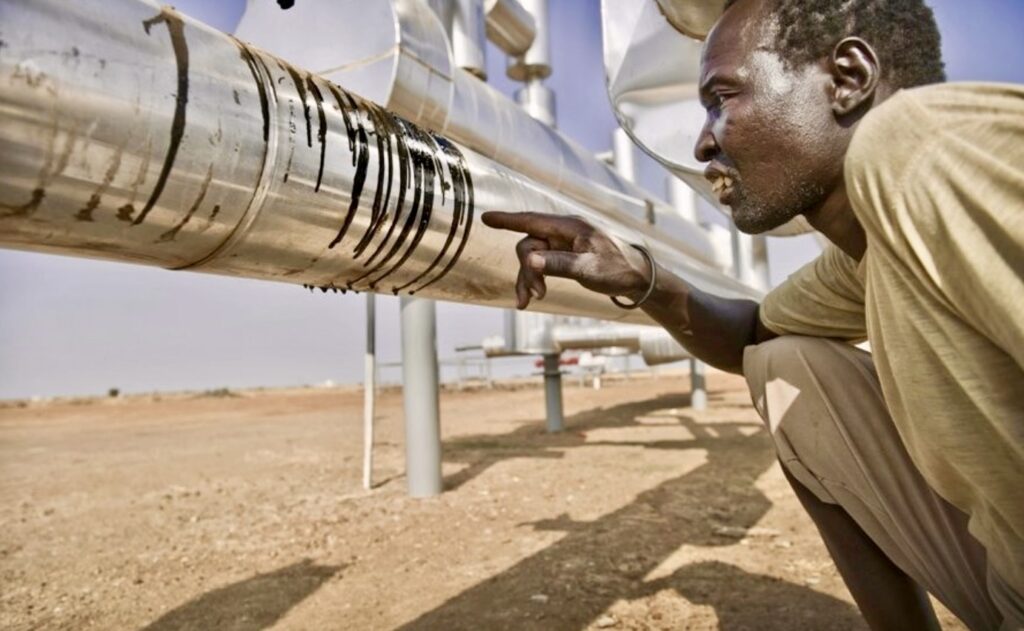
South Sudanese Presidential Security Advisor Tut Galwak and Minister of Foreign Affairs Mandi Samaya arrived in Riyadh last Sunday to seek a solution to the ongoing oil crisis in Sudan. For the past three days, they have held intensive talks with Saudi officials aiming to reach an understanding to end the impasse between the Sudanese government and the Rapid Support Forces (RSF) over oil production.
The crisis escalated after the RSF seized the Heglig oil fields in West Kordofan State in early December 2025, heavily disrupting operations. Sources in the Sudanese oil sector told Ayin that the RSF is demanding a specific financial share of the oil transit fees collected by the Sudanese government in exchange for allowing the continued flow of supplies.
In response, Khartoum has firmly refused to grant any percentage of the transit fees to the Rapid Support Forces. Government sources emphasise that the arrangement is strictly a “sovereign” agreement between the oil and finance ministries of the two countries, asserting it has no relation to forces “rebelling against the state.”
Given Saudi Arabia’s good relations with all involved, the Juba government has formally requested Riyadh to mediate between the warring parties. South Sudan hopes this intervention will secure the uninterrupted transit of its oil through Sudanese territory, sparing it from further economic fallout.
South Sudan’s oil production hovered around 90,000 barrels per day early in 2025, though Juba had been actively seeking to increase this to 150,000 barrels to combat a crushing domestic economic crisis. Prior to the outbreak of war, Sudan received approximately $30 million monthly in transit fees, a figure that was expected to be reviewed annually.
The transit of crude oil through Sudan to eastern ports was previously halted between 2024 and 2025 due to security deterioration and maintenance issues before resuming last year. However, operations remain highly volatile due to the RSF’s ongoing financial demands and the Sudanese government’s steadfast refusal to share revenues.
 2) The Founding Alliance (Ta’sis) is close to forming the council of regions
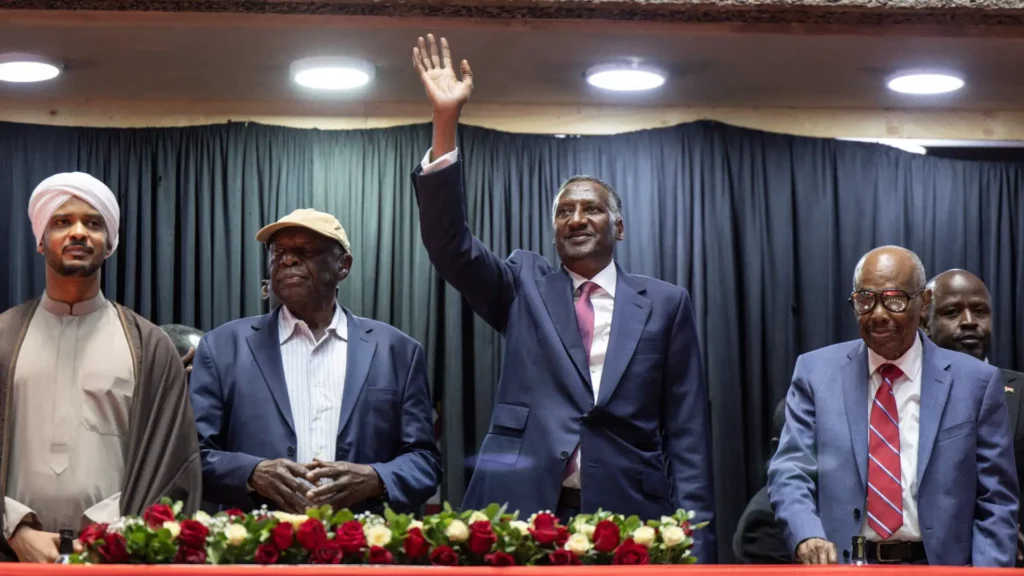
Sources within the Sudanese Founding Alliance, “Ta’sis,” reveal that the coalition is nearing finalising the “Council of Regions,” a supervisory body designed to oversee the executive branch of its parallel government. The alliance is currently holding intensive meetings in Nairobi, Kenya, to determine council membership, timing, and the official commencement of its work.
The alliance was established in opposition to the Sudanese army and was formed in February 2025 by the Rapid Support Forces, the Popular Movement led by Abdel Aziz al-Hilu, and other political factions. It previously formed a parallel government named the “Government of Unity and Peace”, headquartered in Nyala, Darfur, despite warnings that such a move could legally and geographically divide the country.
The coalition recently approved new founding documents, including a transitional constitution that adopts a federal system. This framework abolishes the traditional state system and divides Sudan into eight distinct regions: Darfur, North Kordofan, South Kordofan, Khartoum, North, Central, East, and Blue Nile.
According to a source involved in the Nairobi meetings who spoke to Ayin, the expected council will consist of 24 members, with three representatives drawn from each of the eight regions. These meetings aim to complete the institutions of the “Unity and Peace” government so it can officially commence both internal and external duties.
In a related development, the alliance has also completed the formation of its Judicial Council. This body is tasked with selecting the chief justice, the attorney general and their deputies, as well as forming the constitutional court.
Lt Gen. Mohamed Hamdan Dagalo, head of the Presidential Council of the “establishment” government, appointed 11 members to the interim Judicial Council. Headed by Omar Jadu Hamed and Vice President David Koko Toto, the appointed members include Issa Babiker Hussein, Sayyida Youssef Taya, Mohamed Al-Mukhtar, Yasser Ahmed Suleiman, Hatem Al-Yass Moussa, Kamal Daifan Babiker, Abdel-Baqi Shahto, Abdel-Majid Aboud, and Yaqoub Ibrahim Al-Bashir.”
 3) Army repels a second attack by the rapid support forces on Dilling
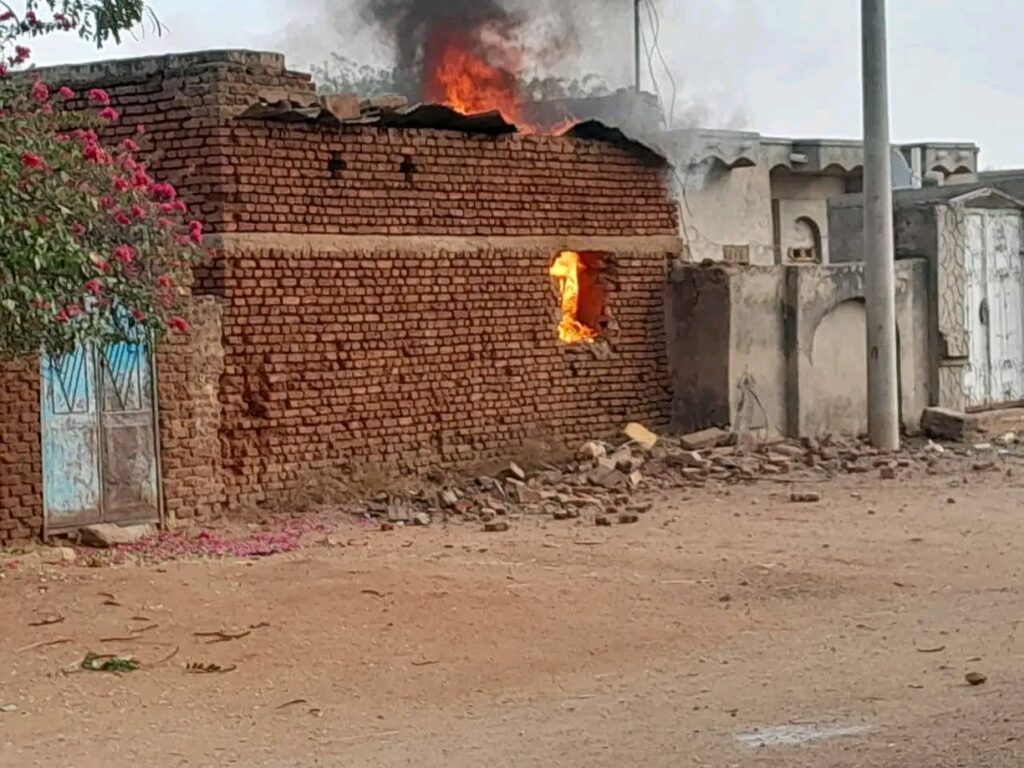
The Kordofan front has erupted into military battles, shattering days of cautious calm. On Monday, the Rapid Support Forces (RSF) launched a fierce assault on the city of Dilling in South Kordofan, coinciding with an intensification of fighting near the city of Rahad in North Kordofan.
Field sources told Ayin that the RSF attacked Dilling from three directions. According to a local military source, the army quickly repelled the first two assaults, but a third, highly violent wave advanced from the north. The source suggested this wave included RSF fighters supported by elements of the Sudan People’s Liberation Movement-North (SPLM-N), penetrating as far as the Al-Radif neighbourhood, east of the military command.
To fully stabilise Dilling, military officials say the army must secure western villages, like Salara and Jald; eastern areas, including Habila; and northern territories up to Tayba. Recapturing the Al-Dubaibat area, which the RSF has controlled for three years, remains a significant challenge requiring substantial tactical support.
Obaida Suleiman of the Dilling Emergency Response Room told Ayin that since Friday, citizens had reported large gatherings of RSF and SPLM-N forces near Salara, Jald, and Hajar Jawad. RSF elements subsequently posted videos on social media showing their forces penetrating Dilling’s residential neighbourhoods.
The Sudanese army confirmed on Monday that it had defeated the attackers, inflicting “heavy losses” in lives and equipment. The military also announced it had regained control of the Takma area, forcing the RSF to retreat and abandon military vehicles. This follows the RSF’s initial capture of Takma in early March.
This marks the second RSF attack on Dilling in less than two weeks, following a repulsed assault on March 26. Meanwhile, fierce battles also raged near Al-Rahad, North Kordofan State, where an RSF source told Ayin they successfully ambushed an army unit, sharing online videos of destroyed military vehicles.
 4) Volunteer Hamed Al-Naeem arrested in Khartoum
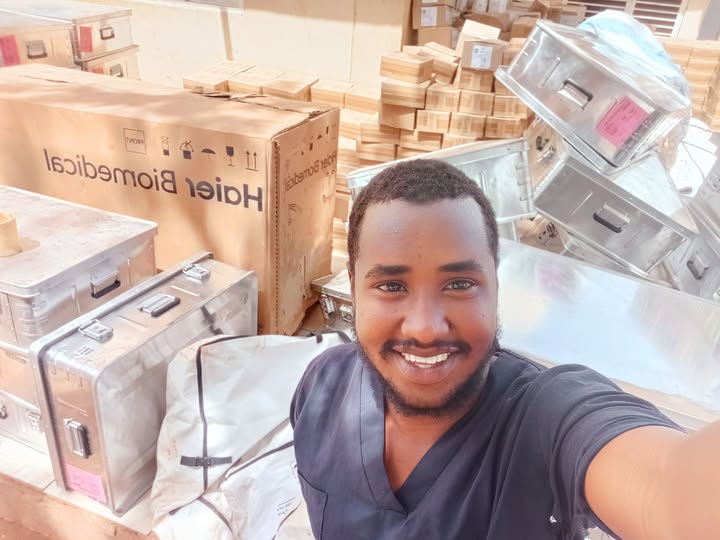
The Al-Jeraif East Emergency Room announced that a unit from the “Security Cell” has detained humanitarian volunteer Hamed Al-Naeem without any legal justification since late March. The arresting force explicitly accused Al-Naeem of cooperating with the Rapid Support Forces.
According to a statement issued on Monday, April 6, 2026, Al-Naeem was arrested on March 31 and taken to Security Cell headquarters in the Sudanese capital. He has now been held for nearly a week without formal or direct charges being presented.
The defence counsel noted that Al-Naeem “dedicated himself to serving his community” during the RSF’s control of the Al-Jereif East area. During that time, he actively risked his life and property to provide vital healthcare and humanitarian services to thousands of affected citizens.
The statement highlighted a glaring contradiction in the charges against him, pointing out that Al-Naeem had previously been detained and physically beaten by the RSF while performing his duties. Al-Naeem’s lawyer is urgently appealing to security agencies for his immediate release and demanding an end to the persecution of humanitarian volunteers.
These actions have sparked growing fears that security crackdowns will fatally undermine the work of emergency rooms and threaten the lives of hundreds of relief workers in Khartoum. Volunteers note that such harassment has intensified steadily since the army seized control of Khartoum State last year.
Last year, Khartoum State mandated that all voluntary entities register with the “Voluntary Work Commission” to continue operations. Relief activists condemned the measure as “governmental and security restrictions” designed to hinder aid delivery. Currently, 300,000 people in Khartoum face severe shortages of basic necessities, while two million struggle to secure daily food and healthcare.
 5) UN envoy meets with Rapid Support Forces commander in Nairobi
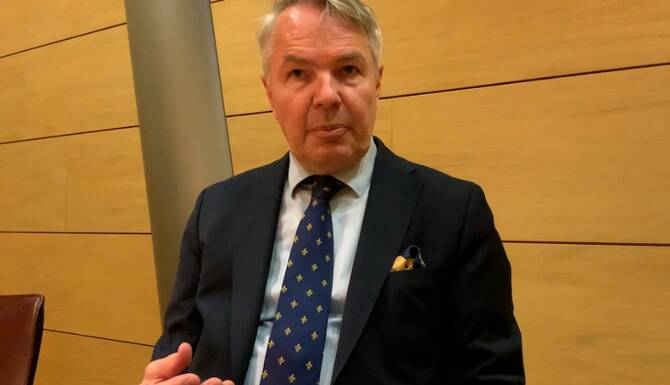
Pekka Haavisto, the Personal Envoy of the UN Secretary-General, met with Rapid Support Forces (RSF) commander Mohamed Hamdan Dagalo (“Hemedti”) in the Kenyan capital, Nairobi. This dialogue follows a prior meeting Haavisto held with Sudanese army chief Abdel Fattah al-Burhan in Sudan.
United Nations spokesman Stephane Dujarric confirmed on Monday that the meetings provided a highly constructive opportunity to exchange views on the ongoing crisis. The discussions focused on exploring practical ways to reduce military escalation and ensure the continued protection of civilian populations.
According to Dujarric, the diplomatic outreach yielded positive signals from the warring factions. He noted that “all the relevant parties that the personal envoy contacted during these visits expressed their willingness to cooperate with the United Nations and the personal envoy.”
The UN views this cooperation as a vital step forward in addressing the catastrophic humanitarian situation in Sudan. Dujarric stressed that “this development is encouraging, and it must be quickly translated into tangible progress towards ending the suffering of all Sudanese people once and for all.”
In related regional diplomatic efforts, the UN Secretary-General spent the weekend in Cairo, Egypt. During his visit, he met with Egyptian officials, Arab League representatives, and members of the Sudanese community residing in the city to discuss broader resolution strategies.
 6) WHO: Sudan faces a serious humanitarian and health crisis
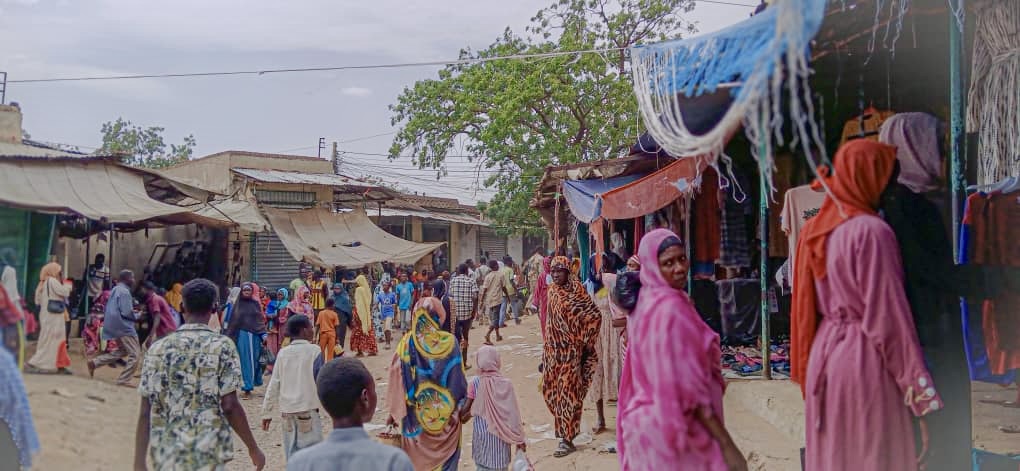
The World Health Organization (WHO) Director-General Dr Tedros Adhanom Ghebreyesus has issued a stark warning that Sudan is currently facing one of the most severe humanitarian and health emergencies in the world. He highlighted that over 33.7 million people—representing more than half of the country’s population—are in desperate need of urgent, life-saving assistance.
In a statement released on Saturday, the WHO urged the international community not to ignore the rapidly deteriorating situation. The ongoing conflict has pushed the Sudanese health system to the brink of total collapse, a crisis severely exacerbated by direct and deadly attacks on medical facilities.
Dr Tedros pointed to a devastating March 20 drone strike on Al-Daein Teaching Hospital in East Darfur State, which killed at least 64 people, including patients and healthcare workers, and injured 89 others. The same day, looters raided the family hospital in Al-Daein, forcing staff and patients to flee and halting all services.
A similarly tragic attack occurred on April 2 at Al-Jabalain Hospital in White Nile State. The assault resulted in the deaths of 10 medical and administrative staff members, including the hospital director, and wounded 22 others.
Furthermore, a hospital in Kurmuk in the Blue Nile State was looted and systematically destroyed on March 25. Patients and medical personnel were forced to flee the facility, resulting in serious injuries to one worker.
Dr Tedros stated that these tragic, targeted events serve as a “stark reminder” of the critical need for immediate international intervention. He emphatically stressed that Sudan cannot endure this health and humanitarian crisis without robust global support.