

21 April 2026
To keep our readers informed of the multitude of events taking place in Sudan amidst the ongoing, devastating war, we have developed a series of weekly news briefs covering major topics of the week.
In this week’s edition:
- The Army and the Rapid Support Forces are mobilizing on the front lines in Blue Nile
- Burhan meets Saudi crown prince; Riyadh is leading political arrangements in Sudan
- Washington linked to Pakistani arms deal suspension for the Sudanese army
- US reservations regarding Sudan’s request to end the isolation of its banking system
- Fierce clashes in the Kordofan region
- An attack inside an exam center raises concerns about teacher safety
 1) The Army and the Rapid Support Forces are mobilizing on the front lines in Blue Nile
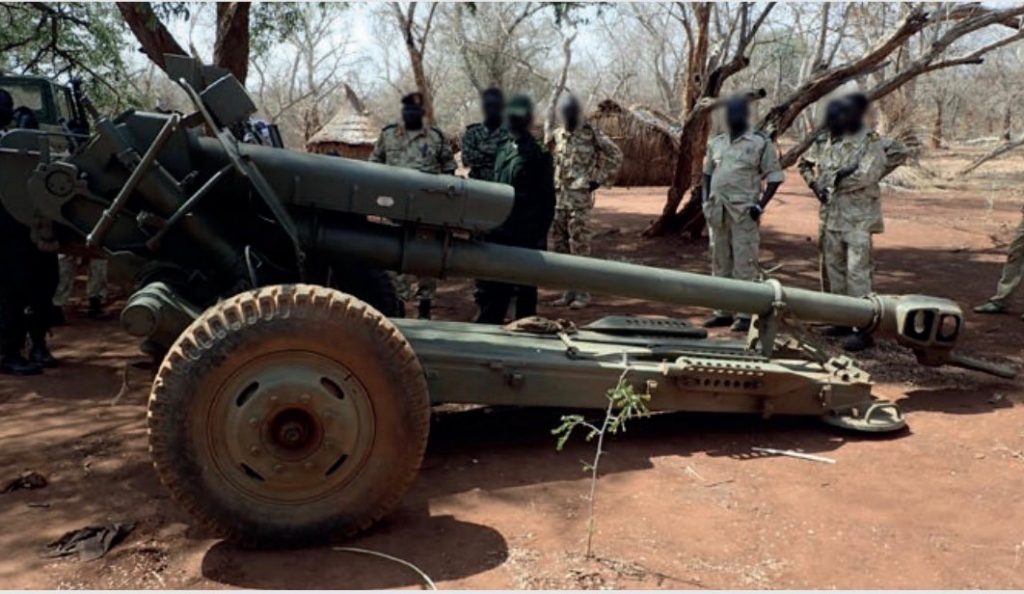
Sudan Shield forces commander Abu Aqla Kikel has deployed his troops to the Blue Nile region, pledging to eliminate the Rapid Support Forces (RSF) before the impending rainy season. The deployment, officially confirmed by the Sudanese Army’s 4th Infantry Division on 20 April, is aimed at securing the region so local farmers can safely access and cultivate their fields.
However, aid workers have expressed grave concerns over this military escalation. From January to April, intensified fighting has already displaced nearly 100,000 people toward Damazin, with others fleeing toward the Ethiopian border, severely exacerbating the local humanitarian crisis and straining relief resources.
On the ground, the Sudanese army recently announced the recapture of the Maqja area near Kurmuk province from the RSF. Local government officials remain optimistic that Kurmuk city itself will be retaken soon, a move they believe would allow thousands of displaced residents and farmers to return and rebuild their devastated communities.
Despite these tactical shifts, humanitarian volunteer Mohamed Elias warns that the region is rapidly descending into a hit-and-run spiral of violence. The volatile border terrain prevents either warring faction from establishing sustainable control, prolonging the conflict and creating an environment of perpetual instability.
This ongoing warfare is systematically dismantling the area’s limited infrastructure. Consequently, farmers remain blocked from their agricultural lands, and the extraction of chromium—a vital mineral for the local economy—has been severely curtailed, threatening the region’s long-term economic survival.
 2) Burhan meets Saudi crown prince; Riyadh is leading political arrangements in Sudan
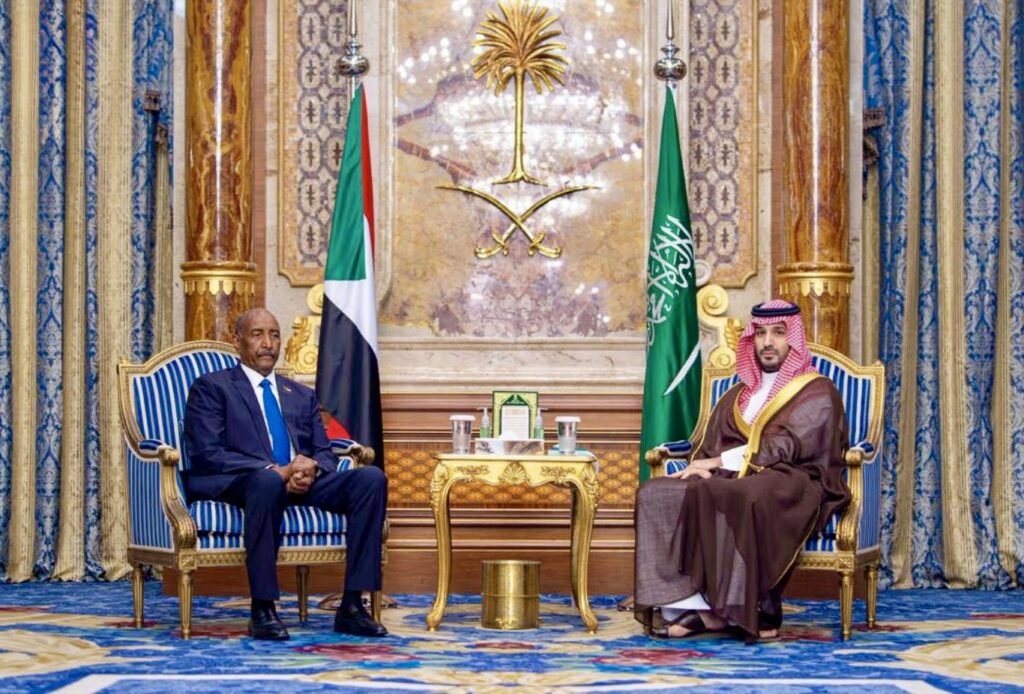
Lt Gen. Abdel Fattah al-Burhan, chairman of Sudan’s Transitional Sovereignty Council, held unannounced talks with Saudi Crown Prince Mohammed bin Salman in Jeddah on Monday, 20 April. Accompanied by top Sudanese intelligence and foreign officials, the visit focused on achieving regional stability and strengthening bilateral ties.
The discussions heavily featured the ongoing armed conflict in Sudan. According to diplomatic sources, Saudi Arabia, working in coordination with the United States, is currently leading new political arrangements aimed at ending the war between the Sudanese army and the RSF and preparing the political environment for a post-conflict stage.
A core component of the bilateral talks involved regional security, particularly concerning the strategic Red Sea area. Burhan emphasised Sudan’s readiness to provide unconditional support to Saudi Arabia, declaring that the Kingdom’s security is inextricably linked to Sudan’s own national stability. The crown prince expressed sincere appreciation for Sudan’s continued solidarity and its supportive diplomatic stance toward the Kingdom during regional challenges.
Concurrently, Egyptian President Abdel Fattah al-Sisi met with a US advisor in Cairo, reiterating the critical need to preserve Sudan’s sovereignty and reject foreign interference. Washington and Cairo reportedly share a unified vision regarding the resolution of the Sudanese crisis, emphasising the prevention of a political vacuum.
 3) Washington linked to Pakistani arms deal suspension for the Sudanese army
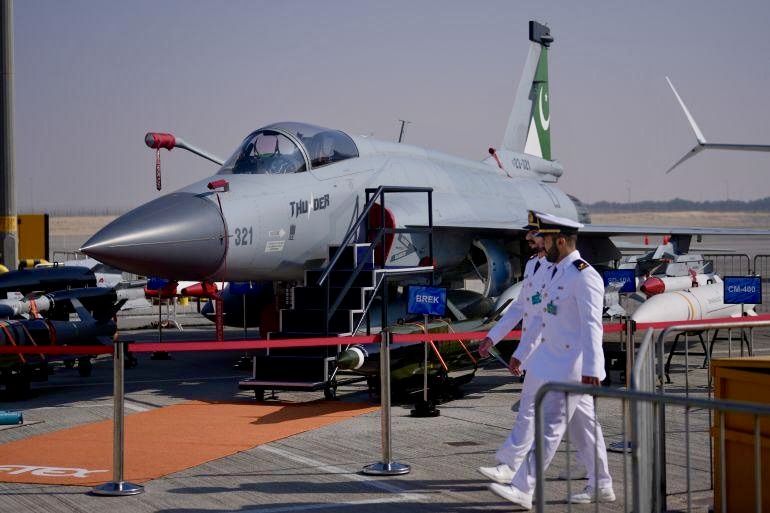
Following intense diplomatic pressure from the United States, Pakistan has suspended a massive $1.5 billion arms deal with the Sudanese army. Saudi Arabia, which originally brokered and planned to finance the January agreement, officially terminated its funding for the defence purchase following a March meeting in Riyadh.
According to diplomatic sources, Washington vehemently opposed the transaction, cautioning that providing Sudan’s military with new weapons could fuel its desire for continued conflict and jeopardise ongoing peace efforts. The US has urged Riyadh to focus instead on its positive diplomatic role alongside the “Quartet” countries.
The Pakistani military, whose weapon systems have gained international prominence, directly negotiated multiple defence sales under the suspended agreement. Saudi Arabia formally notified Pakistan of its decision to withdraw financial backing, effectively halting the transaction in its final stages.
Western nations have increasingly advised Saudi Arabia to avoid funding African arms deals to prevent fostering regional conflicts. Consequently, a separate $4 billion arms agreement with the Libyan National Army is also reportedly at risk as Riyadh actively reconsiders its overarching military strategy in the region.
The United States has also raised similar operational concerns with the United Arab Emirates. Washington is currently awaiting concrete steps from Abu Dhabi to halt the alleged supply of weapons and logistical support to the rival Rapid Support Forces, an accusation the UAE officially denies.
 4) US reservations regarding Sudan’s request to end the isolation of its banking system
A Sudanese government delegation is currently engaged in high-level discussions with the International Monetary Fund and the World Bank in Washington, seeking to end the international isolation of Sudan’s banking system and resume crucial debt relief processes.
During the ongoing spring meetings, Central Bank Governor Amina Mirghani directly appealed to a US banking official to lift the heavy sanctions that have crippled the nation’s financial sector. These stringent sanctions, initially inherited from the al-Bashir era, have worsened significantly during the current conflict.
However, American officials expressed strong reservations about the Sudanese requests. US officials maintain that the current volatile political and security environment in Sudan is simply not conducive to normalising financial relations or lifting existing sanctions at this time.
Economic analysts note that the current conditions render it nearly impossible to revive Sudan’s debt relief path, which has been on hold since October 2021. The World Bank currently restricts its assistance to Sudan to technical budget support and the funding of select humanitarian projects.
The financial burden on the war-torn nation remains immense, with external debt reaching approximately $65.5 billion by 2024. More than half of this total consists of accumulated annual interest from long-term non-payment, a factor that continues to devastate international confidence in the country’s banking system.
 5) Fierce clashes in the Kordofan region
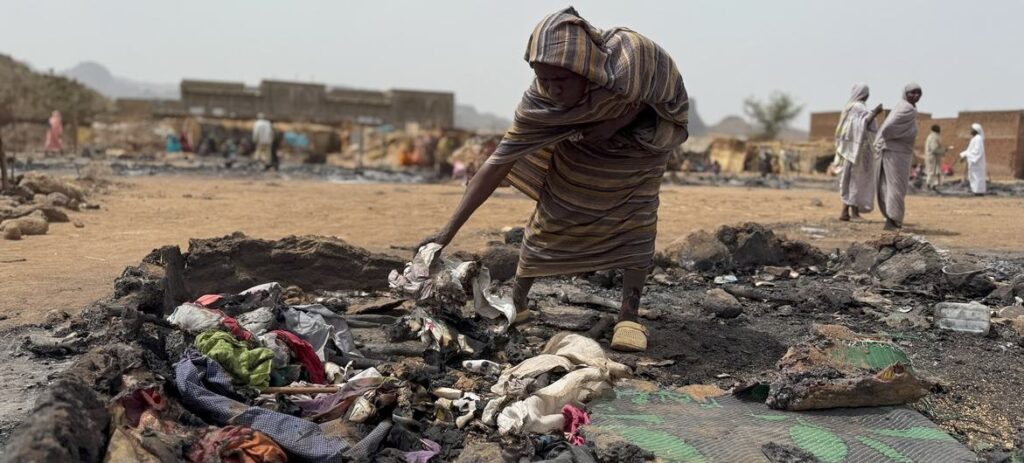
Fierce, five-hour battles erupted on 18 April in the Kordofan region as the Sudanese army attempted to break the Rapid Support Forces’ (RSF) ongoing siege on the cities of El-Obeid and Dilling. The complex fighting occurred primarily along the strategic Kazqil and Hamadi axis.
Following the intense military engagements, the Sudanese army and its allied joint forces retreated north toward El-Obeid. In the immediate aftermath, both warring factions issued contradictory public statements, each claiming decisive military victories and significant enemy casualties.
The Sudanese army reported executing successful combing operations that inflicted heavy losses on RSF personnel and equipment, while allied joint forces claimed to have seized 57 combat vehicles. Conversely, the RSF claimed they successfully repelled the attack, killed over 500 attackers, and captured 85 fully equipped vehicles.
This recent escalation marks Kordofan as a primary theatre in the ongoing conflict. Following the army’s consolidation of control in Khartoum and the central region, the RSF has systematically tightened its grip on the Darfur region and West Kordofan, shifting the geographical focus of the war.
Territorial control remains highly fractured across the region. While the army currently holds major cities like El-Obeid, Dilling, and Kadugli, the RSF and its local allies maintain heavily fortified positions in immediate rural areas and neighbouring towns, ensuring a prolonged stalemate.
 6) An attack inside an exam center raises concerns about teacher safety
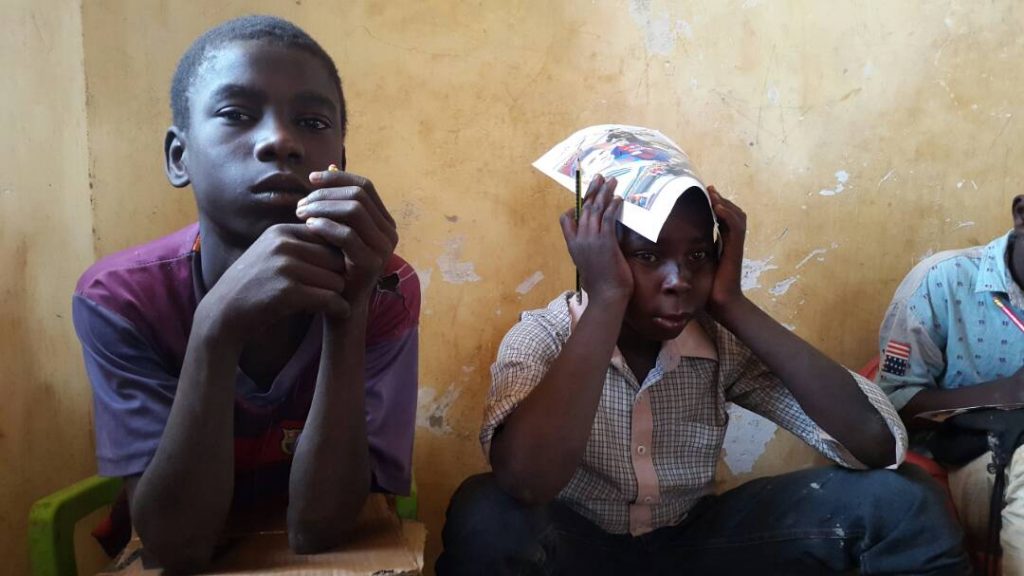
A violent incident at the Wad Al-Haliu School in Kassala has sparked widespread alarm regarding the safety of educators in Sudan. A student sitting for the Sudanese Certificate exams attempted to physically assault a teacher and the center’s director after being caught cheating.
The Sudanese Teachers Committee swiftly condemned the attack, describing it as a dangerous symptom of the country’s broader societal collapse. They warned that the normalisation of militant rhetoric and the introduction of conflict dynamics in schools were actively degrading educational values and student behaviour.
Emphasising the immediate need to protect the educational environment, the committee demanded urgent protective measures, including the removal of weapons from schools and transparent investigations. They strongly criticised recent proposals to use armed factions to fill teacher shortages, warning against the militarisation of education.
This violent incident coincides with a viral video exposing rampant cheating and unequal supervision during the high school exams. Student testimonies corroborate these claims, highlighting a profound crisis of integrity and a severe decline in standards of control within the national examination system.
The exams, which began on 13 April, involved over 564,000 students. However, due to the ongoing war, deep institutional divisions have emerged; the RSF-affiliated “Government of Peace” organised parallel exams in Darfur, leaving thousands of displaced students caught in the middle and unable to participate.