


€1.5 Billion pledged at Berlin-Sudan Conference as global leaders demand unhindered humanitarian access
16 April 2026
Three years into the devastating war in Sudan, international leaders and humanitarian organisations convened in Berlin yesterday for the third International Sudan Conference. Co-organised by Germany, France, the United Kingdom, the United States, the African Union, and the European Union, the conference built on prior summits in Paris (2024) and London (2025). The event brought together representatives from 55 states, major regional organisations, UN agencies, and grassroots Sudanese groups to demand an immediate end to hostilities and to centralise civilian voices in shaping Sudan’s future.
Pledges and needs
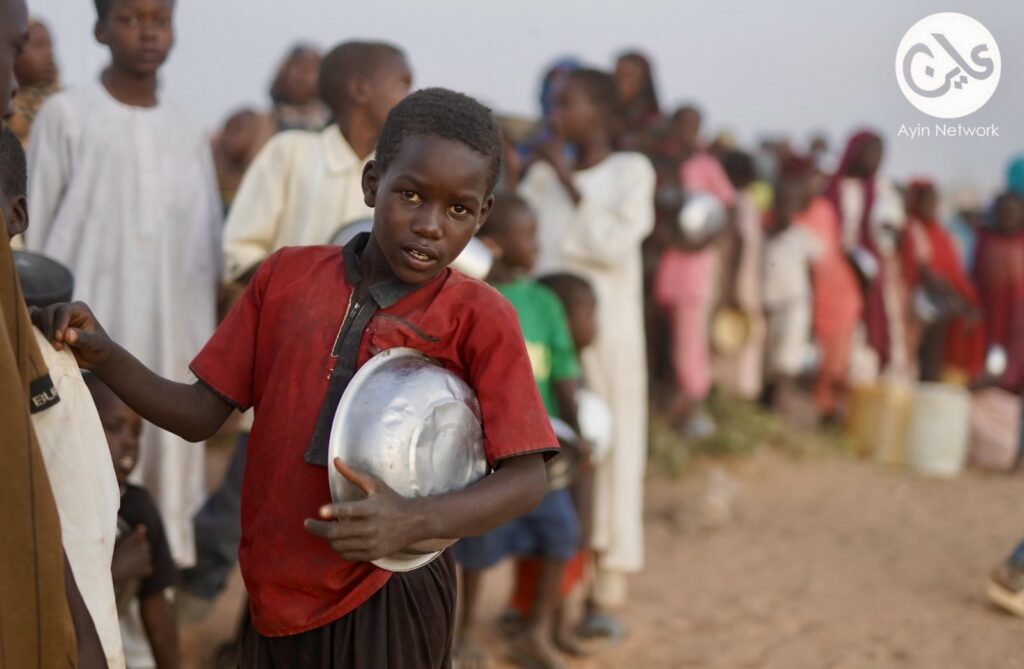
The summit resulted in a €1.5 billion ($1.7) financial pledge to combat what has become the world’s most severe humanitarian crisis. The European Union and its Member States directly pledged more than €811 million of this total. While significant, this pledge covers less than half of humanitarian needs, the UN estimates. The UN’s 2026 Sudan Humanitarian Needs and Response Plan requires about $2.9 billion to deliver basic aid inside Sudan. The regional refugee response—for millions who fled to neighbouring countries—needs another $1.5 billion, totalling roughly $4.4 billion. A recent humanitarian report claims that millions of Sudanese survive on one, scant meal per day.
The UN’s top humanitarian official, Denise Brown, starkly pushed back against the term “forgotten crisis,” stating that Sudan has instead become an “abandoned crisis.” “While the world watches, the scale of suffering has surpassed almost any other modern conflict.”
Demands to warring parties
A central focus of the conference was the absolute necessity of separating humanitarian relief from political negotiations. Leaders issued a unified call for unhindered humanitarian access, demanding that warring parties guarantee safe, rapid, and unimpeded entry across all of Sudan, including through cross-border operations. Leaders emphasised the importance of ensuring sustained aid access, independent of any ceasefire agreement or humanitarian truce.
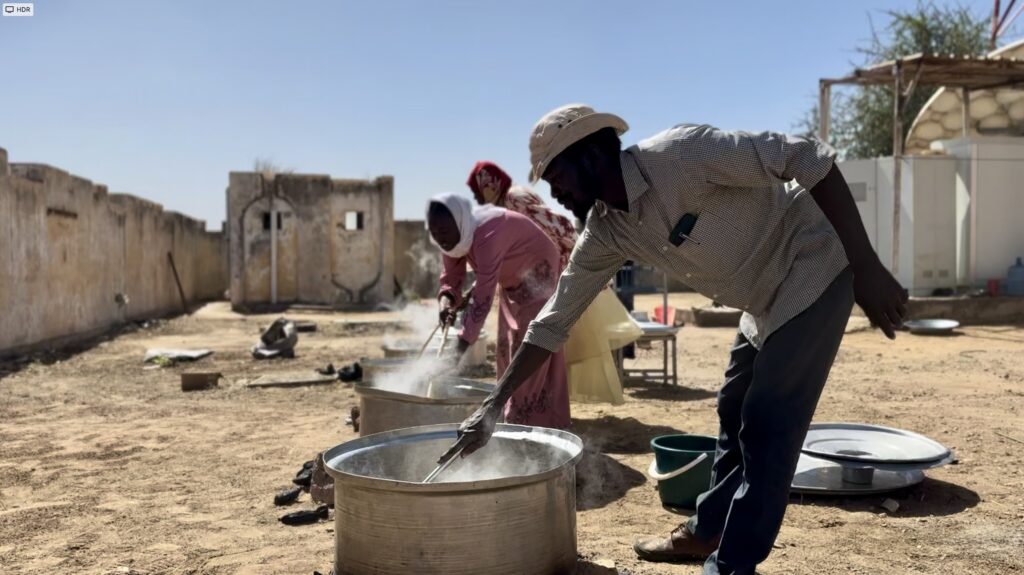
Besides access, conference attendees also mentioned the importance of protecting humanitarian actors. Local first-line responders, particularly Sudanese mutual aid groups and Emergency Response Rooms, face immense risks to their lives, inducing mass closures of community kitchens, among other services. The closure of nearly half of Sudan’s crucial community kitchens in the last six months, a lifeline for millions of people, has worsened hunger and the danger of famine, according to a new study from Islamic Relief. These kitchens are a lifeline for millions of people. An estimated 130 humanitarian workers have been killed in the line of duty since the war began in April 2023, with many more injured, detained, or tortured.
In addition to demanding access, organisers called for strict protections for civilians. They strongly condemned the abhorrent violence in regions like the Kordofans and Darfur, denouncing ethnic attacks, indiscriminate shelling, and sexual violence. The coalition explicitly stated that these violations could constitute war crimes or crimes against humanity, and they demanded an impartial investigation. Finally, leaders urged an immediate end to external interference, calling on outside actors to halt support that continues to fuel and prolong the suffering.
Civilian voices
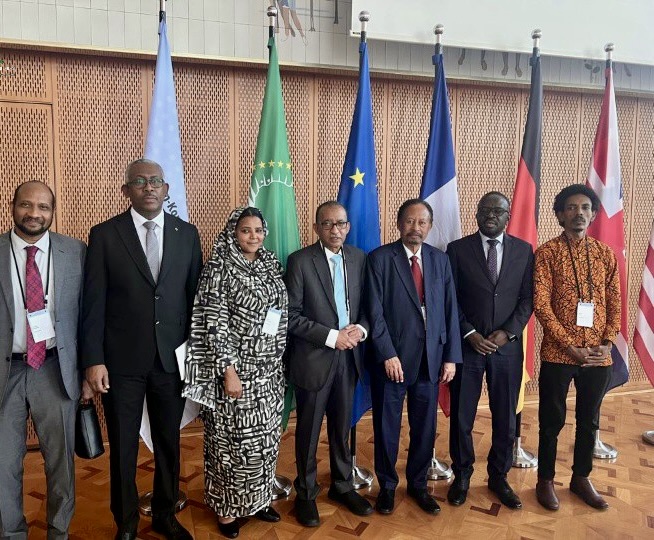
The conference deliberately focused on Sudanese civilian actors, recognising that sustainable peace must be democratic and civilian-led. Hosted by the AU-led Quintet—comprising the African Union, the United Nations, the European Union, IGAD, and the League of Arab States—civilian representatives met to discuss the launch of an intra-Sudanese political dialogue. The dialogue aims to establish the foundation for a civilian-led transition following the achievement of a permanent ceasefire.
The discussion led to a strong condemnation of the conference by the army-controlled Ministry of Foreign Affairs, and Prime Minister Kamil Idris also strongly condemned the conference, framing its conclusions as “entirely irrelevant” and “non-binding.” They argue that discussing Sudan’s future without its official government is a violation of international law, the UN Charter, and state sovereignty; they describe the approach as a continuation of “colonial guardianship”.
Even among civilian groups, some controversies developed. Critics and excluded political forces alleged that the organising group “Quintet” disproportionately allocated invitations to the “Sumoud” group and its affiliates, framing them as independents or youth representatives. Despite these differences, a coalition of 40 civilians issued a joint call to end the war and advance a Sudanese-owned political process that preserves Sudan’s unity and sovereignty under civilian leadership. Germany’s State Minister Serap Güler said in a press conference today that one of the successes of the conference was the convening of 40 representatives of various civilian groups together who were able to reach an agreement and highlighted the important role the Quintet played in facilitating this process. Güler added that the Quintet process is dynamic and will continue to engage with different stakeholders in the days ahead, including those not present at the Berlin conference.