23 September 2026

To keep our readers informed of the multitude of events taking place in Sudan amidst the ongoing, devastating war, we have developed a series of weekly news briefs covering major topics of the week. 

In this week’s edition:

  1. Burhan outlines four priorities ahead of the UN Security Council meeting
  2. The army advances on North Kordofan; RSF drones hit El Obeid
  3. Warring parties agree to maintain oil pipeline in South Kordofan
  4. Drought and Conflict Drive Mass Displacement in Darfur
  5. Gedaref traders close shops as Sudanese pound depreciates
  6. Over 5.1 million Sudanese have returned to their areas of origin
  7. Cash liquidity crisis paralyses Kordofan markets 
1) Burhan outlines four priorities ahead of the UN Security Council meeting

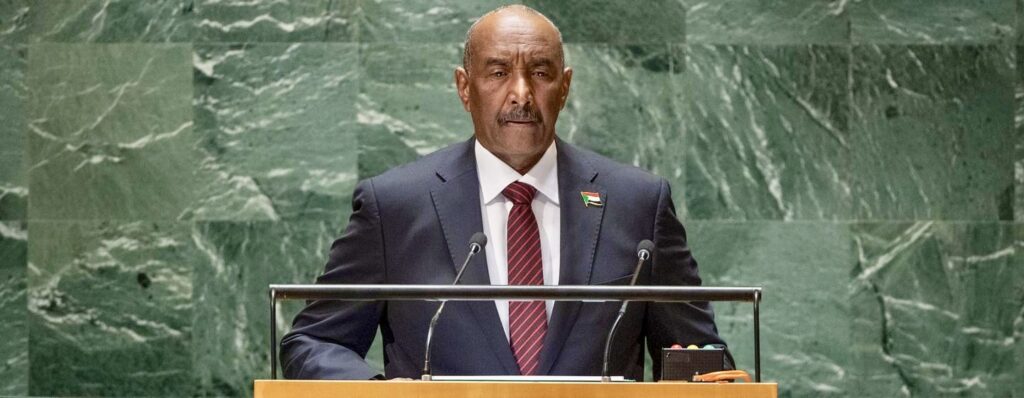
In conjunction with the United Nations General Assembly, Sudanese Sovereignty Council head and army commander Abdel Fattah al-Burhan has outlined four key priorities for the international community to help end the ongoing war in Sudan.

Writing in Foreign Policy magazine, Burhan detailed his vision for a permanent ceasefire and a transition to civilian-led governance. His four priorities demand that the international community support his UN Security Council plan, cut off funding and supply lines to the Rapid Support Forces (RSF), back UN monitoring of any future ceasefire, and allow space for the Sudanese political process to determine the country’s future.

Rejecting the characterisation of the war as an equal conflict, Burhan emphasised that his government represents the legitimate state authority, while the RSF is a paramilitary force. He called for a unified national army under civilian oversight and stressed that international support is welcome, but peace “must be Sudanese—made by Sudanese, for Sudanese, and in Sudan.”

While the Transitional Sovereign Council has not yet announced when Burhan will arrive in New York, an advance delegation led by Foreign Minister Mohi El-Din Salem and Darfur Governor Minni Arko Minawi is already participating in meetings.

During a surprise tripartite meeting on Sunday, Salem met with Egyptian Foreign Minister Badr Abdel-Aty and Massad Boulos, the US President’s Advisor for Arab and African Affairs. According to a diplomatic source, Boulos proposed a 90-day humanitarian truce between the Sudanese army and the RSF.

In response, Salem presented Khartoum’s roadmap for a ceasefire, though the diplomatic source noted that the lack of a joint final statement reflects the “stumbling block” of the agreement.

In parallel, former Prime Minister Abdullah Hamdok led a delegation from the “Somoud” (Resilience) civilian alliance that arrived in New York. Representing a unified coalition of anti-war civil forces, the alliance delivered a joint letter to the UN Secretary-General and Security Council members demanding an immediate, comprehensive humanitarian truce.

The alliance called for civilian protection, unhindered aid delivery, and an inclusive peace process leading to a democratic transition. Furthermore, the civilian forces urged the UN to extend the arms embargo across all of Sudan to halt foreign interference, while warning international institutions against legitimising any authority that had seized power by force.

2) The army advances on North Kordofan; RSF drones hit El Obeid
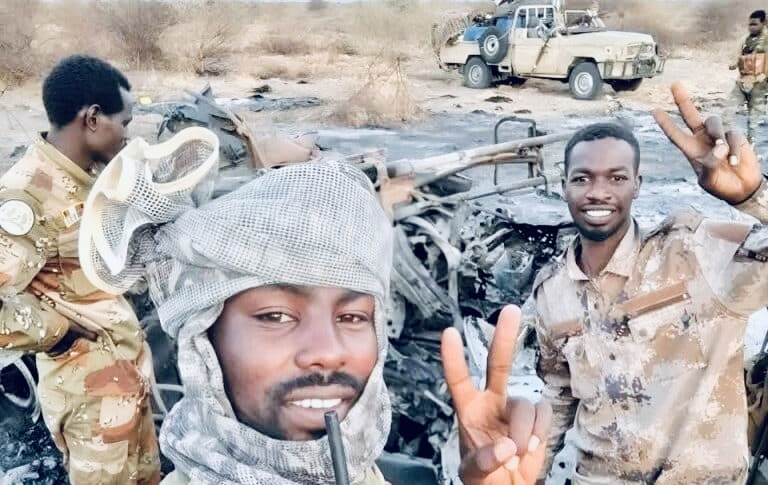
Intense battles have erupted across multiple fronts in Sudan’s North Kordofan state over the past two days, with the Sudanese army claiming control over 11 new areas following the retreat of the Rapid Support Forces (RSF) from positions north of El Obeid. The military escalation has triggered a significant wave of civilian displacement amid concurrent drone strikes on the state capital.
In a statement issued last Thursday, the military announced the capture of several strategic locations, including Kajmar, Sharshar, and Al-Kukiti, while reporting that its forces are pursuing RSF elements toward the Darfur border. However, the RSF countered on Friday, stating they successfully repelled an army attack in the Abu Qoud area west of El Obeid, resulting in casualties and the seizure of weapons and ammunition.
Local sources reported that the RSF abandoned key territories, including the vital commercial hub of Al-Mazroub, without engaging in direct combat, with withdrawing contingents reaching West Kordofan. Highlighting the fluid situation on the ground, a local source told Ayin that “the Sudanese army has not yet entered Al-Mazroub, despite the Rapid Support Forces withdrawing from it last Saturday.”
Concurrent with the ground offensive, the city of El Obeid faced a barrage of RSF drone attacks on Sunday morning. The strikes targeted multiple military installations, including the 6th Division headquarters, ammunition depots, intelligence offices, and officers’ residences, drawing heavy anti-aircraft fire from government forces.
“The sound of drones, anti-aircraft fire, and explosions was heard from approximately 4:00 AM until 10:00 AM in sporadic attacks,” one local eyewitness told Ayin. Following the strikes, the Sudanese army announced that its air defences had successfully shot down an FH-95 drone north of the Kukiti area.
The expanding theatre of war has ignited a deepening humanitarian crisis. Civilians are fleeing northern regions toward El Obeid out of fear of potential abuses, despite the capital itself being under aerial bombardment.

Advocacy groups are raising alarms over the deteriorating conditions. The Emergency Lawyers Group reported widespread displacement from Hamra al-Sheikh, citing massive RSF troop deployments in residential neighbourhoods that have forced civilians to flee to Umm Sunta and Ad-Dabba. Meanwhile, the Kordofan Human Rights Observatory has warned of a looming catastrophe if clashes reach the densely populated Al-Mazroub area, projecting that further violence will inevitably lead to severe civilian casualties and widespread displacement.
3) Warring parties agree to maintain oil pipeline in South Kordofan
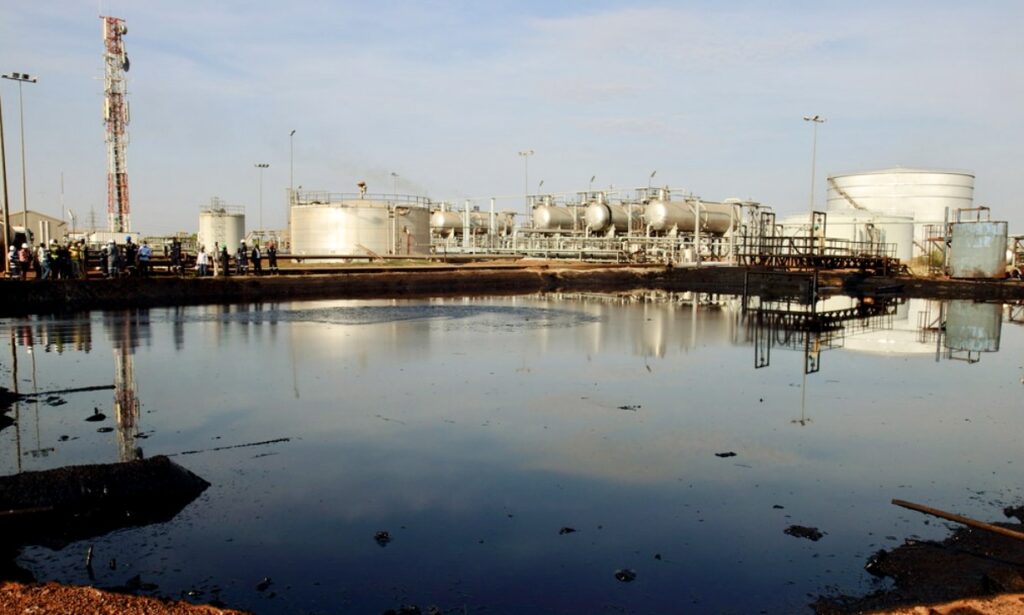
A vital pipeline transporting South Sudanese crude oil through South Kordofan has been repaired following an explosion and multi-day fire caused by sabotage. An engineering team from the Sudanese Ministry of Oil successfully brought the blaze near the Al-Hamadi area under control, made possible by a rare moment of cooperation between Sudan’s warring military factions to protect shared economic interests.
The emergency repair effort required complex logistical coordination between rival forces. Speaking to Ayin, an engineering source confirmed that “the pipeline maintenance operation was carried out under a security agreement between the Sudanese army and the Rapid Support Forces, at the request of the South Sudanese government.” While the engineering team mobilised from army-controlled territory, the Rapid Support Forces (RSF) provided on-the-ground security to ensure they completed the repairs.
Despite the successful maintenance, the circumstances surrounding the initial explosion remain heavily disputed. The RSF-controlled Tas’is (“Foundation”) government accused the Sudanese army of orchestrating the sabotage, alleging the military had launched repeated drone strikes in North Hamadi. 
The targeted pipeline is a critical economic artery for the region, carrying crude from South Sudan through Sudanese territory for international export via Port Sudan. Prior to the outbreak of the current conflict, South Sudan relied heavily on this Sudanese network to export between 100,000 and 150,000 barrels of oil per day.
This localised ceasefire mirrors previous measures taken to insulate vital oil infrastructure from the wider conflict. In December 2025, after the RSF seized the Heglig oil region, a tripartite agreement was brokered between Sudanese Sovereignty Council head Abdel Fattah al-Burhan, South Sudanese President Salva Kiir, and RSF commander Mohamed Hamdan Dagalo. That arrangement successfully neutralised the Heglig zone—which processes oil from South Sudan’s Unity State—allowing South Sudanese forces to deploy and protect the facilities from further collateral damage.

4) Drought and Conflict Drive Mass Displacement in Darfur
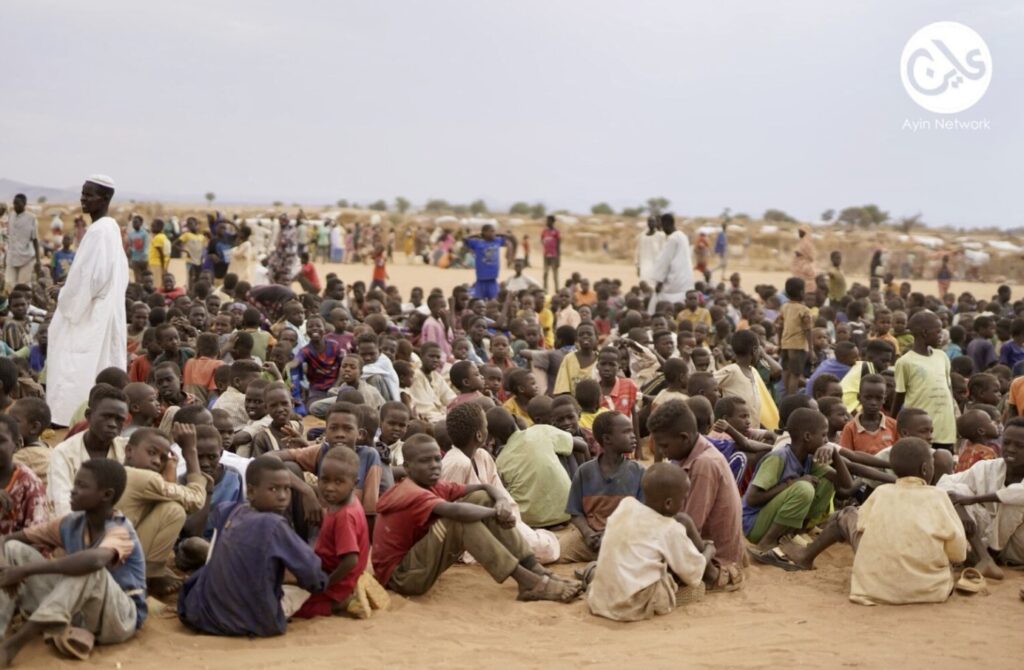
Thousands of civilians are fleeing North Darfur state for the Sudanese-Chadian border and the Tawila displacement camp as the region faces a devastating convergence of escalating violence and severe drought. Local emergency rooms report that the mass exodus is being driven by both a deteriorating security environment and the total failure of the current agricultural season due to the El Niño phenomenon and scarce rainfall.
The agricultural collapse has left approximately 10,000 people in the Kutum locality at imminent risk of famine. Farmers have been unable to harvest essential crops, including corn, cowpeas, and vegetables, forcing residents to abandon their homes in search of basic sustenance and safety.
“The waves of displacement during this period are twofold, combining security and food deterioration due to the scarcity of rain, in addition to the uncertainty regarding the military operations that are conducted almost daily,” explained humanitarian volunteer Ahlam Abu Bakr.
The security situation remains dire, with civilians navigating perilous roads plagued by armed gangs, the Rapid Support Forces (RSF), and drone strikes that are actively destroying local infrastructure. “The continuous flow of displaced people from North and West Darfur continues across the Chadian border in search of safety in light of the intensification of military operations in some locations,” said humanitarian volunteer Ahlam Abubakr.

For the tens of thousands fleeing, the options for survival are increasingly grim. Displaced families must either languish in the open without immediate assistance at the Tawila camp or undertake the dangerous journey into Chad, where volunteers warn they are likely to face continued hardship and suffering.

5) Gedaref traders close shops as Sudanese pound depreciates
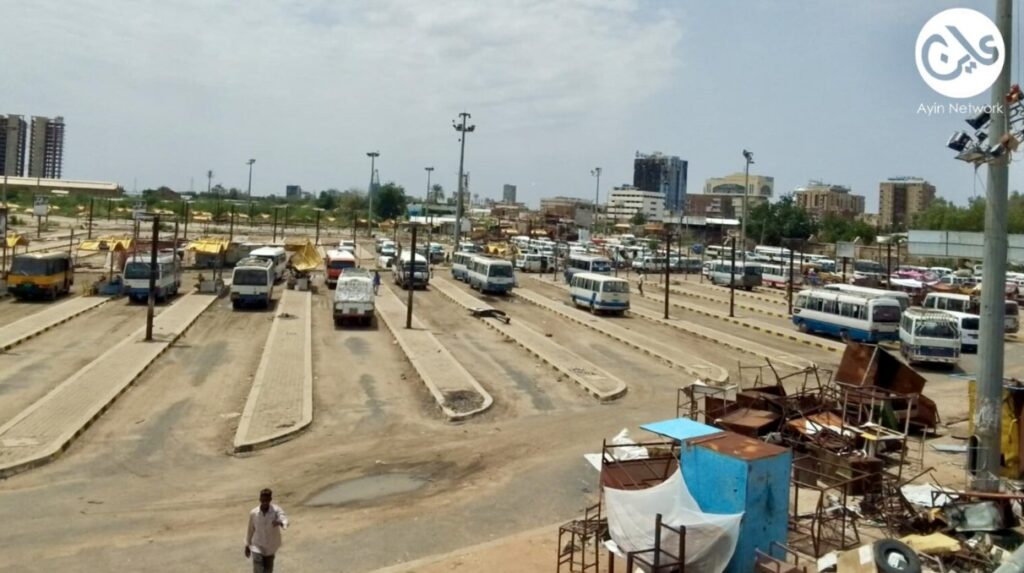
The rapid depreciation of the Sudanese pound has triggered a wave of economic unrest across Sudan, prompting widespread merchant strikes and civilian protests in the eastern city of Gedaref. The crisis comes as the national currency experiences severe volatility, straining an economy already battered by ongoing conflict.
The Sudanese pound recently plummeted to 8,200 against the US dollar before rebounding slightly on Monday, 21 September, via the black market to 7,600. Addressing the private sector at the Economic Recovery Conference, Finance Minister Jibril Ibrahim acknowledged the severe currency decline. In a televised interview the previous evening, he explained that the ongoing war is consuming the nation’s hard currency reserves and has entirely removed eight states from the production cycle, though he maintained that the government has indicators of economic improvement and predicts inflation will fall to 60% this year.
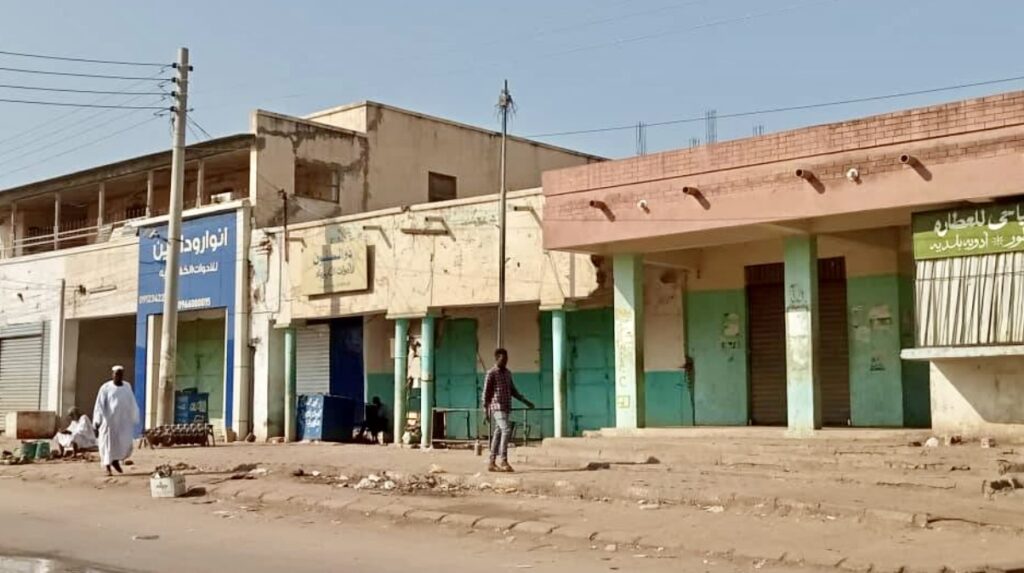
Fearing the rapid erosion of their capital and rejecting exorbitant government fees of up to 5 million pounds for some commercial activities, traders in the cities of Dongola, Atbara, Shendi, and Omdurman launched simultaneous strikes by closing their shops. The closures prompted forceful government intervention, with a “Security Cell” force issuing direct orders to merchants in the Dongola market to reopen their businesses.
The accelerating currency collapse has also sparked public outrage over skyrocketing prices. On Sunday, September 20, dozens of young men gathered in the Al-Tadamun neighborhood of Gedaref to protest. Describing the unrest, eyewitnesses reported that “the demonstrators set fire to old tires and blocked a side road inside the neighborhood while chanting slogans demanding an improvement in the living conditions.”
Following the Gedaref protests, local resistance committees issued a public statement confirming that the demonstrations were a direct result of deteriorating economic realities. In their address, the committees issued a stark warning to state security services, cautioning them against dealing violently with the demonstrators.


6) Over 5.1 million Sudanese have returned to their areas of origin

More than 5.1 million Sudanese have returned to their areas of origin, but the International Organization for Migration (IOM) warns that these families face a high risk of secondary displacement without immediate international support. While the massive wave of returnees marks a shift in the ongoing crisis, approximately 8.6 million people remain uprooted, leaving Sudan with one of the largest displaced populations in the world.
According to the IOM’s recent Displacement Tracking Matrix, 82 percent of those returning were internally displaced within Sudan. The remaining 18 percent—roughly 930,000 people—returned from abroad, with half crossing back from Egypt, followed by South Sudan, Libya, and the Gulf states.
However, those returning are arriving to devastated communities unable to meet basic needs. IOM Director General Amy Pope noted that while the returns reflect the courage of the Sudanese people, many are finding damaged homes, closed schools, struggling health centres, and severely limited livelihood opportunities.
To prevent these fragile populations from being forced to flee again, the IOM is urgently appealing to governments, donors, and humanitarian organisations. The agency stressed that immediate investments are needed to rehabilitate local infrastructure, restore essential services, and support local economies, enabling returnees to safely rebuild their lives and stabilise host communities.


7) Cash liquidity crisis paralyses Kordofan markets 
A severe cash liquidity crisis has crippled commerce across the Kordofan region, with the near absence of physical cash halting buying and selling activity in the weekly markets. According to residents in several areas of the Kordofan region, the lack of physical banknotes has devastated local trade, as communities heavily rely on cash for basic living needs in areas controlled by the Rapid Support Forces (RSF) where traditional banking services are non-existent.
The shortage is severely impacting families reliant on digital remittances. Residents in the Ghabish locality said the commission to convert funds from the “Bankak” application to paper money has skyrocketed to 40 percent. This exorbitant fee strips families of a significant portion of their financial support just as they face soaring commodity prices and rapidly declining purchasing power.
These financial burdens are compounding a broader economic and environmental disaster in the Kordofan and Darfur regions. Scarce and delayed rainfall has ruined the agricultural season and caused widespread livestock deaths, raising urgent concerns about an impending food crisis, according to several testimonies collected by Ayin.
Simultaneously, the rapid depreciation of the Sudanese pound and volatile exchange rate fluctuations have forced many traders to stop selling or shutter their shops entirely, leaving residents trapped between rising living expenses, failing harvests, and an inescapable lack of liquidity.