

18 August 2026
To keep our readers informed of the multitude of events taking place in Sudan amidst the ongoing, devastating war, we have developed a series of weekly news briefs covering major topics of the week.
In this week’s edition:
- Quintet invites Sudanese factions to Addis Ababa political talks
- Sudan’s army sets up council with Saudi Arabia, military talks in Turkey
- Clashes in Blue Nile leave 20 civilians dead, thousands displaced
- Sudan receives assurances from African Union to revive membership
- Fearing RSF Reprisals, displaced Bara residents hesitate to return
- Sudanese pound collapses to 6,000 per dollar, food prices skyrocket
- Dongola residents protest plan to demolish Sabreen neighborhood
- Arrest of journalist Qurashi Awad sparks legal controversy over cybercrime law
- Al-Manasir residents stage sit-in to block geological mining survey
 1) Quintet invites Sudanese factions to Addis Ababa political talks
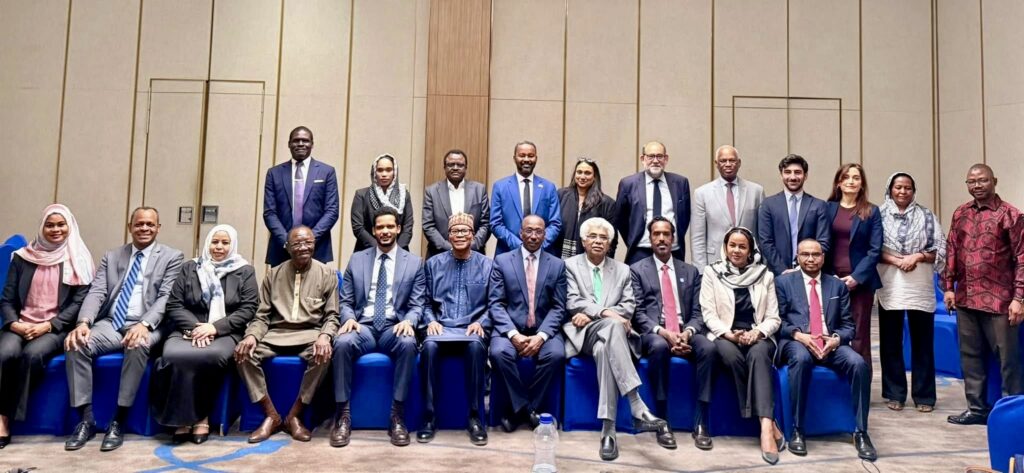
Political sources announced that the five-party mechanism—comprising the United Nations, African Union, European Union, IGAD, and the Arab League—has invited several Sudanese factions to Addis Ababa in late August. The gathering aims to build consensus on a unified political vision to end the conflict and form a preparatory committee for a comprehensive dialogue.
Participants will include the Forces of the Declaration of Principles, the Popular Congress Party, the Umma Party, and the Sudan Founding Alliance (“Ta’sis”) led by the Rapid Support Forces (RSF). “The meetings will be held before the end of this month to agree on a unified vision regarding the political process sponsored by the five-party mechanism,” said Misbah Ahmed, head of the media department of the National Umma Party. “It will focus on the correction of the course of the political process.”
The initiative follows a boycott of the Quintet’s late-July meeting by the Forces of the Declaration of Principles, who accused facilitators of deviating from agreed parameters. In response, Ta’sis confirmed receiving a letter from the mechanism regarding a complete review, stating the step comes “in order to formulate a credible process and a more organised framework to achieve clear goals and objectives, objective and agreed-upon participation criteria, a sequence of steps and phases, and to define the role of the Sudanese parties and international facilitators.”
The Quintet emphasised that the session offers a crucial chance to move forward, indicating that the meeting will be “an opportunity to discuss how to address the imbalances that accompanied the preparation for the operation in a joint manner and to build consensus on positions and opinions.”
 2) Sudan’s army sets up council with Saudi Arabia, military talks in Turkey
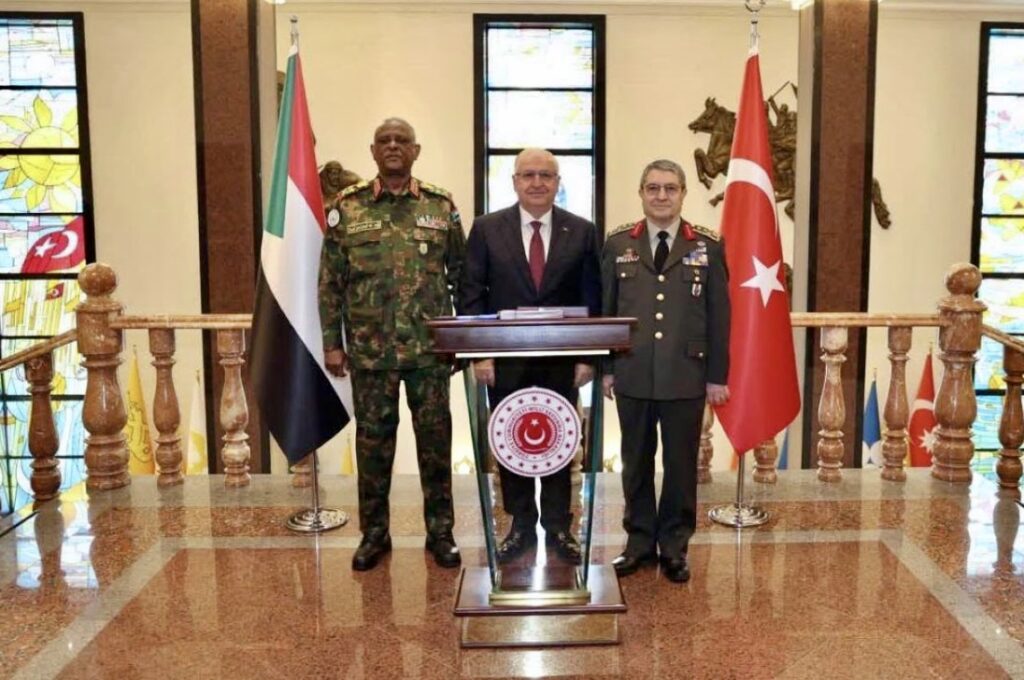
Sudan and Saudi Arabia signed an agreement on Monday establishing the Supreme Council for Strategic Cooperation and Coordination, while Sudanese Army Chief of Staff Yasser al-Atta held high-level military discussions in Ankara.
Sudanese Foreign Minister Mohi El-Din Salem and Saudi Foreign Minister Prince Faisal bin Farhan signed the bilateral agreement with Riyadh. Foreign Minister Salem noted that “the Coordination Council with Saudi Arabia also deals with security and defence.”
According to the Sudanese Ministry of Foreign Affairs, the council establishes a framework to “elevate them to a broader level of coordination and cooperation in various areas of common interest.” Covering ten primary sectors, the initiative aims to “align priorities, strengthen the official partnership between the two countries, and expand economic and investment cooperation” while facilitating joint projects to “support development and stability efforts and promote mutual interests.”
In Ankara, al-Atta met with Turkish Chief of General Staff Selçuk Bayraktar Oğlu and Defence Minister Yaşar Güler. The discussions focused on military relations following an official welcoming ceremony at the Turkish General Staff headquarters.
 3) Clashes in Blue Nile leave 20 civilians dead, thousands displaced
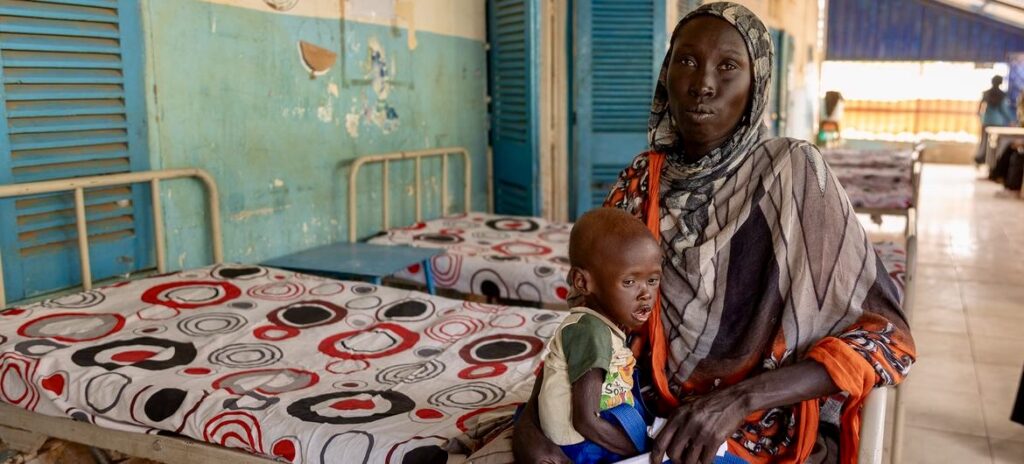
Armed clashes between the Sudanese army and the Rapid Support Forces (RSF) in Geisan resulted in the deaths of 20 civilians and the displacement of 2,500 people, the United Nations confirmed. The RSF seized control of Kurmuk and Geisan in mid-August, with intense battles continuing near the town of Bakuri.
A humanitarian worker reported that areas adjacent to Kurmuk and Geisan are experiencing a military buildup by the army and the Rapid Support Forces, with daily operations taking place last week. The worker added that displaced families fleeing to army-controlled Damazin face worsening conditions in camps due to heavy rains and water seeping into sleeping quarters.
Blue Nile affairs researcher Mohamed Adam warned that “the security situation is extremely dangerous in the direction of Geisan and Kurmuk due to the Rapid Support Forces’ attacks, which rely on supply lines from neighbouring countries.” Adam added, “The armed conflict in the Blue Nile will not stop until the situation calms down on the border strip with Sudan between the Tigray forces and the Ethiopian army.”
 4) Sudan receives assurances from African Union to revive membership
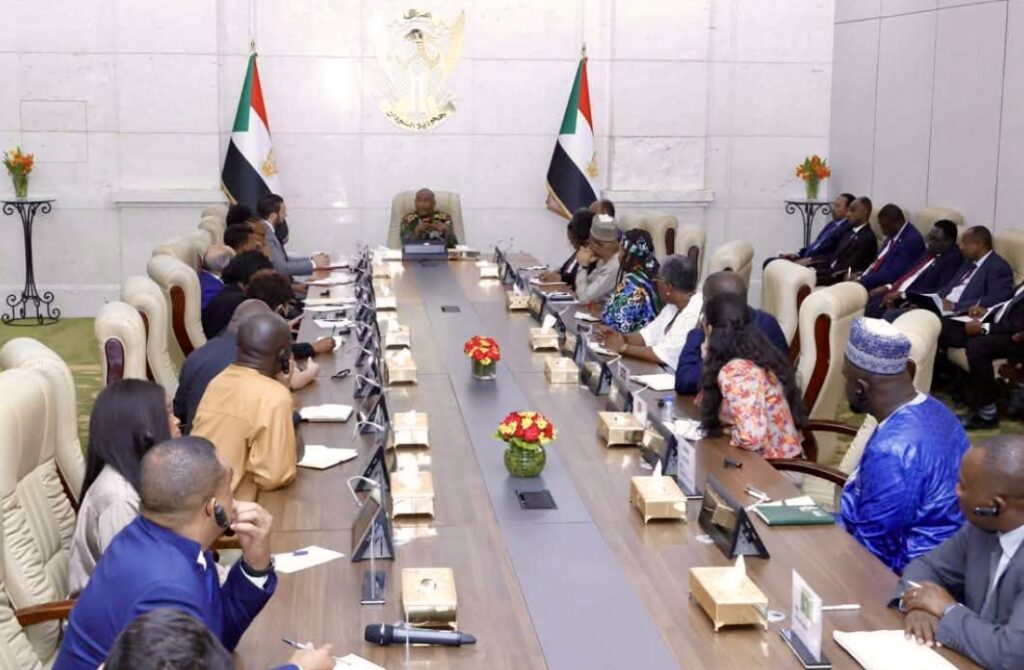
A Sudanese diplomatic source revealed that the government requested an African Union Peace and Security Council delegation to reverse Sudan’s membership suspension, which has been active since the October 2021 coup. The source stated that the government “received promises from the African delegation to work on this issue, with the progress of the dialogue announced by the head of the Transitional Sovereignty Council in mid-August.”
Diplomatic analyst Omar Abdel Rahman noted that “the visit of the African Union Peace and Security Council delegation seeks to explore the foundations of the Sudanese dialogue announced by the army commander and the head of the Sovereignty Council.”
“Khartoum hopes to obtain diplomatic support from the African Union,” Rahman added. But the dialogue will only gain recognition if its outcomes are credible, its active parties are trustworthy, and a ceasefire is established before the dialogue procedures begin.” He cautioned that the delegation’s failure to demand an immediate ceasefire prior to dialogue arrangements “is a grave matter and could deepen the current conflict.”
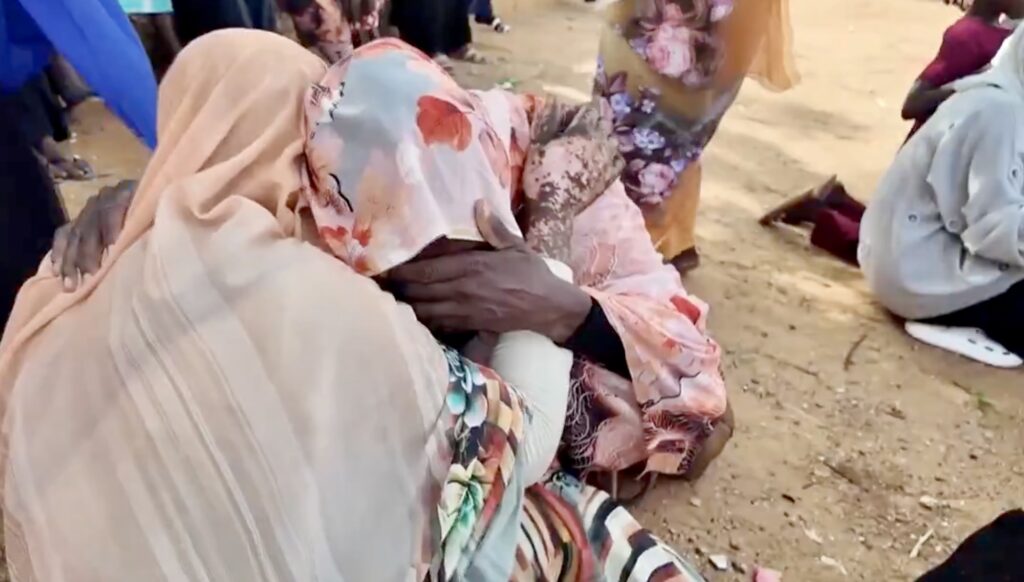 5) Fearing RSF Reprisals, displaced Bara residents hesitate to return
 6) Sudanese pound collapses to 6,000 per dollar, food prices skyrocket
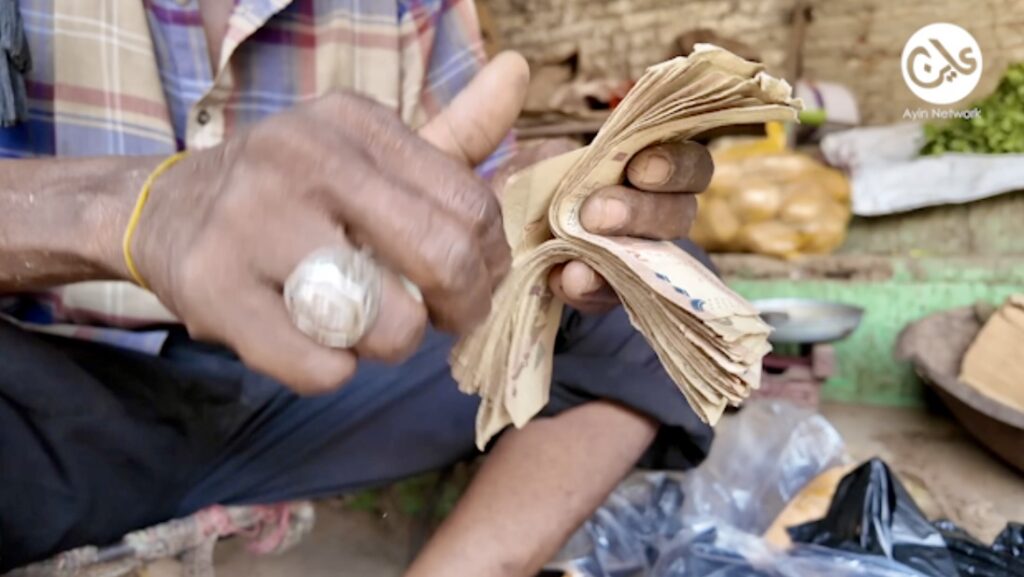
The Sudanese pound fell to 6,000 per US dollar in the parallel market this week, triggering severe price spikes in consumer goods nationwide. A currency trader in Atbara reported that citizens are exchanging local currency for foreign banknotes, adding that “some traders have refrained from depositing Sudanese currency in banks, fearing continued losses due to the rise of foreign currencies against the pound in the black market.”
The economic squeeze is devastating household budgets. “The monthly family budget now costs around 3 million pounds for a family of four to five people,” said East Khartoum resident Hadeel Ahmed. “While public sector salaries are still around 150 to 250 thousand pounds.” She noted that “skipping meals” has become widespread as families cannot secure three meals a day.
“The economic crisis has gotten out of the control of Kamil Idris’s government, because the measures it took focused on pursuing currency markets instead of developing the productive sectors,” said Economic analyst Omar Abshar. Referencing monthly military expenditures of $100 million, Abshar cautioned that “the economic crisis is now putting families on the brink of starvation, and is not just a lack of some necessities.”
 7) Dongola residents protest plan to demolish Sabreen neighborhood
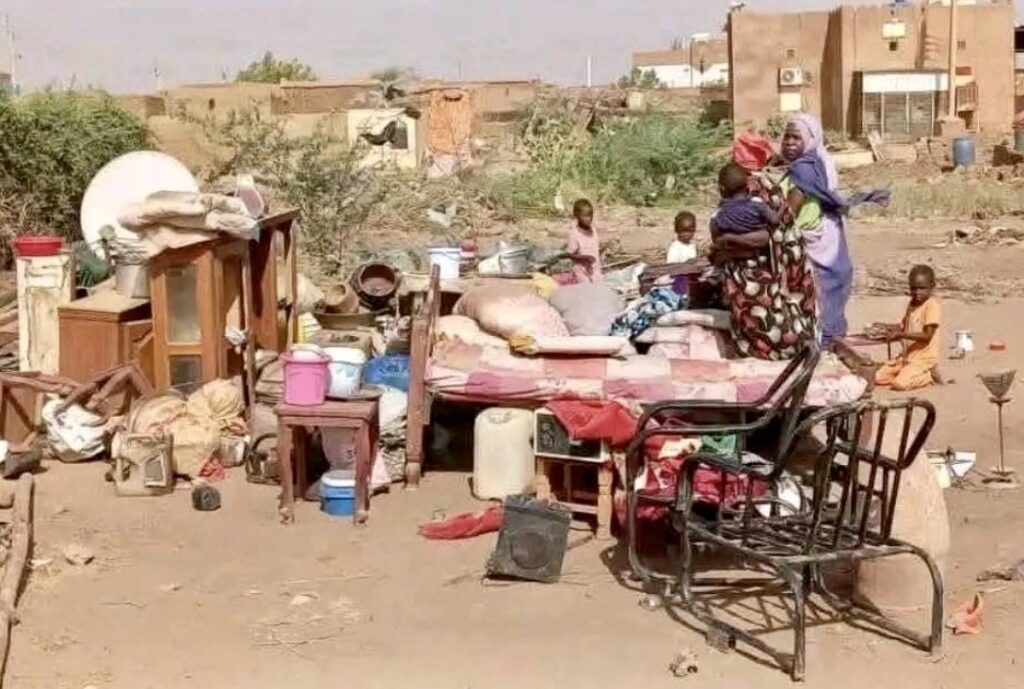
An estimated 10,000 residents in the Sabreen neighbourhood of Dongola have rejected an August 12 municipal order that gave them one week to vacate their homes before demolition. Residents assert they have legally inhabited the area since 1991, when it was “uninhabited land covered with weeds and sand dunes.”
A neighbourhood committee representative stated that court rulings had settled past land disputes in favour of the residents. “The estimated 10,000 residents of the neighbourhood did not receive any new notification from the court regarding the land before the last demolition order was issued. We did not see the court’s decision, only the demolition order,” a neighbourhood committee representative said.
Residents are demanding that local authorities halt all actions until the legal status of the land is formally clarified according to official judicial procedures.
 8) Arrest of journalist Qurashi Awad sparks legal controversy over cybercrime law
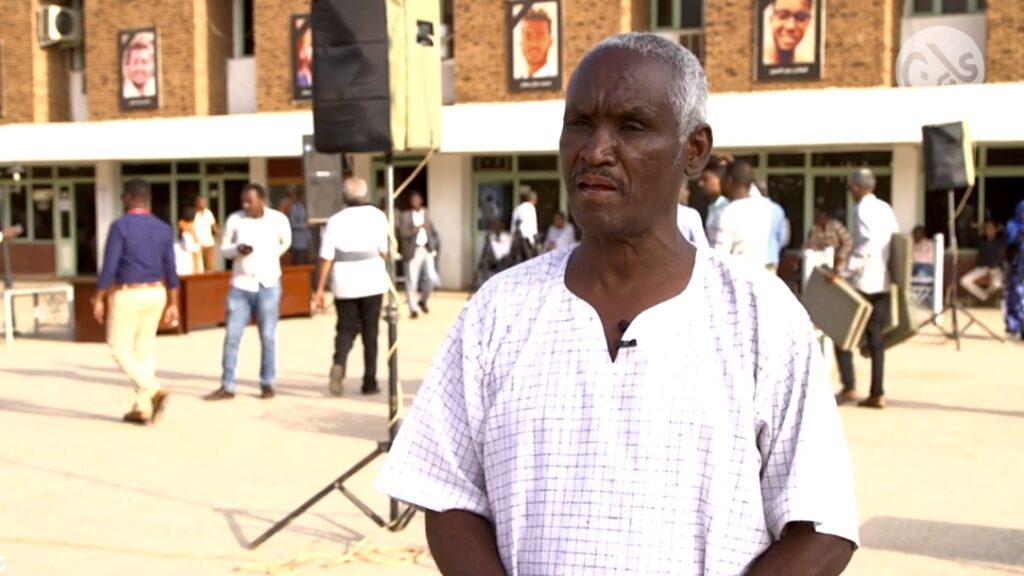
The arrest of journalist Qurashi Awad by Criminal Investigation Department officers in River Nile State under the 2007 Cybercrime Act has reignited fierce criticism over press freedoms. Awad was detained following a complaint by the General Intelligence Service before being released on bail in mid-August.
Legal expert Al-Mu’az Hadra condemned the detention as “invalid and contrary to the constitution and the law and a bad exploitation of judicial procedures and settling of political scores.” Hadra says the state was using selective justice via the cybercrime law to silence anti-war voices.
The Sudanese Journalists Syndicate denounced the actions, asserting that detaining journalists is “a direct infringement on press freedom and the public’s right to know.” The syndicate urged that legal proceedings adhere strictly to constitutional guarantees rather than using cybercrime legislation as a tool to suppress critical reporting.
 9) Al-Manasir residents stage sit-in to block geological mining survey
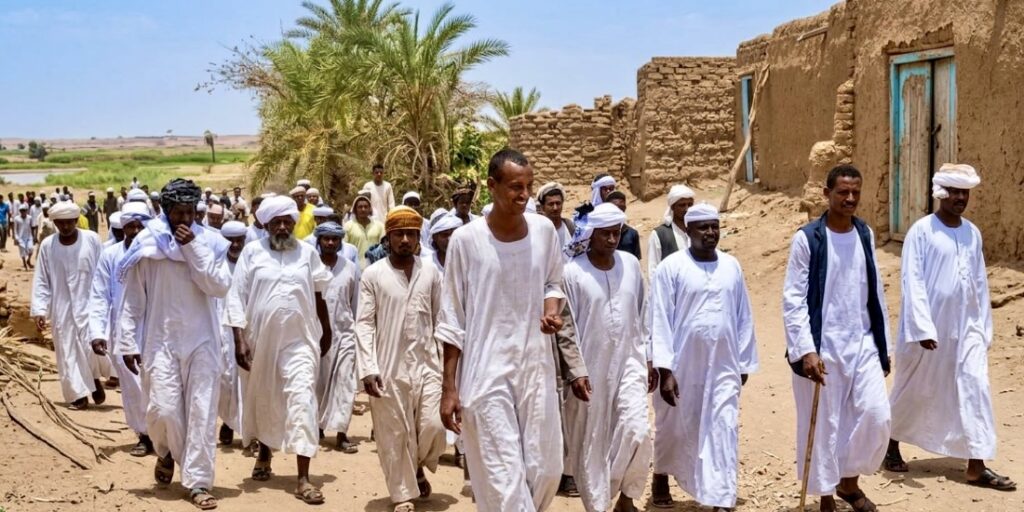
Protesters in the Al-Manasir region launched a sit-in in Kabna to block state authorities from conducting geological surveys intended to open the area to gold mining. Residents demand that historical promises regarding land and housing compensation—unfulfilled since the construction of the Merowe Dam flooded their villages—be resolved first.
The Manasir Youth and Students Association stated that “geological survey work and opening the door to investment represent… a prelude to bringing in mining companies and designating mining blocks.” The group warned of severe “environmental and health damage caused by mining activities in neighboring areas.”
Youth groups have demanded that survey teams evacuate within 48 hours, calling on all local residents to join the encampment near Kabna schools to protect their land rights.