

29 April 2026
To keep our readers informed of the multitude of events taking place in Sudan amidst the ongoing, devastating war, we have developed a series of weekly news briefs covering major topics of the week.
In this week’s edition:
- Fierce ground battles return to southern Blue Nile
- Sudan’s ban on importing 64 goods sparks widespread criticism
- Implementation of the lost property law threatens to sell thousands of looted cars
- Five civilians killed in bombing of Dilling city
- Difficult choices facing Sudanese refugees in Chad, including returning to Darfur
- Civilians killed and humanitarian aid convoy destroyed in airstrikes in Darfur
- Armed robberies of travelers between West Kordofan and El Obeid have escalated
- Drones target El-Obeid amid calm on the military ground operations front
 1) Fierce ground battles return to southern Blue Nile
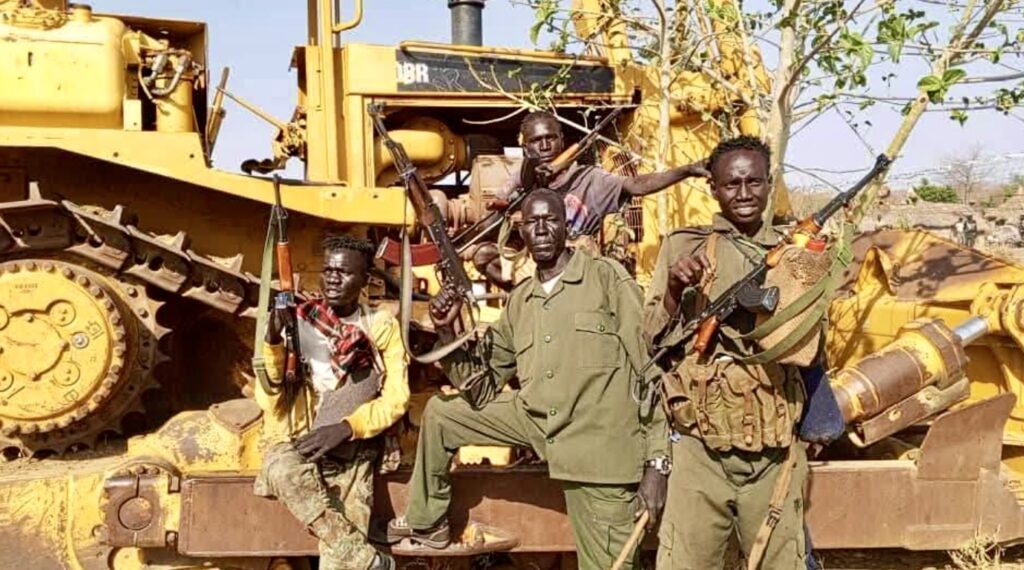
Ground combat has surged in the southern Blue Nile region since early April, signalling a sharp escalation in one of Sudan’s most sensitive border zones. Military movements have intensified across the Kurmuk, Baw, and Qaysan localities, ending a brief period of relative calm in late March. The renewed fighting has severely aggravated the humanitarian crisis for civilians trapped in the expanding conflict zones.
In the Kurmuk province, the areas of Kili and Sali have become the focal points of violent confrontations as warring factions vie for control of strategic positions. On April 24, a joint force comprising the Rapid Support Forces (RSF) and the Sudan People’s Liberation Army launched a coordinated assault on Kili. Local sources report that after hours of intense fighting, Sudanese Army forces withdrew, leaving the RSF forces in control of the area.
At the same time, a separate attack hit the Sali area, located about 27 kilometres from Kurmuk. While the Sudanese Armed Forces (SAF) managed to repel the initial Saturday assault, control of Sali remains highly volatile. Since mid-January, the territory has frequently changed hands, with a renewed attack on the local army garrison reported as recently as Monday morning.
The human toll of this military tug-of-war is mounting rapidly. Ali Hajo, Secretary-General of the Blue Nile Civil Society Initiative, has described the situation in Kurmuk and its surrounding villages as “tragic.” The relentless nature of the fighting has left thousands of civilians caught in the crossfire or fleeing into precarious conditions.
In light of the violence, civil society leaders are urgently appealing for international intervention to rescue those trapped. With basic services failing and supply lines cut, the southern Blue Nile faces a looming humanitarian catastrophe as military operations show no signs of abating.
 2) Sudan’s ban on importing 64 goods sparks widespread criticism
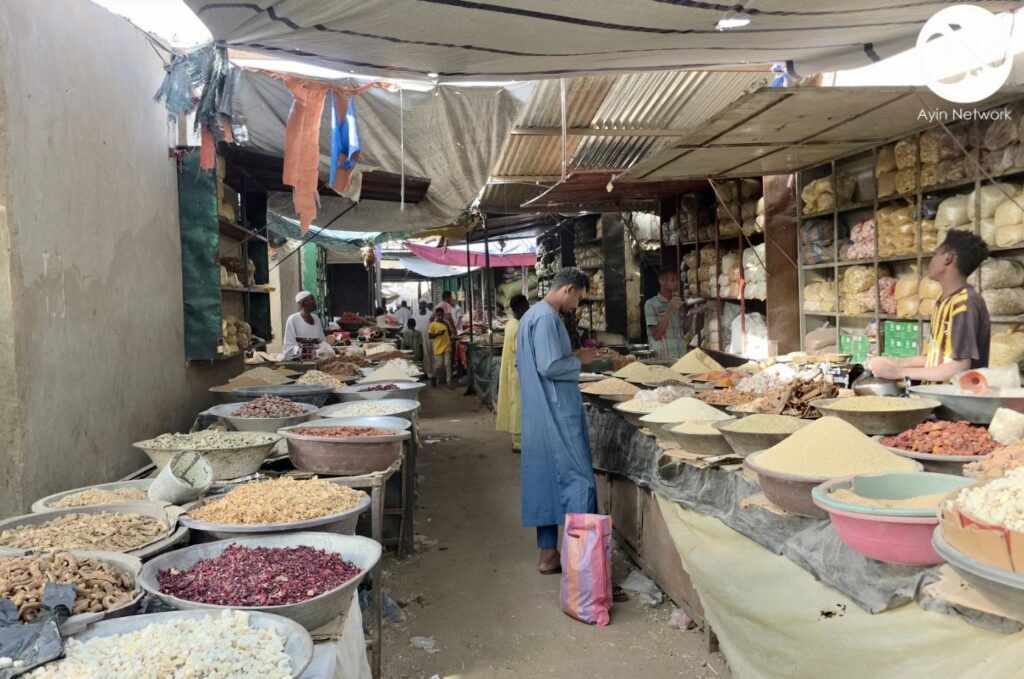
The military-led government in Sudan has imposed a sweeping ban on the import of 64 essential and consumer goods, a move aimed at stabilising the plummeting national currency. The list of prohibited items includes food staples like rice and tomato sauce, as well as industrial inputs and luxury items such as chocolate and biscuits. The decision has triggered immediate backlash, even from within the government itself.
The Ministry of Industry has registered a formal protest with the Council of Ministers, arguing that many of the banned goods are vital for the population and the local manufacturing sector. Sources indicate the ministry intends to legally challenge portions of the directive that Prime Minister Kamil Idris signed. Despite the ban, the Sudanese pound has continued its decline, depreciating to 4,100 pounds against the dollar.
The Israel-US attack on Iran has caused a 20% spike in the cost of fuel and essential imports due to the ongoing closure of the Strait of Hormuz.
Business leaders have been vocal in their condemnation of the new policy. Al-Sadiq Jalal Al-Din, head of the Sudanese Importers Chamber, labelled the move as “ill-conceived and harmful,” warning that it would foster a monopolistic market benefiting only a select few. He argues that restricting legal imports will only drive prices higher while doing little to protect the currency.
Economic analyst Mohamed Ibrahim suggests the ban is a superficial fix for a structural problem. Given Sudan’s porous borders, Ibrahim warns that the policy is likely to fuel large-scale smuggling from neighbouring countries. “The decision to ban imports may be a temporary solution, but given the current deteriorating situation, it is impossible to control imports because Sudan is one of the largest countries experiencing waves of smuggling of goods from neighbouring countries,” he said. Mohamed suggests that the government should instead focus on curbing gold smuggling and addressing the trade balance deficit, which is projected to reach $4.5 billion this year.
 3) Implementation of the lost property law threatens to sell thousands of looted cars
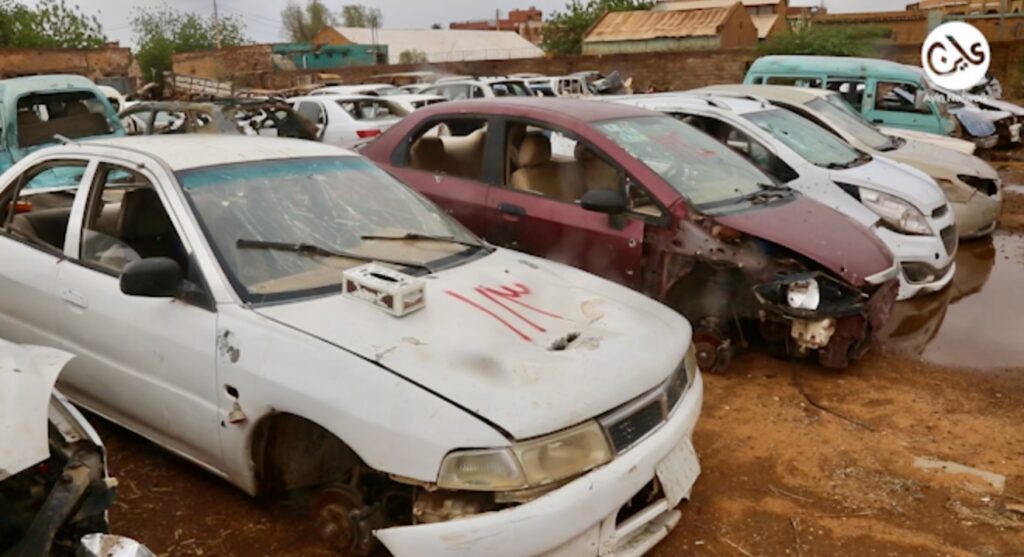
Sudan’s justice minister, Abdullah Darf, has announced the enforcement of the “Lost Property Act” and the 1991 Criminal Procedures Law to dispose of thousands of vehicles currently held in government-designated sites. The move affects vehicles collected across five states, including 38 locations within the capital, Khartoum. Under these laws, assets not claimed within a specified period—ranging from six months to a year—will be auctioned off.
The “Lost Property Act”, a colonial-era law dating back to 1905, allows the state to sell unclaimed property after one year of police notification. Minister Darf confirmed that an electronic platform will be launched to help owners identify their vehicles via data compiled by the Criminal Evidence Police. He emphasised that the process aims to manage “scrap iron and war remnants” while theoretically preserving owners’ rights.
However, the plan has met with stiff legal and public opposition. Legal analyst Othman Al-Basri argues that applying these laws is inherently unfair given the current state of mass displacement. With millions of Sudanese living as refugees or internally displaced persons, many owners are physically unable to access the proposed electronic platform or travel to the collection sites to claim their property.
The scale of the issue is immense. Official reports from the Ministry of Interior suggest 153,000 vehicles have been reported lost since the conflict began, but unofficial estimates place the number as high as 700,000. Armed groups, particularly the Rapid Support Forces, allegedly looted most of these vehicles during the height of the urban combat in Khartoum.
Critics fear the government’s timeline is too aggressive for a population in crisis. Al-Basri warns that the “exceptional circumstances” of the war should preclude the use of standard property laws, as many citizens risk losing their most valuable remaining assets simply because they cannot navigate the bureaucracy while fleeing for their lives.
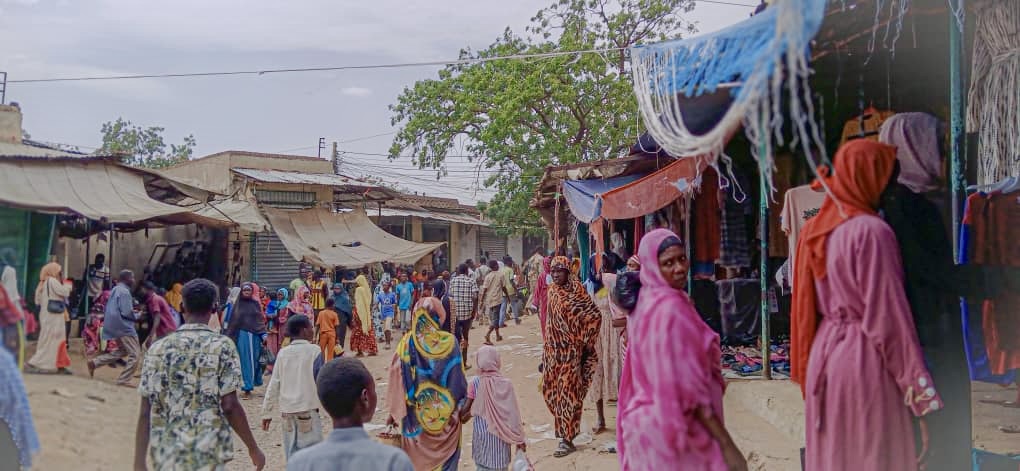 4) Five civilians killed in bombing of Dilling city
The city of Dilling in South Kordofan State has faced a deadly surge in aerial and artillery attacks, resulting in the deaths of at least five civilians. While ground assaults have decreased in frequency, drones and long-range shelling are increasingly targeting the city. A drone strike on residential neighbourhoods Sunday morning claimed the lives of five people, including Al-Siddiq Khalid Bakhit, a well-known local preacher and activist.
The artillery fire, which also caused significant property damage and fires in the Al-Toumat neighbourhood, is believed to have originated from the nearby Faraqal or Al-Kadar areas. A mix of Rapid Support Forces and Sudan People’s Liberation Army (SPLA) troops currently holds these locations. The 54th Brigade of the Sudanese Army maintains control of Dilling, but various factions besiege the city from almost all directions.
Compounding the violence is a “near-total collapse” of the local health sector. Emergency workers in Dilling report a severe shortage of essential medicines and basic services, meaning that even minor injuries from the shelling can become life-threatening. The security deterioration has made the delivery of medical supplies nearly impossible.
Despite the ongoing siege, there was a brief moment of resilience as 577 students returned to Dilling after sitting for their Sudanese Certificate exams in Kadugli. Educational facilities in Dilling have been shuttered for two years due to the constant threat of violence, forcing students to travel through dangerous territory just to complete their schooling.
The 2026 examinations were held under extreme conditions across South Kordofan, with over 8,800 students participating despite the war. The successful return of the Dilling cohort highlights the determination of the local population to maintain some semblance of a future, even as their city remains a primary target in the escalating conflict.
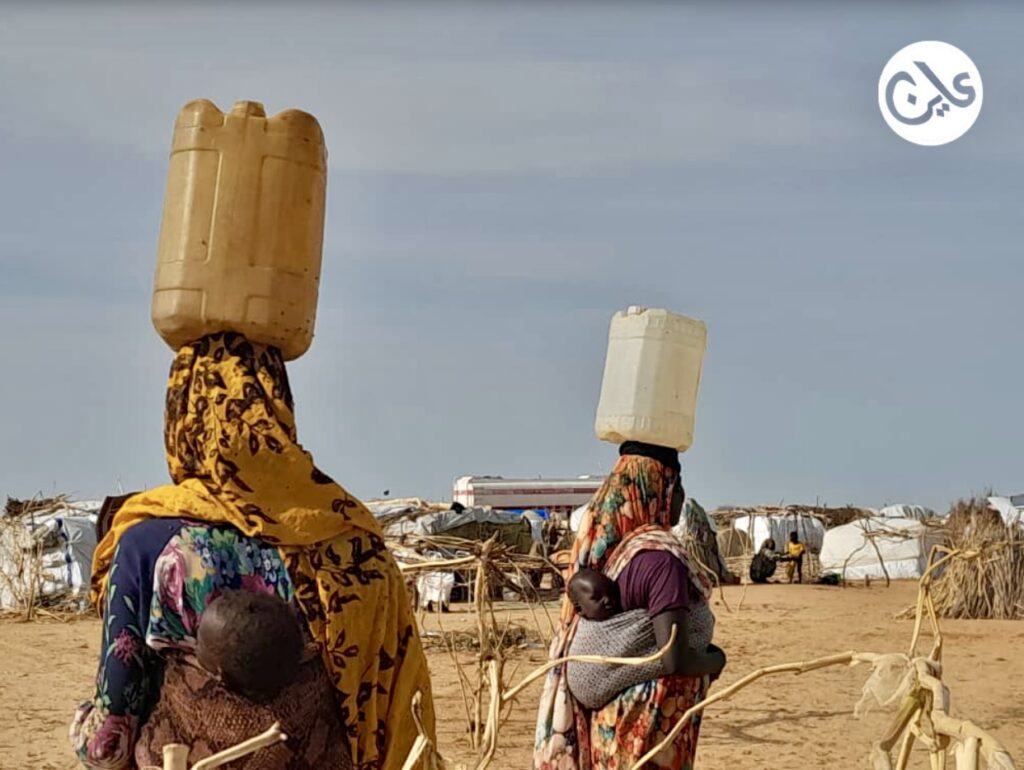 5) Difficult choices facing Sudanese refugees in Chad, including returning to Darfur
Sudanese refugees in eastern Chad are facing a harrowing ultimatum: endure starvation in overcrowded camps or risk their lives by returning to the war-torn Darfur region. Humanitarian volunteers report that conditions in the camps deteriorated sharply between March and April 2026. A massive funding shortfall has forced UN agencies to suspend vital aid, leaving approximately 600,000 people without adequate food or healthcare.
The United Nations recently announced the suspension of aid after its 2026 humanitarian response plan received only 30% of the required $2 billion. Although an international conference in Berlin pledged $1.2 billion in mid-April, experts warn that these funds often take months to materialise—if they arrive at all. In the meantime, the price of basic goods like flour and sugar has reached exorbitant levels due to the global economic crisis.
Volunteer Aisha Hussein notes that many refugees are now planning to return to Darfur to resume farming. “The people in the Chadian camps feel that the hunger is unbearable,” she explained. These families are fully aware that Darfur remains a volatile combat zone, but they view the prospect of self-sufficiency as a better gamble than watching their children starve in the camps.
The security situation in Darfur remains grim, with the Rapid Support Forces increasingly using drones to target civilian areas. Despite these risks, the lack of international support has left refugees with few other options. Many feel abandoned by the global community, noting that the world is ignoring basic human rights as it diverts its attention elsewhere.
As the planting season approaches, the trickle of refugees returning to Darfur is expected to grow. Humanitarian workers warn that without immediate funding to resume aid in Chad, this “reverse migration” could lead to a significant increase in civilian casualties as families walk back into the heart of the conflict.
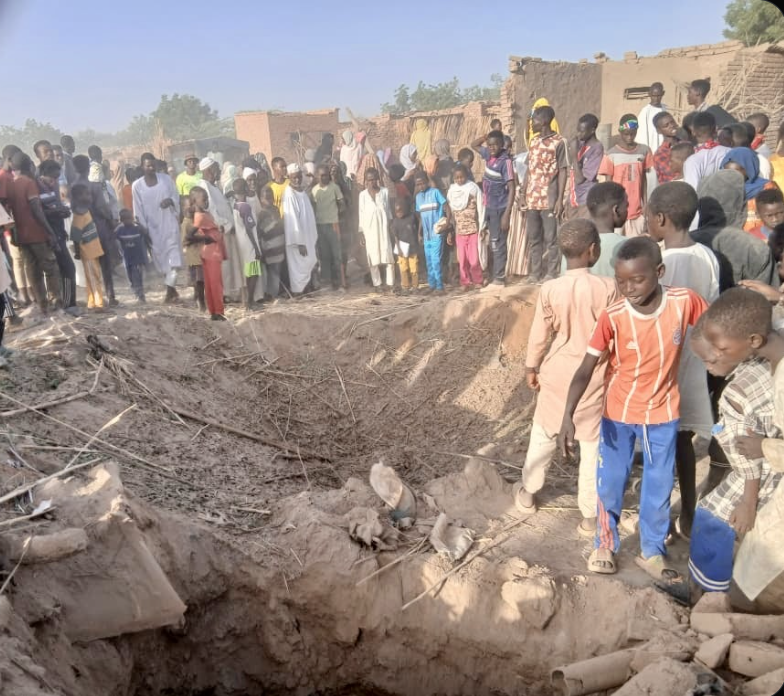 6) Civilians killed and humanitarian aid convoy destroyed in airstrikes in Darfur
A series of devastating drone strikes across the Darfur region has left several civilians dead and destroyed a critical humanitarian aid convoy. On Sunday and Monday, aerial attacks hit various locations, including the Hamidiya camp for displaced persons in Zalingei. The human rights group “Emergency Lawyers” confirmed that shells struck homes within the crowded camp, killing six civilians and injuring dozens more.
The bombardment extended to North Darfur, where a drone struck a truck belonging to the United Nations High Commissioner for Refugees (UNHCR). The truck was transporting emergency shelter kits intended for 1,300 families in the Tawila area. The destruction of these supplies has left over 700,000 displaced people in the region without essential protection as the security situation continues to crumble.
The UNHCR has condemned the attack as a clear violation of international humanitarian law, which demands a strict distinction between military targets and civilian aid. The “Darfur Displaced Persons and Refugees Coordination Office” echoed these sentiments, describing the pattern of targeting markets, medical centres, and relief convoys as a series of war crimes designed to hinder life-saving assistance.
The use of drones has become a primary feature of the conflict in 2026. The United Nations recently warned that over 500 civilians have been killed by airstrikes in just the last three months, with the majority of casualties occurring in the Kordofan and Darfur regions. These attacks have created a climate of constant fear for the millions of displaced people seeking refuge in these areas.
As the conflict intensifies, international agencies are reaching a breaking point in their ability to operate in western Sudan. With aid infrastructure under systematic attack, humanitarian workers warn that the population is intentionally being starved of the resources needed to survive the ongoing war.
 7) Armed robberies of travelers between West Kordofan and El Obeid have escalated
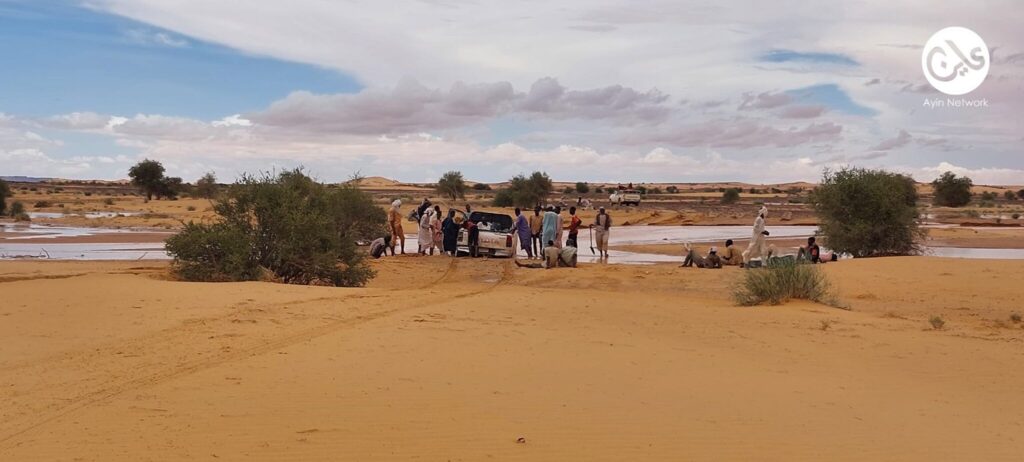
Travellers moving between the RSF-controlled areas of West Kordofan and the army-held city of El Obeid are facing a surge in violent armed robberies. Victims arriving in El Obeid have reported being intercepted by armed groups operating from combat vehicles. These gangs frequently beat travellers, rob them of cash and personal belongings at gunpoint, and often humiliate them in public.
The primary travel routes, such as the “White Road”, have become so dangerous that many citizens are forced to use rugged, unofficial smuggling paths. While these routes bypass the main checkpoints, they expose travellers to extreme physical exhaustion and put them at risk of specialised forest gangs preying on them. The journey has become a gauntlet of both military and criminal threats.
Political restrictions further complicate the movement of civilians. The Rapid Support Forces (RSF) have reportedly begun preventing young men from travelling to army-controlled areas, often detaining them at checkpoints for ransom. This has created a lucrative “kidnap-for-hire” economy that targets families already struggling to survive the economic collapse.
The financial cost of travel has skyrocketed as a result of the insecurity. A ticket from Ghabish to El Obeid now costs approximately 600,000 Sudanese pounds ($150), a five-fold increase from pre-war prices. For the average Sudanese citizen, these costs are prohibitive, effectively trapping them in zones where basic services are non-existent.
With the total collapse of education and healthcare in West Kordofan, residents feel they have no choice but to attempt the journey to larger cities like El Obeid or Khartoum. However, as the roads become increasingly lawless, the quest for basic services has turned into a life-threatening gamble for thousands of families.
 8) Drones target El-Obeid amid calm on the military ground operations front
The city of El Obeid in North Kordofan was rocked by a drone attack on Saturday that killed at least seven civilians and injured 22 others. The strike occurred during a period of “cautious calm” on the ground, where fierce battles between the Sudanese Army and the Rapid Support Forces had recently subsided along the road to Dilling.
Despite the lull in ground combat, the skies over North Kordofan are now dominated by drones from both warring parties. This “aerial siege” has paralysed movement in the region, with residents of nearby towns like Al-Dubaibat and Habila fleeing their homes for fear of being targeted from above. Local sources report that even military vehicles have largely disappeared from the roads to avoid detection by the constant drone presence.
The impact on El Obeid’s infrastructure has been severe. Recent strikes have hit the University of Kordofan, completely destroying one of its halls, and the British Hospital, where 12 people—including medical staff—were injured. Additionally, a targeted strike on the local power station plunged the city into total darkness for several days, cutting off essential services.
The Sudanese Doctors Network has condemned the repeated targeting of residential areas, noting that the civilian toll continues to rise even when no active ground fighting is taking place. The use of drones has effectively extended the reach of the war into the heart of the city, making daily life a high-stakes survival challenge for those who remain.
As the warring factions shift their tactics toward remote aerial warfare, the humanitarian situation in El Obeid remains precarious. While the ground front is currently quiet, the constant threat from the sky suggests that the “calm” is merely a transition into a more tech-driven and equally deadly phase of the conflict.