

Analysis: When the sky no longer belongs to the army
By Eiad Husham
19 December 2025
For much of Sudan’s modern history, control of the air has marked the boundary between state power and insurgency. The Sudanese Armed Forces (SAF) held aircraft, radars, and air defences. Armed groups moved on the ground, fast and lightly equipped, compensating for their vulnerability with mobility and brutality. That division has now collapsed.
As Sudan’s war moves into its third year, the paramilitary Rapid Support Forces (RSF) are no longer operating as a purely ground-based force. Instead, they are emerging as technologically empowered actors, deploying advanced drones, electronic warfare systems, and layered air defences that challenge the army’s long-time monopoly over the skies.
This shift is not cosmetic. It marks a structural transformation of the conflict itself. The RSF’s growing access to high-end military systems has altered how battles are fought, how territory is held, and how civilians experience violence. What was once a war of numbers of soldiers and manoeuvrability is increasingly defined by sensors, signal denial, and airspace contestation.
The consequences for civilians are already severe. As weaponry becomes more precise and more disruptive, the margin for civilian survival shrinks. Drone surveillance expands the battlefield far beyond frontlines, while electronic jamming silences phones, radios, and emergency communication networks.
These developments fundamentally impact the army’s operational doctrine. Air superiority has been its primary advantage, enabling resupply, reconnaissance, and targeted strikes. That advantage is now under direct threat. RSF units are no longer merely evading air power; they are actively contesting it.
The war is entering unfamiliar territory. Sudan has never before seen a non-state or quasi-state actor deploy this level of integrated military technology across multiple domains. The result is a conflict that is more complex, harder to contain, and potentially far more destructive.
Drones
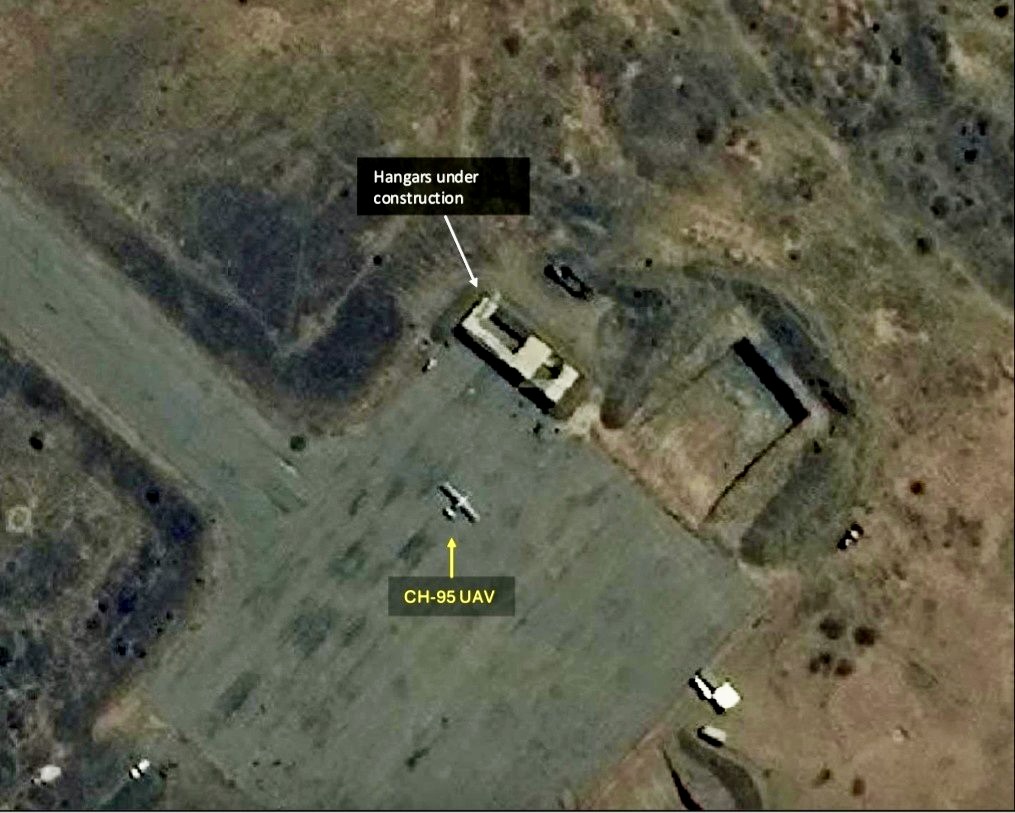
At the centre of the RSF’s technological leap is its drone programme, which is anchored by the deployment of Chinese-made CH-95 unmanned aerial vehicles at Nyala Airport in South Darfur. Ayin’s review of satellite images reveals the presence of several CH-95 drones, indicating a significant improvement in the RSF’s operational capabilities.
The CH-95 is not a rudimentary drone. Designed for long-endurance missions, it can remain airborne for up to twelve hours and operate hundreds of kilometres from its launch site. Its payload capacity allows it to carry reconnaissance systems, communication relays, radar equipment, and precision-guided munitions. This combination enables persistent monitoring of enemy movement and the ability to strike targets well beyond immediate frontlines.
What makes the system particularly suited to Sudan’s war is its resilience. The CH-95 has been tested under extreme environmental conditions, including severe dust storms, high winds, and heavy rain. In a theatre where weather often grounds conventional aircraft, this durability gives the RSF a crucial operational advantage.
Yet drones alone do not explain the transformation underway. Equally significant is the RSF’s growing use of electronic warfare, which is reshaping how information flows—and fails—across the battlefield.
Jamming
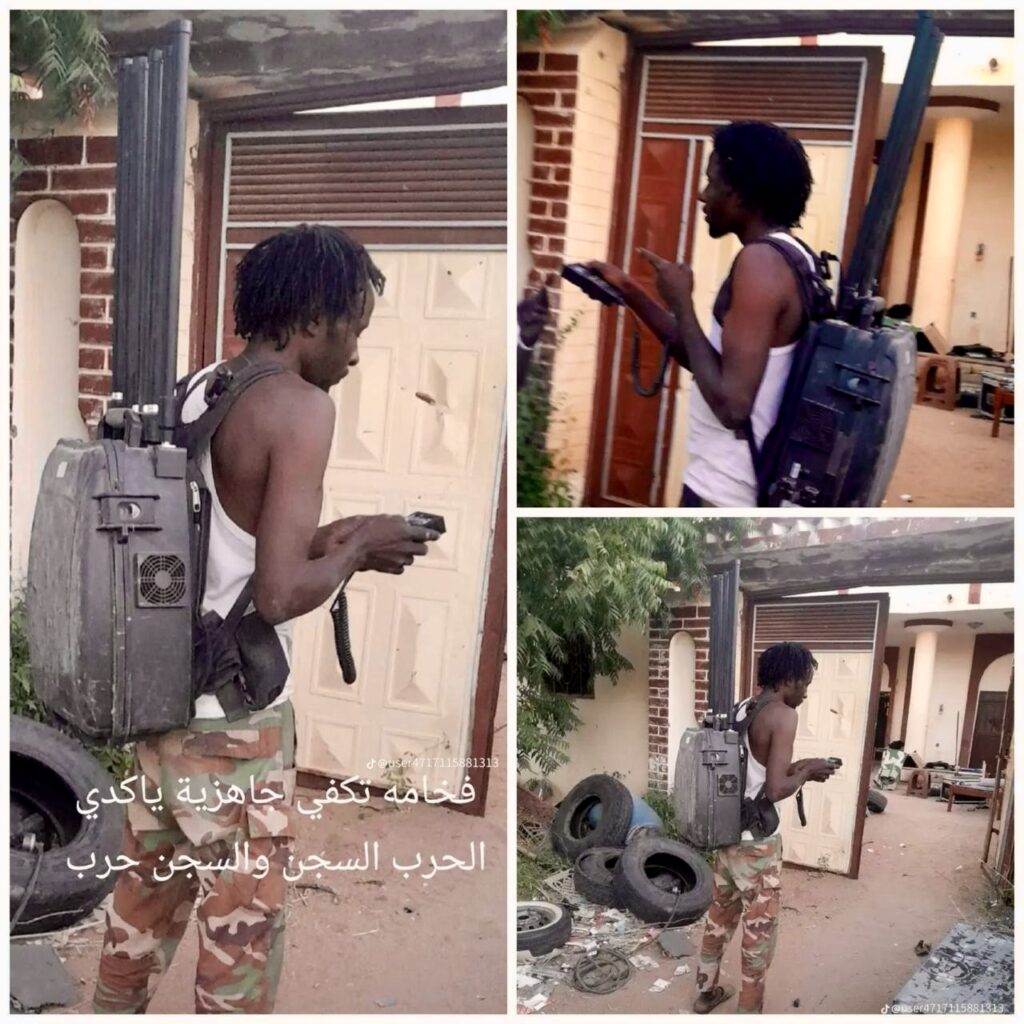
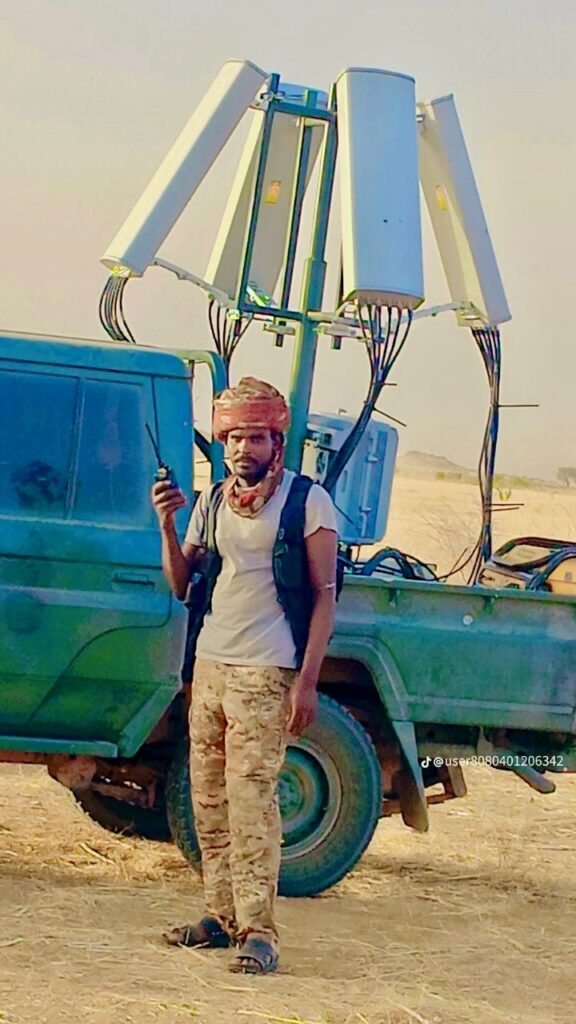
Two distinct jamming systems now form part of RSF operations. The first is a backpack-mounted unit designed for tactical use. Portable and concealable, it allows small RSF units to disrupt enemy drones, interfere with short-range communication, and deny SAF units real-time intelligence. In dense urban environments or remote areas, this capability can neutralise an opponent’s situational awareness within minutes.
The second system operates on a larger scale. Mounted on four-wheel-drive vehicles, it is capable of jamming multiple communication bands, including mobile phone networks, across wide areas. Built for continuous operation in extreme heat, it provides a sustained signal disturbance that can cover entire neighbourhoods or operational zones.
Together, these systems create a layered electronic shield. Drones operate overhead while jammers suppress enemy responses below. SAF pilots are forced to alter flight paths, change altitudes, or abort missions altogether. Ground units lose contact with command centres. Civilians, caught in between, suddenly find themselves unable to call for help, share information, or receive warnings.
Residents in RSF-controlled or contested areas describe these blackouts as deeply unsettling. Phones go dead without explanation. Internet connections vanish. Rumours spread faster than verified information, amplifying fear and confusion. For humanitarian responders, the effects are immediate and dangerous. Coordination becomes nearly impossible, and emergency referrals are delayed.
Air defences—redefining the war
The RSF’s technological expansion does not stop with drones and jamming. It now extends to air defence—an area once firmly monopolised by state militaries.
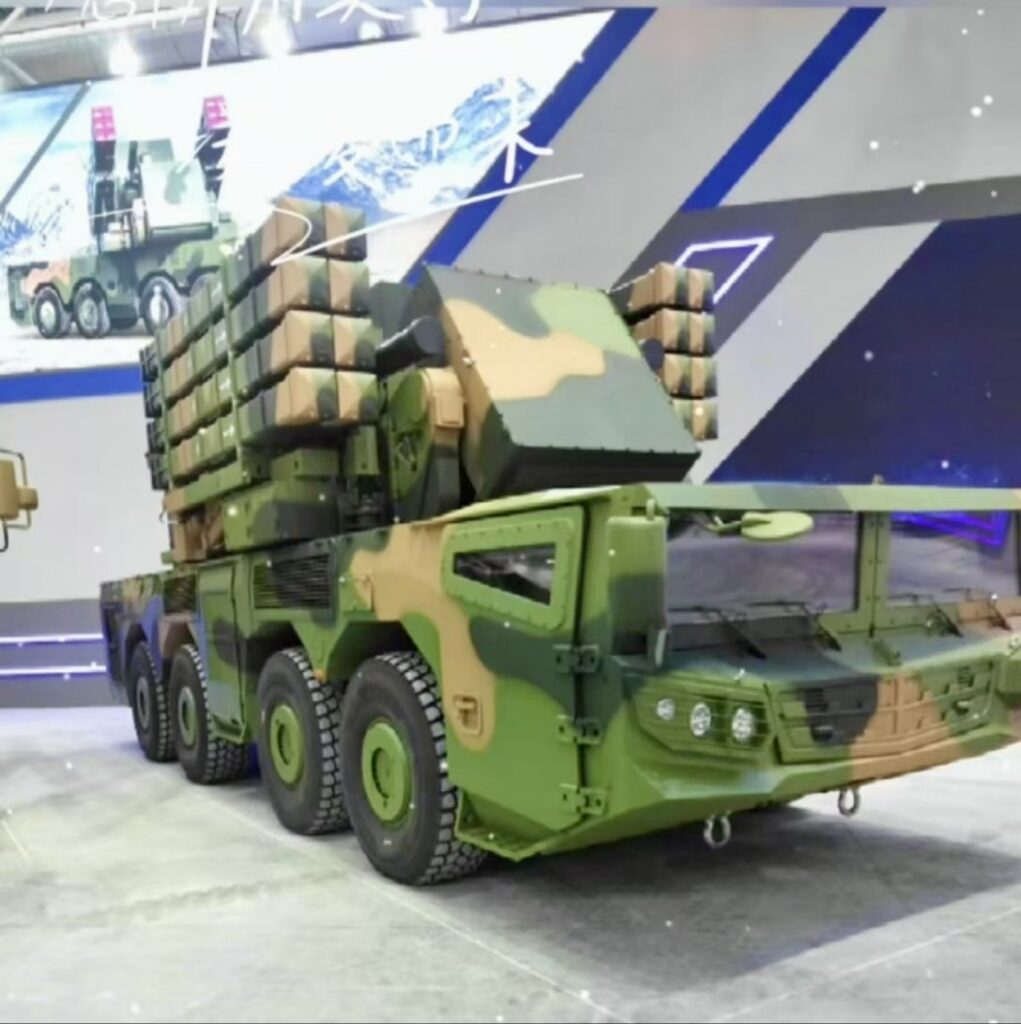
Among the systems reportedly in RSF possession is the FB-10A short-range surface-to-air missile platform. Designed to protect mobile units, the system integrates detection, tracking, and missile launch capabilities into a single vehicle. It can engage helicopters, drones, and low-flying aircraft, allowing RSF formations to operate under a protective umbrella even while on the move.
Complementing this device is the FK-2000 air defence system, a more complex platform that combines radar-guided missiles with rapid-fire cannons. Mounted on a high-mobility chassis, it provides layered protection against a range of aerial threats at significant distances. Along with man-portable air defence systems already in circulation, these platforms create a multi-tiered network that complicates SAF air operations.
The impact on SAF tactics has been immediate. Pilots are increasingly forced to fly higher, reducing strike accuracy. Reconnaissance missions become riskier. Air support—once decisive in holding supply lines and key positions—is no longer guaranteed. In effect, the RSF has imposed a cost on every sortie, altering the risk calculations that once favoured the SAF.
For RSF fighters, the psychological effect is profound; that confidence translates into more aggressive manoeuvring, longer territorial control, and a willingness to engage in sustained operations.
More technology, more political clout, conflict
At the strategic level, these developments reshape the war’s trajectory. Political power now comes from technological ability. The RSF’s ability to field advanced systems strengthens its bargaining position and signals readiness for a prolonged conflict rather than a war of attrition it is expected to lose.
For civilians, the implications are bleak.
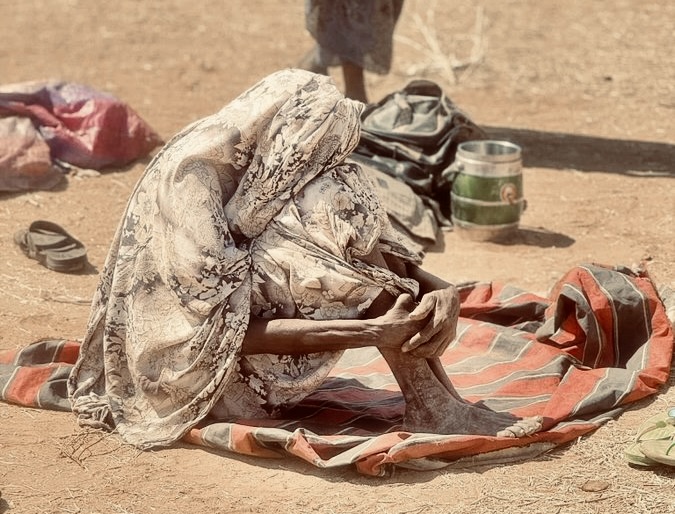
The spread of air defence systems increases the likelihood of contested airspace in populated areas. Drone surveillance expands the reach of violence. Electronic warfare disrupts the fragile networks that keep people alive during siege and displacement. As humanitarian access shrinks, the risk of famine and untreated disease grows.
Sudan’s war is no longer defined solely by who controls roads, cities, or numbers of fighters. It is increasingly about who controls the sky, the signals, and the flow of information. The RSF’s transition from a mobile ground force to a technologically integrated actor signifies a pivotal moment with no discernible way back.
A new form of war
A new phase of conflict in Sudan is rewriting traditional markers of military power. The RSF’s use of long-range drones, electronic jamming, and layered air defences has altered the balance between state and paramilitary forces, eroding assumptions that once defined the war.
The transformation is not merely tactical. It reshapes civilian survival, humanitarian access, and the political calculus of negotiation. As technology becomes a major cause of violence, the war becomes harder to understand, less predictable, and more deadly.
In Sudan, the current conflict is not just an escalation but a redefinition of warfare, where dominance is measured in control of the airwaves, the skies, and the invisible systems that govern modern war. For those living beneath that contested sky, the cost is counted not in strategic gains, but in silence, fear, and lives increasingly beyond protection.