


Selling Sudan’s ports: Saudi Arabia and Qatar as the main bidders
21 January 2025
Desperate for foreign investment and eager to rebuild the country’s shattered infrastructure, the military government in Port Sudan has offered the country’s eastern ports to both Qatar and Saudi Arabia.
In mid-January, Finance Minister Jibril Ibrahim said the government is eyeing deals for Red Sea ports and private investment to help rebuild infrastructure. Jibril acknowledged the terrible economic position, citing a significant drop in gold and oil earnings as a result of the violent battle between the army and the Rapid Support Forces.
Last year, the Sudanese military-backed government cancelled a memorandum of understanding signed with the United Arab Emirates to acquire the Abu Amama port on the Red Sea coast, accusing Abu Dhabi of aiding the Rapid Support Forces (RSF).
Economic analyst Mahasin Osman told Ayin that Finance Minister Ibrahim is keen to raise money to revive basic services in the capital, Khartoum, potentially through dubious port deals. Ensuring such an investment, however, will not be simple. “Sudan has not seen successful investments for many years because it is linked to corruption and mismanagement, including the army’s ambitions to take absolute power in this country, denying state institutions [any] control over public funds,” Osman said.
The war effort vs. investment
Given the high costs of the war, economists remain sceptical that any port investment will lead to much-needed reconstruction investments. Mohamed Ibrahim, an economic researcher, says the government has set projections of up to $2.5 billion for military spending in 2026, while the state’s main revenue source, gold, may only bring in $800 million during the same period. “While Saudi investments in the port could prove high,” trade researcher Badri Mukhtar says, such revenues will likely be consumed by “the war machine that devours everything.”
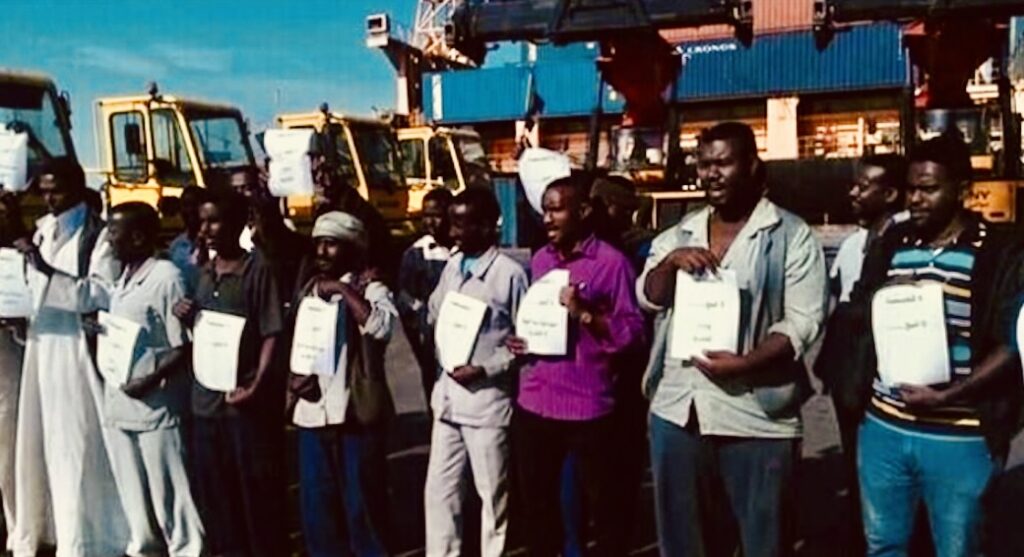
Leaders of the country’s eastern trade unions remain concerned about the repetition of “failed models” for offering major ports to foreign investors, implying that the matter is nothing more than the current government’s attempt to find easy financial resources. Mohammed Hussein, a former member of the port’s labour union, told Ayin that the shift to the Saudi or Qatari private sectors was an attempt “to escape the financial crisis” and little else.
Hussein noted that the northern and southern ports have deteriorated significantly, as the finance ministry wants to collect revenues in hard currency without investing a single dollar on crane maintenance or workplace improvements. Poor management and infrastructure have affected Sudan’s ports, including repeated bridge and crane breakdowns, Hussein added After taking office in May 2025, the Ports Authority Director told Prime Minister Kamil Idris that overlapping jurisdictions and institutional disputes were reducing the facility’s efficiency.
In contrast, political economist Ahmed bin Omar believes that the government has the right to extend its import network by building ports with foreign investment. He told Ayin that the ports are a “strategic card” in the Red Sea power struggle. However, he emphasised the importance of passing these treaties through a legal parliament to prevent past mistakes from repeating themselves.
Regional influence
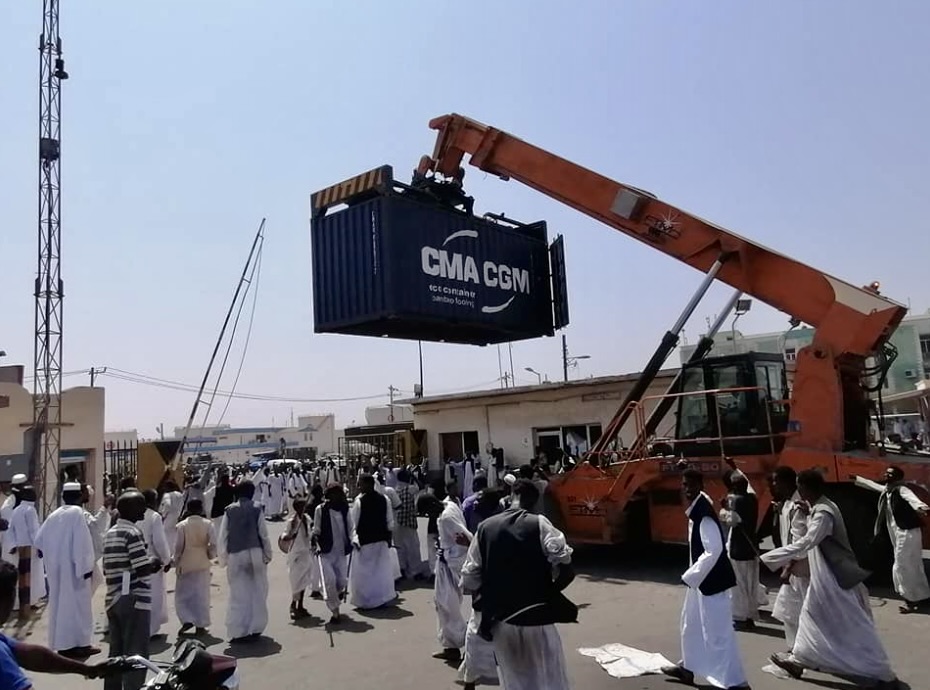
Sudanese ports have entered a regional “competition arena” that is no longer restricted to commercial shipping but now includes establishing influence to safeguard the region’s security. Saudi Arabia has recently emerged as a major player in this sport. Mukhtar believes Khartoum will favour the Saudi arrangement over Qatar, given Riyadh’s significant interest in protecting the Red Sea and connecting it to Jeddah’s ports. Mukhtar says the Qatari offer is not new, having been launched in 2017 to build the largest cargo port, but it was halted due to political turbulence under the administration of ousted President Omar al-Bashir.
Omar believes Sudanese ports are of political interest to the Saudi Kingdom to help them establish a new regional alliance with Sudan, Somalia, Egypt, and Eritrea. The foundation of the “Sudan-Saudi Arabia High Council” in mid-January, he says, may lead to deeper economic cooperation, playing a key role in bilateral investment. He points out that, while Abu Dhabi has offered $6 billion in 2022 for projects related to the Abu Amama port, Saudi Arabia is capable of giving a significantly higher sum.