Opinion: Peace first, politics later – Why Sudan’s peacemaking keeps failing?
The views expressed in this opinion piece are those of the author and do not necessarily reflect the official policy or position of the Ayin Network.
4 December 2025
In the labyrinth of Sudan’s protracted crisis, any credible initiative aimed at resolution must be anchored in a logical framework that sequences priorities to achieve its professed ends. Foremost among these must be the immediate cessation of active fighting and the safeguarding of Sudanese civilians from the devastating repercussions of the war before delving into the morass of political intricacies.
Yet, certain political actors and factions persist in erecting barriers by demanding preemptory political conditions, securing partisan advantages, and cynically leveraging the horrors of atrocities as bargaining chips in a game of self-interested score-settling. This approach not only obstructs the path to peace but also transforms human suffering into a currency for narrow ideological gains.
The latest proposal from the Quad mechanism—comprising the United States, Egypt, Saudi Arabia, and the United Arab Emirates—exemplifies this flawed paradigm. The initiative imposes a precondition that undermines its coherence, and it is hindered by Quad’s inherent structural deficiencies, particularly the inclusion of the UAE, a country that is deeply involved in providing substantial support to the Rapid Support Forces (RSF) militia, which prolongs the ongoing war. It predicates progress on the exclusion of Islamists from the post-war political landscape, a landscape that remains unformed and hypothetical.
Regardless of the merits or legitimacy of this demand, it fundamentally contradicts the Quad’s self-articulated progression: transitioning from a humanitarian truce to a durable ceasefire, and only then initiating a political process. This inversion raises profound questions about the rationality and integrity of advancing Islamist exclusion as a sine qua non.
The attempt by some circles to exploit the revolutionary fervour that toppled the Islamist regime in order to recast RSF as a vanguard of civil and political rights is an exercise in intellectual obfuscation. The RSF itself was forged as an instrument of political repression and genocidal campaigns under the very Islamist apparatus it now ostensibly opposes.
The rhetoric surrounding Islamists has been weaponised since the war’s eruption in 2023, serving to rationalise alliances between certain factions or harmonise their media narratives with those of the Rapid Support Forces. Subsequently, the UAE appropriated this discourse to retroactively justify its overt backing of the militia, as mounting evidence rendered denial untenable. While there exist credible indications of Islamist influence within the Port Sudan governmental camp, the inferences drawn from this fact lack logical rigour. Sudanese Islamists are, above all, Sudanese citizens entitled to align with the government and its armed forces. It is a stance that is not exclusive to them but shared by a predominant current within the Sudanese people, who rally against the RSF’s unprecedented violations, from the occupation of Khartoum to the genocide in El Geneina, the invasion of Gezira State, and the recent barbarities in El Fasher.
The attempt by some circles to exploit the revolutionary fervour that toppled the Islamist regime in order to recast RSF as a vanguard of civil and political rights is an exercise in intellectual obfuscation. The RSF itself was forged as an instrument of political repression and genocidal campaigns under the very Islamist apparatus it now ostensibly opposes. In contrast, the Sudanese Armed Forces—and its current leadership in particular—played a pivotal role in deposing Omar al-Bashir’s regime in 2019. The 2021 coup, meanwhile, implicates both the army and the RSF in equal measure.
Furthermore, the narrative that the RSF is the ideological opposite of Islamism conveniently ignores a more important fact: a large number of former Islamist regime figures, both political and security operatives, are now part of the RSF’s command and operational structures. Prominent examples include Hasbu Abdul Rahman, Bashir’s erstwhile vice president and a pillar of the Islamist movement, who has provided direct political and logistical support to the militia’s expansion; Taha Osman al-Hussein, former director of Bashir’s office and a linchpin in Gulf security networks, now integral to the RSF’s network of external relations; and others such as El Basha Tabig, the militia’s advisor, who was until recently leading the Islamists demonstrations against the transitional government in Sudan, Al-Fatih Qarshi, the RSF spokesman who was a notorious Bashir-era security cadre, and Abdul Ghafar al-Sharif, the ex-political security chief and his current role in procurement of arms and weapons to the RSF militia.
Opposition to the Islamist regime in Sudan was fundamentally rooted in its foundations of corruption, political despotism, and unrestrained violence. These are precisely the attributes that the RSF has epitomised in its anarchic takeover of the country, offering the most egregious model of governance through chaos yet witnessed.
The presence of these ex-officials from the previous Islamic regime inside the RSF is not merely anecdotal; it has been registered in sanctions notices and UN Panel of Experts reporting tied to the conflict’s external linkages. Naming these links does not absolve political Islamists of criticism; it does nullify the simple binary that is used to frame the RSF war against the Sudanese government and people as a struggle against political Islam.
The persistence of this vendetta-driven politics—wherein the RSF, its Emirati patrons, and segments of Sudan’s civilian forces invoke Islamists as a perennial bogeyman to secure the militia’s ideological foothold as a counterweight to political Islam—betrays a deliberate disregard for historical logic. Opposition to the Islamist regime in Sudan was fundamentally rooted in its foundations of corruption, political despotism, and unrestrained violence. These are precisely the attributes that the RSF has epitomised in its anarchic takeover of the country, offering the most egregious model of governance through chaos yet witnessed. To prioritise such partisan exorcisms over the essential task of halting bloodshed is not merely strategically myopic; it perpetuates a cycle of fragmentation that consigns Sudan to enduring torment.
True resolution demands a return to disciplined sequencing: peace first, politics thereafter, lest the nation’s wounds fester indefinitely in the shadow of misplaced priorities. Let’s stop the killing before settling politics.
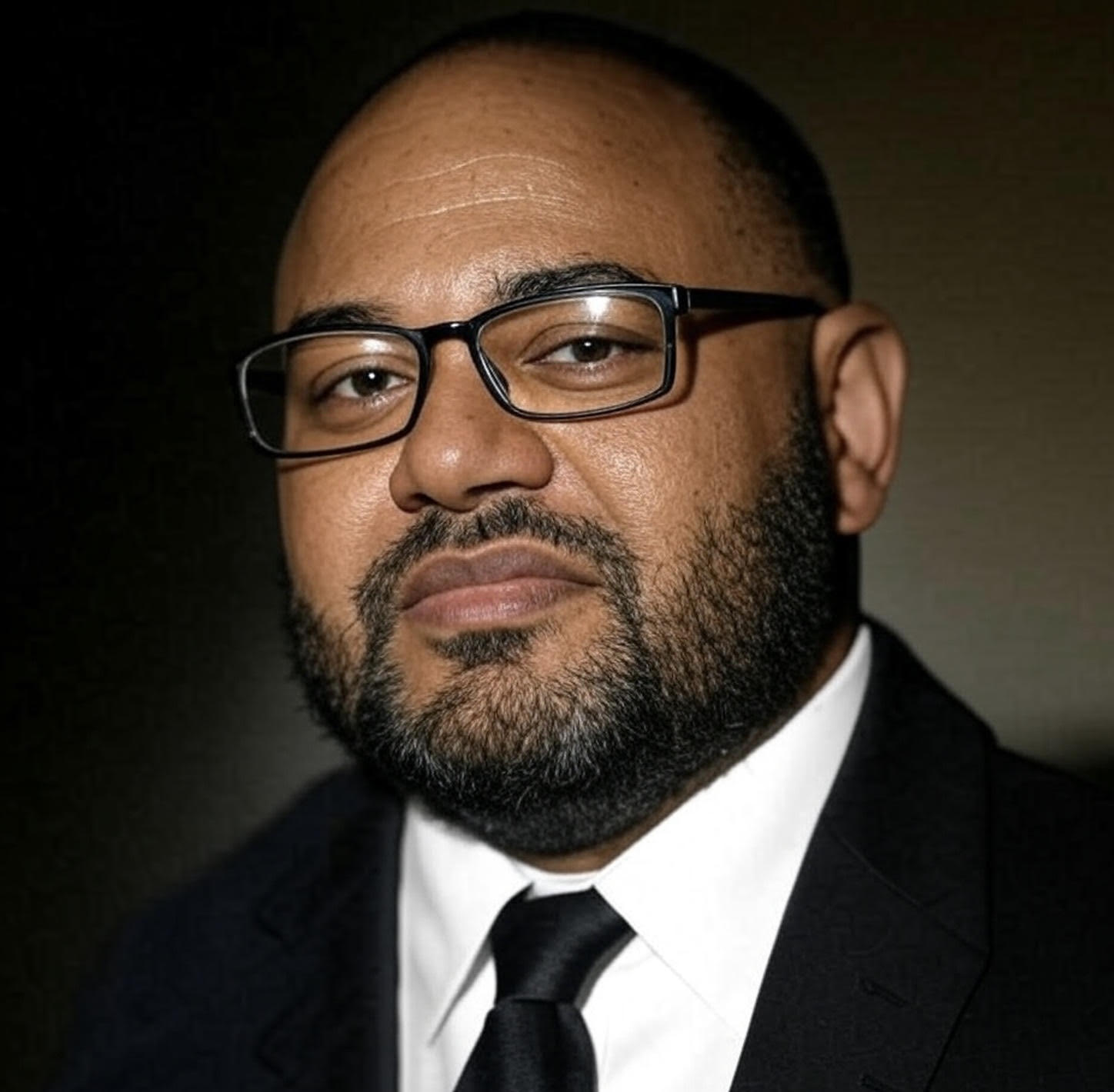
Khalid Mukhtar Salim is a Sudanese/Canadian political analyst based in Canada, known for his incisive critiques of Sudan’s post-2021 political landscape and external mediation dynamics. He can be reached at khalidmukhtarsalim@gmail.com.
Related Articles