


The war against the harvest
14 March 2026
Sudan’s war has moved beyond military frontlines, striking directly at the rural farming communities that sustain millions. Across Darfur, settlements have been destroyed and farmland abandoned, creating a deepening food crisis.
Satellite analysis by the Yale Humanitarian Research Lab found that 41 rural communities—predominantly inhabited by the Zaghawa ethnic group—north and west of El Fasher were intentionally razed between March 31 and June 12, 2024. Researchers assessed with high confidence that the paramilitary Rapid Support Forces (RSF) carried out the attacks.
Imagery revealed clear patterns of deliberate, systematic destruction, with burnt structures deliberately spaced apart. The violence was frequently repeated; of the 41 destroyed communities, ten were razed more than once, with one targeted at least seven times. Satellite data also recorded 504 thermal detections across the region in 2024, roughly 35 percent of which occurred within two kilometres of previously razed communities.
Because this razing occurred just before main farming activities intensified, satellite observations later showed significant disruptions to agriculture. Darfur historically produces between 15 and 25 percent of Sudan’s staple crops, meaning the abandonment of this farmland threatens food supplies far beyond the region itself.

Crops destroyed, farmers trapped in Darfur
Even in areas where villages remain standing, Darfur’s agriculture is collapsing. Farmers report that insecurity, violent disputes, and livestock invasions by pastoralist herders are making cultivation nearly impossible.
Fatima, a farmer near Kutum in North Darfur, managed to cultivate small plots of corn and peanuts. Last October, before the crops ripened, camels belonging to local herders trampled her fields in full view of the RSF forces controlling the town. While the RSF established a unit to protect the agricultural season, farmers say it has failed to resolve these disputes effectively.
Fatima said the RSF protection force eventually ordered herders to leave farms in November 2025, but by then much of the damage had already occurred. “The RSF’s agricultural season protection force ordered herders to evacuate the farms in November,” Fatima said. “But this approach does not allow some crops to reach full maturity and farmers are unable to complete harvesting.”

Abkar Adam, a farmer from Kabkabiya, described similar struggles with early livestock invasions.
“The herders have been invading our farms since October, which is early because the crops had not yet reached full maturity,” he said. “We had to carry a little of the crop to our homes and finish harvesting inside.”
Adam noted that while farmer-herder tensions are historic, the conflict has drastically escalated them. “We face severe suffering with the herders every year, but this season was the worst ever,” he said.
These disputes often escalate into violence. Across Darfur, clashes between farmers and herders between October and December resulted in at least 19 deaths. Farmers attempting to protect their harvests face assaults, threats, and the looting of their transport carts. Consequently, many residents fear they may have to completely give up farming altogether.
The war on agriculture in South Kordofan
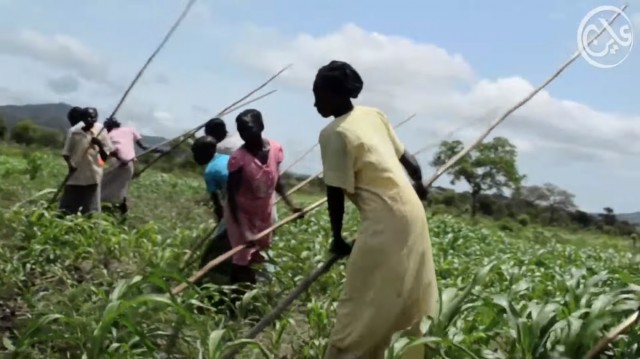
South Kordofan is experiencing a parallel agricultural collapse driven by intensifying military confrontations between the Sudanese Armed Forces (SAF) and forces aligned with the RSF and the Sudan People’s Liberation Movement-North (SPLM-N). The violence has forced thousands to flee to cities like Diling and Kadugli, leaving large agricultural areas uncultivated for a third consecutive year.
Omar Kajo, a resident of Kadugli, said communities have retreated to remote mountain areas for safety, cultivating small quantities merely for household survival rather than the large fields that once fed the region.
For Kajo, the early signs of famine have already begun, and he fears the future. “The start of last year’s planning season coincided with widespread security disturbances in South Kordofan State,” Kajo said. “This led to a significant decrease in the amount of land under cultivation [and] pales in comparison to the population’s requirements.”
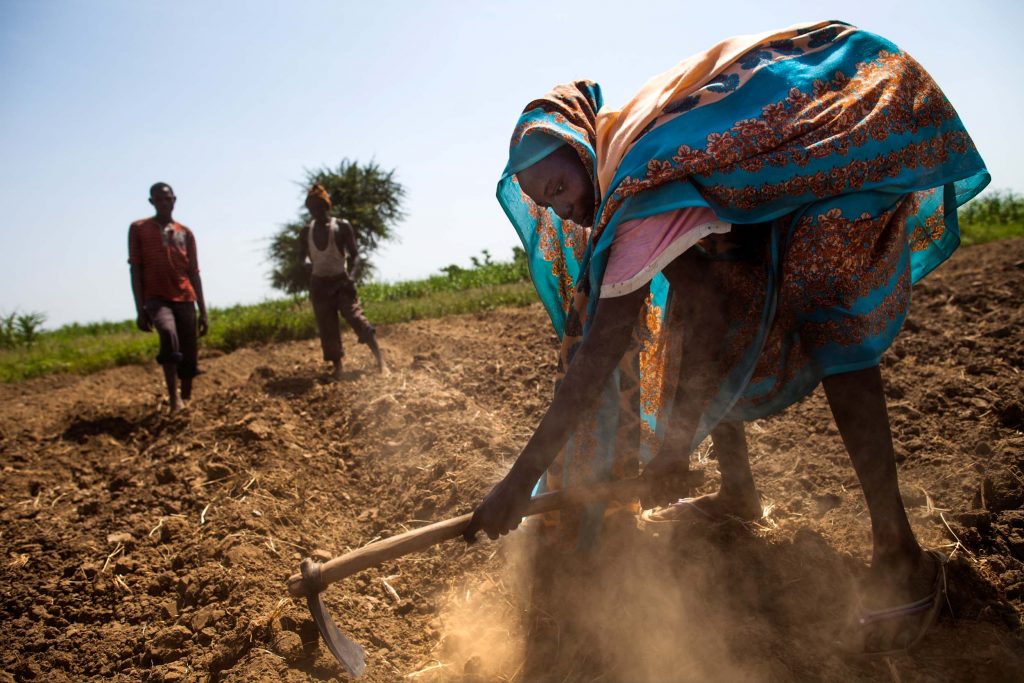
In the northeastern area of Al-Abbasiya, farmers have adopted “Al-Jabraka”—the practice of farming tiny plots right next to their homes for safety. Yet, even these plots are targeted. Fathi Jabrallah, a local resident, noted that RSF fighters attacked farmers at the start of the season.
“With the start of the agricultural season last June, armed men from RSF attacked farmers near Al-Abbasiya during land preparation operations,” Jabrallah said.
The fighters seized a tractor, fired shots, and warned residents not to farm, only returning the machinery after residents paid a 300,000 Sudanese pound extortion fee.
Further south in the Nuba Mountains, Munim Karuru, a farmer in Kartal, estimates that 30 to 40 percent of farmland has been affected. Severe economic challenges compound the insecurity; the price of gasoline has soared to 140,000 Sudanese pounds per jerrycan, rendering tractors unaffordable. Major producers who once planted up to 1,000 acres are now forced to cultivate small patches manually, rarely travelling more than 10 to 15 kilometres from their homes.
No farming, more famine
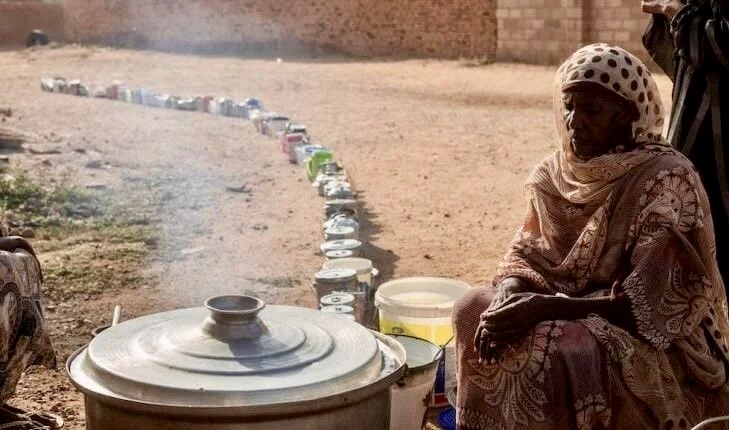
According to food security expert Dr Timmo Gaasbeek, farming in Sudan constitutes roughly ⅔ of all food consumed by the public. “Farming is critical for food supplies; we tend to focus on international aid, which is also important, but farming in Sudan is key,” he told Ayin. Gaasbeek says the Darfur and Kordofan regions are particularly prone to famine due to the dearth of food being delivered from eastern Sudan across the Nile to western regions.
Across Darfur and South Kordofan, Sudan’s conflict is steadily dismantling the country’s agricultural foundations. The systematic burning of villages, the militarisation of land disputes, and the forced abandonment of fields are deepening the humanitarian crisis, turning the war into a desperate struggle over food and survival.