

Sudan’s war caught in the Ethiopia-Eritrea crossfire
1 September 2026
Sudan’s war is increasingly becoming intertwined with the longstanding rivalry between Ethiopia and Eritrea, diplomatic sources told Ayin, raising fears that renewed tensions between Addis Ababa and Asmara could further regionalise the conflict.
Three sources familiar with the region’s diplomacy told Ayin that Ethiopian officials have expressed growing concern over Lt-Gen Abdel Fattah al-Burhan’s military and political relationships with Eritrea, Egypt and the Tigray, accusing the Sudanese Armed Forces (SAF) leadership of interfering in Ethiopian security affairs. At the same time, mounting evidence suggests the Ethiopian authorities are supporting the national army’s opponents, the Rapid Support Forces (RSF), as a possible counterweight.
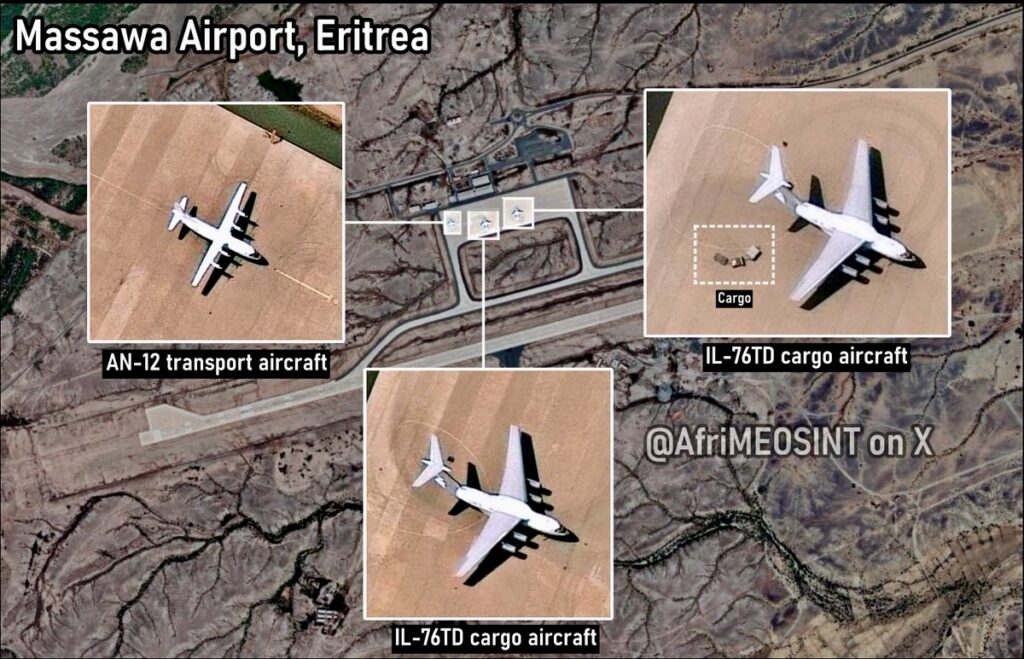
A defiant Ethiopian premier, Abiy Ahmed, made such a claim in July during the 30th regular session of Ethiopia’s House of People’s Representatives. “Ethiopia has no fear of any alliance involving Eritrea, the TPLF, and Sudan, even if other actors join them,” claiming unnamed foreign actors were backing this alliance. “The worst is that Tigrayan youth are being sold into the Sudan war after being taken by force,” Abiy said during the same event, adding that young people from Tigray were losing their lives in a conflict “they know nothing about.” According to one open-source data analyst, Eritrea’s Massawa Airport has likely been an entry point for arms shipments to Sudan’s army and Tigray fighters under the Tigray People’s Liberation Front (TPLF). Ayin, however, has not been able to independently verify this claim.
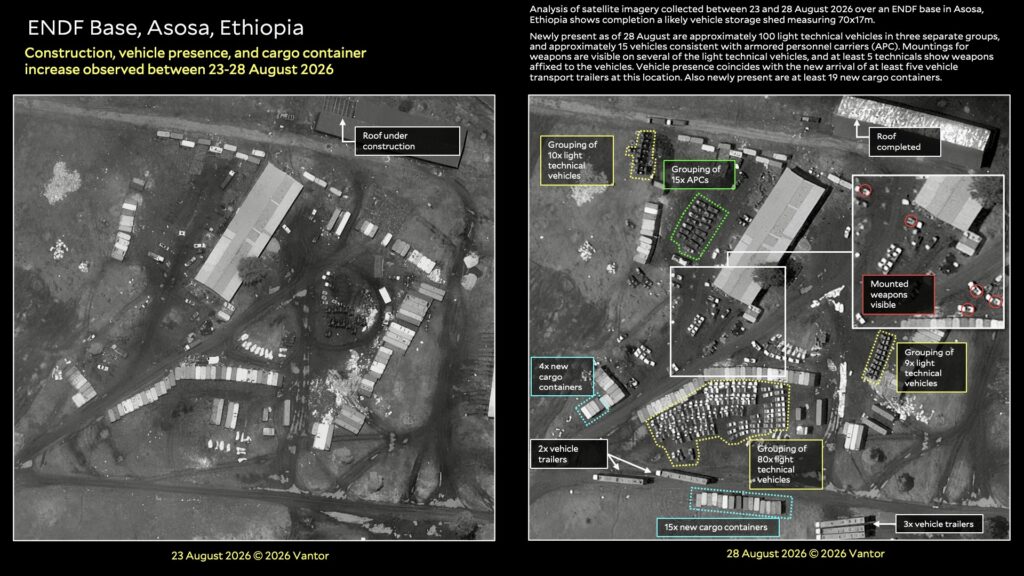
On the other side, the Yale Humanitarian Research Lab (HRL) has identified a spike in activity and arms at the Ethiopian National Defence Forces (ENDF) base in Asosa last week. In just under a week, HRL identified 100 newly arrived light technical vehicles at the base, a sixfold increase from previously. According to Yale HRL, there are enough brand-new vehicles at the ENDF base to support a brigade, with the ability to carry 750 to 1,000 soldiers. HRL warns that the RSF is more likely to launch an imminent attack on Damazin, the capital of Blue Nile State, due to this armament buildup.
A regional war
Jonas Horner, a visiting fellow with the Africa Programme at the European Council on Foreign Relations, told Ayin that the military infrastructure being developed on both sides of Sudan’s borders risks linking the Sudanese conflict directly to tensions between Addis Ababa and Asmara.
“With Eritrea providing training camps and shelter for SAF and its allies and Ethiopia appearing to provide training camps and rear bases for the RSF (Rapid Support Forces) and its allies, Sudan’s conflict could readily become intertwined with tensions between Asmara and Addis Ababa.”
Horner warned that the consequences of a direct Ethiopian-Eritrean confrontation would extend well beyond their borders. “The outbreak of conflict between Eritrea and Ethiopia would instantly regionalise Sudan’s own war,” he said, expanding the battlefield across Sudan’s already-fluid eastern borders and further complicating any hope for a negotiated outcome. “With each of the country’s seven direct neighbours engaged to varying degrees in Sudan’s war, Sudan already provides an active theatre for playing out regional rivalries.”
Ethiopian officials, according to sources who attended meetings with regional stakeholders, have not concealed their frustration with Burhan. They accuse him of interfering in Ethiopia’s security affairs and say Sudan’s military cooperation with Eritrea, Egypt and Tigray threatens Ethiopian interests.
A new proxy war, old rivalries
The issue is not new. Ethiopia has long been concerned about armed groups operating from Sudanese territory, particularly groups associated with the TPLF. Ethiopian officials recalled Prime Minister Abiy Ahmed’s visit to Sudan during the war – the first visit by an African leader after the conflict erupted – when he reportedly requested that Sudan disarm Tigrayan fighters.
“The important thing to note here is that the internal conflicts within these countries – Sudan, Ethiopia and Eritrea – are bleeding into one another,” says Kholood Khair, founding director of Confluence Advisory.
Khair says a cycle of reciprocal support, in which governments use neighbouring armed groups as instruments of strategic pressure, is nothing new for Ethiopia and Sudan. Ethiopia has previously supported Sudanese armed movements, while Sudanese governments and the army have supported Ethiopian rebel movements. What is different today is the number of external powers involved and the scale of resources being channelled into the competing networks.
According to Khair, SAF supporters often focus on the question of Ethiopian support for the RSF without considering the reciprocal dynamics that preceded it. Simply put – “You support my rebels, I support yours, you support my enemy, I support yours.”

Gosh and Asmara
The increasingly close relationship between Burhan’s camp and Eritrea is also reflected in the reported relocation of former Sudanese Security Service chief Salah Mohamed Abdallah (better known as “Salah Gosh”) to Asmara. Three sources familiar with the matter told Ayin that Gosh is now based in the Eritrean capital after previously residing in Cairo. One diplomatic source attributed the move to a legal case in the UAE involving allegations that Gosh was connected to shipments of weapons destined for the army that were intercepted by authorities in the United Arab Emirates.
One Sudanese source said Gosh’s presence in Cairo became problematic because of Egypt’s close relationship with the UAE. According to the source, Egyptian authorities did not want his presence to create tensions with Abu Dhabi and therefore asked him to relocate. The same source, however, said Egypt continues to maintain close ties with Gosh and that his departure from Cairo should not be interpreted as a deterioration in relations with the former security service chief. The source linked the move to the increasingly close relationship between Cairo and Asmara, arguing that Asmara has become a more suitable location for Gosh as the two countries strengthen their regional security cooperation.
Reports have also indicated that Burhan met Gosh during his most recent visit to Eritrea. If confirmed, the meeting would underline the continuing relevance of Gosh to Sudan’s security networks despite his absence from an official position and his years outside Sudan. His reported presence in Asmara is particularly significant at a moment when Eritrea is becoming increasingly important to Burhan’s military camp. At the same time, Ethiopian officials are increasingly portraying the army chief’s relationship with Asmara as part of a wider security threat.
For a country already struggling to contain a war involving the army, RSF and a growing number of regional and international actors, such an escalation would further narrow the space for diplomacy.