

24 June 2026
To keep our readers informed of the multitude of events taking place in Sudan amidst the ongoing, devastating war, we have developed a series of weekly news briefs covering major topics of the week.
In this week’s edition:
- Crisis escalates in El Obeid while pressure mounts to prevent RSF attack
- Sudanese pound’s exchange rate spikes again, trade at a standstill
- Thousands of miners return; Burhan promises to investigate airstrikes
- Destruction of two bridges threatens humanitarian supplies in South Kordofan
- Civil peace agreement is signed, ending a bloody conflict in South Darfur
- Human Rights Watch calls for accountability for Rapid Support Forces defectors
- Teachers’ strike continues in Khartoum and Kassala
 1) Crisis escalates in El Obeid while pressure mounts to prevent RSF attack
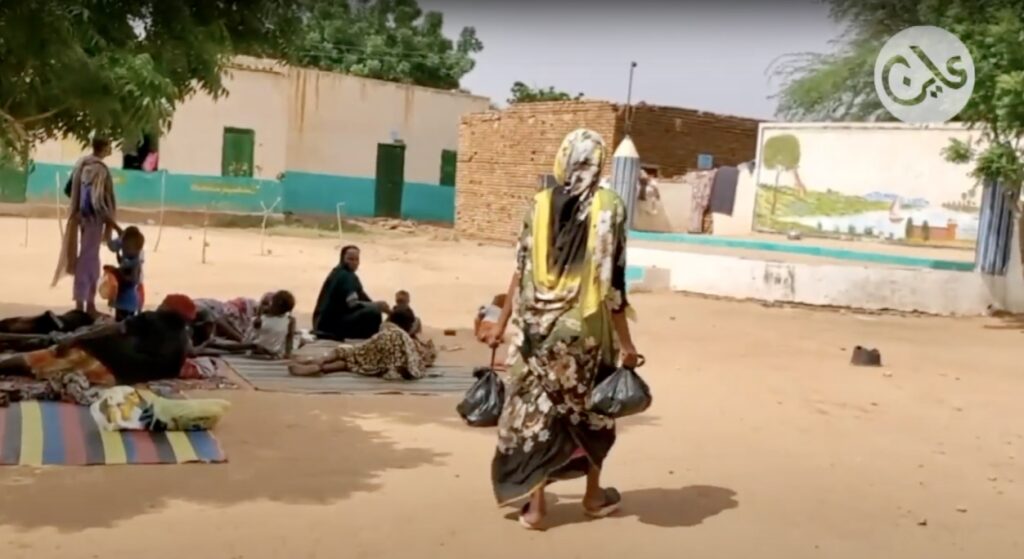
The humanitarian crisis for the residents of El Obeid, the capital of North Kordofan State, has worsened due to a shortage of drinking water, power outages, and disruption of internal transportation as a result of fuel scarcity.
This deterioration follows a series of air attacks on the city by drones belonging to the Rapid Support Forces (RSF). These strikes heavily targeted fuel stations, the electricity substation, and other crucial locations within the city, resulting in the death and injury of several civilians.
Witnesses in the city told Ayin that the dire situation has driven several residents to leave the city amidst a scarcity of transportation and soaring travel fares. They noted that a bus ticket to Omdurman now costs 210,000 Sudanese pounds (roughly $38) per seat, up from 130,000 pounds (roughly $24) about two weeks ago. They also pointed to the worsening drinking water crisis, with a jerrycan now costing 5,000 pounds (90 cents).
“Two days ago, I sent my sister and her children 600,000 pounds, and on the third day she informed me that she had run out of money and asked for my help to leave the city because living has become very expensive in light of this crisis,” one Sudanese citizen with family trapped within El Obeid said.
As drones continued to fly over the skies of El Obeid, home to more than half a million civilians, international parties intensified their pressure on the RSF leadership to halt their attack. On Monday, the US President’s Special Envoy to the Middle East and Africa, Massad Boulos, spoke by phone with RSF leader Mohamed Hamdan Dagalo (aka “Himedti”). Concurrently, the US State Department issued a statement expressing grave concern, calling on the RSF to “cease any actions that could endanger civilians, impede the delivery of humanitarian aid, or contribute to further atrocities and suffering”.
The Chairperson of the African Union Commission, Mahmoud Ali Youssef, also expressed deep concern about the escalating violence, calling for an immediate cessation of hostilities. The United Nations echoed these warnings, with Spokesperson Stéphane Dujarric stating that drone attacks have forced water stations to shut down, further hindering residents’ access to vital survival services.
 2) Sudanese pound’s exchange rate spikes again, trade at a standstill
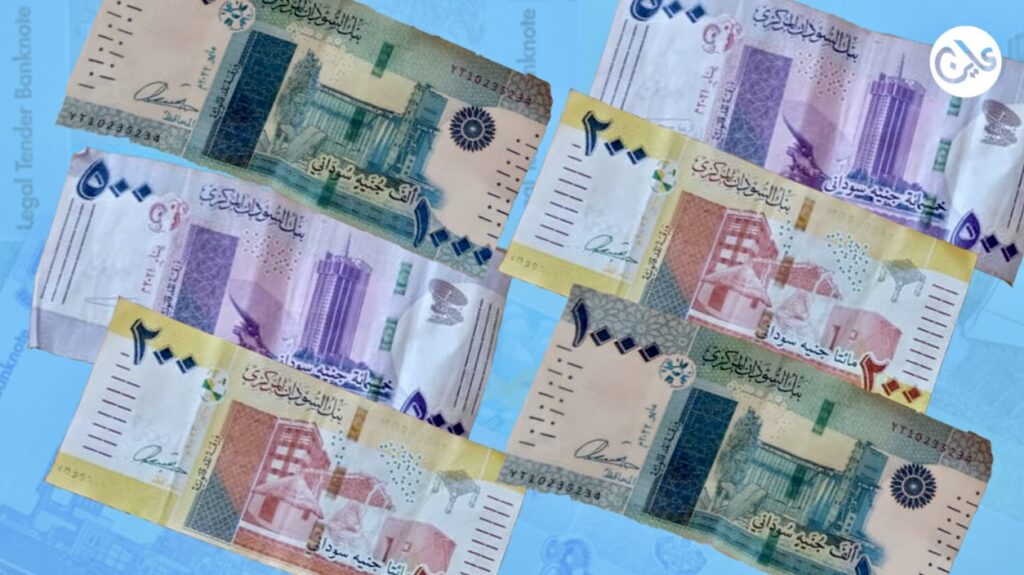
Foreign currency prices in the black market on Tuesday in the capital Khartoum, Port Sudan, and Atbara, cities where trade and supply chains are concentrated, reached record levels against the backdrop of the Sudanese pound’s decline.
The price of one US dollar has risen to 5,500 Sudanese pounds, according to traders. Traders said they decided to halt wholesale sales in the Omdurman and Wad Medani markets for the past two days due to the runaway exchange rate.
The decline of the Sudanese pound also led to the Egyptian pound rising to 92 Sudanese pounds, which has heavily affected Sudanese refugees in Cairo. “100,000 Sudanese pounds was equivalent to 100 US dollars at the beginning of 2024, and currently it is equivalent to only 25 US dollars –this amount does not cover 10% of the value of the monthly rent for the residence,” said a Sudanese woman residing in Cairo.
In conjunction with the runaway exchange rate in the black market, the Sudanese Ministry of Finance has set new increases in the customs tariff for goods imported from abroad to border crossings, ports, and airports, amounting to 3,600 pounds, effective last Saturday.
“The government wants to spend on the war and does not put the livelihood economy, which is linked to the lives of millions of citizens, at the top of its priorities,” says economic analyst Mohamed Ibrahim. “Therefore, the exchange rate is expected to reach critical levels during the next two months.” The military spending has prevented Sudan from developing exports, Ibrahim added, since the agricultural and industrial sectors are currently at a standstill.
 3) Thousands of miners return; Burhan promises to investigate airstrikes
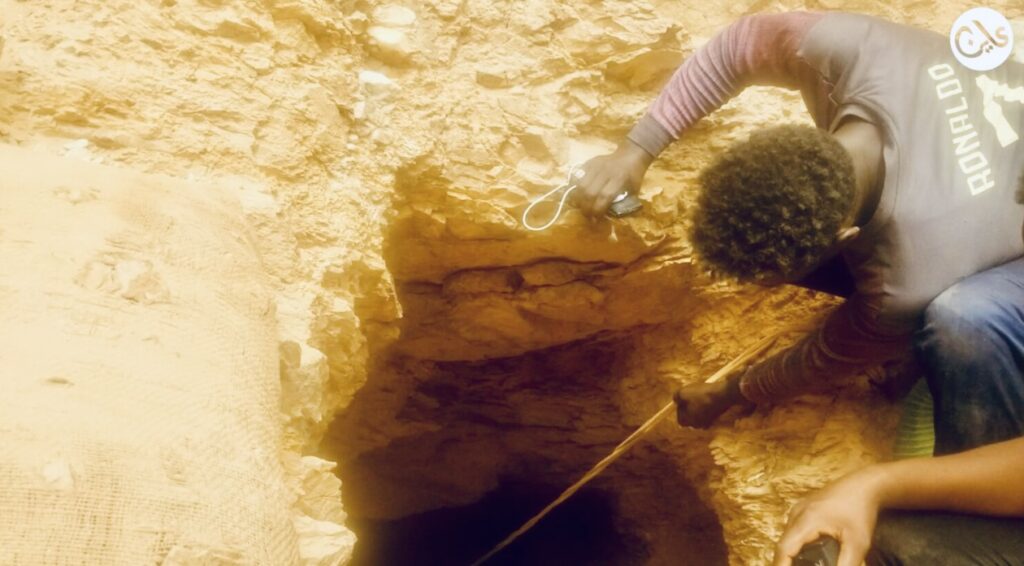
Over the past week, thousands of Sudanese miners arrived at a border crossing in Wadi Halfa, Northern State, following a security and military campaign carried out by Egyptian forces in gold mines situated near the Egyptian-Sudanese border.
Officials at the Argeen border crossing in Wadi Halfa, Northern State, said the crossing unexpectedly received more than 2,500 people last Friday. In videos posted on social media, Sudanese miners stated that Egyptian forces forced them to leave gold mines located in Egypt and Sudan in the Red Sea State.
The Sudanese Mineral Resources Company said it decided to send several trucks to transport Sudanese deportees from Egypt to their regions within the country, following the influx of thousands to the Wadi Halfa crossing. The removal of the Sudanese miners coincided with air raids on mining areas within the Egyptian and Sudanese borders.
Army Commander Lt-Gen. Abdel Fattah al-Burhan said on Monday they were investigating the matter and urged citizens not to cross the border into Egypt. In turn, Egyptian state officials acknowledged carrying out a large-scale security campaign in the south of the country, claiming some mining groups were threatening national security. The official spokesperson for the Egyptian Armed Forces confirmed that the campaigns resulted in the arrest of 87 Egyptians and 136 foreigners, marking the first official acknowledgement following the recent border raids.
 4) Destruction of two bridges threatens humanitarian supplies in South Kordofan
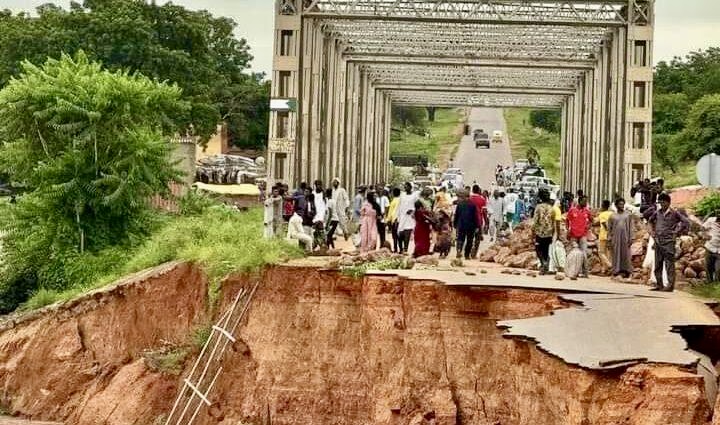
On Sunday, drones destroyed two vital bridges that link the states of White Nile and North Kordofan in the eastern mountains of South Kordofan State. The destruction complicates the movement of supplies and consumer goods to those areas at a critical time during the start of the rainy season.
Local sources told Ayin that the two destroyed bridges are located south of the city of Umm Ruwaba in North Kordofan State, on the road leading to the city of Al-Abbasiya Taqali in South Kordofan State. Official authorities have not commented on the incident, but UN spokesman Stephane Dujarric confirmed in a statement on Monday, citing local sources, that two main bridges on the road were targeted. He added that “humanitarian partners reported that movement through this corridor is still possible.”
Since the outbreak of war, this route has become a major artery for the movement of goods and people, following the closure of the El Obeid-Dilling road due to RSF control over parts of it.
This incident is part of a series of similar incidents in which drones have targeted vital bridges used for transporting aid in Darfur and Kordofan. This includes the Ardamata Bridge—a strategic gateway linking the Adré border crossing with Chad to various cities in Darfur—and the Kiga Bridge in South Kordofan State.
 5) Civil peace agreement is signed, ending a bloody conflict in South Darfur
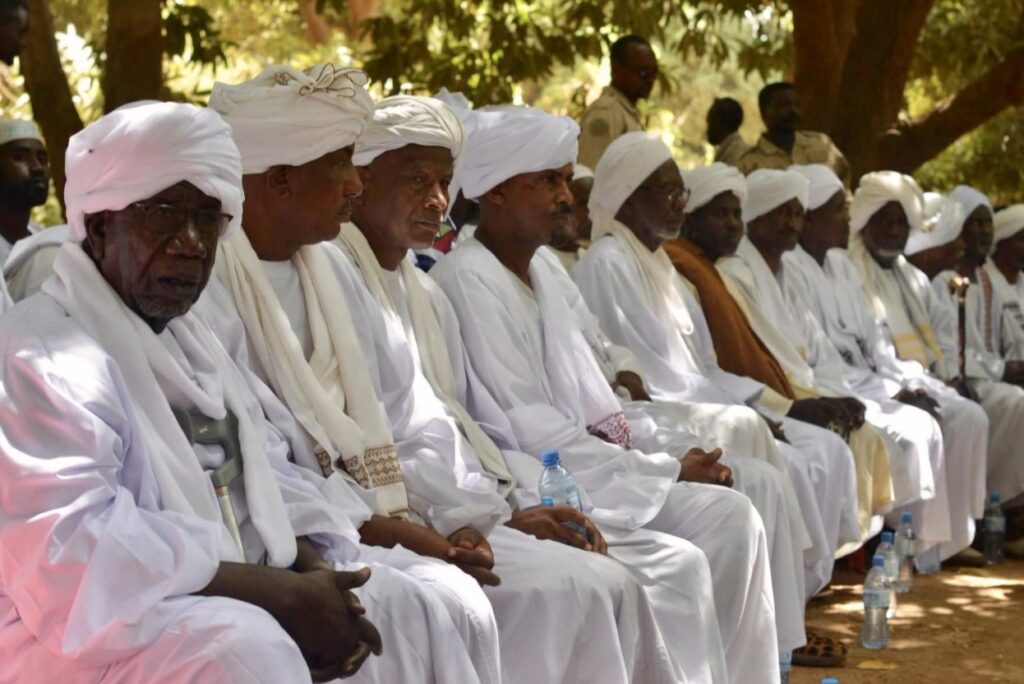
On Monday, two civilian groups in Nyala, South Darfur State, signed a joint peace agreement, ending a bloody conflict that had erupted recently and claimed dozens of lives on both sides.
The signing ceremony, which took place in Nyala, was attended by leaders of the Presidential Council of the RSF-controlled “Tas’is” government; members of the Regional Council; heads of civil administrations; several leaders of the native administrations in Darfur; as well as officials of the Rapid Support Forces and members of the mediation committee.
The agreement stipulated the reopening of roads and shared markets in conflict zones within fifteen days of its signing and the creation of suitable conditions for the voluntary return of members of both communities within 45 days. It also included a cessation of hate speech on social media and a ban on carrying weapons in markets and public areas.
The pact stressed security, the rule of law, arresting and punishing lawbreakers, and building a cooperative system to monitor its execution. The document stipulated that Salamat tribe members in Dar Beni Halba would be administratively subordinate to the tribal government.
In late May, violent armed clashes erupted in the areas of Kabm, Markandi, and Umm Labasa in South Darfur State, lasting for several days. This resulted in the death and injury of dozens from both sides, in addition to the displacement of more than 11,000 people, according to data from the International Organization for Migration.
The conflict was heavily exacerbated by the fact that fighters from both sides belonged to the RSF, and heavy military vehicles were used in the civil conflict. There were also accusations that one of the parties used a drone to bomb the market in the Umm Dukhun area, resulting in the death of dozens of citizens.
 6) Human Rights Watch calls for accountability for Rapid Support Forces defectors
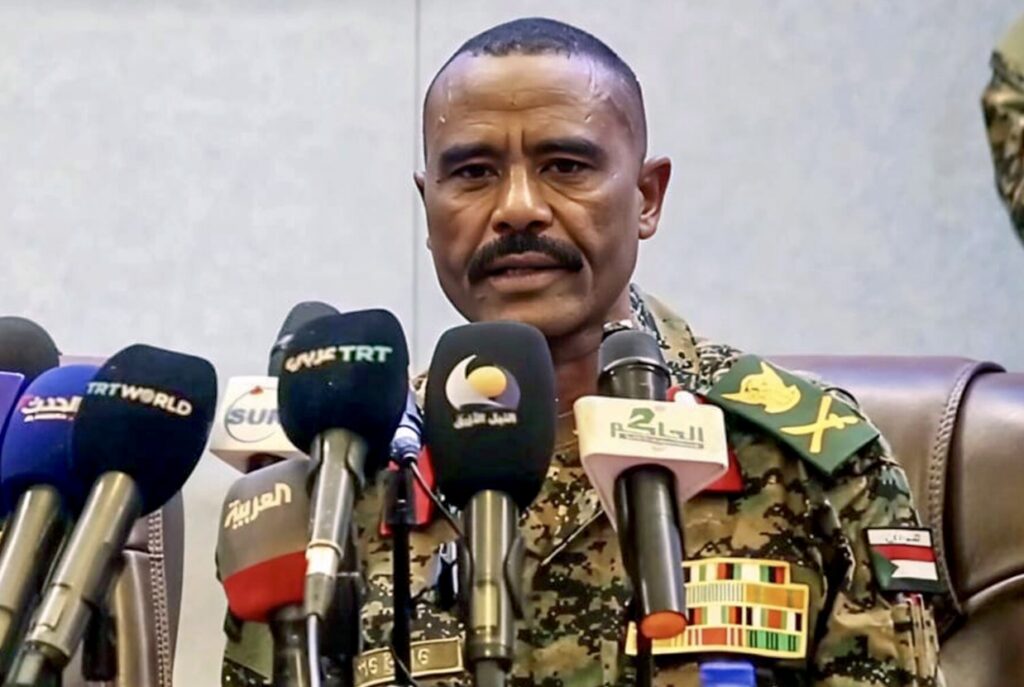
Human Rights Watch (HRW) called for ensuring accountability for Rapid Support Forces (RSF) commanders who defected and joined the Sudanese army, saying that two commanders who defected from Hemedti’s forces between April and May 2026 were involved in serious crimes committed during the war in Darfur and Kordofan.
“Changing allegiance does not grant those responsible for international crimes and serious human rights violations a clean bill of health,” said HRW researcher Mohamed Osman. “Sudanese people who have suffered horrific abuses under any leader deserve justice and an end to the vicious cycle of impunity that has long plagued Sudan.”
On April 18, 2026, cities under the control of the Sudanese army witnessed the arrival of Al-Nur Ahmed Adam, known as “Qubba”. Ali Rizqallah, known as “Savannah”, also arrived in Khartoum last May from abroad after leaving RSF-controlled areas, indicating that Hemedti has no project other than sabotage.
Human Rights Watch stated that it documented widespread attacks by the RSF against civilians in El Fasher and verified videos confirming the presence of the two commanders during the RSF’s 18-month siege of the city. “It is alarming to see defectors from the Rapid Support Forces roaming freely in Khartoum since April of this year without fear of any consequences,” Adam Musa, director of the Darfur Victims Support Organisation, told Human Rights Watch.
Mohamed Osman emphasised, “If there is a lesson to be learnt about addressing the ongoing atrocities in Sudan, it is that putting justice at the bottom of the priority list will only lead to more violence and atrocities.”
Following these defections, demands have escalated among advocates and politicians for the release of thousands of those accused and convicted of collaborating with the RSF in army-controlled areas, including convicts facing death sentences and life imprisonment.
 7) Drone strikes leave dead and wounded and destroy shops in North Darfur
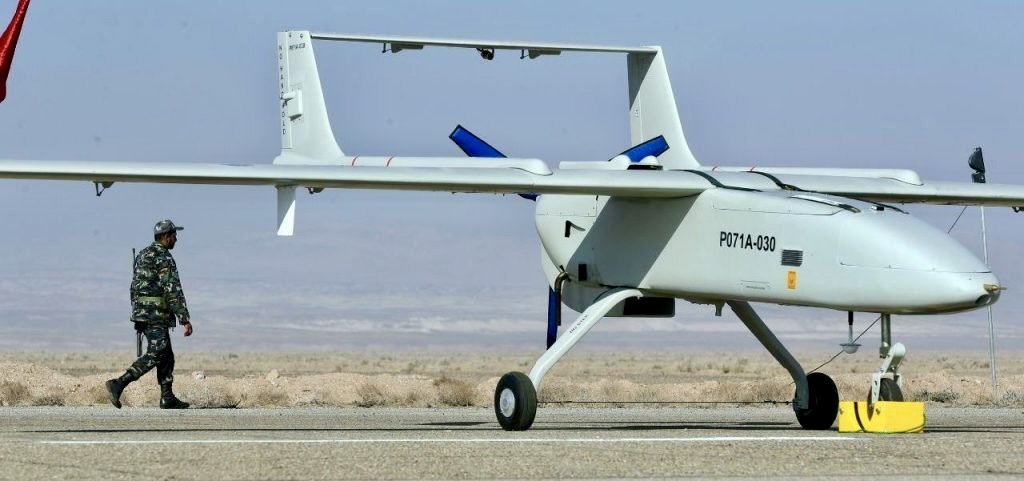
At least nine people were killed and others were injured, along with the destruction of dozens of shops, following a drone strike last Friday that targeted a civilian vehicle and a popular market in the Al-Malha area of North Darfur State.
Local volunteers connected to the emergency response rooms have reported that the strikes have affected the food and economic security of a wide range of civilians. The volunteer explained that the bombing of the “Umm Bayada” market resulted in nearly 50 families suddenly losing their primary sources of income. They issued a statement stressing that the wounded who were transferred to Al-Malha Hospital need urgent medical intervention to perform surgeries and that those affected by the fire need urgent relief.
These incidents are part of a long, escalating series of bombings targeting civilian infrastructure and sources of income for citizens. Popular markets in Darfur have remained a persistent target for drones over recent months. Consequently, this aerial threat is forcing residents in several areas to rapidly change the locations of well-known weekly markets for fear of further deadly targeting, disrupting local economies and survival supply chains.
 8) Teachers’ strike continues in Khartoum and Kassala
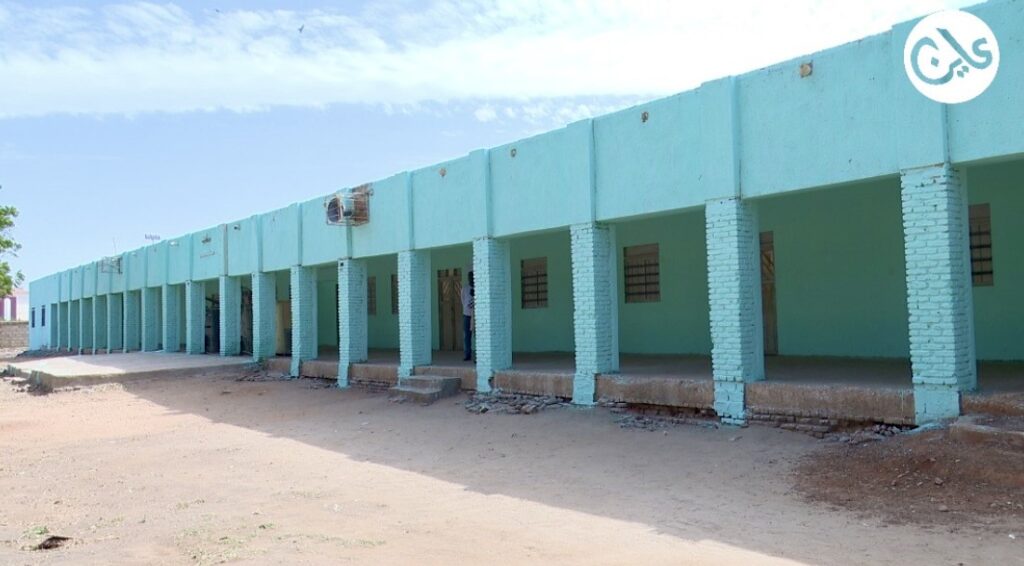
The strike by teachers in Khartoum and Kassala states continues amid widespread disruption of the educational process in government schools.
In Khartoum State, the Sudanese Teachers’ Committee and the state’s local committees announced the continuation of the teachers’ strike. In a statement issued on Tuesday, they confirmed that the move comes in protest against the deteriorating living and professional conditions and in adherence to what they described as legitimate rights to a fair wage and a decent life.
The committees stated that wages no longer cover the minimum basic needs or the costs of accessing workplaces, which has led to a widening phenomenon of reluctance to enter the teaching profession. They added that schools are experiencing a significant shortage of classes, with educational administrations relying on collaborators to fill the gaps.
In Kassala State, the Higher Strike Committee continued to implement the strike for the fifteenth consecutive day, claiming that strike participation “exceeded 99%”, which they considered evidence of the teachers’ unified stance behind their demands. The Kassala committee criticised the position of state authorities, accusing them of attempting to circumvent the crisis with proposals that shift the burden onto families.