

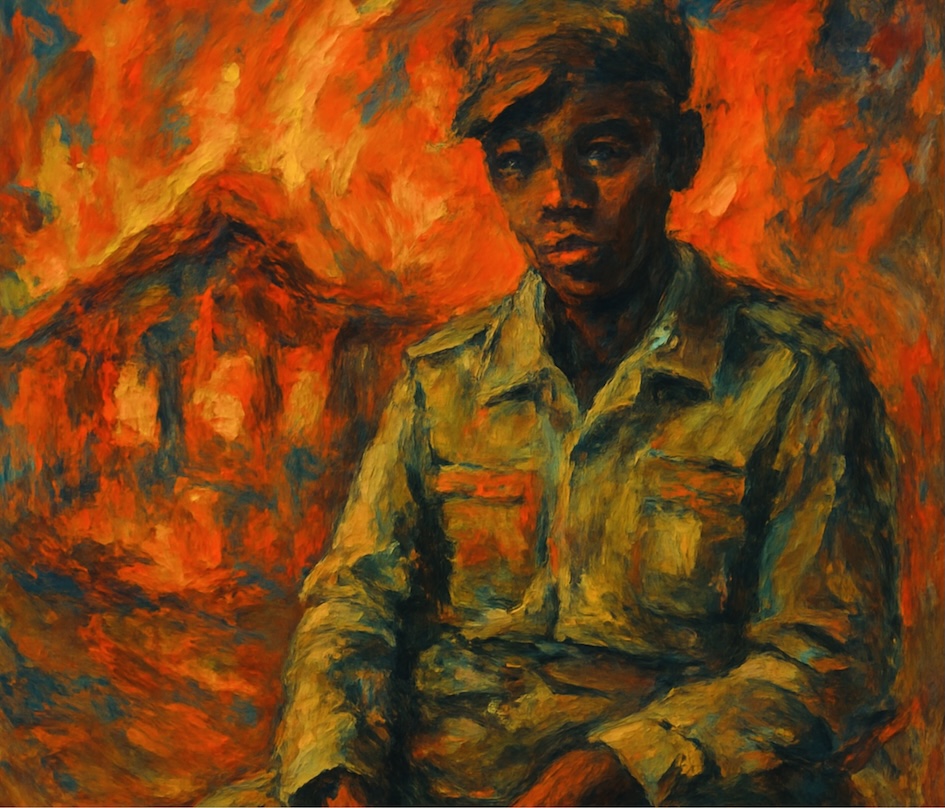
From revolutionary to a soldier: a young man’s journey to Sudan’s war
12 December 2025
While many youth were steadfast in their resolve, taking huge risks to support Sudan’s democratic revolution prior to the war, many eventually enlisted in Sudan’s army, the very institution they previously rallied against. The Ayin Network managed to speak to one young man, Haleem*, about his days supporting the revolution and joining the Al Bara bin Malik Brigade, an Islamic militia that supports the national army.
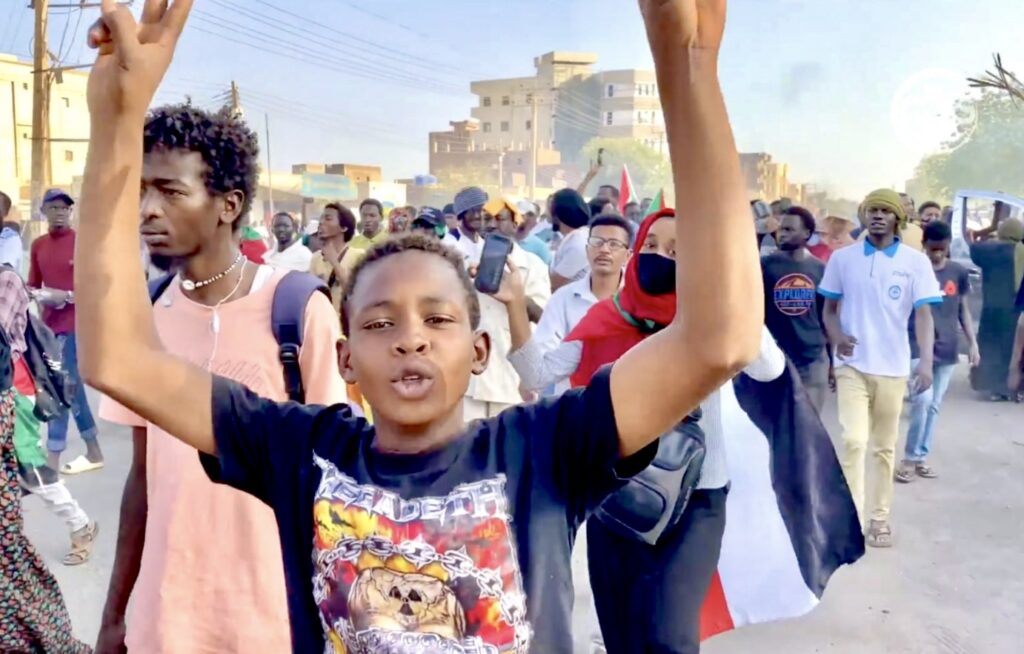
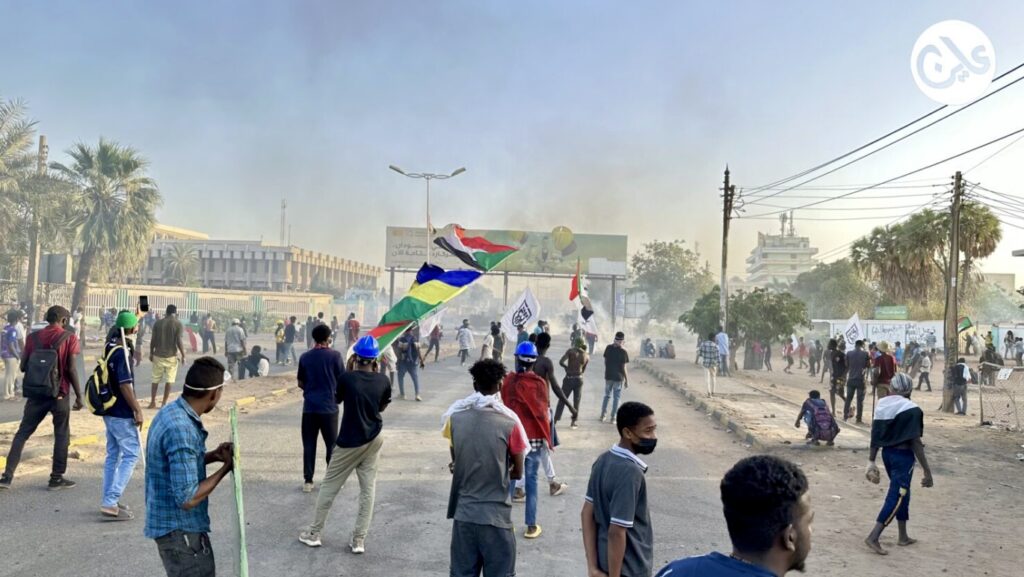
Before the war erupted in Sudan, mass demonstrations demanding the restoration of civilian democratic rule filled the streets of Sudanese cities. Public pressure continued for nearly 16 months up to the outbreak of hostilities in the capital, Khartoum. Its ignition in the heart of the capital and subsequent spread to 13 out of 18 states dragged both warring parties and their aligned forces into recruiting underage fighters, while documented atrocities were perpetrated against civilians across all states that turned into battlefields.
From protests to gunfire
When the war started, Haleem was only 17 and preparing for the Sudanese Certificate exams. “I remember that day vividly. It happened to be the date of the mock chemistry exam, and it coincided with a protest march calling for a return to democratic transition,” he said. “The gathering point was roughly a kilometre from my home. My friend and I planned to join it.”
While asleep, Haleem heard heavy gunfire. “I thought I had overslept and that the protest had already begun and the police were dispersing it. I rushed down to the street and asked the people around me, but no one seemed to know what was going on or why there was such intense shooting,” he added. Moments later, Haleem saw army pickup trucks speed down the main street. After returning home, TV stations announced the outbreak of the war between the Sudan Armed Forces (SAF) and their former allies, the paramilitary Rapid Support Forces (RSF).
When the December Revolution began, Haleem was an active participant in the protests in the Karari locality, Khartoum, in addition to playing regularly with the Karari Football Association.
He describes the earliest days of the war as terrifying. Residents of his neighbourhood and those adjoining it gradually began leaving. But the sense of fear and isolation slowly faded once the RSF fled their area, making the situation relatively calm except for the heavy and unsettling artillery shelling.
From the schoolyard to the battlefield
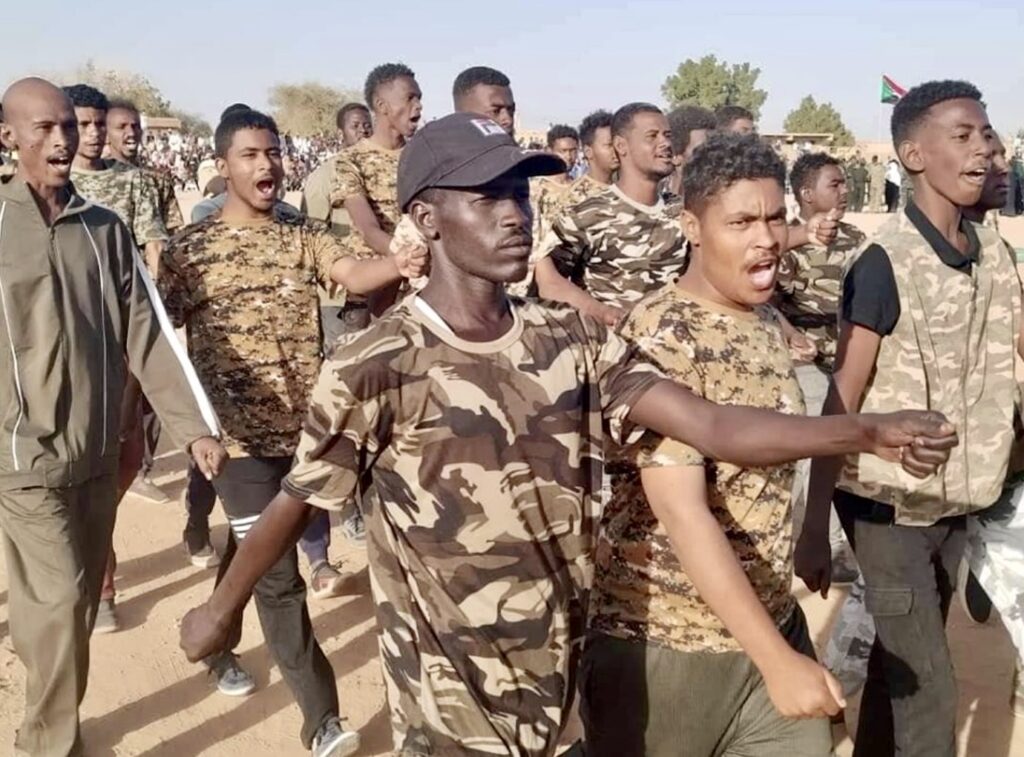
Haleem first enlisted in a military capacity in November 2023, joining two close friends in the Army’s Istinfar (“mobilisation”) forces. He had actually applied earlier in September and October of the same year, but the camps were full. When he began his mobilisation training, he was between 15 and 16 years old, and many of the others he was training with were of similar ages.
“I joined Istinfar with two friends. The training was extremely long, starting from November up to March. I left training in late January and joined the Popular Resistance Camp—another force aligned with the SAF—in my neighbourhood in February, where we trained for about 45 days.” After the training, many were divided into neighbourhood security units or the General Intelligence Service. After Haleem’s exam schedule was announced, his mum insisted he stick with his studies.
He lost a close friend who enlisted in the army while he was preparing for his tests. Another friend had joined the Bara bin Malik Brigade. Despite losing his friend, the fact his peers were joining the war influenced him deeply.
He joined the Al-Bara bin Malik Brigade in January of this year after finishing his exams. “Overall, the training was harsh and exhausting. They always told us: ‘You must shake off civilian habits if you want to learn how to survive here.’”
While his father supported his military training, his mother staunchly opposed the idea. At first, he had to hide his intentions from her, but he told her he was only training for self-defence and would not join the front lines. When he later trained with the Popular Resistance and decided to enlist with the Intelligence Service, his mother vehemently refused, warning she would never forgive him, so he backed down at the time.
Al-Bara bin Malik Brigade
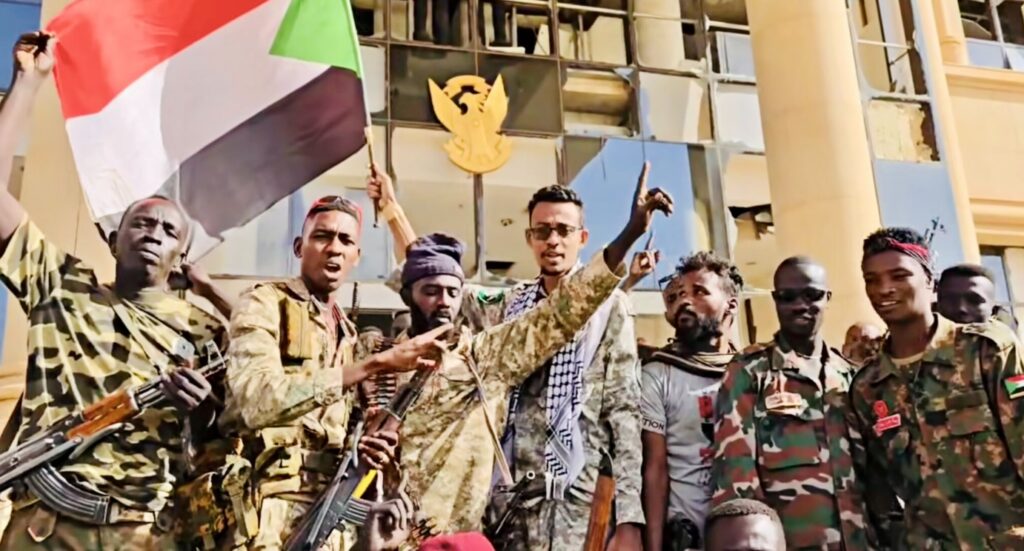
By then, he had met several fighters in his neighbourhood, which strengthened his resolve. His decision to join the Islamist Al-Bara bin Malik Brigade did not rest on any religious principle but more on a practical perspective for the future: he would rather not be a soldier forever. “Joining the Brigade makes me a mujahid, not just part of the mobilised forces. Mujahideen can return to their normal lives and activities after the war, but those mobilised with the SAF had already received military numbers and officially joined its ranks,” he reasoned. Upon joining, Haleem was required to undergo training once more. He reassured his family that he would not join the frontlines. His mother remained unconvinced but gradually accepted it.
But what prompted a young teenager, who believed that Sudan could no longer tolerate decades of military rule under an Islamist regime, to join the very ranks that supported it? Haleem’s words: it was the horrific destruction he witnessed around his neighbourhood once the RSF seized Khartoum.
“What pushed me into mobilisation and into these military formations,” he explains, “is the fact that if we don’t contain the RSF, they will expand, commit more assaults, rape women, loot, and kill. Even if none of this happened to me personally, it happened to many I know and many I don’t,” he told Ayin. “The humiliation inflicted on people is unbearable. My goal is to protect myself and those around me.” Haleem added.
Among Haleem’s strongest memories of combat before the fighting receded from Khartoum was the 25 days he spent in the Al Mogran axis, in constant confrontation with the RSF. He was positioned with around 11 fighters from the Al‑Bara’ bin Malik brigade alongside army soldiers, defending nonstop while the RSF attacked on the ground and through snipers.
“In the building we fought from,” he says, “the bathrooms were several metres away, in open view of enemy snipers. One day, on our way there, a sniper shot one of my comrades in the leg. Another was hit while taking just a few steps behind the building. RSF snipers in the Al Mogran axis were active day and night, not to mention the drones, twin-barrel guns, and thermal missiles.” Haleem stayed in Al Mogran until the army retook the Republican Palace. Haleem says he also took part in battles in Libya Market, Omdurman’s Umbada area, and in clearing operations in Bahri.
Shared motivations
Haleem believes his story mirrors many young fighters; their main fears are violations, assaults, and the possibility that the RSF will reach their neighbourhoods with no one defending them or their families. They also want to avenge friends and relatives who were killed or captured by the paramilitary force.
However, before the war, he had no intention of joining the army. His dream was to become an airline pilot. He prays that the war will end soon but pledges to continue fighting in the Kordofan region, if need be. “My brothers whom I’ve started this path with are there and just the way we started it together, we must finish it together.”
The war has affected his vision of a civilian government, a concept he once fought for during the protest movements. In his view, the RSF consolidated power under the brief civilian leadership that was unable to rein the paramilitary force in. Scarred by the violence, Haleem, along with many of his peers, felt pressure to enlist and protect their neighbourhoods.
“His story reflects what many civilians, especially young men, have experienced – they find themselves in a brutal war where joining an armed group appears to be the only option,” says political analyst Mohamed Ibrahim. “This may very well have been the impetus for this conflict in the first place – the military forces wanted to dispel any ideas of democratic, civilian leadership for the country.”