

Al-Jazeera: A gold ring to build a school
7 October 2026
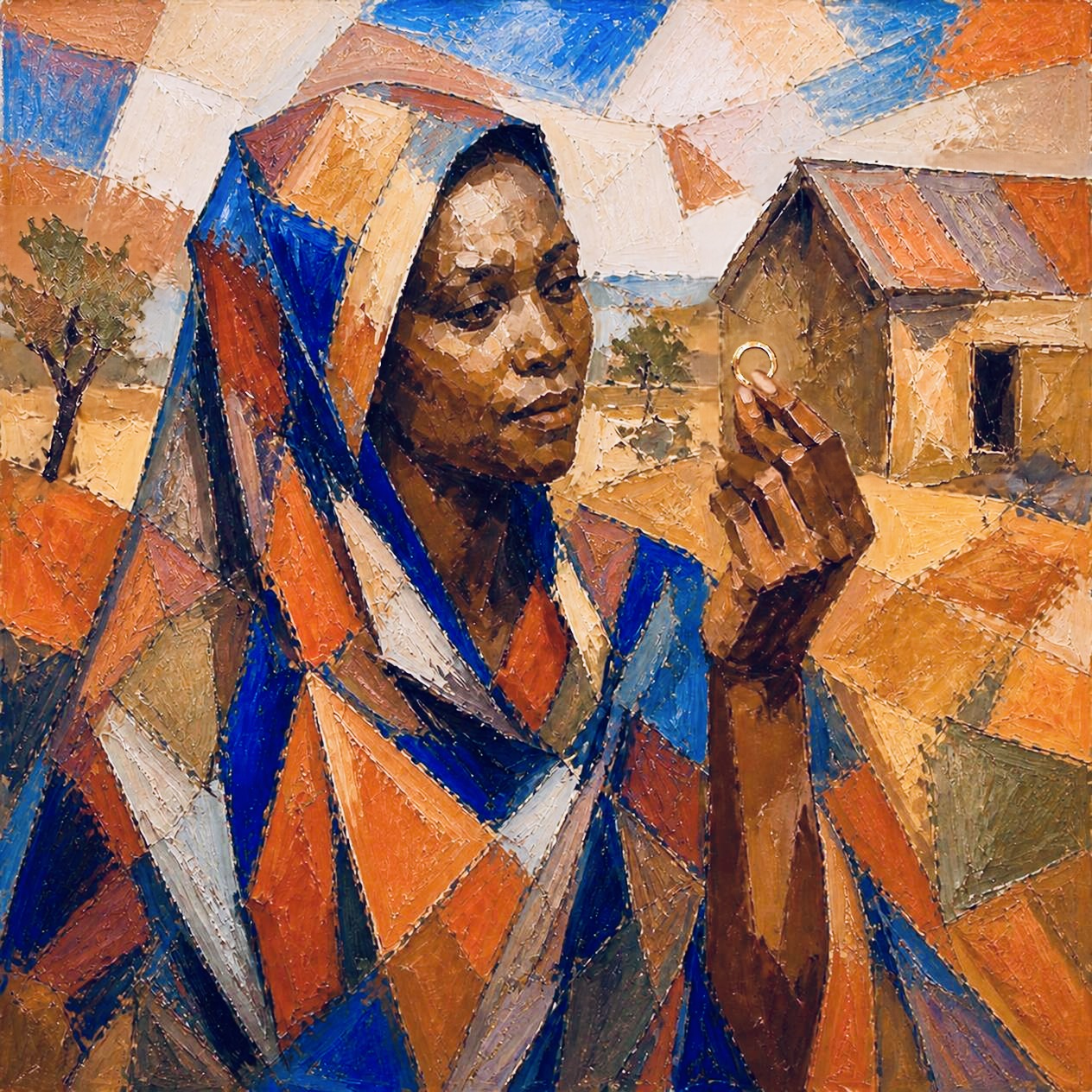
In a small town in Jazeera State, central Sudan, a school whose classrooms had been in ruins reopened months after the end of fighting in the area. The walls bore the marks of bullets, the roofs were damaged, and the village children eagerly awaited their return to school. As the villagers gathered to discuss how to rehabilitate the school, Fatima, a woman impoverished by the war and who had lost her husband, stepped forward. All she possessed was a simple gold ring, the last remaining savings of her depleted family. She took the ring off her finger and handed it to the village committee, explaining that she had no cash but wanted her children to have a place to learn.
Fatima’s step was not just an individual act of sympathy but rather an entry point reflecting the harsh reality that Sudanese people are living through after the outbreak of war on April 15, 2023. From remote villages to crowded cities, citizens find themselves facing only one option for survival: liquidating their remaining personal assets, depleting the savings of expatriates, and turning small solidarity contributions into a lifeline to finance the operation of collapsed public services.
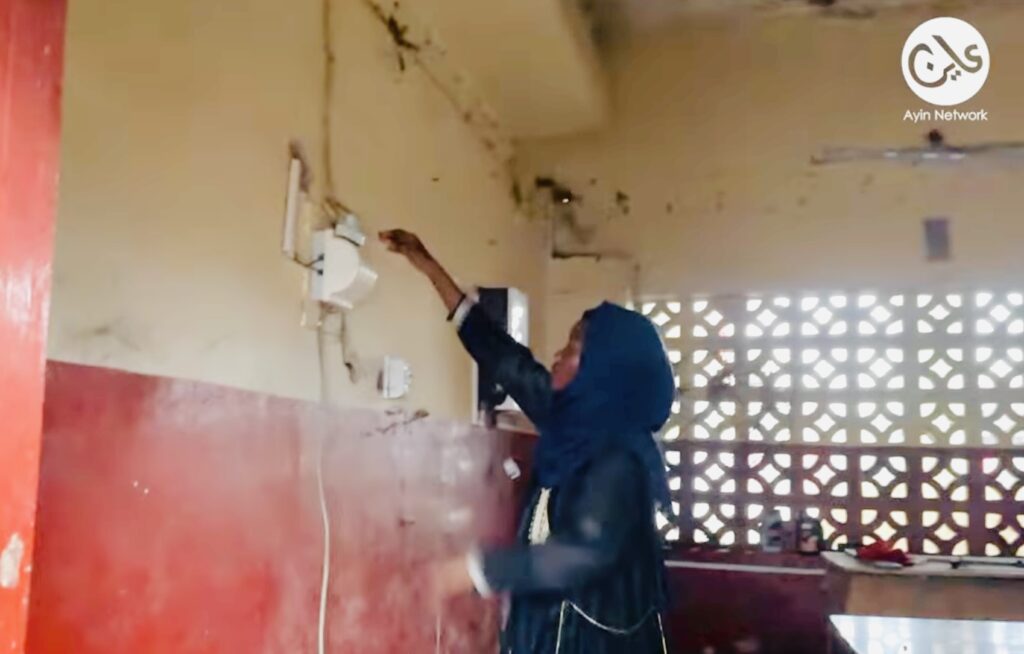
Following the Sudanese Armed Forces’ takeover and recapture of Al-Jazeera State in January 2025, residents and returnees were confronted with widespread destruction of infrastructure and public facilities. The Rapid Support Forces and allied militias had either looted or destroyed all means of agricultural production. Harvesters were stolen, irrigation canals were damaged, and electrical transformers ceased to function.
Local solutions
Fatima (a pseudonym, used at her request), a mother of two from a village in Jazeera State, says she lost her husband during the war and now has very little left. When the village committee began collecting donations to rehabilitate damaged schools and facilities, residents contributed according to their means. But she had no money to contribute.
“The gold ring was the only thing that survived the looting, and it was all I owned, so I decided to donate it to contribute to the rehabilitation of schools,” she told Ayin. “The most important thing is for my children to study and learn so that they can build their future. Their education is more precious to me than a piece of gold.”
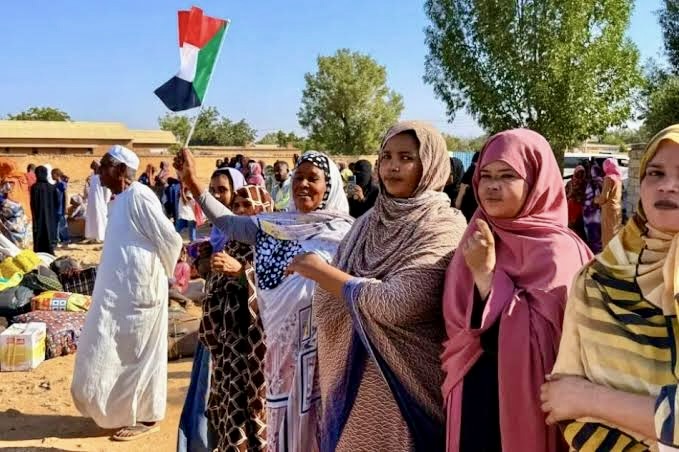
Faced with this administrative paralysis, residents didn’t wait for the government’s announced reconstruction plans. In areas like Al-Asilat in East Nile and villages in Al-Jazeera State, “village committees” and “community associations” mobilised to restore essential services. Instead of relying on the lost budgets of local authorities, traditional “community mobilisation” mechanisms were revived, relying entirely on remittances from Sudanese expatriates abroad. These funds, sent directly through digital banking applications, were used to purchase diesel generators, water pumps, and maintain drinking water networks.
Ahmed Ali, a young man from the Al-Asilat area in East Nile, says that the provision of basic services in the region has historically not depended on the government. “People from the region, both inside and outside Sudan, have consistently contributed to funding these services through direct donations and regular contributions from expatriates, in addition to contributions from merchants, business owners, and residents,” he said.
Ahmed says that the priority was restoring services that directly impact residents’ lives, especially health, education, and water. According to him, the residents were able to rehabilitate and reopen the health centre, and schools were repaired and reopened to students. “Everyone in the region contributed what they could to the reconstruction fund.” Ahmed sees these projects as a symbol of local resilience, but it also illustrates the burden borne by these communities in the midst of a conflict where state institutions are absent.
Community-led vs. the state
In states like Jazeera, the absence of government funding was not absolute. In January 2026, the Jazeera State government inaugurated the Wad Medani water station after its rehabilitation, stating that the 1.167 billion Sudanese pounds project would serve approximately 80,000 households. Despite this significant state budget allocation, the state relied on contributions from others “outside the government apparatus” for the rehabilitation process.
Economic researcher Mohamed Al-Haj believes that relying on local communities to finance the rehabilitation of basic services can play a significant role in the immediate response, but it is not a sustainable alternative to the state. “Remittances from Sudanese expatriates have become a primary source of funding for the needs of families and communities during the war, after having been used more extensively for investment and asset building before the war. As the war continues, an increasing portion of these remittances has been directed towards food, medicine, operating water wells, and rehabilitating local facilities.” But he points out that selling gold, livestock, or other possessions to cover service needs is not a sustainable source of funding, especially given that many families have lost their sources of income.
The core challenge for community-led development is maintaining these services. A community might be able to raise money to repair a school building or buy a water pump or generator, but it faces greater difficulty in covering recurring expenses such as staff salaries, fuel, medicine, and maintenance.
According to Mohammed, relying entirely on local resources could also lead to disparities between regions, as villages with larger numbers of expatriates, traders, and businessmen can raise funds more quickly to restart their services, while poorer villages face greater difficulty in restoring basic services.