

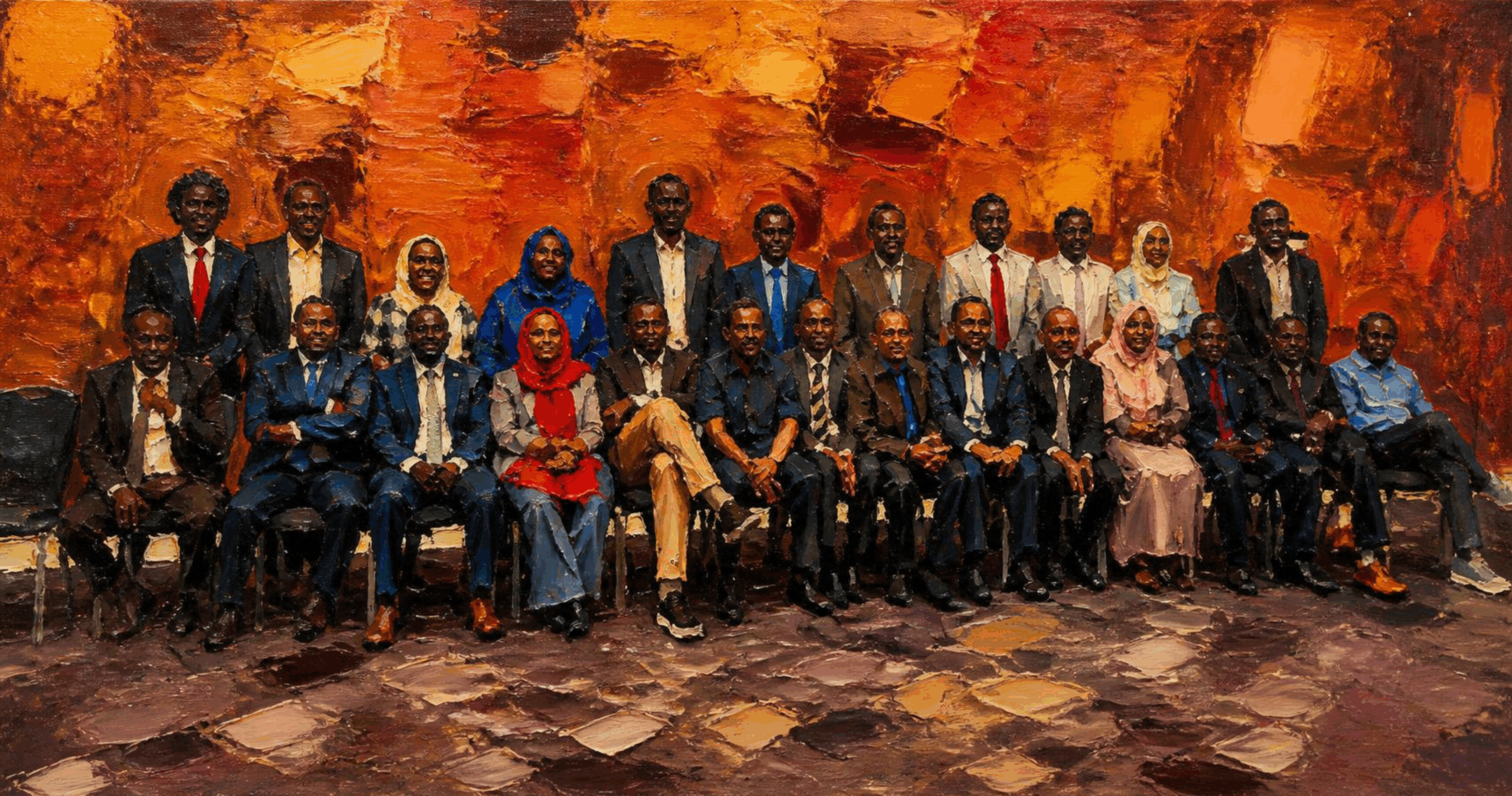
Addis Ababa: Sudanese factions sign a joint vision while others split over peace roadmap
6 June 2026
High-stakes consultative meetings aimed at charting a path out of Sudan’s devastating three-year conflict have had mixed results: parties formerly at loggerheads are now aligned while others split over a peace roadmap.
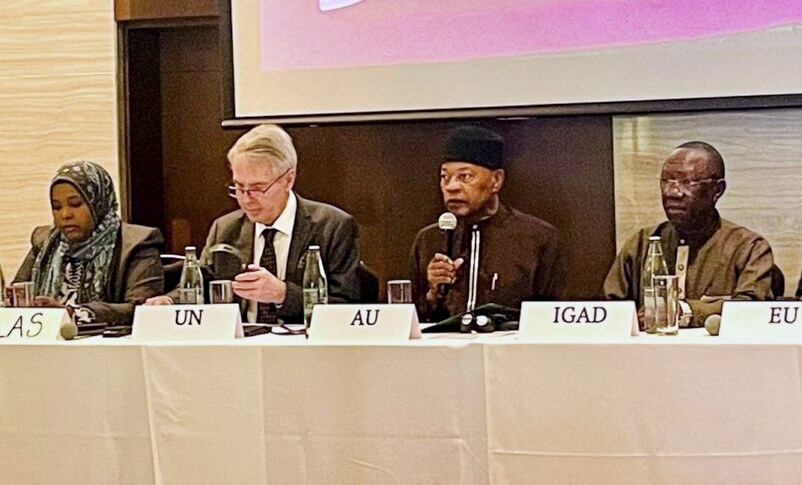
Hosted in the Ethiopian capital from June 3–5 by the international five-party “Quintet”—comprising the UN, African Union, European Union, Arab League, and IGAD—the talks concluded with a partial joint statement. However, a wave of high-profile boycotts, withdrawals, and sharp rejections also took place.
A shared vision for reconstruction
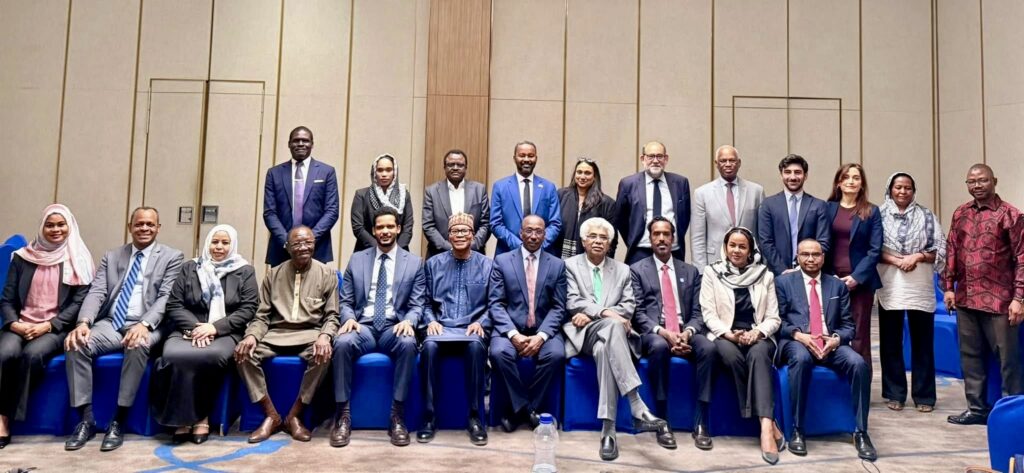
For the first time, a coalition of prominent political and civil forces succeeded in signing a joint vision to launch a preparatory committee for the peace process. Signatories included the Civil Democratic Alliance of Revolutionary Forces (“Somoud”), factions of the Democratic Bloc (including Minni Arko Minawi’s Sudan Liberation Movement), the Umma Party, and various youth and women’s organisations.
In their joint statement, the signatory forces declared that the agreement:
“Lays the foundations for a comprehensive political solution that preserves Sudan’s unity and sovereignty, addresses the root causes of the crisis, and responds to the humanitarian, social, and political repercussions of the war.”
The participating powers emphasised an immediate ceasefire and demanded a transition to a national reconstruction project. They argued that any successful political environment must prioritise the humanitarian response, expand civil space, and establish a new social contract based on equality and transitional justice.
Voices of dissent
The apparent consensus quickly unravelled. The Sudan People’s Liberation Movement–Revolutionary Democratic Current (SPLM-RDC) flatly rejected the document. Buthaina Dinar, the movement’s vice president, stated on 5 June that the process was marred by “great shortcomings” and isolated from the grim realities facing Sudanese citizens. She warned that proceeding without enforcement mechanisms would be futile.
“Proceeding with a political process without the warring parties committing to its outcomes is a ‘theoretical luxury’ that does not bring about tangible change in citizens’ lives,” Dinar said.
Dinar further criticised the framework as being “weaker than the Rotana peace initiative” rejected before the war, warning it could produce fragile solutions that fail to address the roots of the crisis or restore the goals of the Sudanese revolution.
Parallel fissures emerged within the Democratic Bloc itself. Sally Zaki, the bloc’s assistant head, announced her total withdrawal from the outcomes, stating she had “no connection to what was signed” and demanding a more comprehensive, open framework. Meanwhile, the Sudan Liberation Movement, led by Abdul Wahid Nour, refused to sign entirely, citing fundamental disagreements over who could sit at the negotiating table.

Battle over inclusion
The most contentious issue dividing the delegates was the future political role of the National Congress Party (NCP) and the Islamic Movement associated with the former regime of former president Omar al-Bashir.
While the SPLM-RDC fiercely criticised the refusal to include an explicit text banning these factions, Mubarak Ardol, assistant head of the Democratic Bloc Alliance, sought to clarify the matter. Ardol claimed that the signatories had verbally agreed to reject both the NCP and the Founding Alliance (“Ta’sis”)—the political arm of the Rapid Support Forces (RSF)—even if that language was omitted from the final press release.
However, the Founding Alliance held its separate consultative meeting with the Quintet on Friday evening, maintaining a rigid stance against the traditional military establishment. Labelling the military as “terrorist brigades”, the Alliance noted it was not prepared to waste time on any peace process that includes “those who have killed the Sudanese people over the past 70 years”. The Alliance added that discussing the formation of a dialogue mechanism before resolving critical security and humanitarian issues is “premature”.
Since the outbreak of war in April 2023 between the Sudanese army and the RSF, the country has spiralled into one of the world’s most severe humanitarian crises, marked by widespread famine and mass displacement. While the international Quintet continues to push for a permanent ceasefire, the discordant outcomes in Addis Ababa underscore a harsh reality: before Sudan’s political forces can successfully negotiate peace with the warring generals, they must first find a way to agree with one another.