

11 August 2026
To keep our readers informed of the multitude of events taking place in Sudan amidst the ongoing, devastating war, we have developed a series of weekly news briefs covering major topics of the week.
In this week’s edition:
- RSF arrest heads of civilian administrations in three Darfur states
- Somoud rejects political dialogue in army areas as Islamists split
- Outrage erupts after officer assaults teacher and brandishes weapon in school
- Cholera outbreak and severe food shortages in El Obeid
- More than 5,000 flee heavy fighting in West Darfur
 1) RSF arrest heads of civilian administrations in three Darfur states
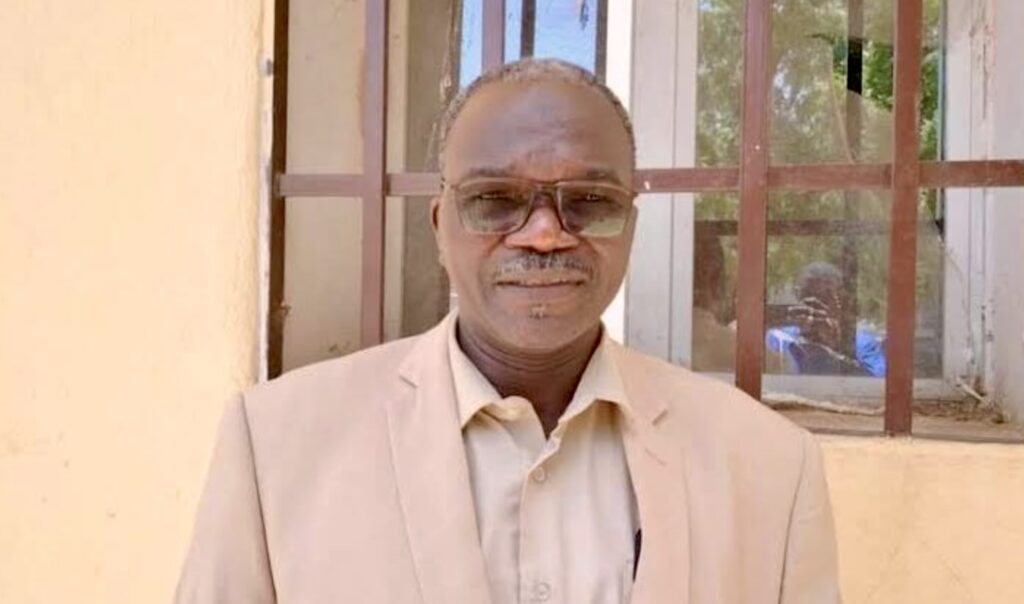
The Rapid Support Forces (RSF) have arrested the heads of the civilian administrations across Central, East, and South Darfur, detaining them in Nyala’s Korea Prison under accusations of spying for the Sudanese army alongside financial and administrative charges. According to local sources, the arrests began last Friday when an armed RSF force picked up Central Darfur’s civil administration head, Abdulkarim Yusuf Othman (in photo), from his home in Zalingei, following disputes over land appropriations and internal political tensions within his tribe.
The crackdown expanded the following day in Al-Daein, where RSF forces arrested East Darfur civil administration chief Mohamed Idris Khater. A local source stated that “Khatir faces charges related to administrative and financial irregularities, including misappropriation of public spaces and cemeteries, as well as encroachment on some streets within the main market.” Khater is also accused of inciting tribal members to pressure the ruling coalition to appoint him state governor, following public protests over commercial redevelopments in Al-Daein.
The two officials join South Darfur civilian administration chief Youssef Idris, who was detained weeks prior on similar espionage allegations. While the RSF established these civilian administrative bodies between June and September 2024 to oversee controlled territories, the paramilitary group has yet to issue an official statement detailing the formal charges or legal grounds for their ongoing detention.
 2) Somoud rejects political dialogue in army areas as Islamists split
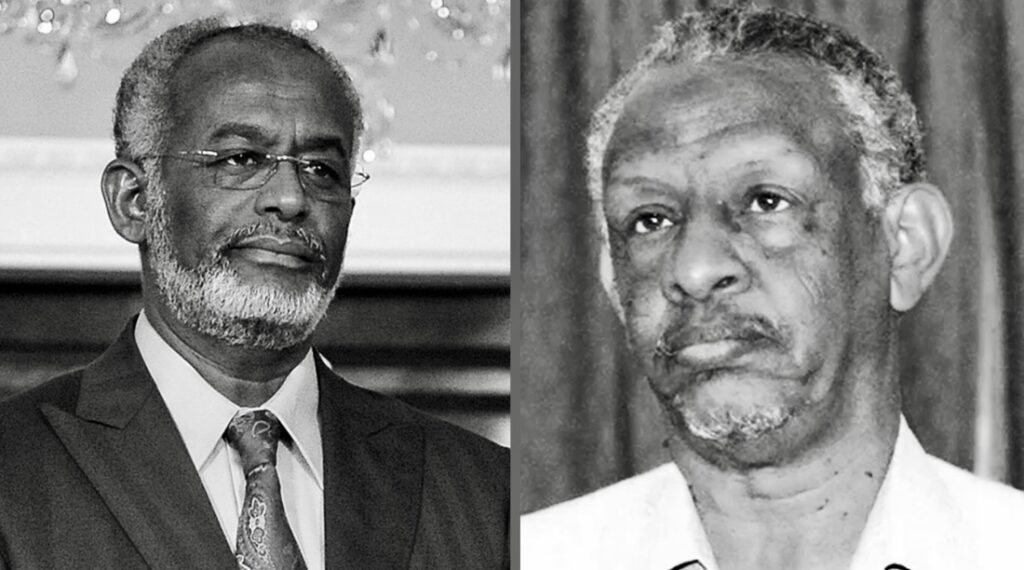
The Civil Democratic Alliance of Revolutionary Forces (“Somoud”) has publicly refused to join any political dialogue within Sudan while the conflict persists, warning that “holding a dialogue within the areas controlled by the army may perpetuate the existing division in the country.” The coalition emphasised that a viable political process must first focus on stopping the war, resolving the humanitarian crisis, excluding the National Congress and Islamic Movement, and extraditing wanted individuals to the International Criminal Court.
The coalition’s stance coincides with army chief Lieutenant General Abdel Fattah al-Burhan’s initiative to hold a “Sudanese-Sudanese” dialogue in army-controlled territories. However, international mediators from the five-party group—including the UN, African Union, IGAD, Arab League, and EU—have questioned the exclusion of key factions. An informed source within the bloc revealed that “these parties see no political justification for refusing the participation of Islamists in the Sudanese-Sudanese dialogue,” noting that Islamists themselves remain divided over the process.
Proposed outlines for the dialogue entail a two-year transitional period, a civilian government led by the army, and eventual elections, without requiring a national ceasefire or lifting the rebel classification of the Rapid Support Forces. Meanwhile, Mubarak Al-Fadil Al-Mahdi, head of the Umma Party, criticised the framework, arguing that meaningful dialogue requires a neutral international venue, a comprehensive ceasefire, and the army’s commitment to hand power to a civilian government.
 3) Outrage erupts after officer assaults teacher and brandishes weapon in school
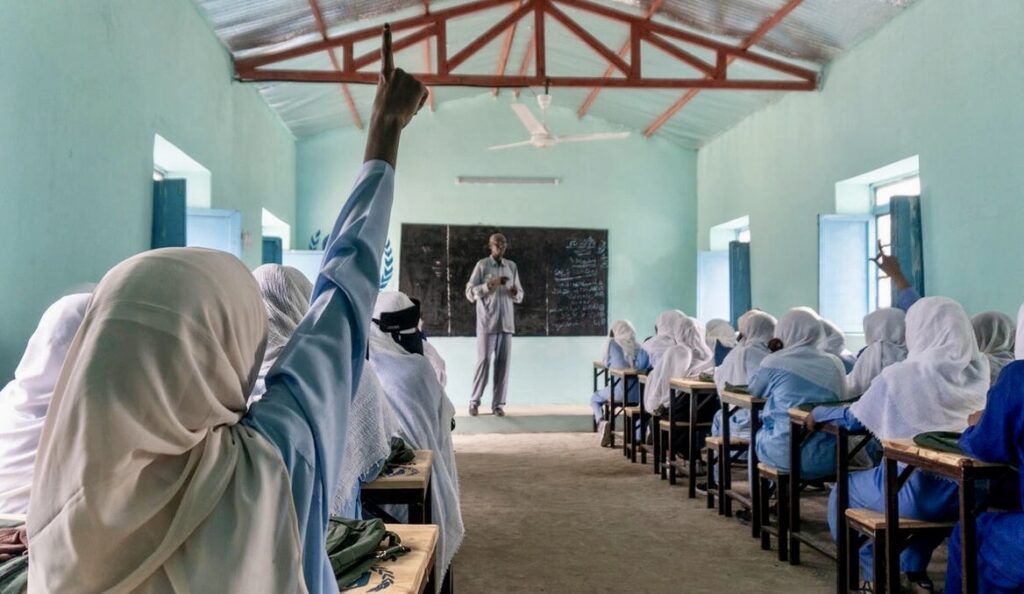
A violent incident at the Model Training School for Boys in Omdurman’s Karari locality has sparked widespread condemnation across Sudan’s education sector. According to the Sudanese Teachers’ Committee, a retired brigadier general and former local commissioner stormed the school following a classroom disciplinary incident involving his son. The former official slapped a teacher in front of students and staff before drawing a firearm and threatening to shoot anyone who intervened.
The Sudanese Teachers’ Committee demanded an immediate, independent investigation and full legal prosecution without granting immunity to the perpetrator. In response to statements from the Governor of Khartoum State offering solidarity and judicial recourse, the committee criticised the regional government for failing to take direct enforcement action.
Rejecting the governor’s response as insufficient, the committee stated that “simply condemning attacks without taking legal action neither protects teachers, deters aggressors, nor safeguards the sanctity of schools.” The organisation reiterated that state institutions have a direct legal obligation to protect educators and ensure the safety of educational facilities.
 4) Cholera outbreak and severe food shortages in El Obeid
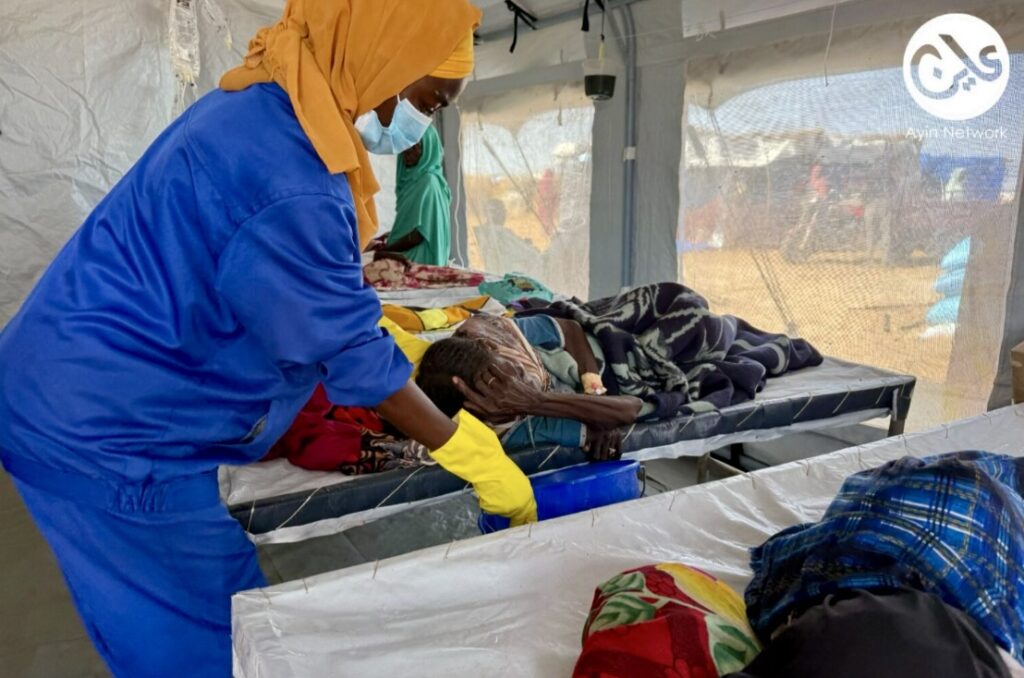
Humanitarian conditions in Sudan’s Kordofan region are rapidly deteriorating, raising fears of mass civilian displacement as food shortages, insecurity, and disease compound near the city of El Obeid.
Medical sources in Al-Mazroub, North Kordofan State, report a critical surge in cholera cases driven by clean water scarcity, noting that “two deaths were recorded among cholera patients on Sunday,” alongside severe shortages of essential intravenous fluids and medicines.
Civilians in the area also report frequent drone overflights and military shelling as fighting intensifies between the Sudanese army and the Rapid Support Forces across East Kordofan. The expanding military operations and increased drone usage have severely disrupted local agricultural communities and safe transit routes, forcing residents to rely on contaminated water sources and face persistent security threats.
According to a human rights monitoring group, trade blockades imposed by regional authorities on RSF-controlled territories have driven basic food prices to unprecedented levels. A single sack of corn now costs up to 900,000 Sudanese pounds (roughly $180), while onions have reached two million pounds (roughly $400), leaving local populations stranded between the threat of extreme hunger and active conflict.
 5) More than 5,000 flee heavy fighting in West Darfur
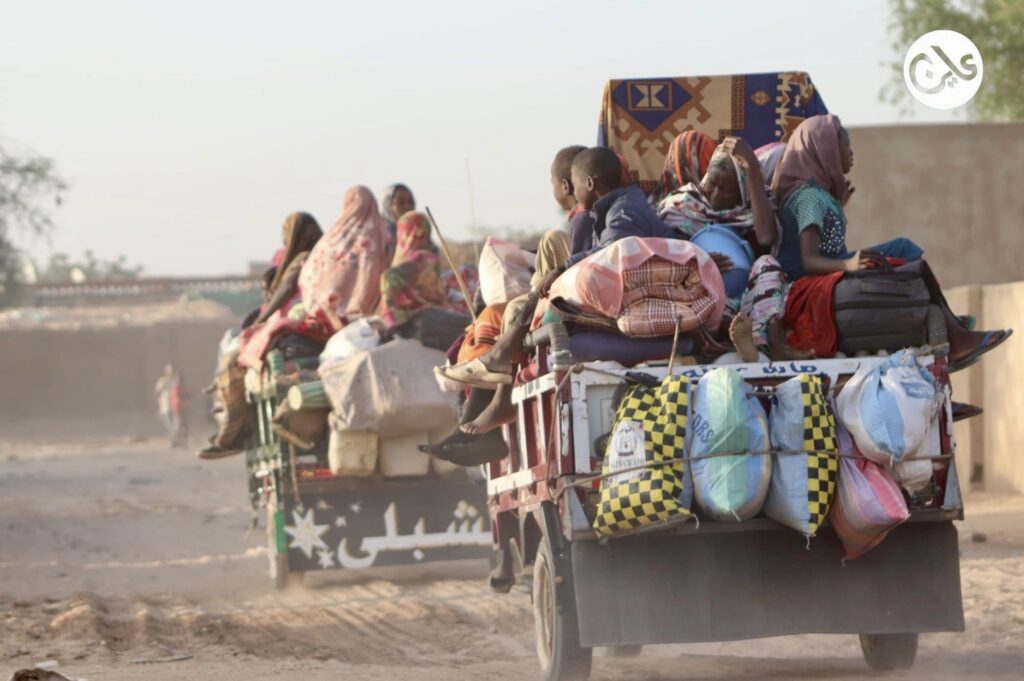
Renewed clashes between the Rapid Support Forces and the army-aligned Joint Force have forced more than 5,135 people to flee 10 villages in West Darfur’s Serba locality, according to the International Organization for Migration (IOM). The vast majority of the displaced families have crossed the border into neighbouring Chad to seek refuge from escalating instability in the Bir Saliba area.
The fresh outbreak of combat near Bir Saliba, located northwest of El Geneina, involved heavy engagements between opposing forces. Joint Force fighters published footage claiming the destruction and capture of RSF vehicles and personnel during a counteroffensive, while the RSF previously asserted full control over the strategic locality following intense battles.
The escalated fighting has had a serious impact on both combatants and civilians, with reports confirming the death of prominent RSF commander Mahdi Jabal Moon during earlier engagements in the region. The continuous violence threatens to further destabilise northwestern Darfur and exacerbate the cross-border refugee crisis in Chad.