

Analysis: The case against the RSF, pressure for a terrorism designation
30 December 2025
As Sudan’s war grinds on, pressure is mounting in Washington and European capitals to formally designate the paramilitary Rapid Support Forces (RSF) as a terrorist organisation. The push follows a growing body of evidence documenting systematic attacks on civilians, ethnically targeted violence, and the use of increasingly sophisticated weaponry—including drones—in densely populated areas.
At the centre of this effort is a network of Sudanese researchers, activists, and civil society actors working to translate atrocities on the ground into concrete policy actions abroad. Among them is Sudanese researcher Mohamed Suliman, who has played a leading role in coordinating advocacy efforts aimed at securing a US designation of the RSF as a Foreign Terrorist Organization (FTO).
“As part of the Sudan ad hoc group, which consists of researchers and activists working to advance the cause of Sudan, I coordinate the effort pushing for RSF designation,” Suliman said. “I created a petition supporting (US) Senator Jim Risch’s proposal to assess the militia as an FTO, which was signed by thousands.”
Suliman also coordinated a formal letter, signed by civil society actors, urging the U.S. State Department to classify the RSF as a terrorist group. In parallel, he authored an op-ed aimed at shaping public and policy discourse in Washington, while his group continues to lobby U.S. lawmakers directly.
Terrorism designation
At the heart of the argument lies a legal framework embedded in US counterterrorism law. According to that framework, three conditions must be met for designation: the group must be foreign; it must engage in terrorist activity, particularly against civilians for political purposes; and it must pose a threat to U.S. national security.
Advocates argue that the RSF meets all three criteria.
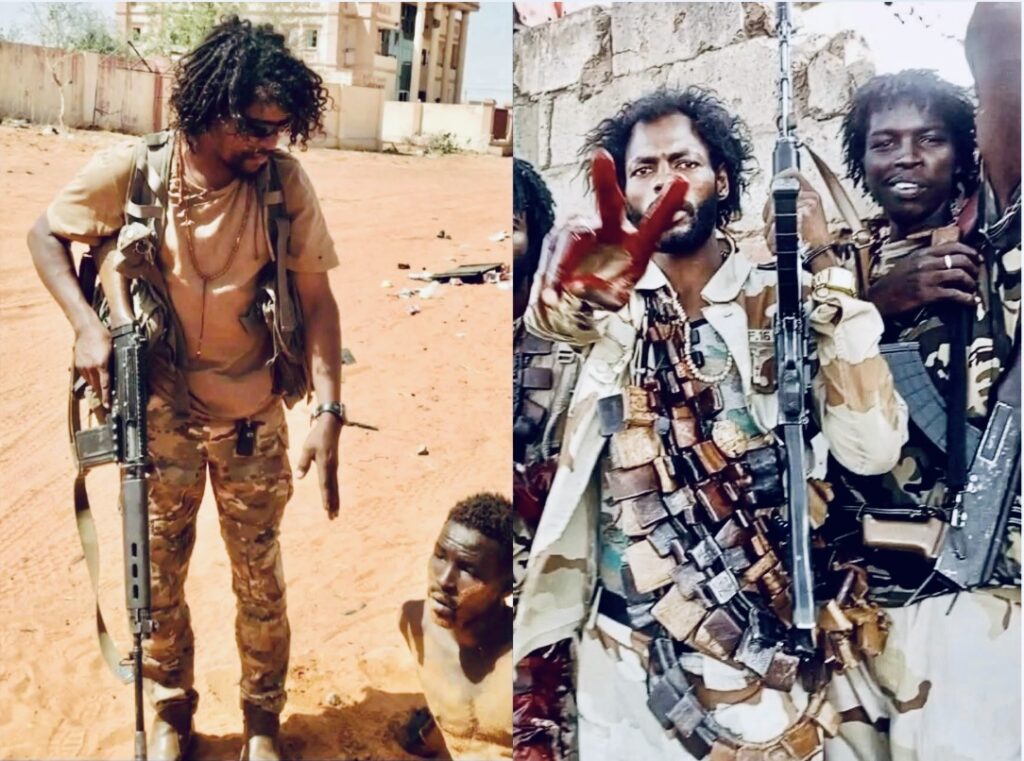
The RSF’s documented attacks on civilian infrastructure — including hospitals, displacement camps, and residential neighbourhoods — are cited as clear evidence of terrorist activity. The use of drones in urban and civilian-heavy areas, they argue, reflects both technological escalation and deliberate targeting strategies.
The RSF’s external links hold equal significance. Its reported relationship with Russia’s Wagner Group, a sanctioned mercenary network, is viewed by advocates as a direct threat to U.S. interests in Africa and the Red Sea region. Advocates contend that these connections elevate the RSF from a domestic armed actor to a transnational security threat.
Despite this, designation remains politically fraught.
Diplomacy, division, and the politics of designation
While momentum is building within parts of the US Congress, the international response remains fragmented. A senior European Union (EU) official told Ayin that designating the RSF could have unintended consequences, particularly for humanitarian operations.
“I don’t,” the official said when asked whether he believes the EU or the US might designate the RSF as a terrorist group. “It would have adverse effects on humanitarian aid. See Syria.”
This caution reflects broader European concerns that terrorist designations can complicate aid delivery, criminalise engagement with de facto authorities, and limit access to civilian populations in need. Similar debates have shaped EU policy in Syria, Gaza, and Afghanistan.
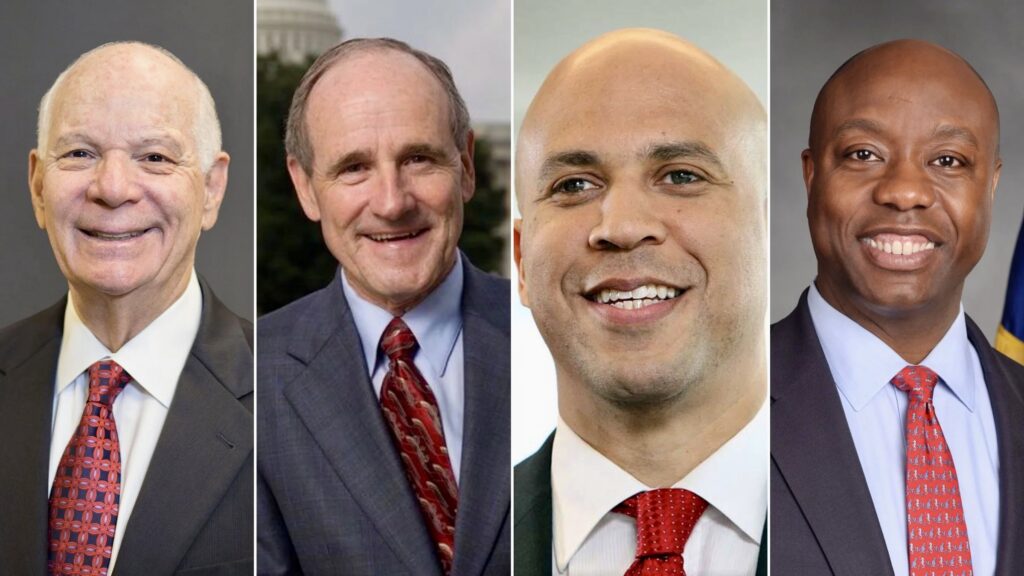
At the same time, pressure is mounting in Washington. Senate Foreign Relations Committee Chair Jim Risch, alongside Ranking Member Jeanne Shaheen and Senators Tim Scott, Cory Booker, Todd Young, and Chris Coons, issued a bipartisan statement condemning what they described as the RSF’s “long-predicted, ethnically targeted assault” on civilians in El Fasher.
The senators urged the US administration to consider designating the RSF either as a foreign terrorist organisation or a specially designated global terrorist entity—two classifications that would severely restrict financial flows, criminalise support, and redefine international engagement with the group.
However, evidence alone does not shape the path to designation.

Saudi Arabia
Sources familiar with diplomatic discussions assert that regional politics significantly influence the decision. Saudi Arabia’s position is viewed as particularly influential. Without Riyadh’s support, Sudanese advocates believe, the designation is unlikely to move forward. At the same time, the United Arab Emirates is widely perceived as working to block such a step, given the legal and reputational risks it would pose if links to the RSF were formally scrutinised under US counterterrorism law.
Under American legislation, any state or entity providing material support to a designated terrorist organisation can face severe legal consequences—a reality that makes the issue highly sensitive for Washington’s regional partners.
The debate over designation is unfolding against the backdrop of a fractured Sudanese political landscape, where multiple civilian coalitions are competing for international legitimacy while armed actors continue to dominate facts on the ground.
Civilian blocs and international diplomacy
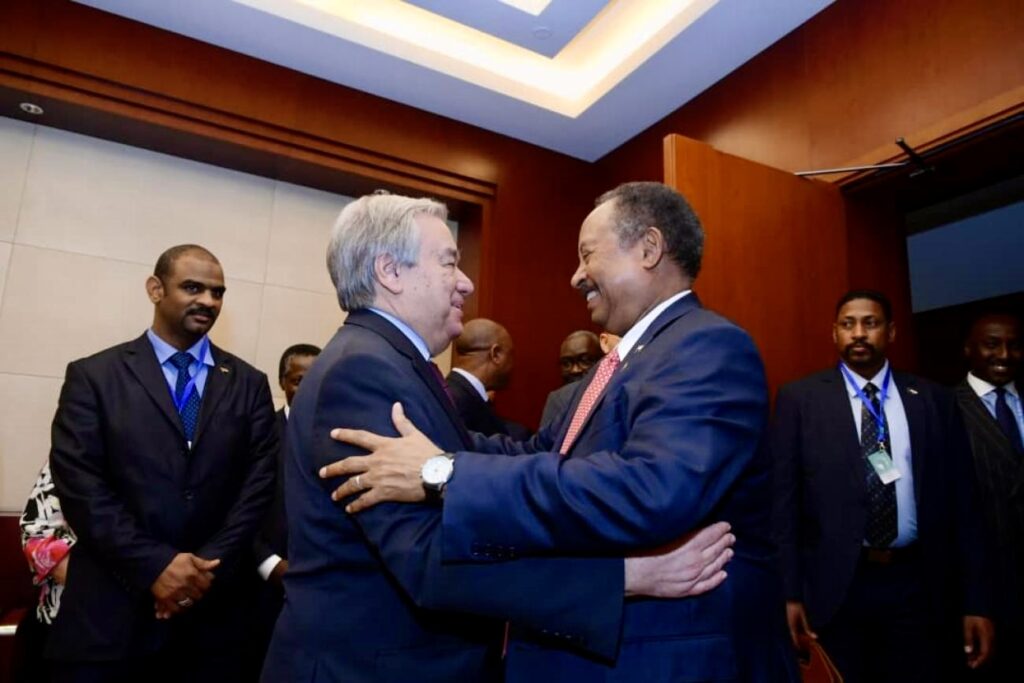
Three major civilian blocs now shape the political arena. Tasis, a coalition of political parties and armed movements aligned with the RSF, recently played a role in forming a parallel governing structure in RSF-controlled areas. In contrast, the Democratic Bloc closely aligns with the Sudanese Armed Forces (SAF) and endorses their political roadmap. Meanwhile, Sumoud, led by former Prime Minister Abdallah Hamdok, presents itself as a civilian alternative but has been accused by critics of political proximity to the Rapid Support Forces.
It is within this fragmented landscape that international diplomacy is unfolding. According to informed sources, the EU is attempting to distance itself from the recent Nairobi declaration, although it followed conditions previously outlined by the Quad—the U.S., Saudi Arabia, Egypt, and the UAE— in their September statement.
The EU’s current strategy, sources say, is to prepare civilian actors for a future political process by encouraging the formation of a broad-based coalition representing diverse Sudanese voices. This approach aligns with the Quad’s proposal for a humanitarian truce and a future ceasefire agreement between the SAF and RSF, one that would eventually place security forces under civilian-led oversight.
Stability vs. accountability
Yet critics argue that such frameworks risk reproducing the same power imbalances that have defined Sudan’s transition since 2019. Without accountability for mass atrocities, they warn, political arrangements risk legitimising armed actors rather than restraining them.
For Sudanese activists pushing for RSF designation, the issue is ultimately one of moral clarity. “Our effort is important,” Suliman said, “but without Saudi Arabia pushing for this step, the designation will not happen.”
International actors continue to balance stability and accountability, leaving Sudan’s civilians caught between diplomatic caution and the daily realities of violence. Whether the RSF is formally designated or not, the outcome will shape not only the future of Sudan’s war but also the credibility of international commitments to justice, civilian protection, and the rule of law.